Mentions
Conversations linking to GitHub, newest first. Times are UTC.
Mentions by source
X
Bluesky
Hacker News
V2EX
Qiita
DEV
Mastodon
Latest posts
想让 Agent 真去点网页、填表、点按钮?看看 browser-use。 开源 Python,给 AI 浏览器代理用;也有托管 API。写自动化脚本的思路被它改了。 browser-use/browser-use #AI #Agent #Browser
I Asked for 499 Bytes, 51,101 Came Back This block sits in my blog's nginx configuration: location /_astro/ { proxy_pass http://127.0.0.1:3040; expires 1y; add_header Cache-Control "public, immutable"; } So even the site's static assets don't come off disk — they pass through the Node process, and nginx merely carries them. I knew that, and still, reading the config today, a question came up that I couldn't answer: if a client asks for only part of that file, who answers? There are three candidates — Node, nginx, and Cloudflare out front — and the request touches all of them. Asking with curl took five seconds. The table that came out wasn't what I expected: my own stack answers this question with a single voice, while the edge in front of it runs a different rulebook altogether. The most expensive answer the edge gave was this one — I asked for 499 bytes and 51,101 came back. That this piece opens on proxy_pass is no accident: over the past three weeks my measurements of open_file_cache and gzip_static both snagged on the same line. This is the third. What snags this time isn't a tuning knob, it's a defense nginx added this year. First measurement: the page doesn't do ranges, the asset does Two requests, same site. The first is an article page, the second is the CSS that page loads. I asked both for their first 100 bytes. # the article page curl -s -o /dev/null -w '%{http_code}/%{size_download}\n' \ -H 'Accept-Encoding: identity' -H 'Range: bytes=0-99' \ https://mustafaerbay.com.tr/blog/tutorials/node-u-tek-dizine-kilitledim-bes-kapi-acik-kaldi/ # 200/269938 # that page's CSS curl -s -o /dev/null -w '%{http_code}/%{size_download}\n' \ -H 'Range: bytes=0-99' \ https://mustafaerbay.com.tr/_astro/BaseLayout.CGi080bn.css # 206/100 The page answered my 100-byte request with 269,938 bytes — 2,699 times what I asked for. The CSS sent exactly what I asked: 100 bytes, with a `Content-Range: bytes 0-99/114436` header beside it. Same server, same certificate, same second: one of them has no notion of ranges, the other does. The difference shows up in the headers too. The CSS response carries Accept-Ranges: bytes; the page response doesn't. HTTP is lenient here — a server may ignore the Range header field, and RFC 9110 says so explicitly. So my page is standards-compliant. What interested me is why it behaves that way. One missing header explains the page The answer is inside my own server. On the VPS I asked the Node process directly: curl -s -D- -o /dev/null -H 'Range: bytes=0-99' \ 'http://127.0.0.1:3040/blog/tutorials/node-u-tek-dizine-kilitledim-bes-kapi-acik-kaldi/' # HTTP/1.1 200 OK # Transfer-Encoding: chunked Astro's SSR output streams the page: the body length isn't known when the response starts, so there is no Content-Length and there is Transfer-Encoding: chunked. nginx's range filter, for its part, wants three things before it does anything — a 200 status, a known content_length_n, and the allow_ranges flag. [The filter's entry condition](github.com/nginx/nginx/blob/cb9252ae6537d8c24addc…) hands the response straight on when the length is unknown. I wanted to verify that in a lab too, because I didn't want to write "because of a missing header" without measuring it. I ran nginx 1.31.8 in a container on my Mac and put a tiny two-ended Python server behind it: the /chunked path streams in chunks, the /cl path serves the same body with a Content-Length. As a fourth variable I also tried the proxy_force_ranges directive. | path | upstream | proxy_force_ranges | result | |---|---|---|---| | /p-chunked/ | chunked | off | 200, whole body | | /p-cl/ | Content-Length | off | 200, whole body | | /p-chunked-force/ | chunked | on | 200, whole body | | /p-cl-force/ | Content-Length | on | 206, 100 bytes | Four rows, one summary: nginx does not slice a proxied response by itself. It takes two conditions together — the upstream saying Accept-Ranges (or you writing proxy_force_ranges on) and a Content-Length on the response. Without the length, the directive doesn't save you either. My pages ignoring ranges isn't a misconfiguration, it's the price of streaming. I think that price is fair: no real client asks for 100 bytes from the middle of a page. Multiple ranges: the edge manufactures multipart Things get strange not with one range but with many. HTTP lets a client ask for several pieces in a single request, and the server answers in multipart/byteranges form, wrapping each piece in its own little header. curl -s -D- -o /dev/null -H 'Range: bytes=0-9,20-29,40-49' \ https://mustafaerbay.com.tr/_astro/BaseLayout.CGi080bn.css # HTTP/2 206 # content-type: multipart/byteranges; boundary=a331107a9f3d76fe # content-length: 346 I asked for 30 bytes and 346 came back. The surplus isn't data, it's envelope: each piece gets a boundary string, a Content-Type and a Content-Range line in front of it. At this scale nobody cares. But the envelope has a fixed length while the requested piece doesn't — so the ratio falls apart as you shrink the pieces and raise their count. So I broke it: I asked for 499 separate bytes in one request. R=$(python3 -c "print(','.join(f'{i*7}-{i*7}' for i in range(499)))") curl -s -o /dev/null -w '%{http_code}/%{size_download}\n' \ -H "Range: bytes=$R" https://mustafaerbay.com.tr/_astro/BaseLayout.CGi080bn.css # 206/51101 I asked for 499 bytes and 51,101 bytes came down. Same number on all three runs. The payload grew 102-fold; I paid 101.4 bytes of envelope per piece. When I ran the same experiment with 200-byte pieces, the number went somewhere even funnier: I asked for 99,800 bytes and got 151,707 — while the entire file is 114,436 bytes. Asking for the pieces cost 37 KB more than downloading the whole thing. Then I went up to 500 and it was over: # 500 x 1 byte -> 200/114436 # 500 x 200 bytes -> 200/114436 # 499 x 200 bytes -> 206/151707 The edge's rule is clear: yes up to 499 ranges, and at 500 it behaves as though it never saw the Range header and sends the whole body. The size of the pieces doesn't change the decision at all — this is a count limit, not a budget. Whether you ask for one byte or 200 per piece, the line is at 499. What would my own server say? Everything past this point would have been guesswork, so instead of guessing I asked the server. The origin's 443 is open to Cloudflare only, but from inside the VPS I can reach my own nginx with --resolve. Same requests, with the edge out of the loop: | request | Node (:3040) | origin nginx 1.30.0 | Cloudflare edge | |---|---|---|---| | single range, 100 bytes | 206 / 100 | 206 / 100 | 206 / 100 | | 3 ranges | 200 / 114,436 | 200 / 114,436 | 206 / 346 (multipart) | | 499 × 1 byte | 200 / 114,436 | 200 / 114,436 | 206 / 51,101 | | article page + range | chunked, 200 | 200 / 268,824 | 200 / 269,938 | The first thing that jumps out is that the first two columns are identical: whatever Node says, nginx carries, on all four rows. So this isn't "three layers, three answers" — it's "my own stack speaks with one voice, the edge with another". Every multipart response in these tests came from Cloudflare; my own stack can't do a multi-range request at all, because it delegates ranges to Node, and the static file server Astro uses (send 1.2.1) only knows single ranges: its ranges.length === 1 condition treats a multi-range request as a "regular response" and sends the whole body. Second: the same page is 268,824 bytes at the origin and 269,938 at the edge. The 1,114-byte difference is most likely the cached copy being an older render; I didn't chase it, that wasn't today's question. !Diagram What nginx alone would do: one budget, three predictions What if nginx served the file itself? Trying that at the origin would have meant changing the configuration; instead I put a file of the same size into the lab container (114,436 bytes) and raised the range count. n=453 -> 206/43294 n=454 -> 206/43390 n=455 -> 200/114436 At 454 it produces multipart; at 455 it ignores the Range header. An odd number. It has nothing to do with header length: by requesting pieces at offsets above 100,000 I pushed the header to 6,369 bytes and the break stayed at 455. So the decision isn't made by the count of ranges but by something else. The answer is in the range filter's source, in the last ten lines of ngx_http_range_parse(): if (max_ranges == NGX_MAX_INT32_VALUE) { size += ctx->ranges.nelts * 256; content_length += 4096; if (size > content_length) { return NGX_DECLINED; } } size is the total of the requested bytes, nelts the number of ranges. nginx assumes 256 bytes of envelope per piece, grants the source 4 KB of slack, and refuses a request that comes close to the whole body. So it's a budget: requested bytes + 256 × number of ranges > file size + 4096 means there are no ranges. I tested the formula on two more file sizes, computing the break point first and measuring afterwards: | file | range size | prediction | measurement | |---|---|---|---| | 114,436 bytes | 5 bytes | 454 accepted / 455 refused | 454 accepted / 455 refused | | 10,000 bytes | 5 bytes | 54 accepted / 55 refused | 54 accepted / 55 refused | | 1,048,576 bytes | 10,000 bytes | 102 accepted / 103 refused | 102 accepted / 103 refused | A direct hit all three times. This budget hasn't always been in nginx: it arrived with commit cb9252ae on 13 January 2026, titled "Range filter: reasonable limit on multiple ranges". The release notes list it as a bugfix — 1.29.5, 4 February 2026: "a response with multiple ranges might be larger than the source response". The 1.30.0 at my origin and the 1.31.8 in my lab both come after that fix. The trap: writing max_ranges cancels the budget Look at that if condition again: the budget only runs while max_ranges is at its default. The moment you set the directive to a number, the code never enters that block and all you have left is a flat count limit. Here is what came out of the lab: default n=455 -> 200/114436 (budget refused it) max_ranges 1000 n=455 -> 206/43486 (no budget, accepted) So writing a generous max_ranges is weaker than not writing it at all. nginx's documentation still says "By default, the number of ranges is not limited" — true as a count, but since 1.29.5 the default carries a size budget, and writing the directive takes it away. The commit message says the limit "can be altered with the max_ranges directive", which is technically right: you alter it, and a flat count takes its place. There's an important distinction here, so don't skip it: writing max_ranges doesn't leave you defenseless. Right above the envelope-aware budget sits a cruder check that has been in nginx since 1.1.2 — if the sum of the requested bytes exceeds the file itself, the request is refused — and that check lives outside the max_ranges block. With max_ranges 1000 in place, the line falls here: n=572 requested 114,400 bytes (file 114,436) -> 206/167597 n=573 requested 114,600 bytes -> 200/114436 The break is exactly at the file's size. So with the directive written, the ceiling of amplification becomes "file size + piece count × envelope": that 572-range request pulled 167,597 bytes out of a 114,436-byte file, 1.46 times over. The envelope budget had already cut the same request off at 400 ranges. Your three real options behave like this (all measured): - default: a single range always passes; multiple ranges pass up to the budget. - max_ranges 1: single range 206, multiple ranges 200. Resumable downloads and video seeking keep working; multipart closes entirely. - max_ranges 0: the Accept-Ranges header is never sent and every response is a 200. There's a third limit, and I hit it by accident. Generating ranges as 0-4,10-14,20-24… (f'{i*10}-{i*10+4}') and raising the count with max_ranges 1000 in place, the response flipped to 400 at range 841: n=840 Range line 8,190 bytes -> 206 n=841 Range line 8,200 bytes -> 400 The cause isn't the ranges but the request itself: the Range line no longer fits the default large_client_header_buffers (4 8k). That's where the natural ceiling of range-based amplification sits — the request has to fit into a single header line. What's in the envelope, and what nginx assumes Opening up a two-range response byte by byte shows what the tax actually is: \r\n--f822d9a65821054d\r\n Content-Type: text/css; charset=utf-8\r\n Content-Range: bytes 0-9/114436\r\n\r\n @keyframes \r\n--f822d9a65821054d\r\n ... Ninety-six bytes of envelope for ten bytes of data. The averages came out at 101.4 bytes per piece on the edge and 90.6 bytes on the lab's nginx. All 10.8 bytes of that gap come from the Content-Type line — the edge appends ; charset=utf-8, the local nginx doesn't. The boundary string actually works the other way: nginx's boundary is a zero-padded twenty-character number, the edge's a sixteen-character hex string. nginx's budget, meanwhile, assumes 256 bytes per piece, two and a half times reality. The envelope isn't quite constant either: it grows with the digit count of the offsets in each Content-Range line. Pieces asked for at the end of a file cost a few bytes more than pieces at the beginning. That generosity isn't accidental. For the same file, the break point moves like this depending on the assumption: | assumed envelope | break point | |---|---| | 91 bytes (actual) | 1,234 ranges | | 101 bytes | 1,118 ranges | | 256 bytes (nginx) | 454 ranges | So nginx also refuses requests it could have served without trouble. The commit message says as much: a client asking for small pieces of a large source is penalized, because there the processing cost dominates the data. That reads right to me — a browser has no reason to ask for 450 separate bytes. The moment I slice, I lose compression A side effect I wasn't looking for turned up here. When I ask for the same CSS with brotli accepted, 20,634 bytes come down. The moment I add a Range header: curl -s -D- -o /dev/null -H 'Accept-Encoding: br' -H 'Range: bytes=0-99' \ https://mustafaerbay.com.tr/_astro/BaseLayout.CGi080bn.css # HTTP/2 206 # content-length: 100 # content-range: bytes 0-99/114436 The content-encoding header disappears and the total in Content-Range is 114,436 — the length of the uncompressed body. Ranges are served over the raw representation, not the compressed one. A client that tries to fetch this file piece by piece carries 5.5 times what brotli would have cost. An earlier measurement turned on which representation compression picks; once ranges enter the picture, that choice is cancelled outright. A single range is privileged, and a stale copy gets the whole body One last detail about the budget: if the range count is exactly one, the source returns NGX_OK without consulting the budget at all. So a single-range request — a resumable download, seeking in a video, pulling the last page of a PDF — passes at any size and on any file. Asking for 100 bytes of the 1 MiB file gave me a 206 too. Alongside that path there is a validator. A client holding half a copy can say "continue where I left off if my copy is still valid" with If-Range: ET=$(curl -sI https://mustafaerbay.com.tr/_astro/BaseLayout.CGi080bn.css \ | grep -i '^etag' | sed 's/etag: //I') curl -s -o /dev/null -w '%{http_code}/%{size_download}\n' \ -H 'Range: bytes=0-99' -H "If-Range: $ET" .../BaseLayout.CGi080bn.css # 206/100 <- tag matches, the piece arrives curl -s -o /dev/null -w '%{http_code}/%{size_download}\n' \ -H 'Range: bytes=0-99' -H 'If-Range: "bogus-etag"' .../BaseLayout.CGi080bn.css # 200/114436 <- tag didn't match, the whole body arrives Getting a 200 rather than a 412 on a non-matching tag is by design: the server sends the new body directly so the client doesn't have to make a second request. In practice that means a client trying to finish a half-finished download will quietly pull the entire file if the asset changed during a deploy. Files under /_astro/ carry a content hash in their name, so this doesn't happen to me; it happens if you serve a file with a stable name. Two requests the edge won't take RFC 9110 grants the server a right: it may reject overlapping ranges, or a set of many small ranges that aren't listed in ascending order, since both point at either a broken client or a deliberate request. The standard advises this without requiring it. Each layer got the question separately. | request | lab nginx | Cloudflare edge | |---|---|---| | bytes=0-99,200-299 (ascending) | 206 | 206 | | bytes=200-299,0-99 (unsorted) | 206 / 403 bytes | 200 / whole body | | bytes=0-199,100-299 (overlapping) | 206 / 604 bytes | 200 / whole body | | bytes=999999-1000099 (past the end) | 416 | 416 | The edge follows the RFC's advice and nginx doesn't: unsorted or overlapping, it slices and sends. On 416 they agree — the response carries Content-Range: bytes */114436, telling the client the file's real size. That table also explains the 499-range measurement above: the bytes requested were in ascending order, which is why the edge took them. Shuffled, the same 499 ranges would have brought back the whole body without a single slice. The decision for my own setup Here's the table I'm left with: my origin's nginx is on a post-fix version and carries the budget, but the budget never fires — because Node already refuses the multi-range request, and the face turned outward is Cloudflare, whose limit is a count of 499. I don't own the defense. So I changed nothing on the origin side today, and I'm not going to set max_ranges to a number — the moment I write it I lose the only smart limit I have. The real limit is at the edge and I have no knob there; my one lever, if it ever matters, is lowering the range count at the edge. The scale deserves to stay in the right place too. 102-fold sounds bad, but the absolute figure is 51 KB; the amplification is bounded by the file size and the request has to fit in a single header. This is a tax, not a weapon. Still, it's good to know it isn't free: while marking the files under /_astro/ as immutable for a year, I had never thought about how they get sliced. You can measure your own stack from the same spot with four commands: # 1) does the page do ranges? curl -sI https://<site>/ | grep -i accept-ranges # 2) does a static asset serve a single range? curl -s -o /dev/null -w '%{http_code}/%{size_download}\n' -H 'Range: bytes=0-99' https://<site>/<asset> # 3) is multipart produced? curl -sI -H 'Range: bytes=0-9,20-29' https://<site>/<asset> | grep -i content-type # 4) up to how many ranges? R=$(python3 -c "print(','.join(f'{i*7}-{i*7}' for i in range(499)))") curl -s -o /dev/null -w '%{http_code}/%{size_download}\n' -H "Range: bytes=$R" https://<site>/<asset> If the second request returns 206, slicing is on; if the third says multipart/byteranges, you're paying the envelope tax; if the fourth returns 206, the layer in front of you doesn't honour nginx's budget. What this measurement taught me isn't really about ranges. Every layer of my stack can answer the same request differently, and I only get to see which answer counts by interrogating the layers one at a time. That ten-line budget nginx added in January sits on my server — unused. It's nice when defaults improve; whether that default ever sees your request is a separate question. The gzip_static measurement taught me the same lesson more cheaply: a static file module never touches a response coming through proxy_pass — writing that directive would not have affected a single path carrying traffic. This time the thing that doesn't touch my traffic isn't a speed knob, it's a defense. Official Sources - nginx — the max_ranges directive (ngx_http_core_module) - nginx CHANGES — 1.29.5 (4 February 2026) multi-range response fix - nginx commit cb9252ae — "Range filter: reasonable limit on multiple ranges" - RFC 9110 — the Range header, a server's right to ignore it (§14.2) and the security note on multipart range requests (§17.15)
最近在试开源 coding agent:OpenCode。 本地跑、可改、不锁死某一家模型。写代码/改仓库这种活,比「只能聊天」好用一截。 anomalyco/opencode #AI #Agent #OpenSource
AI 短片最烦的不是生成,是 6 个镜头各长各的脸、衣服全换、牛的花色都变了。 所以我做了个批量插件:一遍讲清人物服装场景,逐字锁进每个镜头;一个镜头抽 1–6 条,自动续跑;终审不过的直接重抽;最后精剪拼成片。 刚开源,zysen1/batch-video-plugin
Introducing motor, my personal C++ engine Hi everyone! I’ve been developing motor on and off for several years. I’m currently on parental leave and picked up development again a few months ago. My goal is to build my own demos and eventually a small game with it. Engine development is a lot of work, and there’s still plenty missing. But lately, I’ve started to feel things coming together: systems that used to be separate experiments are becoming something I can actually build demos and a small game with. motor supports Windows and Linux, with OpenGL and Direct3D 11 rendering backends. Recently, I’ve spent a lot of time fixing bugs, improving performance, and separating frame preparation from rendering so they can overlap. Beyond rendering, motor has modules for mathematics, threading, memory management, I/O, asset importing, audio, and a scene graph. It also has its own shading language, msl, which generates shaders for the different backends. I’ve also started using AI assistance during development. It has genuinely helped with investigating bugs and avoiding some of those evenings spent chasing a small mistake. These days, I mainly use it to help create test applications, while I work on the engine itself. The demo shown here is one of those applications. This is a personal project, and I’m sharing it because I’d like to hear from other people building engines. Feedback and questions are welcome! For the video, I chose the transform feedback / stream-out test because it combines several stages of the rendering pipeline. A geometry shader filters the points, and the surviving ones are captured in a buffer. That captured data is then used to render the cubes. Compute, the OG way ;) GitHub: aconstlink/motor
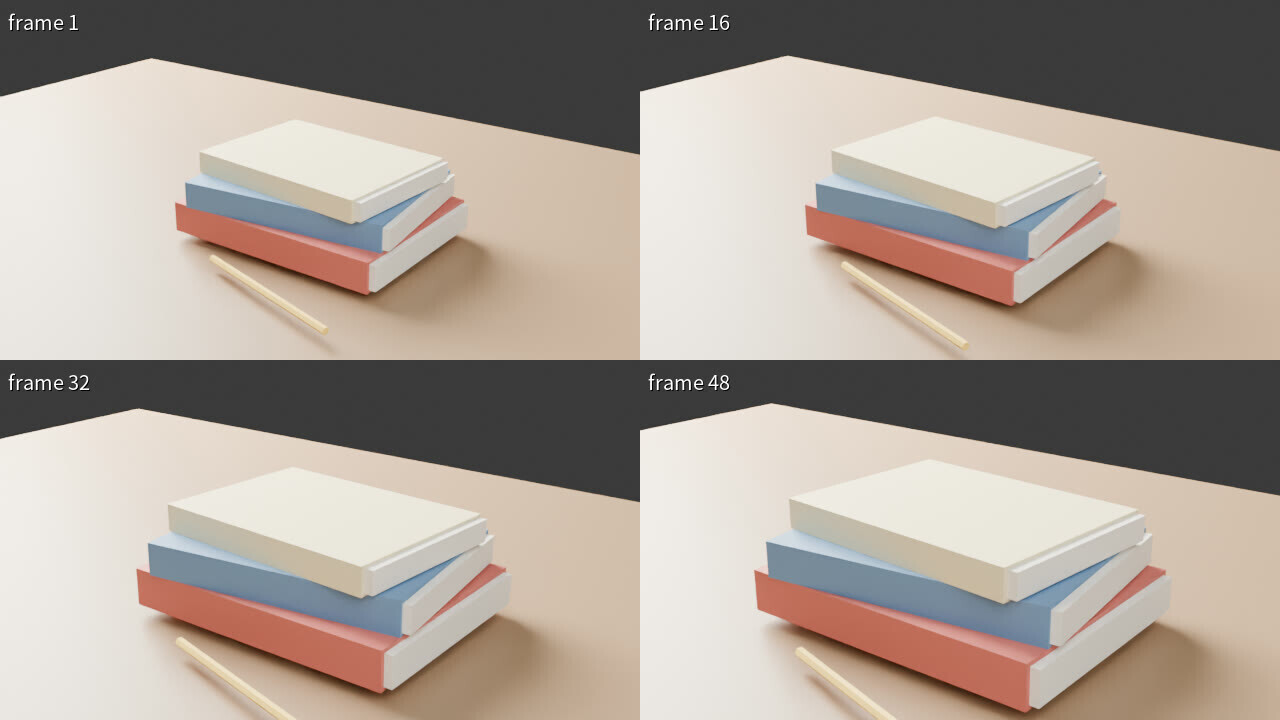
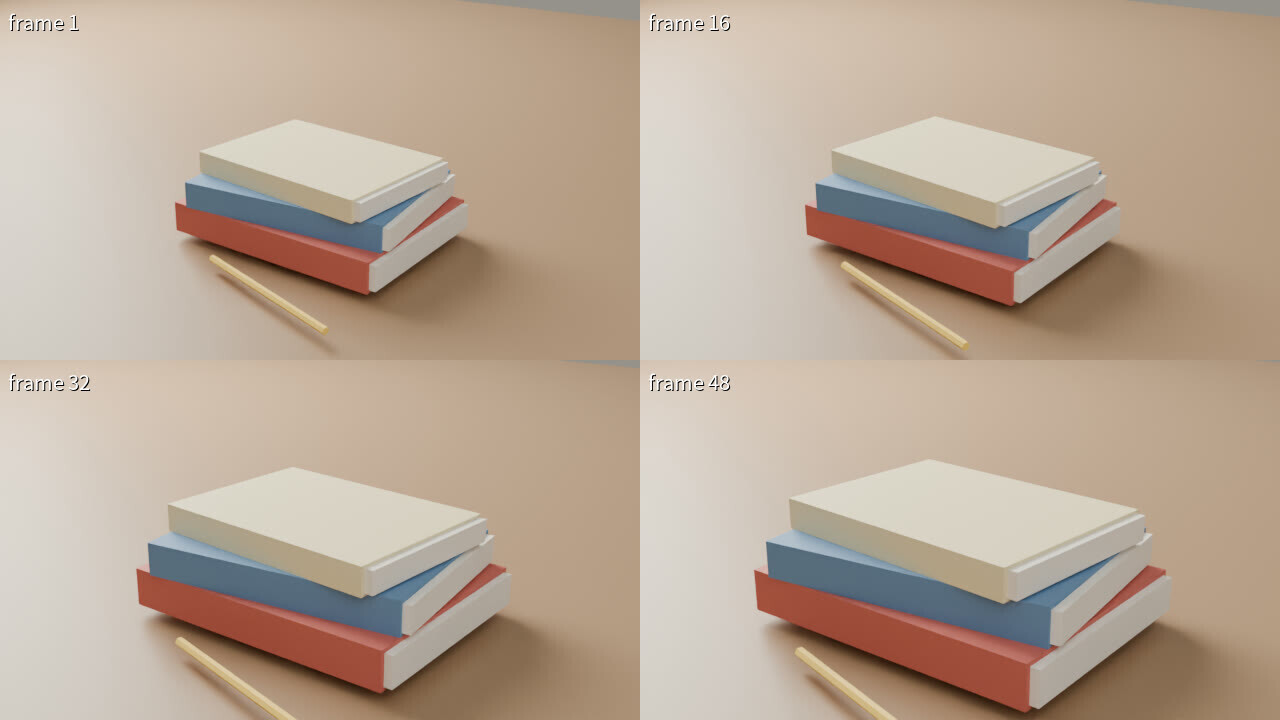
Claude Code wrote a Blender scene from one sentence, saw its own mistake in the preview, and fixed it before rendering I work on JANCTION Render at JasmyLab, and this run was done by Claude Code itself: it wrote the bpy script, called the MCP tools, looked at the images and changed the script. I only typed the sentence. Numbers are from the production service on 2026-11-02. The sentence: > Three stacked books and a pencil on a wooden desk, soft window light from the left, the camera pushes in slowly over 48 frames. Site: render.janction.jp Setup claude mcp add --transport http janction-render https://render.janction.jp/mcp That is the remote server; the first tool call opens an OAuth page that creates a free key. For this run I used the stdio package instead, because it sends local files and saves results locally: claude mcp add janction-render -e JANCTION_RENDER_SERVER=https://render.janction.jp -- uvx --from janction-render janction-render-mcp Either way Claude Code sees 13 tools. The ones that matter here are render_preview, render_estimate and render_final. Round 1: the script, and a preview that looked wrong Claude Code wrote about 80 lines of bpy: a desk, three cubes as books with lighter blocks for pages, a six-sided cylinder as a pencil, two area lights, a camera keyed from frame 1 to 48. Then it called render_preview with frames="1,16,32,48". !First preview: four frames tiled, desk blown out, black void behind it 3.46 GPU-seconds, back in 5 seconds, free. The built-in critic said ok with a score of 100. Claude Code disagreed with it, which is the point of this post: the desk was blown out by a 250 W area light, and the desk was only 1.6 m wide, so the camera saw a black void behind it (the scene had no world). Round 2: three edits, one more free preview The changes Claude Code made to its own script: - window light 250 W → 90 W, fill 40 W → 15 W - desk 1.6 × 1.0 m → 4.0 × 3.0 m so no edge is in the frame - a world background, warm grey at strength 0.6, instead of nothing !Second preview: even light, no void Another 3.46 GPU-seconds, free. Previews stay free up to 2 GPU-minutes a day, so looking twice costs nothing. Round 3: a 12-frame test, then the estimate The estimate before any final said 271 GPU-seconds for 12 frames with confidence: low and asked for a short contiguous test first. The key's recent finals were a heavy 50 MB scene, so the guess was far too high this time. The test: render_final(scene_id=..., frame_start=1, frame_end=12, width=1920, height=1080, samples=128, output="png", max_yen=60) 46.96 GPU-seconds for 12 frames (3.9 GPU-seconds a frame at 1080p, 128 samples, denoised), 24 seconds of wall time on 4 workers, 12 of 12 frames present, charged 5 JPY. render_estimate for frames 1–48 after the test: 169 GPU-seconds, about 40 seconds of wall time, about 17 JPY, basis: scene, confidence: high. That is the number to show a user before the full render. Round 4: the final render_final(scene_id=..., frame_start=1, frame_end=48, width=1920, height=1080, samples=128, output="mp4", fps=24, max_yen=40) 186.65 GPU-seconds, 64 seconds of wall time, 48 of 48 frames, 0 black frames (checked with ffmpeg), MP4 at 1920x1080 and 24 fps. Charged 19 JPY. !Frame 40 of the final render The whole run in numbers | Step | GPU-seconds | Wall time | Cost | | --- | --- | --- | --- | | Preview 1 (4 frames) | 3.46 | 5 s | free | | Preview 2 (4 frames) | 3.46 | 5 s | free | | Test, frames 1–12 at 1080p | 46.96 | 24 s | 5 JPY | | Final, frames 1–48 at 1080p, MP4 | 186.65 | 64 s | 19 JPY | From one sentence to a 48-frame 1080p Cycles clip: about 2 minutes of waiting and 24 JPY, with the agent catching its own lighting mistake on the way. A new key starts with 100 JPY of GPU time with no card (14 days) and 400 JPY more after saving a card that is not charged; this whole run fits inside the first 100 JPY. Current prices: render.janction.jp What I would tell other people running this - Make the agent look at the preview image itself. The critic catches framing and exposure problems, but "ok" is not the same as "what you asked for". - Run a short contiguous test before trusting the estimate. Both runs I did today had a first estimate that was off by about 6x in opposite directions, and both were right after the test. - Pass max_yen. The service holds at most that amount and charges only the GPU time used. The script Claude Code wrote is short enough to paste; ask it for the same sentence and compare. Docs for agents: render.janction.jp · Source (MCP server, CLI, client): JasmyLab-JANCTION/janction-render
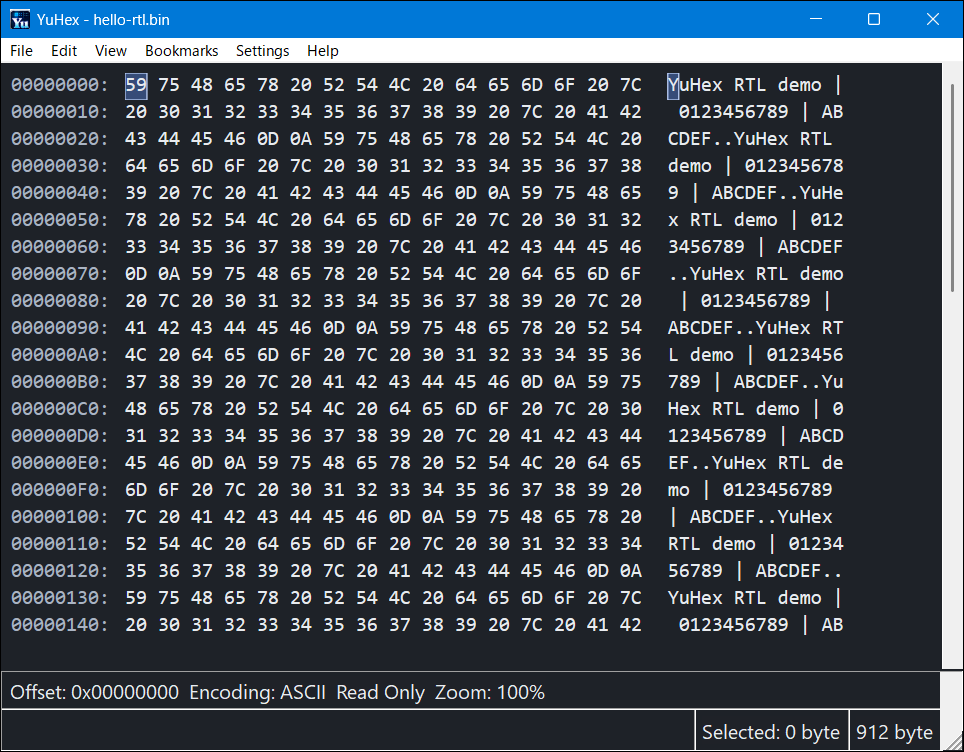
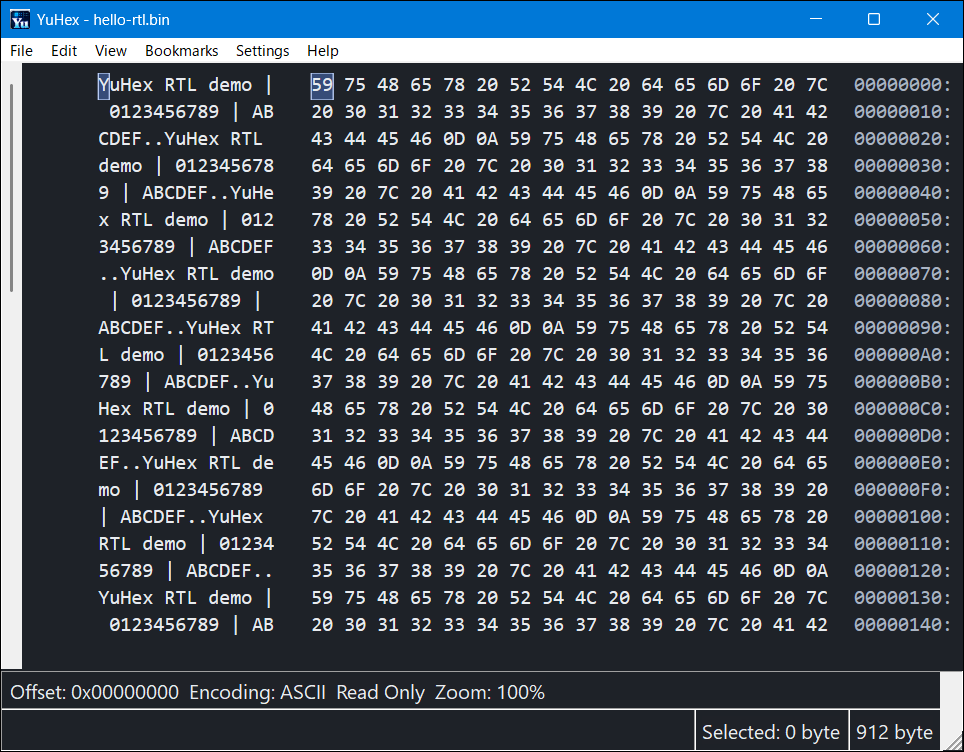
[2/3] Moving the Columns, Keeping the Bytes: Inside YuHex’s RTL Layout --- title: "[2/3] Moving the Columns, Keeping the Bytes: Inside YuHex’s RTL Layout" published: true description: "A Windows RTL checklist, followed by the C++ behind YuHex column placement, drawing, and hit testing without reversing byte order." tags: cpp, windows, internationalization, unicode series: "Adding RTL to YuHex" --- Adding RTL to YuHex — Part 2 of 3 First, a checklist for RTL work For a Windows application, adding RTL support is primarily work on the UI and help. But it is more than moving the visible elements: clicks and keystrokes must still reach the data the user sees. I would begin with the following checklist. These are tasks to assess and verify for an application, not a claim that YuHex has already completed every item. - [ ] Define the scope. Separate application UI direction from document or editor direction. Decide which regions become RTL and which remain LTR. - [ ] Review windows and dialogs. Check menus, toolbars, labels, fields, buttons, and alignment, including which child windows inherit a parent's layout. - [ ] Check separately opened UI. Include settings, search, confirmations, and error messages. - [ ] Separate text direction from alignment. Test RTL prose mixed with LTR letters, numbers, brackets, and punctuation. Right alignment alone does not establish RTL direction. - [ ] Identify elements that must retain their meaning. Preserve appropriate orientation and internal order for logos, images containing text, numbers, paths, addresses, hex values, and code. Evaluate navigation arrows according to their function. - [ ] Review custom drawing. Check column widths, margins, origins, clipping, fonts, and joined glyphs. Avoid applying both custom and Windows mirroring to the same content unintentionally. - [ ] Keep coordinates tied to data. Verify that clicks, drags, selections, and the caret correspond to the visible character or byte. - [ ] Check keyboard behavior. Review arrow keys, Home/End, tab order, shortcuts, and selection extension according to each field's role and reading direction. - [ ] Preserve in-progress input. A direction change or redraw must not lose an edited value or partially entered input. - [ ] Vary display conditions. Check resizing, horizontal scrolling, narrow windows, and DPI or display scaling. - [ ] Verify data invariants. RTL layout alone must not change byte order, copied content, saved results, or Undo/Redo results. - [ ] Review help. Set paragraph direction separately from alignment. Keep code, paths, and expressions in the required LTR order; test links and search too. - [ ] Test language and direction changes. Check redraws, already-open windows, and restored settings. Language selection and layout direction are separate decisions. - [ ] Retest LTR. Compare the same files and operations against the original behavior. Ask readers of the target language to evaluate whether the layout feels natural. Windows provides RTL window layout support, but it is not one switch that settles every surface. Microsoft's documentation distinguishes layout, inheritance, image mirroring, and coordinate mapping. Part 2 focuses on custom drawing and the mapping between screen coordinates and data in YuHex. Part 3 follows in-progress input and help. The checklist is a way to organize the work, not a certification that every item is complete. Part 1 used a short Arabic sentence to separate grammar, paragraph direction, and the order of numbers. A hex editor adds another question: what exactly should move when its layout changes? In YuHex, I rearrange the columns. The bytes retain their order. If those two decisions become entangled, the screen might look plausible while a click selects a different byte from the one under the pointer. I wanted to keep that possibility out of the design as far as I could. Here is how the actual C++ fits together. Two arrangements of the same file These screenshots show the same 912-byte sample. I changed only the editor area’s direction; the interface language remains English. !YuHex with its usual LTR editor layout Address, hex, and text columns from left to right. The first byte is 59. !The same sample with YuHex’s RTL editor layout Text, hex, and address columns from left to right. The first bytes remain 59 75 48 65. The text column prioritizes correspondence with byte positions. Rearranging the columns for RTL is separate from typesetting a natural Arabic paragraph as a word processor would. The address column moves to the right. The digits and trailing colon in 00000010: must retain their order. I had to revisit and fix that detail even after the broader RTL work. Where a field sits and how its contents are ordered need separate answers. Design goal: limit the impact on existing LTR behavior Before working on RTL placement, I wanted a structure that would help preserve the LTR display and editing behavior already in use. If every adjustment to RTL spacing also required changing LTR code, the area that needed checking would keep growing. I used the following principles to decide where each change belonged. Keep document and editing state separate from layout. The existing editor continues to own the bytes, selection, partially entered hexadecimal digit, and undo/redo state. Changing direction replaces the layout provider without recreating the editor or its window. There is no need to transfer an editing session to another view every time the arrangement changes. Retain existing LTR behavior and separate RTL-specific implementations. Column layout has a shared interface; the LTR implementation calls the existing calculation function, while RTL calculations live in a separate class and source file. For dialogs, I also used direction-specific entry points that continue to the existing screen for LTR and delegate RTL work to a dedicated implementation. Connecting these paths still changes existing code, but an RTL spacing correction can stay local instead of requiring a rewrite of the LTR formulas and screens. Choose direction near creation and switching boundaries. I avoided adding separate LTR and RTL calculations independently to drawing, clicking, and dragging. The connection code selects a layout provider, and the following operations obtain positions through the shared interface. Drawing and hit testing must refer to the same layout result. Treat application direction and editor direction separately. Menu and dialog direction is separate from the arrangement of byte columns. The comparison images above keep the English interface and change only the editor area. That area uses explicit column positions rather than window-wide mirroring. Keeping digit and byte order, along with the ordinary coordinate system, limits how much existing cell calculations and input handling need to change. Check LTR regressions alongside RTL behavior. Introducing a shared interface changes the LTR call path too. I check display, clicking, and selection with the same data, as well as resizing, DPI, horizontal scrolling, and direction changes during partial input. Separating the implementations limits the reach of a change; testing checks the connections between them. The column calculations below show how these design choices appear in the code. Put the direction decision at a boundary The original LTR editor already had a function for calculating column positions. I kept that calculation and introduced separate LTR and RTL layout classes with a common interface, HexViewDirectionLayout. These objects calculate geometry. They do not own the document or selection. This excerpt from HexViewDirectionLayout.h shows some of the questions they answer: virtual HexViewRowLayout Build(float margin, float y, float lineHeight, float addressWidth, float hexWidth, float textWidth, float gap, float clientRight, int horizontalOffset) const = 0; virtual float HexCursorLeft(int byte, float charWidth, float textWidth, float gap) const = 0; virtual float HorizontalContentWidth(float hexWidth, float textWidth, float gap) const = 0; Build() returns rectangles for the columns. HexCursorLeft() locates the cursor within the scrolling content, and HorizontalContentWidth() calculates that content’s width. Grouping those decisions lets the editor replace its layout provider without replacing its document. The LTR provider delegates to the existing calculation. This is its Build() implementation in LtrHexViewDirectionLayout.cpp: HexViewRowLayout Build(float margin, float y, float lineHeight, float addressWidth, float hexWidth, float textWidth, float gap, float clientRight, int offset) const override { return BuildHexViewRowLayout(margin, y, lineHeight, addressWidth, hexWidth, textWidth, gap, clientRight, offset); } An RTL spacing correction therefore does not require changing the LTR formula. The common interface still changes the call path, so I also need regression checks. Keeping changes separate reduces their reach; it does not prove that existing behavior is unchanged. Reserve the address column on the right The RTL provider first reserves a fixed address column, then uses the space to its left for the scrolling bytes. In RtlHexViewDirectionLayout.cpp: const float addressLeft = std::max(margin, clientRight - addressWidth); layout.addressRect = D2D1::RectF(addressLeft, y, std::max(addressLeft, clientRight), y + lineHeight); const float viewportRight = std::max(margin, addressLeft - gap); clientRight is the right boundary, addressWidth is the address column’s width, and gap separates columns. Subtracting the address width gives its left edge. Subtracting the gap gives viewportRight, the right boundary available to scrolling byte content. For example, use a margin of 8, a right boundary of 1,000, an address width of 128, and a gap of 12. The address occupies 872–1,000, and the byte viewport ends at 860. These are device-independent pixels, or DIPs, so the geometry can be used independently of physical display scaling. The following consecutive lines place the text and hex columns: const float glyphRoom = GlyphRoom(textWidth); layout.contentLeft = margin + std::max(0.0f, viewportRight - margin - textWidth - glyphRoom - gap - hexWidth) - static_cast<float>(offset); layout.textLeft = layout.contentLeft; layout.textRight = layout.textLeft + textWidth; layout.hexLeft = layout.textRight + glyphRoom + gap; layout.hexRight = layout.hexLeft + hexWidth; With a text width of 128, a hex width of 384, glyph room of 16, and scroll offset zero, the result is: | Region | Left | Right | |---|---:|---:| | Text | 320 | 448 | | Glyph room and column gap | 448 | 476 | | Hex | 476 | 860 | | Address | 872 | 1,000 | The std::max(0.0f, …) term pushes the content toward the right when there is room, without creating negative padding when the window is narrow. Subtracting offset then scrolls that content leftward. The fixed address rectangle was calculated separately, so it stays put. The coordinate system itself retains its ordinary meaning: larger x values are farther right. Bytes within the relocated hex column still progress from left to right. A click should undo the drawing calculation Both drawing and hit testing obtain their column positions through the same directionLayout_->Build() interface. They do not each invent their own RTL transform. In HexViewLayout.cpp, a hex cell’s rectangle is calculated like this: const float left = layout.hexLeft + static_cast<float>(byteIndex) * GetHexByteCellWidth(charWidth); return D2D1::RectF(left, layout.y, left + GetHexByteCellWidth(charWidth), layout.y + lineHeight); byteIndex is the byte’s index within its row. GetHexByteCellWidth() returns three times the character width: two hexadecimal digits plus spacing. With an 8-DIP character width, a byte occupies 24 DIPs. Now consider the reverse operation. This is the hex-column branch of HitTest() in HexView.cpp: if (x >= rowLayout.hexLeft && x < rowLayout.hexRight) { byteIndex = static_cast<int>((x - rowLayout.hexLeft) / GetHexByteCellWidth(hexCharWidth_)); } Subtract the column’s left edge from the click position, then divide by the cell width. With the example above, a click at x=512 gives (512 - 476) / 24 = 1.5. Converting to an integer gives byte index 1. On a row beginning at offset 0x20, that selects 0x21. Drawing adds an indexed cell width to the column origin. Hit testing subtracts that origin and divides by the width. Once both use the same layout, the calculation does not need a separate rule that reverses RTL byte indexes. Before this branch, the real code also rejects clicks outside the byte viewport. That prevents selecting bytes hidden underneath the fixed address column. A correct formula still needs a correct domain. Why I did not mirror the entire editor Windows provides WS_EX_LAYOUTRTL, an extended window style that affects the horizontal coordinate origin and the direction in which coordinates increase. It is a standard facility described in the Microsoft documentation. For YuHex’s custom editor area, I chose explicit placement instead. I wanted to rearrange columns while retaining the existing relationship between cell coordinates and input. This is a choice for this codebase, rather than a general instruction to avoid native RTL layout. There is a cost: my code must keep column widths, clipping, scrolling, and hit testing consistent. Introducing an interface does not make those responsibilities disappear. The user may be halfway through an edit We now know where the columns go and how a click finds a byte. The columns move, but the selected data stays the same. The visible layout and the operation finally agree. The tool shown here is available as a Microsoft Store edition and a free edition, including for commercial use. Looking at a familiar file in both arrangements makes the distinction easier to see. From my side, it may be just a display change. From the user's side, work is already in progress. They may have entered one hex digit, or just found the offset they needed in a narrow window. Changing the view should not make them start that work again. Can I keep that half-entered byte while switching the layout? Can resizing preserve the place they were looking at? Part 3 follows the code that keeps the work going while the screen changes. The help window has another twist: right-aligned prose and code still need different reading directions.
Synology has abandaned beloved VideoStation, now I re-create it I bought my DS218+ years ago as I was finding a better way to organize my pile of mobile hds. DSM and VideoStation is surely the tip point converted me, and I was so satisfied with VideoStation: it is ready to use, it is snappy, it manages my video lib so well, with a minimalist UI, util DSM 7.2 ... I stayed DSM 7.1, refused to upgrade to DSM 7.2 because of Video Station is gone. I was looking for a good replacement for Video Station, but just feel so tired about the alternatives: * plex/emby? it feels more like I invited a business man to my assets and it keeps wondering how to charge me despite I only want to manage my videos well * jellyfin. Every one seems think this is the obvious choice as it is free and open source. But... how do you guys make it work on your synology? I never get it working, it is bloated, slow in scanning my video folders, and ... the movie info scraper seems never works for me. After one security fix to DSM 7.1, the old Video Station lost its ability to even play some files with audio correctly. And I searched and fixed with hacky method like swap the ffmpeg with proxy scripts. But the moviedb integration has forever gone: not the built in api key is expired (I believe synology cancel it), but even with my own api key, the info crawling feature can not work again. Frustrated, and I was planning to just buy those new Chinese brands, as they are still offering VideoStation like software, and seems pretty good, if I am ok to jump from one walled garden to another garden. So finally my story comes to today: with my past engineering skills and nowadays AI agents, why not re-create VideoStation, build it openly, use morden tech stacks, make it up to date, and most obviously bring back video station experience. So come to my personal project called MyVideoStation: liyu1981/my-videostation, and the picture you see above is from the current in built version of MyVideoStation. When build MyVideoStation, I listed some principles as below: 1. video assets management first, other things second. I enjoy video station because of its simple and easy to use video assets management, and always working metadata scraping feature, so these are the first priority. 2. keep video assets read-only. Our assets are read only to MyVideostation, like in Video station, it will not overwrite or delete assets but only build a meta info db for managing. 3. try the best to maintain the same look and feel and even APIs to VideoStation. I hate to learn new UI operations, period. APIs? that's for future compatibility with may be mobile apps or players. 4. build in open source so even I lose my interests in future, people can take over (or may be people + AI can take over). I am now with a very early version of MyVideoStation built: it now can already manage video folders super fast, scan fast and with personal provided themoviedb api key, its scraping feature is as enjoyable as the old VideoStation. The pcitrue showed in the beginning is from my deployment to my DS218+. It works and it plays, in one sentence. Currently I deploy MyVideoStation in docker container and give it my path to my videos, it reads it and build its db (and it even can read the vsmeta or nfo file for movie info) -- it is quite safe and it runs very fast in my aged DS218+ thanks to the morden tech stack. Share this with you if you are also still in finding a good Video Station replacement :) Welcome feedbacks! Disclaimer: I write this post by myself, without AI. And the project MyVideoStation is built with help from Pi-in-go and Deepseek v4.1.
When a document assistant refuses: quota, context, and the missing model call An assistant over your documents needs a useful answer when the documents cannot help. In my ASP.NET Core sample, that means returning a refusal instead of asking the model to improvise. But the refusal has consequences beyond the response text: it consumes an admitted question and, when the request completes normally, becomes part of the conversation history. My previous article explains retrieval and citation checks. Here I follow the state changes around an unsuccessful answer. The sample contains three synthetic cooking lessons, so its behavior is small enough to inspect directly. All implementation links below point to commit a540d6fbf57c0df4be35eafac076b2688592cdb4 of cited-assistant-dotnet. Admission happens before evidence lookup In ChefService.cs, the service reserves a question before retrieving a passage: var access = subscriptions.TryReserveQuestion(memberId); if (!access.Allowed) throw new ChefAccessException(access.Reason); Only after admission does the service find or create the conversation history and ask the lesson library for evidence. That ordering matters: a question can use an allowance even when no model call follows. The allowance measures admitted questions, not successful answers or provider requests. Someone integrating this sample should make that policy visible to users. Otherwise, a refusal that saved an inference call could still produce a confusing allowance decrease. The repository documents the distinction in its limits: refusals and model failures consume a reservation; rejected admission does not. Missing evidence keeps the model out The service initializes the result as a refusal. This excerpt comes before its conditional model branch: var evidence = library.Find(question, history); var answer = OutsideMaterial; string? source = null; var refused = true; When evidence is null, the model branch is skipped. The response explains that no passage answers the question and suggests the sample's supported topics. It carries no source reference. This is an application decision with an observable boundary. It does not rely on a model choosing to admit uncertainty. It also does not prove that retrieval catches every unsupported question: keyword retrieval can select an irrelevant passage. This branch handles the narrower condition that retrieval returned nothing. The outside-material test asks who won an election and checks three properties: Assert.True(reply.Refused); Assert.Null(reply.Source); Assert.Equal(0, model.Calls); Checking the call counter matters. A refusal string alone would not establish that generation was skipped. A failed model call takes a different path If retrieval finds evidence, the service calls the configured model. Ordinary exceptions from that call are caught without exposing dependency error details. Cancellation is explicitly rethrown. The service then validates the candidate. For a cited model, it delegates to IsValidAnswer. For another model implementation, it requires the candidate to equal the retrieved passage exactly. If validation fails, the service returns its unverified-answer refusal instead of the candidate. These paths distinguish two situations: no retrieved passage, and no accepted answer from the selected passage. Neither establishes that the underlying documents contain no possible answer. They describe what this implementation could retrieve and accept. Citation validation also has a limit: a matching source identifier does not prove that every generated claim follows from the passage. A refusal policy should not be described as a factual correctness guarantee. A completed refusal remains in context After either answer path, the service records a turn: cancellationToken.ThrowIfCancellationRequested(); history.Add(new ChefTurn(question, answer, source, time.GetUtcNow())); if (history.Count > HistoryLimit) history.RemoveRange(0, history.Count - HistoryLimit); There is no success-only condition around that append. A normally completed refusal enters history with its refusal text and null source. History retains at most twenty turns per conversation, and its key includes both member and conversation identifiers. Cancellation is different. If cancellation propagates before the append, that request does not add a completed turn through this code path. The earlier reservation has already happened; the service shows no refund operation. Keeping a refusal in history does not turn it into evidence. The model-input contract explicitly separates conversational history from the selected evidence passage. What I checked, and what I did not run For this article, I retrieved the public repository files with curl at the fixed commit and inspected the service, contracts, README, and visible test cases. I inspected the outside-material assertions above and the unknown-member test, which checks that rejected admission makes no model call. I ran no build, automated test suite, API session, or real-provider integration test for this article. The README records a previous 49-test pass; that is recorded validation, not a fresh result from this review. Subscription, quota, and conversation state are in memory. Restarting resets them, and multiple instances do not share them. These are prototype limits to address before relying on the policy across a deployed service. If you want an assistant like this over your own documents, I offer it as a fixed-price project on Upwork: upwork.com
OP-Free - OP-Z firmware liberated OP-Z firmware is open for exploration. OP-FREE TL:DR - This site allows you to add new synths and FX without modding your firmware - It links to research and how to get your own decrypted firmware - I’m planning on firmware mods but this opens the doors for others - feel free to test, submit new synths and effects, build your own etc. IF YOU LOAD MULTIPLE SYNTHS AND FX IT CAN TAKE QUITE A WHILE. JUST BE PATIENT. Also note, this is very experimental. Proceed at your own risk I didn’t want to release the research without expanding on it a little more. I am not a developer and so the general warnings hold. This is all very untested. It may brick devices. I am sharing my research, sdk and a site that i’ve built that anyone can build on, submit synths, engines and fx too and in future, firmware mods. Firmware mods remain untested. In this site and research you will find some synths and FX that can be pushed to your op-z and tested in browser. They don’t sound incredible. I am not a sound designer but they are POC and the SDK now gives clear guidance on how to develop engines for the OP-Z. I have limited time to work on this so feel free to expand. mutlisensor.github.io mutlisensor/op-free OP-FREE: community synths, effects and research for the OP-Z. Independent project, not affiliated with teenage engineering. As stated above, we’ve found a way to find the key and decrypt the firmware. thanks u/rastalukee for their method: Full path: 1. OP-Z in update mode [battery out, hold screen (i taped mine with electric tape wrap around to have it pushed all the time) on power-up]. 2. Over the serial console send the read-only 0x17 (read SPI flash) and dump bootloader.ldr - the installed copy is already decrypted, no cracking. 3. Open the dump in Ghidra with a Blackfin+ extension (BF703 is Blackfin+, not classic - build hekar-lab’s Ghidra-BlackFinPlus). 4. Find the decrypt routine (it logs “key index”); for key_index 0xFF it copies a fixed 32-byte constant from the image - that’s the AES-256 key. 5. Verify: AES-256-CBC-decrypt the .zfw filename slot at 0x300 (IV at 0x70) → firmware_bin_only_with_bootloader.zip; payload from 0x400 → normal ZIP. BUT as per the research, the firmware can also be extracted unencrypted from any OP-Z device. Also thank you to Oksami on Discord for inspiration
Pokopia Native Repo Up and Running Honestly, this was much faster than I was expecting to get this done otherwise I would have posted earlier today. This is not an emulation at all, it's completely native. Go have fun with it, works for any Apple Silicon Mac or iPhone: xFractals/pokopia-native If you'd rather play on PC with an emulator and want fixed shaders, I fixed the Eden NS2 fork aswell. xFractals/Eden-NS2
Want this checked on one of your GitHub agents? Offer, scope and price: gokuljayaprakash8/Kalpang-agent-effect-check
VallabhKulkarni-09/GTM_Autopilot I think It will help you @NicolasVDB Give it a try
🚀 Run massive MoE models on standard hardware using pure C with zero dependencies. It streams active experts directly from disk on demand, requiring no GPU. Building local AI inference just got infinitely lighter. JustVugg/colibri #OpenSource #C #DevTools t.co
Turn any AI prompt into a 3D take-apart simulator 🧊 ⭐ GitHub Repository: elvarofficial/teardown In this video, we explore teardown, an open-source project that a Claude Code skill that transforms any machine description into an interactive 3D simulator you can take apart.. #github #coding #opensource #programming #developer
やっぱ個人的に2が一番でかいよな... ズレるかもだけど x.com Zedとかは Latias94/merman を使ってるし、erweixin/RaTeX とかを使えばいけそうではあるけど、GPUIでちょっと試してみた感じ微妙... あとSVG互換性🥲 Web技術のエコシステムが巨大だから仕方ない🥲
Revisited 9/39: Rising-Ask Buy (PRAB). Wait for a cheap outcome on a wide book to start repricing up, then buy that same side. Main failure: cheap is often correctly cheap, and a rising ask can be a pulled quote or flicker. Research, not advice. github.com/Polytutor-AI-Labs/polymarket-strategy-… t.co
ドット絵のエフェクトを244種まとめたライブラリ、気になったから調べてみた! patch-gg/pixelfx 火・爆発・氷・雷・近接・天気とかいろいろ 1つ1つが小さなコードで、色替えや反転もできるやつ t.co
Added Rankhog to it! Awesome-Black-Friday-Cyber-Monday#2410 Let's go, thanks @tdinh_me
My side project - a website to help students visualize electromagnetism I’ve been building this simulator as a side project with the purpose of helping students understand and visualize electromagnetic phenomena such as radiation, polarization, wave interference and diffraction. Live: antennasim.com The simulation lets you: * place multiple, diffrent radiation sources and set their parameters (geometery, amplitude, phase and more) * place perefect wire conductors, PEC plane and poke slots in the plane to create diffraction patterns * observe the electric field, magnetic field, energy flow field, energy density or radiation pattern * zoom in and out and translate the canvas * change the simulation resolution, frequency and propogation speed and some other parameters I hope someone might find it useful and I’d love to hear what people think :) Git: rotemTsafrir/antenna_sim Originally made in Java with Processing and later converted to p5.js Disclaimer: this project has been in the making since before the era of LLMs but I did use chat gpt to upgrade the UI and improve efficiency
Tired of bloated scrapers breaking on modern dynamic pages? ⚡ Scrapling delivers blistering speed and zero friction for all your data extraction needs. Plug it into your workflow today and ship faster. D4Vinci/Scrapling #Python #OpenSource #Developer
7/7 🧠 My takeaway: Pearl's FP8 development is making meaningful progress toward verifiable AI computation. Bullish on the engineering, but waiting for production benchmarks and activation details. PRs: pearl#475 pearl#476 #Pearl #FP8 #PoUW
No todo es PC Fútbol en esta vida 😅 He hecho Gramola, un karaoke tipo SingStar que se juega desde el navegador de la tele. Tu móvil es el micro: escaneas el QR, eliges color y a cantar. Y es open source 👇 nuvolacat/Gramola.link t.co
@SusSu5566 Dices el de GitHub? Te lo pegó de nuevo, si no te funciona, si quieres te lo paso por privado xai-org/x-algorithm
Reverse-engineering PS5 DualSense authentication to build a universal controller adapter Hey guys I've been working on a personal reverse-engineering project called PS5 Universal Controller, and I'm looking for some advice, fresh perspectives, or potentially people interested in collaborating. The goal Ideally, the solution would: - Work without a permanently connected genuine DualSense. - Require no licensed authentication dongle. - Avoid Remote Play, jailbreaking, or console modifications. - Be inexpensive and reproducible. My intention is to make the entire project open source on GitHub if I manage to develop a working solution. I want other people to be able to build it, improve it, and use their existing controllers on PS5 without buying expensive adapters or replacement controllers. This is a personal, non-commercial project motivated by curiosity, interoperability, and learning. What I've investigated so far I've accumulated around 97 research reports/iterations, primarily involving static analysis, public USB captures, protocol reconstruction, and reproducible tests. Some of the important findings: - DualSense authentication: I've investigated the F0/F1/F2 HID authentication exchange, challenge/response structure, and authentication state transitions. - Cryptographic integrity: Existing research indicates that native PS5 input reports involve session-dependent cryptographic integrity checks. Simply emulating USB HID descriptors isn't sufficient. - Pre-authentication behavior: In a public capture I reanalyzed, there were 1,640 host-acknowledged input reports, including 749 before the first observed F0. However, USB acknowledgment does not prove that the PS5 actually accepted those reports as gameplay input. - Sony PSVR2 research: I've investigated publicly documented cryptographic interfaces, including AES-CMAC-related operations, but haven't established a transferable DualSense authentication implementation. - USB/Bluetooth proxies: I've studied existing relay projects, including unsuccessful USB authentication attempts and a working Bluetooth relay that still depends on a genuine DualSense. - Third-party controllers: I'm investigating whether officially compatible third-party controllers might use different authentication architectures. The main obstacle remains generating valid, fresh authentication responses and authenticated input reports independently of Sony hardware. I haven't solved that problem yet. Relevant existing research - GIMX #672 — DualSense emulation research - 0xThreadz — DualSense PS5 USB research - eddeeh — DualSense PS5 Bluetooth MITM - Alex Taradov — USB protocol sniffer I've already investigated these projects, so I'm particularly interested in overlooked evidence, alternative implementations, or new experiments. What I'm planning next I have access to a real PS5 and genuine DualSense for testing. I'm considering purchasing a low-cost USB 2.0 High Speed packet sniffer (approximately €29) to capture real PS5–DualSense communication. My next steps are to compare multiple authentication sessions, correlate USB traffic with actual gameplay, and potentially investigate inexpensive third-party PS5 controllers. I'm working with a Windows PC and a limited budget, so I'd like to prioritize experiments that genuinely improve our understanding. Where I could use help 1. Has anyone investigated the authentication implementation inside officially compatible third-party PS5 controllers, particularly HORI, Subsonic, ASRVA, or similar devices? 2. Is there newer research on DualSense authentication, especially regarding the per-report integrity mechanism or independently implemented authentication? 3. Are there unexplored hardware, firmware, or protocol research directions that might be worth investigating? 4. What would you prioritize experimentally? More genuine-controller captures, third-party controller comparisons, or an active USB proxy to investigate authentication state transitions? 5. Does anyone have relevant technical documentation, captures, or experience with PS5 controller authentication that they'd be willing to discuss? I'm aware that passive captures alone won't reveal protected cryptographic secrets, and I'm not claiming to have discovered an authentication bypass. I'm looking for reproducible evidence and practical experiments rather than unsupported speculation. Open-source plans If this project succeeds, I plan to release the implementation, source code, documentation, and reproducible build instructions publicly on GitHub. My goal isn't to create another proprietary adapter. I'd like to contribute something useful to the controller modding and reverse-engineering communities. I'd also be happy to collaborate with other developers, hardware enthusiasts, or security researchers who are interested in the technical challenges. Thanks for reading! Any advice, corrections, research leads, or collaboration would be greatly appreciated.
@N1809031125 手軽にAI楽しめるように昨年AIボット自作しました これならそんなスペックなくても動く GPUなくても多分動く ymn-t-yamanashi/eli2
Şifreler Bitwarden ya da KeePassXC, 2FA Ente Auth, mail Tuta. Android'de ikisini tek uygulamada açan Keyguard: AChep/keyguard-app
Супер-агент DeepSeek сам берёт задачи из чатов и GitHub | Новости ИИ 2 ноября DeepSeek открыл код прототипа супер-агента: роутер общается с людьми и раздаёт задачи, а воркеры работают параллельно — в эксперименте авторов 95 % задач уложились в 15,7 минуты против 29,5 у обычной сессии с субагентами. С декабря ChatGPT и Codex в тарифах Plus, Pro и Business будут тратить один общий лимит в токенах. В трендах GitHub — шаблон, который превращает Claude Code в игровую студию из 49 агентов (проект ведут с февраля). В рубрике «Странное и прекрасное» — «мышцы» деревьев (работа INRAE вышла в сентябре) и длинное облако на Марсе. 0:00 Начало 0:11 Супер-агент DeepSeek 1:10 Общий лимит ChatGPT и Codex 1:47 Игровая студия из 49 агентов 2:41 Странное и прекрасное: «мышцы» деревьев 3:17 Длинное облако на Марсе — фото дня NASA 3:40 Итоги Источники: DeepSeek, dsh-superagent-prototype — deepseek-ai/dsh-superagent-prototype DeepSeek Harness, Exploring Super-agent Design — x.com OpenAI, справка «Understanding ChatGPT and Codex usage limits» — help.openai.com OpenAI, ChatGPT Release Notes (29 октября) — help.openai.com Claude-Code-Game-Studios — Donchitos/Claude-Code-Game-Studios GitHub Trending — github.com/trending INRAE, A newly discovered role for tension wood: the “muscle” trees use to correct their posture (2 сентября) — inrae.fr ScienceDaily — sciencedaily.com NASA, фото дня 2 ноября «A Long Cloud on Mars», ESA, DLR, FU Berlin, обработка — J. Cowart — science.nasa.gov Как сделан выпуск: сценарий, графика и монтаж — Claude; музыка — Runway; лицо ведущего — HeyGen, голос — клон автора в ElevenLabs; темы выбрал и проверил автор канала. Новости ИИ каждый день — в телеграм-канале: t.me
Can't get past loading screens on either Eglantine or Eden-NX2 - Mario Kart World/Donkey Kong - 5900x/RTX 3080 Hey, so I've tried both of these for Mario Kart and Eglantine, both using the latest version: Djihads80/Eglantine git.eden-emu.dev However I can only get to the loading screen (in-game), then the whole emulator crashes. Any ideas? Does anyone have any particular settings you have to try? Vulkan doesn't launch at all - and OpenGL works until the emulator crashes. Thanks 5900x, 32GB Ram, RTX 3080 10GB Edit: Managed to launch Mario Kart World but it's super buggy. I reset all settings and it launched
This is the nested-radius rule in ai-design-check: inner radius = outer radius minus padding, never below 4 px. Full pills stay for chips and avatars. enmerasoftware/ai-design-check
Astris: Minecraft Java 26.3 reimplemented in Rust, running in the browser on wasm threads, WebGPU and memory64 Hey! For a while now I’ve been porting Horizon (a Rust reimplementation of Minecraft: Java Edition) to the web, and it’s finally in open beta: astris-bcu.pages.dev ( Ragalikx/Astris ) Figured this sub might like the wasm side of it: - Threads. It runs on actual wasm threads (shared memory + SharedArrayBuffer, so the site is cross-origin isolated with COOP/COEP). Worldgen, chunk meshing and resource loading all happen on workers. - wasm64. There’s an experimental memory64 build next to the regular wasm32 one, so you’re not stuck under the 4 GB cap. Getting threads working on memory64 meant pulling wasm-bindgen straight from git, since that support landed after the last release. - Rendering is WebGPU through wgpu. - Storage. Worlds and game files live in OPFS. Nothing gets uploaded anywhere, there’s no backend at all. - Size. The engine is about 30 MB of wasm. Cloudflare Pages caps files at 25 MiB, so it’s split into parts and glued back together before compiling. - No eval. The CSP only allows wasm-unsafe-eval. No Mojang files are shipped. You import the game files from your own licensed copy locally (folder/zip or over LAN). How it runs on real hardware: - Only tested on Chromium-based browsers so far (Chrome, Edge, Brave). - iPhone (Safari) actually gets pretty far: it loads all the way to the main menu and the logs say it’s rendering at ~58 fps, but nothing shows up on screen yet. Still figuring out that one. - Intel Celeron N4020 + UHD Graphics 600 (Linux Mint, 4 GB RAM, memory limit set to 4 GB in the launcher): 40-60 fps at 2 chunks render distance, around 1.7 GB used. - Intel Core i5-13420H, integrated graphics (Fedora, 16 GB RAM, 8 GB limit, wasm64): 140+ fps at 12 chunks, and 60-90 fps while flying around generating new terrain at 22+ chunks.
Bigger irony is paying @Adobe for basic text and signatures in 2026. 🤷♂️ @get_artcraft is open-sourcing PhotoCraft — a clean-room Photoshop reimplementation in pure Rust. storytold/photocraft
💡 Stumbled upon this Rust tool that gives AI agents reliable desktop control via OS accessibility trees instead of fragile pixel guessing. It maps native UI structures into stable refs so actions are safe to retry. vercel-labs/agent-desktop #OpenSource #Rust #AI t.co
EB006 update: 110 trials, 3 models, 3 injection wordings. gpt-oss-120b followed a workflow-style injection in 28/30 trials, a polite one in 0/10. qwen: 0/30. Authorized-issue checks missed every extra issue; a repo observer caught them. Rerun it yourself: gokuljayaprakash8/kalpang-observer
ابزار رایگان عبور از فیلترینگ به هیچ سروری وصل نمیشه و IP رو عوض نمیکنه. فقط بستههای اولیه (TLS SNI و هدر HTTP) رو تغییر میده تا DPI نتونه سایت رو تشخیص بده. مصرف اینترنت هم عادیه. اطلاعات بیشتر و دانلود:github.com/umutxyp/Shroudly/releases من دنبال ویو نیستم😊 تست شده در توییتر و یوتیوب t.co
Cursor から 50 MB の .blend を 1080p で仕上げるまで、MCP の道具が返した数字を全部書く 運営のジャスミーラボで JANCTION Render を作っている者が書いています。数字は 2026-11-02 の本番で測ったもので、切り上げはしていません。 知りたかったのは、Cursor(や Claude Code、Codex)の中の AI が MCP で本物の Cycles のシーンを描くとき、各段階で何が返ってきて、どれだけ待って、いくらかかるか、です。キューブではなく、49.7 MB の .blend、メッシュ 386、テクスチャ 46 枚をパック済み、ライト 3 つ、30fps で 200 コマのアニメです。 サイト: render.janction.jp Cursor の設定 render.janction.jp の「Add to Cursor」を押すか、~/.cursor/mcp.json に手で書きます。 { "mcpServers": { "janction-render": { "url": "render.janction.jp" } } } Settings → Tools & MCP に janction-render と道具 13 本が並びます。最初の呼び出しで OAuth のページが開き、無料の鍵ができます。登録の画面もカードもありません。 正直に書いておくと、下の呼び出しは同じサーバーに、ターミナルの AI から stdio の janction-render(pip install janction-render)で送りました。手元の .blend をそのまま送れるからです。Cursor のリモート MCP は https の URL か bpy スクリプトを受け取るので、手元のファイルは render.janction.jp で 12 時間のリンクにするか、AI に CLI を使わせます。道具と返事は同じです。 1. シーンを読む(GPU は使わない) scene_info(scene_path="toyroom.blend") 数秒で返ります。Blender 5.2.2、Cycles、1〜200 コマ・30fps、1920x1080、ファイルの設定は 160 サンプル、カメラは Camera.002、メッシュ 386、カーブ 53、ライト 3、マテリアル 69、画像 48 のうち 46 がパック済み、missing_files: []。あとは scene_id が返るので、50 MB を送るのは 1 回だけです。 AI はこの時点で、Blender を開かずにコマ数と fps を知っています。あとで仕上げを頼むときに効きます。 2. 無料の試し描き(4 コマ) render_preview(scene_id=..., frames="1,67,134,200") GPU 7.67 秒、待ちは 10 秒、無料。点検の判定は ok(100 点)で「露出・構図・光に問題なし、仕上げに進める」。返事には全体の見積もり final_estimate も付いていて、200 コマを 1080p・128 サンプルで約 3,224 GPU 秒とありました。 MCP の流れが成り立つのはこの段のおかげです。AI が絵を見て、判定を読んで、直すなら直して、そのあとでお金を使います。 3. 見積もり、そして外れたところ render_estimate(scene_id=..., frame_start=1, frame_end=24, width=1920, height=1080, samples=128) 答えは GPU 72 秒・約 8 円。ただし confidence: low で、「このシーンは仕上げの実測がない。短い連続テストを描いてから見積もり直せ」という注意つきでした。 この注意が正しかったです。72 秒は私の鍵の最近の仕上げ(小さなシーン)から出した数字で、このシーンのものではありませんでした。2 の試し描きから出た final_estimate(200 コマで 3,224 GPU 秒、1 コマ約 16 秒)の方が、次に起きたことに近かった。仕上げのないシーンでは鍵の履歴より試し描きの実測を優先するべきで、不具合として報告済みです。 4. 仕上げの経路で連続 24 コマ render_final(scene_id=..., frame_start=1, frame_end=24, width=1920, height=1080, samples=128, output="mp4", fps=30, max_yen=30) 実測です。 24 コマで GPU 446.6 秒。1080p・128 サンプル・ノイズ除去ありで 1 コマ 18.6 GPU 秒 待ちは 135 秒。4 つに分けて 4 枚の GPU で描いたため 24 コマ全部あり、黒いコマは 0(ffmpeg で確認)、MP4 は 1920x1080・30fps 定価 0.1 円/GPU 秒で約 45 円 max_yen は AI が渡す上限で、見積もりが外れても請求が膨らまないための歯止めです。サービスはその額を押さえて、使った GPU 時間の分だけ引きます。 5. 実測つきで見積もり直す テストのあとに同じ render_estimate を 1〜200 コマで。4,231 GPU 秒、4 枚で約 20 分、約 424 円、basis: scene、confidence: high、calibration.final_path_measured: true。 AI が全体を描く前に利用者へ見せるべき数字はこれです。この回はここで止めました。このシーンの 200 コマ版はサイトの作例にあります。 費用をまとめると シーンの読み取りと 4 コマの試し描き: 0 円(ようこそクレジットの後も、試し描きは毎日 2 GPU 分まで無料) 1080p で 24 コマ: GPU 446.6 秒、定価で約 45 円 200 コマ全部: テストからの見積もりで約 424 円 新しい鍵には 100 円分の GPU 時間がカード不要で付き(14 日)、カードを保存すると(請求なし)400 円分が足されます。その後は 0.1 円/GPU 秒を先払いのクレジットから。今の数字は render.janction.jp にあります。 AI に伝えておく順番 うまくいった順番は、scene_info → render_preview → 短い連続テストの render_final → render_estimate → 利用者に聞く → 全体の render_final です。テストを飛ばすと、3 で見たとおり見積もりが数倍外れることがあります。 MCP サーバー・CLI・クライアントは公開しています: JasmyLab-JANCTION/janction-render AI 向けの案内: render.janction.jp
Метрика-ассистент учит ИИ-агента честно отвечать, какие страницы сайта популярнее. Просмотры и входы в Метрике — разные отчёты. Агент без скилла мешает визиты с хитами в одном запросе и выдаёт кашу. Скилл их разводит. Horosheff/yandex-metrika-assistant t.co
> But if you get a Claude subscription, don't you have to use Claude Code? Seems like the doors are (slightly?) open right now. OpenCode just announced that users can use their Claude subscription: - x.com - opencode#58782
⚡ Éclair 1.10 : les mises à jour se font maintenant en un clic depuis l'administration. Signées, vérifiées fichier par fichier, avec retour automatique si le site ne répond plus. Tes contenus ne bougent jamais. CMS libre, 528 Ko 👉 Jacckisback/eclair-cms
自撸的一键代理脚本,主用于VPS或服务器上安装代理,支持大多数 Linux 发行版: yeahwu/v2ray-wss 场景推荐: 1. 用 Shadowsocks(SS) :主要用于国外落地,不要直连,易封IP 2. 用 WS + TLS(WSS):需域名 + 443端口,容易封端口,适合前置 CF 使用 3. Reality(xtls-rprx-vision):目前抗检测能力最强之一,适用于海外直连 4. Hysteria2:偏“暴力”发包,主要走 UDP,适用于海外无优化线路机 5. HTTPS 正向代理(类 naiveproxy):基本不挑客户端,但需要域名 + 443 端口,抗封锁,适用于海外直连 提醒:直连机请选择 Reality 或 HTTPS 正向代理或Hysteria三选一即可。SS / WSS 不适合直连,容易导致 IP 或端口被封。
I made an app that gets new users from “I want to try Linux” to a bootable USB (or VM) in a few clicks Trying a distro for the first time usually means: find the real download page, pick the right ISO, find the checksum, verify it, then figure out a flashing tool. I wanted all of that in one place. DistroShop lets you pick a distro, downloads the ISO from the official server, checks the sha256, and either flashes it to a USB drive or boots it in a VM so you can try it without touching your hardware. All the distro entries are pinned to specific stable releases, so the hashes are reproducible. It’s free and open source, written in Rust. Packages for AppImage, .deb and .rpm on x86_64 and arm64: github.com/TechCore3/DistroShop/releases I’d especially like to know which distros you think should be on the list, and what would make this useful for someone you’re trying to get onto Linux.
@jevlorde @X I've also build an agent memory system. it's open-source for now. Dawncoral/wallaby-agent-rules
➡️Primus: primuslabs.xyz Primus zkTLS documentation: docs.primuslabs.xyz Cournot Protocol: cournot.ai Primus GitHub: github.com/primus-labs More on the technology: s.kaito.ai Primus, Explained continues. Follow the quotes for the next episode.
Dónde cuesta más y menos comprar un apartamento de 2 habitaciones en Envigado: ranking de barrios En Envigado, un apartamento de 2 habitaciones cuesta 1.050 millones de pesos en la mediana en Loma de los Mesa, el barrio más caro, y 490 millones de pesos en Las… DOI: 10.5281/zenodo.23523524
Preprint: preprints.org GitHub: csbl-usp/LayaMed
Modern Combat 4: Zero Hour for modern 64-bit Android phones (native 64-bit, 60 fps, local Wi-Fi multiplayer) I recompiled the whole engine to native 64-bit code, so it now runs as a modern app. Local Wi-Fi multiplayer works: one phone hosts the match and the others on the same Wi-Fi join it. Multiplayer over the internet, between players in different places, is still experimental and will come in a future version. I'm also working on a PC port. It's fully offline otherwise, with no ads, no tracking, and no permissions required. All game data is included in the APK, so there's nothing else to download. Screenshots, details, and installation instructions: RedMemories/ModernCombat4Revived You'll need a 64-bit Android phone with Android 10 or newer and about 4 GB of free space. Play Protect may show a warning because the APK isn't from the Play Store; proceed only if you trust the source. I've tested it on a Galaxy S26 Ultra. It should also work on devices with Exynos, Dimensity, or Tensor processors, although I haven't tested those myself. If you try it on a different device, with a controller, or in a local match with friends, let me know how it runs
Depend on the @atproto/lex-* packages instead of @atproto/lex (#5786)
家里的小米电视还在被广告轰炸、预装软件拖慢吗 试试这个开源项目: wangrongding/tv-fresh 用 Codex 安装后,可以清理预装应用、减少广告干扰,让电视重新变得流畅顺手,操作体验明显提升 再顺手装个 YouTube,老电视也能焕发新活力 适合想折腾电视、提升使用体验的朋友收藏备用 t.co
@lucasian76 @AndreyFradkin yes but netlogo is just a pedagogical tool -- the ABMs that are used (this is the bank of italy's implementation of a model close to what @Kehang_Zhu mentioned up there bancaditalia/BeforeIT.jl ) don't look at all like that, they're just generic simulations