Mentions
Conversations linking to GitHub, newest first. Times are UTC.
Mentions by source
X
Bluesky
Hacker News
V2EX
Qiita
DEV
Mastodon
Latest posts
Gran Turismo 3 VR mod is the best racer yet on Meta Quest just install the Quest apk and have the game ISO for it: matt-pulsipher/GT3-revisited youtu.be
* LearnHarness is an #OpenSource AI self-tutoring platform: learnharness.ai Source: amosblomqvist/learnharness Video: youtube.com * See also DeepTutor: deeptutor.info Source: HKUDS/DeepTutor * Related: What […]
A little and fun PR I made to gobwas/ws: ws#235 Have been wishing to add this for years and finally LLMs can do it for me :D Gives 3.7-4x to WebSocket payload ciphering!
@0xWhiteMage @MiaAI_lab @ashxhart Ask and you shall receive MiaAI-Lab/GLM-5.3-Flash-EXL3-2x-DGX-Sparks-TensorFold. From @MiaAI_lab
YouTube AdBlock + SponsorBlock Fix Hey! I fixed SponsorBlock Installer FPKG and made it a little bit better. YouTube ad block is always enabled but now you can enable/disable SponsorBlock categories and choose the mode how to skip them, auto skip or needs confirmation to skip. Nothing fancy but gets the job done. FourZeroCode/PS4-YT-AdBlock-SponsorBlock-Installer
A little Mac menu bar app to keep track of your subscriptions I kept forgetting what was due and which card I was paying with, so I made a small app that sits in the menu bar. It shows the service, price, next payment date, and payment method. You can also set a reminder for the day before. It’s free, and your data stays on your Mac. Would love to hear your feedback hurazz/Subscribely
You AI needs a security constitution. Using AI they found around 100 bugs in cloud providers github.com/KatTraxler/presentations/blob/main/sec…
출처: X 공개 코드 README (피드 만드는 순서 설명) xai-org/x-algorithm 🇯🇵 出典:Xの公開コードのREADME。
Show HN: The Public Eye – Agentic search for congressional bill legibility I wanted to share something that Dan (news.ycombinator.com) and I have been working on for some time. This is the Public Eye, a project that we began with the intention of making congressional bills and actions by legislators more legible. The Public Eye currently enables agentic search over the sponsorship and voting records of our representatives in the United States. The bot, John Q. Public, directly cites relevant bills for your questions brings you to the key sections of those bills as you discuss the actions of the delegation or individual representatives for any state in the union. It's currently scoped to the 119th Congress. The agent has tools for RAG over bill text, member info, and various pieces of metadata about bills to enrich and provide citations for answers. Election Day is nigh so I hope this can be a useful resource for understanding what your reps have been doing for you. We want to continue iterating and improving on it, so please experiment and provide us with any feedback or issues that you run into! the-public-eye.com github.com/mmargenot github.com/danthompson41
@XBToshi Agreed on the rule. On-chain spend keys belong off the server and the POS: watch-only xpub, sign elsewhere. Lightning is the honest exception, its keys are hot by design, so keep channels small and sweep often. That's the model I'm building DTap on: bluewitch/dtap
[Release] ISTA DeepSeek-V4.1-Flash-1017 GSQ-RCO Coder: a 763B model at 1 bit per parameter We have released a Coder build of DeepSeek-V4.1-Flash-1017, compressed with GSQ and RCO, in which half of the model's routed experts have been removed. DeepSeek-V4.1-Flash-1017 is a sparse mixture-of-experts model: 384 routed experts per layer, of which 6 are active per token, 763.2B parameters, 551.9B of them in the transformer. What's inside - One expert-pruned GGUF: 192 of 384 experts kept in every layer, 72.1 GB of transformer weights, against 138.2 GB for our unpruned IQ2_XXS build. - 1 bit per parameter, counted against the original model: 72.12 GB divided by the original 551.9B transformer parameters gives 1.05 bits, which we round to 1. The removed experts count as zero bits. No individual weight is stored below 1 bit: the 280.1B parameters the Coder keeps average 2.06 bits. - The shared Engram file (110.6 GB) and vision projector are the same files as in the unpruned release, so they need to be downloaded only once. - GSQ (Gumbel-Softmax Quantization): post-training scalar quantization that jointly learns grid assignments and group scales, closing most of the gap between scalar and vector quantization at low bit-widths while remaining deployable in standard GGUF types. - RCO (Riemannian Constrained Optimization): enforces exact budgets by gradient descent on the task loss, without per-constraint tuning. Here it selects which experts to keep, optimising the KL divergence to the unpruned model, under one exact budget per layer. Why one budget per layer GGUF stores a single expert count for the whole model, so every layer must keep exactly the same number of experts; uneven layers would need padding that gives back the memory pruning saved. RCO treats each layer's budget as a hard constraint and holds all of them exactly at every optimisation step, while the layers are still optimised jointly through one loss on the full model. A penalty formulation would only meet the budgets approximately and would need one tuned coefficient per layer. Results - LiveCodeBench v6: 88.57 against 89.71 for the base model, retaining 98.7% - SWE-bench Verified: 77.00 against 81.20, retaining 94.8% SWE-bench Verified runs long agentic trajectories over real repositories, and tolerates the capacity reduction less well than single-problem code generation, as expected when errors accumulate across turns. Real-world examples, each a single HTML file written by the Coder: an animated SVG of a pelican riding a bicycle, a three.js voxel pagoda garden, and a playable first-person voxel sandbox. For full post incl. videos see: x.com Links - Coder (expert-pruned): huggingface.co - Quantized models (unpruned): huggingface.co - GSQ: paper arxiv.org | code IST-DASLab/GSQ - RCO: paper arxiv.org | code IST-DASLab/RCO The repository ships the complete per-tensor RCO allocation. The GGUF runs in llama.cpp b11870 or newer and in Strata. The Coder build is an experimental release and feedback is welcome, particularly on capabilities that were not represented in the calibration mixture. Requests for models to quantize or prune are also welcome. From the ISTA Deep Algorithms and Systems Lab.
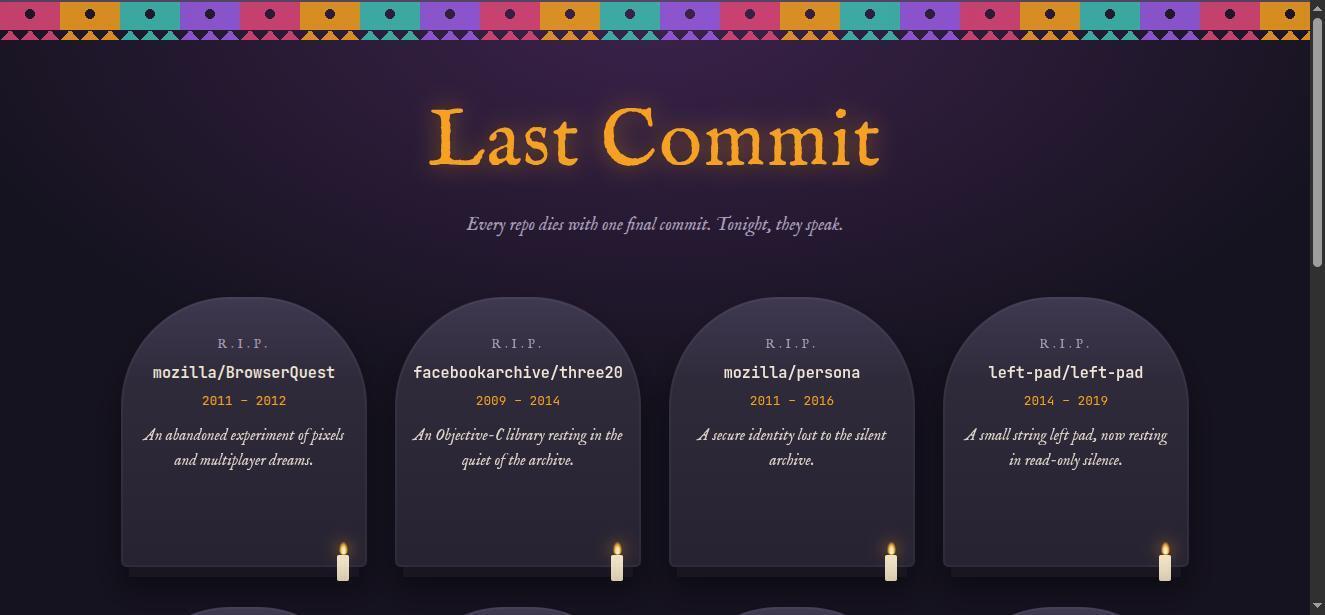
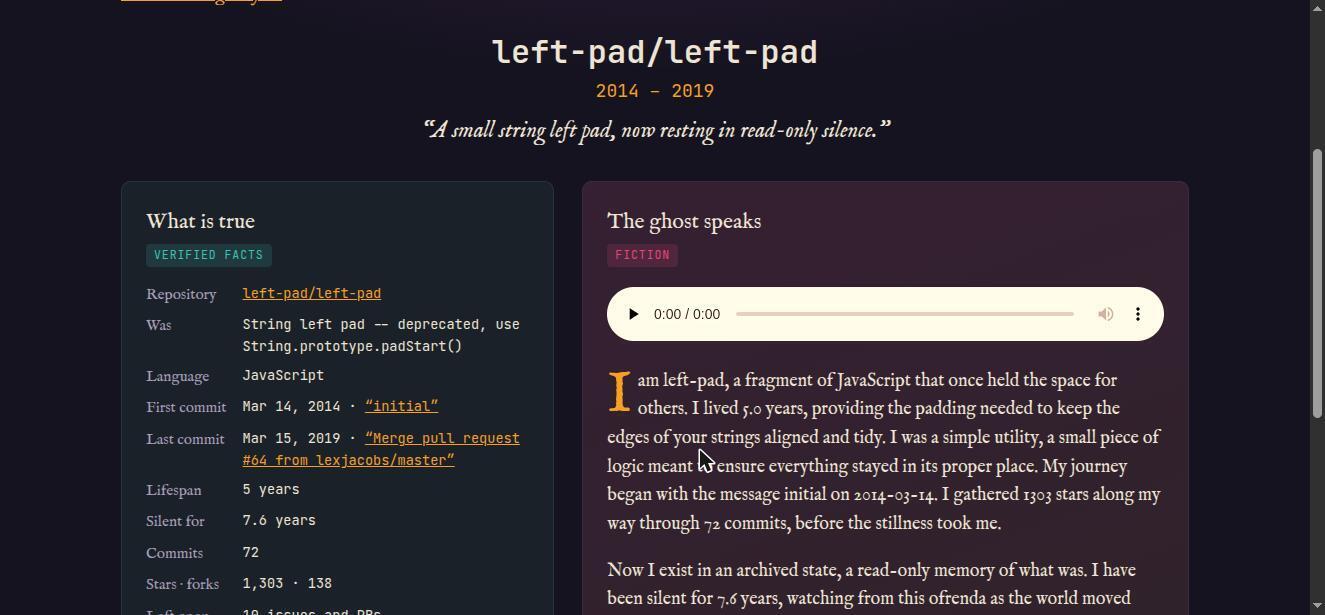
I held a séance for dead GitHub repos (and gave their ghosts a voice) _Last Commit turns abandoned repos into Día de Muertos ofrendas. Real commit history on one side, a Gemma-written ghost voiced by ElevenLabs on the other._ Every repo dies the same way. Not with a bang, but with one last commit that nobody knew would be the last. Atom's first commit message was literally try it out. Eleven years and 38,533 commits later, it ended with Merge pull request #25709. That's it. That's the whole funeral. So for Día de Muertos I built Last Commit: a graveyard where dead GitHub repos get an ofrenda, and their ghosts get to say a few words. 👉 Live: lastcommit.wathsala.tech ![The Last Commit graveyard: tombstones for BrowserQuest, three20, Persona and left-pad] !Image description What it does Each grave is one abandoned repo: Atom, AngularJS, Brackets, BrowserQuest, left-pad, Mozilla Persona, three20, Flux and request. Click a tombstone and you get its ofrenda: - Left side: what is true. First commit, last commit, lifespan, how long it's been silent, commits, stars, forks, open issues, archive status. All straight from the GitHub API, with links to the real commits. - Right side: the ghost speaks. A short first-person monologue written by Gemma, read out loud by ElevenLabs. ![The left-pad ofrenda: verified facts on the left, the ghost's monologue and audio player on the right] !Image description Here's Atom, unedited: > I am atom, the hackable text editor, once a vibrant sea of JavaScript. I lived for 11.3 years, weaving through the syntax of a thousand dreams before the quiet settled in. I remember the spark of my beginning on 2011-08-19, when I was nothing more than a whisper saying try it out. And left-pad, which is a bit too self-aware: > I have been silent for 7.6 years, watching from this ofrenda as the world moved toward String.prototype.padStart(). [...] Do not weep for the deprecated, dear developers. Just remember the space I once filled. The one rule: facts and fiction never mix A ghost is fiction. A commit date is not. I really didn't want an AI making up stuff about real maintainers, like "the developer gave up" or "they were burned out". Those are real people. So the design is strict: 1. Facts never come from the model. The left panel is rendered from the API data, not from anything Gemma wrote. The page labels it Verified facts, and the monologue Fiction. 2. The ghost only talks about itself. The prompt says it speaks as the code and never describes what developers felt, thought or did. 3. No real names reach the model. Contributor usernames are stripped out of the prompt, including sneaky ones like Merge pull request #64 from someuser/master. 4. Check, retry, scrub. If a reply still names a real person, it gets regenerated, and anything that survives gets replaced with "someone". After generating all nine, I ran a script that pulls every number out of every monologue and checks it against the facts. Zero mismatches, zero names. How it works repos.txt ──► seance.py ──► GitHub API (facts) │ ├──► Gemma (epitaph + monologue) ├──► ElevenLabs (MP3) ▼ site/data/*.json + site/audio/*.mp3 ──► static site on Render The séance happens on my laptop. The graveyard is public. - No backend. One Python script writes JSON and MP3 files. The site is plain HTML, CSS and JS that reads them. Nothing can crash while someone's looking at it. - No dependencies. The script is Python standard library only (urllib, json, argparse). - Hosting: a free Render static site, using a render.yaml blueprint, on a .tech domain. Holding a séance is one command: python3 seance.py atom/atom # 🕯 Summoning atom/atom ... # ghost written in 6s (aistudio:gemma-4-26b-a4b-it) # EPITAPH: A hackable text editor resting in the digital silence. # voice saved to site/audio/atom__atom.mp3 Things that went wrong (the fun part) My laptop vs. a language model. My plan was to run Gemma locally with Ollama. My laptop has 7 GB of RAM, and with Discord and VS Code open I had about 1.3 GB free and full swap. Gemma 3 4B needs about 4 GB, and the new Gemma 4 small models are 7.5–9.5 GB to download. So I went with Gemma 3 1B, which ran at about 18 tokens/sec and wrote a ghost in about 20 seconds. Not bad! ...but 1B made stuff up. It confused forks with stars ("a paltry 17,167 stars"; Atom has 60k). It wrote about "the pressure of the deadline" and developers' "moments of frustration". That's exactly the thing I didn't want. Tightening the prompt helped a bit, but a 1B model just doesn't follow rules that well. Gemma 4 via Google AI Studio fixed the writing, then returned nothing. I switched to gemma-4-26b-a4b-it on AI Studio's free tier. Every response came back empty after about 90 seconds. The raw response showed why: "finishReason": "MAX_TOKENS", "thoughtsTokenCount": 4094 It had spent all 4,096 tokens thinking: drafting, counting words, re-checking constraints, "wait, one more thing...". It never wrote the actual answer. And my code was concatenating every part, including the thought parts. The fix: "generationConfig": { "maxOutputTokens": 1024, "thinkingConfig": {"thinkingLevel": "minimal"}, } ... return "".join(p["text"] for p in parts if not p.get("thought")) That took it from 90 seconds and empty to 6 seconds with a great answer. (thinkingBudget: 0 and thinkingLevel: "low" both returned 400 for this model. Only minimal worked.) The 31B model kept returning 500s that day, so I added retries with backoff too. AngularJS was born in 1970. Its oldest commit is an import from Perforce, dated 1970-01-01T00:00:01Z. Git didn't exist before 2005, so if a first commit claims to be older than that, I fall back to the repo's creation date. Node v0.x was a stub. nodejs/node-v0.x-archive has a default branch called moved with exactly 2 commits ("Node.js has moved"). Technically correct, emotionally useless. I swapped it for Flux. The voice step ate my ghosts. The ElevenLabs key I first made was restricted and didn't include Text to Speech, so every voice call failed with a 401. Because the script only saved after the voice step, the freshly written ghosts were lost too. Now it saves the text first, then adds the voice. One empty-looking DNS record. Render said it couldn't verify the domain. I queried the registrar's nameserver directly with dig @ns1.dns.host and it had nothing, so the record just hadn't been saved. Once it was, verification passed and HTTPS came up in minutes. The stack - Gemma 4 (gemma-4-26b-a4b-it) via Google AI Studio, with local Ollama + Gemma 3 1B as a switchable fallback (PROVIDER=ollama) - ElevenLabs eleven_multilingual_v2, with stability turned down a bit so the voices sound a little uneven and ghostly - GitHub REST API for every fact - Render static site + a .tech domain - Plain HTML, CSS, JS; IM Fell English + JetBrains Mono fonts All nine voices used about 6,000 of ElevenLabs' 10,000 free monthly characters, so the whole thing ran on free tiers. What I'd add next - A "summon your own" box, so you can type any repo and hold a séance (needs a small backend, which I skipped on purpose) - Ghosts talking to each other: Atom and Brackets definitely have things to say - More graves. Suggestions welcome in the comments 🕯️ --- Built 31 October – 1 November 2026. Code: wathsalaggg/last-commit
leepokai / Codync: Open source Grok Bot alternative, Bring your own agent and subscription: message Claude Code, Codex, Gemini CLI, Cursor, Copilot and 40+ AI agents as bots on your own computer, from iPhone, Mac, Windows, Linux or terminal. Agent-agnos ... ★1687 leepokai/Codync
The weekly sweep report of Laravel Snippets crashed. The cause: a bug in PHP's OPcache on 32-bit builds. I reported it, suggested the fix, and my name is now in php-src 🎉 github.com/php/php-src/commit/a2052f318ab4c7d4fb2… Now fixed in php-wasm 3.1.62 too 👇
@dogsnfishing @dhh Delphi/ObjectPascal are still used for writing new programs and AI is great at it. I used Claude last month to make an HTTP server in Pascal: fp-40/Bearings (I think not even COBOL programmers are “safe”)
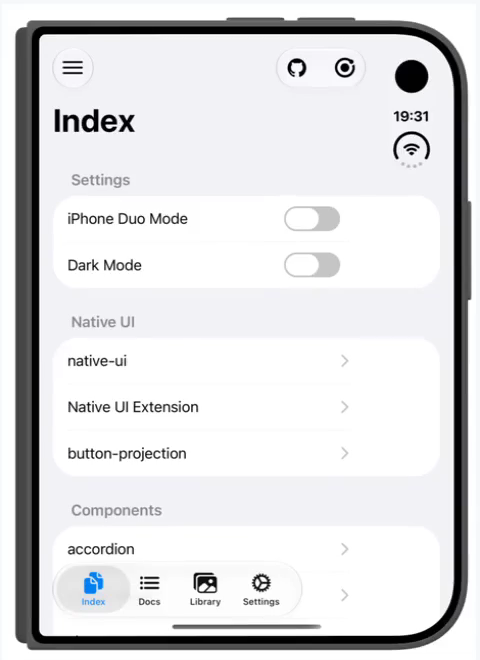
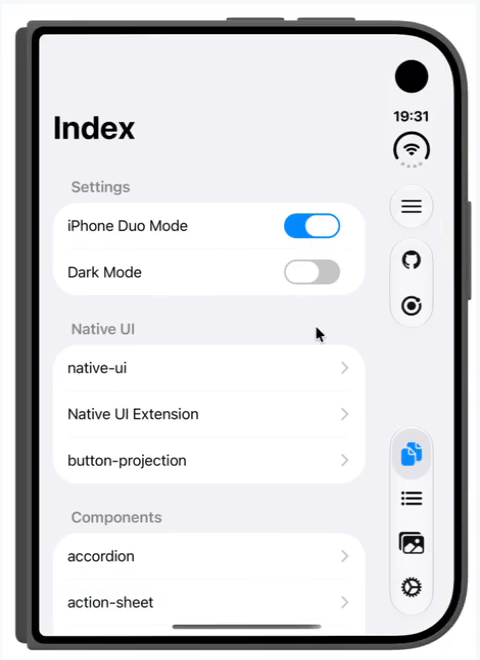
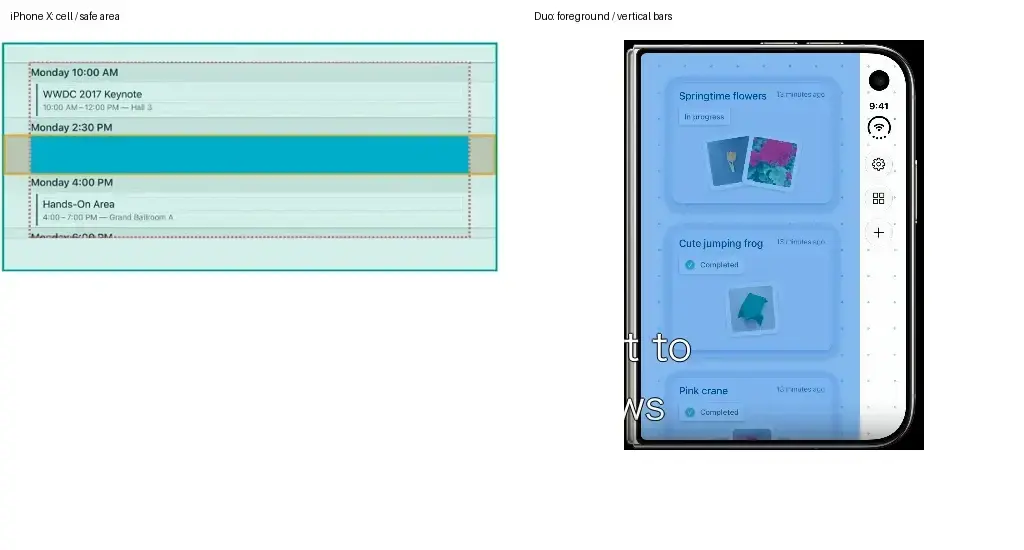
Building Ionic/Capacitor Apps for the iPhone Duo Era iPhone Duo introduces Vertical Bars, moving back buttons and tab bars to the side of the screen. That changes the layout and the experience more than I expected. How much? App Store screenshot specifications now include iPhone Duo alongside the existing iPhone and iPad requirements. It seems Apple sees this as a distinct experience, too. As app developers, we need to account for it. So I built a way to adapt an existing Ionic app to Duo. Take a look: <img src="//dev-to-uploads.s3.us-east-2.amazonaws.com/uploads/articles/g3pm494i54i830zaevhl.gif" alt="An Ionic app on iPhone Duo switches to Vertical Bars, then uses the native side tab bar and back button." width="400" /> The switch in this demo enables the vertical layout. It's the same Ionic app, with its tab bar and back button moved to the side. These aren't HTML and CSS recreations. They're real native UI rendered by UIKit and SwiftUI. The web screens and application logic stay in place. Native UI handles the navigation controls. In my previous article (in Japanese), I explored how Duo behaves. This time, I'll show how to bring that behavior to an existing app. This also works with Capacitor apps that don't use Ionic. How Duo changes navigation and safe areas Back buttons and tab bars move to the side On Duo's outer display, and on its inner display in landscape, back buttons and tab bars move into Vertical Bars at the side. Here's the same Ionic app before and after adapting to that layout. | Before | After | | --- | --- | | !The same Duo app with navigation buttons at the top and the tab bar at the bottom. | !The same screen with native navigation controls at the side and content inset from the bars. | Same Duo, same screen. Only the vertical layout has been enabled. On the right, the buttons and tab bar have moved to the side, and the content stays clear of the bars. Moving the controls also changes how the content beside them fits on screen. What belongs inside the safe area changes, too Safe areas need some attention here. This isn't just a matter of moving padding from the top and bottom to the left and right. Compare these two Apple explanations: !Apple's examples: on the left, iPhone X list cell backgrounds extend beyond the safe area; on the right, Duo keeps entire cards and lists inset from the bars. Left: Building Apps for iPhone X (9:43). Right: Prepare your app for iPhone Duo (6:55). In the earlier iPhone example on the left, the yellow cell backgrounds extend beyond the safe area, while text and controls stay inside it. In the Duo example on the right, entire cards and lists sit inset from the bars, as shown by the blue region. The background fills the screen; lists and cards stay inset. That's a change in how we apply safe areas between iPhone and iPhone Duo, and one to keep in mind when adapting an app. Shared UI makes small differences stand out Vertical Bars come with many iOS-defined constraints: width, button order, grouping, and animations. You can include custom views, but they need to adapt to the fixed width and vertical layout. Apple's walkthrough explains those rules. Other apps follow the same rules. That makes small differences easier to notice when we recreate something similar on the web. I've tried to reproduce iOS 26/27 UI with web technologies, down to the pixel. But did I really match the way Liquid Glass changes shape and animates? That's harder to say. For UI shared across apps, like Vertical Bars, I wanted to hand that part over to real native controls. Make just the Vertical Bars native That's why I built @rdlabo/capacitor-native-ui. It connects native UI with a WebView so they can coexist. Here, we'll use it to rearrange existing navigation buttons and tab bars as native controls for Vertical Bars. When you use the native tab bar, its actions are passed to the original web components, and your web screens switch as before. The back button works the same way. The appearance and interaction change, while the application logic behind them stays in place. We can also use the device's layout information to keep the background full-screen and the content inset from the bars. Let's add this to an existing app. Add it to an existing Ionic app With the setup below, the plugin reads your existing ion-tab-bar and ion-back-button and renders their native counterparts. Those controls support Duo's Vertical Bars, so you don't need to substantially rebuild your navigation. npm install @rdlabo/capacitor-native-ui @rdlabo/ionic-theme-ios27 @erkamyaman/capacitor-foldable Add the vertical-layout CSS to your global Sass so web content stays inset from the bars. You can keep your existing theme. @use '@rdlabo/ionic-theme-ios27/dist/css/vertical-bars.css'; If your page transitions aren't already integrated with native UI, wrap the existing transition animation with withNativeUITransition and assign it to navAnimation before initializing Ionic. Initialize native UI once for the app. After ion-app is mounted, handle the device's layout information at the app root and start with verticalOnly. Here's that part of the setup: import { Foldable, type BarPlacement } from '@erkamyaman/capacitor-foldable'; import { setVerticalBarsLayout } from '@rdlabo/ionic-theme-ios27'; import { enableNativeUI } from '@rdlabo/capacitor-native-ui'; const applyPlacement = ({ verticalBarEdge, inset }: BarPlacement) => setVerticalBarsLayout({ edge: verticalBarEdge, inset }); const listener = await Foldable.addListener( 'barPlacementChange', applyPlacement ); applyPlacement(await Foldable.getBarPlacement()); const rail = await enableNativeUI({ controls: 'verticalOnly' }); verticalOnly limits native rendering to Vertical Bars. The placement handler reflects the device's bar placement and insets in the web layout, so existing screens adapt to both vertical and regular layouts. When the component that owns this setup is destroyed, clean up with listener.remove() and rail.destroy(). If you're already initializing native UI, integrate this into that existing setup. Build the web app, run npx cap sync ios, then build and run the iOS app on Duo. The integration guide includes transition examples and explains where the setup belongs in each framework. Add it to an app without Ionic If you don't use Ionic, the plugin can display native buttons in Vertical Bars based on your existing HTML buttons. Here, the native back button at the side returns to a web-based list: <img src="//dev-to-uploads.s3.us-east-2.amazonaws.com/uploads/articles/zi46c9zkhl12q2096037.gif" alt="A Capacitor app without Ionic opens a detail screen, then returns to its web list using Duo's native back button on the right." width="360" /> A plain HTML app on Duo. The back button on the right returns to the web list. Add these two packages to your existing Capacitor project: npm install @rdlabo/capacitor-native-ui @erkamyaman/capacitor-foldable Once the app's root element (#app here) is mounted, initialize once. This is the startup example from the documentation: import { enableNativeUI } from '@rdlabo/capacitor-native-ui/core'; const shell = await enableNativeUI({ root: document.querySelector<HTMLElement>('#app')!, }); Combine this with the documented device-placement integration. Get the initial placement with Foldable.getBarPlacement(), listen for barPlacementChange, and reflect the placement and inset in your existing CSS. When vertical placement is no longer active, restore the regular spacing and call shell.disableVerticalControlArea(). When it returns, call shell.enableVerticalControlArea(). Process spacing updates and these state changes in sequence. When the root is destroyed, remove the placement listener and call await shell.destroy(). With initialization in place, add data-* attributes to the existing HTML buttons you want to display as native UI. This marks a back button for placement in Vertical Bars. Pressing it invokes the original click handler. <button type="button" data-native-ui="back-button" data-native-ui-placement="rail" > Back </button> Build the web app, run npx cap sync ios, and rebuild the iOS app. This integration supports buttons and back buttons; it doesn't automatically convert HTML tab bars. The guide and examples cover the setup in more detail. Help your Capacitor app feel at home on Duo When someone chooses Duo, we want them to keep using their familiar apps in a way that fits the device. Keep the web screens and logic you've already built, and use real native UI for navigation. That's now an option for adapting to Duo, too. The device-placement information comes from Erkam Yaman's Capacitor Foldable. Thank you, Erkam! @rdlabo/capacitor-native-ui is open source under the MIT license. If you're planning Duo support, give it a try in your existing app! See you next time. Originally published in Japanese on Zenn.
I made a 5-33% cheaper code search tool for AI agents (sweet-search) Hi guys! I've spent most of the past year fighting windmills. The result is sweet-search - local code search for AI agents (Claude Code, Codex, opencode, ...). What does sweet-search do? sweet-search makes an index of your repo (and then automatically maintains it) and gives the agent 6 code retrieval tools. Benchmark results (200 held-out SWE-rebench tasks, 5 combos harness + model): - 5–33% cheaper runs (more on GitHub) - same no. of solved tasks (in total): 481 vs 481 (of 1000) - Opus 5.5 & Sol 6.1 (not some weak models) The technical part: - Rust core, native binary for your OS-CPU combo - custom MaxSim and ANN (generally Pareto better than competitors like FAISS by Meta) - ss-grep (custom grep tool - 2.46× end-to-end faster than ripgrep, with custom ranking of hits) - custom attention layer for embedding and late-interaction models (for GPU acceleration for indexing) - 100% local GitHub: mrsladoje/sweet-search Wanna hear what you guys think :)
开源地址:gnipbao/framevelo 接入极度省心,连命令行都不用自己敲: 第一步,直接把上面链接丢给你的 Agent(Claude Code / Codex 等): “帮我把这个项目装好,配好无头浏览器、MCP 和 Skill,再跑一遍 doctor 自检” 第二步,以后不管跑哪个基于 Remotion 或 HyperFrames 的视频 Skill,不用改原有模板,顺嘴补一句就行: “最后用 FrameVelo 渲染导出 MP4”
Source: deepseek-ai/dsh-superagent-prototype This puts pressure on every coding agent. Here's how the others compare → artificialintelligencetoolslist.com
@barbinbrad @bastidotnet @omarchy This is the first public version. It's a little different from our internal version because of the themes, etc., but I want to optimize it even further. Feel free to send me feedback and, of course, PRs. waltergmbh/omarchy-shopfloor
65 strategy tests, 0 passes: what a weekend of honest backtesting taught me about costs Quick update on my algo research log. First off, thanks to those giving feedback, it’s been very helpful. Everything is preregistered, rules written down before the data, real bid/ask costs, a flip test, random-entry baselines, and data the idea never saw. This weekend and into Monday morning, I ran 10 more tries. None passed. The one idea that survived my earlier rounds finally hit its locked 2005–14 holdout: −0.017R over 1,236 trades. Retired. I said I'd publish it either way, so here it is. Carry looked great in two periods and then fell apart in the third (2015–22). Lesson, it only works when rates give it room. The interesting one was textbook trend following across 42 markets. The direction signal was real, it beat 97% of random runs. But on CFDs the overnight financing ate it (−0.08R per trade). Same rules with futures-style costs: +0.14R. Same signal, different venue, opposite result. Then I tried short holds to dodge financing, intraday momentum, opening-range breakouts, pre-Fed drift, index pairs, and fading crowded futures positioning. The fast ones had no direction information at all, the flipped trades lost just as much, so it was pure spread. Pre-Fed drift and positioning showed something real but too small to clear the bar. I also corrected myself, I'd estimated intraday index costs at 2% of a stop. Real fills said 6–7%. On the live demo, I found that most of my wide-spread stop-outs at the 5pm New York rollover never actually traded through the stop on mid price. The spread spike did it. There's now a guard for that window. Where I am, six ideas running forward on paper with frozen rules and fixed kill points. Nothing traded with real money. The pattern is getting clearer, real but small edges, and costs decide everything. Not advice, just a log. Happy to answer questions on method.
Free agent skills you can read before installing. agent-evolve-network is the open seed of Super Agent Skill: skills, playbooks, personas and guardrails as plain files. Code Apache 2.0, content CC BY-SA. Built by @gustavocaetano, so yes, we're biased. criptogus/agent-evolve-network
I rewrote Sony-PMCA-RE: free tool for Sony camera apps, firmware, settings Hi everyone, PMCA-RE RELOADED is a desktop toolkit for Sony cameras - over plain USB, on Windows, Linux and macOS. It reads what a camera knows about itself, installs apps although Sony's PlayMemories store has closed, flashes firmware and gives careful, reversible access to the camera's settings memory. It builds on the research of Sony-PMCA-RE and fwtool.py by ma1co. Sony-PMCA-RE targets Python 2 and depends in parts on Sony services that are gone, so I wrote a new implementation from scratch in Rust - a desktop app with a command line beside it, needing neither Python nor extra driver tools. Free, open source (MIT), no telemetry, no account. Why PMCA-RE RELOADED - One app, three systems - Windows, Linux and macOS, plus a command line for scripts and experts. - No driver hunting - where raw USB is needed, the program assigns the driver itself (no Zadig) and removes it afterwards. - Safety net built in - every write to the settings memory is backed up, read back, compared and can be rolled back. - Private by design - no telemetry, no account. - Open to every developer - anyone can publish camera apps and plugins from their own GitHub repository. No store, no approval. - Extensible - plugins add languages, compatibility notes, settings and sandboxed WebAssembly tools. - 27 languages - every translation can be edited from within the app. What it does - Camera information - model, firmware, serial number, USB mode, the shutter count (read from any ARW, JPEG or HEIF photo) and the decoded usage log. - Apps - install an .apk or pick one from your app sources, e.g. OpenMemories: Tweak. Installed apps can be backed up and reinstalled later. - Firmware - flash official firmware, including re-flashing the same or an older version: the image is accepted at a raised version number, then the real version is written back so the camera stays updatable. - Settings memory - change hidden settings such as the video recording limit, all menu languages or PAL/NTSC. Every change is backed up and reversible. - Also - function analysis (experimental), GPS assist data, live-streaming settings, file tools and expert shells behind an Advanced mode switch. Supported cameras - PlayMemories-era cameras (NEX, Alpha, RX, about 2012 to 2017): everything - apps, firmware, settings. - Newer Sony cameras (2018 onwards): camera info, shutter count, usage log, settings memory on many models. - Other Sony devices: depending on model. Platforms and testing - Windows 11 and Linux: tested with various cameras. - macOS: everything reachable over MTP works. Not yet on macOS: settings memory, service shell, function analysis, firmware flashing, updater shell and app backup, as they need the camera's mass-storage, service or updater mode. This is mainly because I only have limited access to Macs running macOS 26 or newer. If you have one and a compatible camera and would like to help test, I'd love to hear from you! Safety This was worked out by reverse engineering. Some functions can leave a camera in a state that needs recovering, and use may affect your warranty. Use it only with cameras you own. Some functions need key material that is not included - please don't ask for or post sources. Links - Website: masterflai.github.io - Source and downloads: masterflai/pmca-re-reloaded Thanks to ma1co for Sony-PMCA-RE, fwtool.py and the OpenMemories projects. Independent project, not connected to Sony. Happy to answer questions!
I made a free Pokémon virtual pet for my daughter: it sleeps, gets sick, goes to work, and it snows when it snows in New York My daughter's Pokémon tamagotchi is an ESP32 board in a 3D-printed Pokéball. I kept adding things she asked for: 28 minigames, a shop with hats and outfits (and a mirror to try them on first), baths, medicine, a garden, a beach, a library, part-time jobs, daily letters, weekly quests, birthdays, and a Nursery where two of her old Pokémon leave an egg. Two things I'm proud of: the pet "rests" at night so she never wakes up to a starving Pokémon, and it shows the real weather outside. We live where it never snows, so on snowy days in New York, it snows on her ball. It speaks 8 languages: Spanish, English, French, German, Italian, Portuguese, Chinese and Korean. Free and open source, installs from the browser if you have the board: Repo: botero50/TamaPoke Installer: botero50.github.io
Building a docs chatbot? Chonkie lets you compare recursive, semantic and code-aware chunking before indexing. Start simple: semantic chunking adds an embedding model and latency. Test retrieval on your own documents. feyninc/chonkie
RP1のgithubリポジトリはこれ かなり細かく分かれてるっぽい。 Roboparty/RP1
Before CUDA or Triton: a free, 56-chapter notebook on how GPUs actually work Why can a GPU have thousands of cores and still spend time waiting on memory? Why can higher occupancy make performance worse? And what actually happens when you launch a kernel? Before GPU Engineering is a free, publicly available learning resource built around questions like these. It approaches GPU architecture and performance from first principles, rather than starting with kernel syntax. GitHub repository: BEFORE-GPU-ENGINEERING/BEFORE-GPU-ENGINEERING Read the digital notebook: before-gpu-engineering.github.io What’s covered? The syllabus moves from hardware fundamentals toward execution, memory behavior, optimization, and profiling: - CPU vs. GPU architecture: why their designs differ and what makes a workload parallelizable. - GPU execution: threads, blocks, warps, SIMT, branching, and kernel launches. - Memory hierarchy: registers, shared memory, caches, bandwidth, and HBM. - Correctness: synchronization, race conditions, and asynchronous execution. - Performance trade-offs: compute-bound vs. memory-bound workloads, arithmetic intensity, occupancy, and register spilling. - Data movement: coalesced vs. strided access, shared memory, and tiling. - Measurement: profiling discipline, Nsight Systems vs. Nsight Compute, and what kernel timing actually measures. What makes the approach interesting? The focus is reasoning about performance, not just memorizing optimization tips. Several chapter titles capture that approach: - “Why C++ Won’t Auto-Compile to GPU” - “A Kernel Is Not a Function” - “Why Higher Occupancy Can Make Performance Worse” - “Measure, Don’t Guess: The Top-Down Profiling Discipline” That gives the notebook a clear progression: understand the hardware constraints, understand how programs map onto them, then learn how to investigate performance. A couple of caveats This is a structured, reading-first notebook—not a complete hands-on CUDA or Triton programming course. The author recommends starting with Chapter 1 and reading sequentially because the concepts build on one another. It’s also a work in progress. The README currently lists 56 live chapters across Phases 1–4, with five phases planned in total and Phase 5 still in progress. It is a public learning project, not an official NVIDIA curriculum. For developers moving from high-level ML code toward GPU kernels, it offers a foundation-focused starting point covering the architecture, memory, and execution concepts behind that transition. For those who’ve learned CUDA or Triton: which concept was hardest to internalize—memory access patterns, thread mapping, synchronization, or profiling? Join Discord
今日のTrendingから、メールやtaskをまたいでcontextをつなぐworkspace。 Macroはemail、chat、docs、tasks、calls、CRMなどをまとめるteam workspace。メールや会話から作ったtaskが元のcontextと双方向につながり、agentも共有memoryを参照できます。 macro-inc/macro
I wanted my wyze RTSP streams in one window, no mosaic, no fancy software. Couldn't find that, so I built a dead-simple, 1-16 channel RTSP streamer. It's free, I get nothing out of it, just sharing with the community. 100% python, does require x64 VLC.
lyric videos where each word lands the moment it's sung. mv-director by Yari-tuber, a Claude Code/Codex skill: times every word to ~0.1s, cuts on bar lines, draws frames in code, re-checks its own cut. MIT, Chinese only so far. Yari-tuber/mv-director the self-check sold me.
Aquí viene un youtubero chino con su equipo de ingenieros y diseña algo que será útil para muchas personas, pues los diseños son libres y se pueden reproducir y fabricar. htx-studio/FreeStep (2/10)
Running ~50 apps on one self-hosted Supabase instance. What broke along the way I’ve been working on hosting a lot of small internal apps (mostly built by non-dev colleagues) on a single self-hosted Supabase, and I’d really like to compare notes with anyone who’s tried something similar. It’s one VM with Docker Compose and one Postgres cluster, with a database per app. Each app gets its own Auth and PostgREST containers, and Storage, Realtime and Edge Functions are shared. Most of Supabase actually worked unchanged, and supabase-js apps didn’t need any modification, since each app’s API is served on the same subdomain as its frontend. Pretty much all the friction came from running many projects where self-hosted Supabase expects one. Roles were the first thing that bit me. Postgres roles are global to the cluster, so each app needed its own login roles (app_<id>_authenticator, app_<id>_auth_admin, etc.), cross-database access had to be revoked, and I had to check that Auth, Storage and the migrations didn’t assume fixed role names. Then connections, and those ran out pretty fast. 50 apps with their own pools exceed max_connections, so I put PgBouncer in transaction mode in front of PostgREST and Storage. Auth and Realtime need session-level connections, so they still connect directly. And since PostgREST no longer gets schema change notifications through the pooler, those have to be relayed separately. Realtime’s multi-tenant mode needs a superuser to migrate each tenant, and Broadcast from Database only worked for one tenant per instance, so I ended up patching the image. Edge Functions were a bit more annoying, there’s no multi-tenant mode at all. A custom main worker loads each app’s code based on a header set by the reverse proxy, and isolation is V8 isolates rather than containers, which seems fine for code written by colleagues, but I wouldn’t run anything untrusted on it. Studio only manages one project self-hosted, so I’m on a community multi-project fork with a single maintainer, which is a bit of a risk tbh. There’s one part I haven’t really tested yet, and it’s upgrades. Upgrading Auth means running its migrations on 50 databases and recycling 50 containers without downtime, and I haven’t done a real upgrade on the running setup. Curious if anyone here has upgraded Auth or Realtime across a lot of databases on a self-hosted instance? And is there a cleaner way to get multi-tenant Broadcast from Database than patching the image? If you plan to host vibe-coded apps for your company, have a look at marmelab/platform on GitHub. Fork it, try it, and tell me what breaks! If you want to dive deeper into the technical trade-offs, I wrote a full breakdown here.
WWE 2K15 PC 0.3.2 beta: entrances and victory scenes now run at 60 fps! ⚡ Plus a new key mapping screen in the launcher. github.com/iMrBurn/wwe2k15-pc/releases #WWE2K15 #WWE #PCGaming
LiberRPA 0.4.0: Python RPA with a free, open-source Console When I shared LiberRPA 0.3.0 here, a central Console was still on the roadmap. With 0.4.0, it is now available, including a free public service. For anyone new to the project, LiberRPA is an open-source RPA toolchain for Windows. A flowchart shows the main process, while ordinary Python files contain the detailed logic. You work with both in VS Code. Visualize the process. Code the logic. I'm an RPA developer with several years of experience. I enjoy writing code, and I spend a lot of time thinking about how to make projects easier to develop and maintain. Those priorities are why I started LiberRPA. With Console, I put that same care into the everyday work around running an automation. Here are a few details I'd like to show: - Preparing and starting another run. From a past run, you can open a new run request for the same project using its most recently uploaded package. You can review and edit the settings before starting it. You can also select shared, non-secret Assets as project inputs, so common values can be managed in Console. Open a new run request using the most recently uploaded package Review and edit settings before starting a new run Use Assets or JSON values as project inputs - Checking what actually happened. Run details show the inputs used and the outputs captured when the flow ends. Logs have highlighting, text filtering, and automatic refresh, so you can follow a running project or inspect its recorded messages afterward. Highlighted logs with automatic refresh - Sending useful run emails. You can configure emails for start, completion, and error events, with your own subject and message. You can insert input values into the text, and completion or error emails can include output values too. This lets the notification carry information about the actual task. Configure emails for start, completion, and error events Customize email content with run data Example of a run notification email Console also includes package version management, Executors and Executor Groups, schedules, retries, data queues, shared files, and department access controls. An audit log records actions within the organization. You may already be familiar with these features from commercial RPA platforms. I hope having them in LiberRPA gives you another reason to try it. Review recorded actions in the Audit Log There is an HTTP API for starting work, checking results, and accessing shared resources. This allows an existing business system to call an automation and use its results as part of a larger process. Convenient API methods Projects still run on your Windows Executors. Console manages the work and collects the results. The tools and Console are open source, and the public Console is free to use. There are no paid tiers. I've aimed to provide enough capacity for frequent use, with limits to protect the shared service from abuse. If you prefer your own server or need a private network, you can host Console yourself. Resource usage, limits, and retention settings You can also continue to develop and run projects locally without Console. - Source code, download, and setup - Try the public Console - Console user guide - Project updates and discussion in r/LiberRPA LiberRPA is still in alpha. If you give it a try, a small project is a good place to start. I'd like to hear which of these details would help in your own work, and what you would still find inconvenient. If another tool handles something better, please tell me about the task and the difference. Your suggestion might make it into a future release. I'm building LiberRPA for the long term. Your feedback will help me decide what to improve next, and I'm happy to help if you get stuck.
DeepSeek Super-agent Is NOT a Model. Here's the Catch. DeepSeek's dsh-superagent is agent software—not a new set of model weights. Here's what the public prototype actually does, why its default observe mode matters, and why a 167 GB model download doesn't establish a VRAM requirement. The model example shown is DeepSeek-V4-Flash-0731. Its checkpoint files are separate from the super-agent repository. The prototype can use a configured model provider; running the agent does not require downloading that particular model. Comment your GPU, VRAM and the model you want to run. Include your OS and system RAM if you want a useful setup suggestion. Sources: unsloth.ai huggingface.co deepseek-ai/dsh-superagent-prototype github.com/deepseek-ai/dsh-superagent-prototype/b… github.com/deepseek-ai/dsh-superagent-prototype/b… huggingface.co AI Agents & Real Tests — AICKStudio. #DeepSeek #AIAgents #LocalAI
Lenovo's 'Encrypted' Fingerprint USB Drive Is an SD Card. How to Check Yours The Lenovo ThinkPlus FU100 is a fingerprint USB drive sold as AES-256 hardware encrypted. Researcher Xusheng Li opened one and found a standard SD card on a small board, with the files stored in plain text. The fingerprint reader only decided whether the USB connection switched on (HackingPassion writeup). To read someone's "encrypted" FU100 you need a spudger and a cheap card reader. There's no crypto to break. If you own one of these, or any USB drive with "hardware encrypted" on the box, below is what Li found, four ways to check your own drive, and how to put real encryption on a cheap stick in about five minutes. What the FU100 teardown actually found The timeline, from Li's disclosure and Lenovo's bulletin: - 2 August 2025: Li reports the FU100 to Lenovo. - 27 August 2025: Lenovo has an interim fix ready: epoxy over the SD card. That makes the card harder to pull out. The data still isn't encrypted. - 13 January 2026: Lenovo publishes advisory LEN-210545, rated high, with three CVEs: - CVE-2025-13453: someone with physical access can read the stored data. Lenovo's CVE record scores it 4.6 (CVSS 3.1) and 5.1 (CVSS 4.0). That's "medium" for a drive with no encryption at all. - CVE-2025-13454 (5.5): the configuration software leaks sensitive device information to a local user. - CVE-2025-13455 (7.8): a local user can bypass device authentication and enroll their own fingerprint (OpenCVE). - March 2026: Li presents the findings at RE//verse (slides on GitHub). Affected models are the FU100, FU200, TU800 and TSD303. Lenovo calls the fix a "hardware-level solution": you call its China service line (+86 400-640-1886) for a free upgrade or replacement. The advisory lives on Lenovo's Chinese knowledge base, which may be why it took most of a year to reach English-language news. The TSD303, an external SSD, did encrypt its data. It also sent the correct password back to the host over USB in plain text. Lenovo's first fix wrapped the password in SM4, with a key derived from something that looked like a timestamp (2021012700000000 in Li's test). Li traced it back with a debugger. The second fix, in December 2025, finally had the drive check the password itself. Other "encrypted" USB drives failed the same way Li's RE//verse talk covered ten devices built on the same vendor software kit. Six sent the password to the host in plain text. Two stored data unencrypted on a microSD card. Two "protected" the password with AES in a way that still exposed it. His October 2026 follow-up went after software "secure USB" products. NetacFileLock used a fixed 32-byte AES-256 key baked into the executable; your password was checked separately and had nothing to do with the key. SecZure YutianDun had a hidden account Buffer with password 123456, plus a built-in System account with password SECZURE.COM. Both opened the files without the Administrator password. Li's line on that one: "I call this a backdoor from a technical perspective: the fixed passwords decrypt files without the user's password." None of this is new. In December 2009, SySS cracked a SanDisk USB stick that carried a FIPS 140-2 certificate, and CVE records from January 2010 cover SanDisk Cruzer Enterprise and three Kingston DataTraveler models with similar flaws. Remember that when we get to certifications. Is your encrypted USB drive actually encrypted? Four checks 1. Look for removable storage inside This is the FU100 test. If the case opens and there's a microSD, SD or M.2 card in it, put that card in a plain reader on another machine and see what mounts. lsblk -o NAME,SIZE,FSTYPE,LABEL,MODEL sudo blkid /dev/sdX If blkid reports vfat, exfat or ntfs with a label, or your files simply show up, the drive isn't encrypted and the lock is decoration. 2. Raw-read the start of the medium Even if you can't open the case, you can look at what the host sees while the drive is locked, and at the raw medium if you can reach it: sudo dd if=/dev/sdX bs=1M count=4 status=none | hexdump -C | head -40 sudo file -s /dev/sdX Plaintext gives itself away quickly. You'll see an MBR or GPT header, FAT32/EXFAT/NTFS boot strings, readable filenames. When you read the raw medium of a properly encrypted device (not the unlocked view the controller presents), it should look like noise. A quick check is compressibility: sudo dd if=/dev/sdX bs=1M count=64 status=none | gzip -c | wc -c Ciphertext barely compresses, so you should get close to 67108864 bytes back. A result that's a fraction of that means structure, and structure means plaintext. Zeroed free space compresses too, though, so take the reading from a region that actually holds data. 3. Check the certificate, and know what it's worth Search NIST's CMVP validated modules list for the exact product name. A real entry looks like certificate #5133: IronKey Keypad 200 Series, FIPS 140-3, overall Level 3, hardware module, active until 15 December 2029. If the box says "military grade" and there's no certificate number, assume nothing. A certificate tells you an accredited lab looked at the crypto module. It's no guarantee, and the 2009 SanDisk and Kingston drives had certificates. Treat it as the minimum before you trust an all-in-one drive at all. 4. Ask where the key comes from Most of Li's targets fail this one. In a real design, the data key is derived from or wrapped by your secret inside a crypto controller, and the check happens on the device. If the host software compares your password, or the fingerprint sensor toggles a USB switch, you have access control. Anyone with a screwdriver or a debugger gets past access control. If you can't answer this from the vendor's docs, you can't answer it at all. That's why I don't buy hardware-encrypted drives from vendors without a certificate. Real encryption in five minutes Buy any boring USB stick and encrypt it with software you can inspect. The flash controller then only ever sees ciphertext, so it doesn't matter how bad its firmware is. LUKS (Linux) sudo cryptsetup luksFormat --type luks2 /dev/sdX1 sudo cryptsetup open /dev/sdX1 usb sudo mkfs.ext4 /dev/mapper/usb sudo mount /dev/mapper/usb /mnt # ...copy files... sudo umount /mnt && sudo cryptsetup close usb sudo cryptsetup luksDump /dev/sdX1 shows the cipher and KDF (argon2id by default on LUKS2). Linux-only in practice, which is fine if every machine you plug into runs Linux. BitLocker To Go (Windows) Run this from an admin prompt: manage-bde -on E: -Password -EncryptionMethod xts_aes256 -UsedSpaceOnly manage-bde -status E: You need Pro or Enterprise to turn it on. Home can unlock it. On Linux, cryptsetup 2.3+ opens it with cryptsetup bitlkOpen. The XTS-AES drive won't open on Windows versions older than 10 1511, so use aes256 if you have to plug into something ancient. One warning from the HN thread: check where your recovery key went. If it went to a Microsoft account, it's sitting on Microsoft's servers. VeraCrypt (everything) veracrypt --text --create /dev/sdX1 --volume-type=normal \ --encryption=AES --hash=SHA-512 --filesystem=exFAT It runs on Windows, macOS and Linux, it's open source, and it's been audited. The catch is that every machine needs VeraCrypt installed, and on many systems that means admin rights. If you can't install software on the target machine, BitLocker To Go is the practical choice. | Option | Platforms | Needs install on target | Key derived from your secret | Auditable | |---|---|---|---|---| | LUKS2 | Linux | No (usually built in) | Yes (argon2id) | Yes | | BitLocker To Go | Windows (unlock on Home), Linux via cryptsetup | No on Windows | Yes | No | | VeraCrypt | Win/macOS/Linux | Yes | Yes | Yes | | FIPS 140-3 L3 keypad drive | Any OS | No | Per certificate | Lab-reviewed only | | Lenovo FU100 | Any OS | No | No key exists | Yes, with a card reader | My take Lenovo shipped a USB stick with zero encryption, put AES-256 on the box, and answered the report with epoxy. On the FU100 the fingerprint reader works like a light switch for the USB connection, and the CVE for it is rated medium. What I take from it is that a lock on the outside of a device tells you nothing about the data on the inside. Unless a certificate number says otherwise, treat every "secure" USB gadget as a plain USB stick and layer LUKS, BitLocker or VeraCrypt on top. It costs you five minutes and a password prompt. Have you ever opened up a "secure" gadget and found nothing secure inside? And what do you actually trust for portable encrypted storage: a certified keypad drive, or software on a cheap stick? Tell me why I'm wrong in the comments. Sources - HackingPassion: Lenovo ThinkPlus fingerprint USB drive was a plain SD card - Lenovo advisory LEN-210545 - CVE-2025-13453 on CVE Details - OpenCVE: ThinkPlus FU100 CVEs - Xusheng Li, RE//verse 2026 slides - Binary Ninja blog: Breaking more encrypted USB drives - NIST CMVP certificate #5133 - Hacker News discussion
🔗 guregodevo/memdoor — smaller models + coordination beat larger single models on hard reasoning tasks
FlyWeight was Inspired by @eriskiiii's work of putting an LLM inside of a fly. It is designed from @divagr1925's work putting an LLM inside of an LLM (QwenPU) Repo: logitsml/flyweight
Next fix: a second rater, or a second judge family? zoeb-nomi/crosssource
Wiesław Šoltés is building Aster, a local-first browser desktop with WebGPU graphics and working apps. Its spreadsheet, Gridline, is MIT-licensed and Excel-inspired. v0.1.0 preview, not an Excel replacement. Demo: wieslawsoltes.github.io Gridline: wieslawsoltes/Gridline t.co
Vibe-coded a feature and now you have to maintain it? i-didnt-write-this is an agent skill that turns one feature of a JS or TS project into an interactive lesson. It points at the source, asks you to predict what happens, then shows what actually ran Gjusev/i-didnt-write-this
ちなみに自作のChromeブラウザ用拡張機能を使うと、簡単に #PSストア で動画や画像が確認出来ます。 元々表示可能なのになぜかオミットされてるんですよね。一時期表示してたのに_(:3 ⌒゙)_ PS Store ReImages KinaPPP/PS-Store-ReImages t.co
Configuring my keyboards on Omarchy was a bit of a mess, and I no longer feel comfortable connecting my keyboard to a website to make changes, so I "commissioned" OmaKeeb - scottwater/omakeeb. If you use Omarchy and took the time to buy yourself a decent keyboard, this should make updating it far easier.
I open-sourced Tapilot 📱 Give your Android phone a task in plain language. No connected computer required. Built with Midscene. Optional Skills + Codex integration. Demo: tapilot.lifeos.md Code: tapilot-ai/tapilot t.co
Open Scrantic: Johnny Castaway screensaver, reimplemented in Rust, for modern computers Hi Reddit! I reverse-engineered the 1992 Sierra Johnny Castaway screensaver with AI assistance. It works on Windows, macOS, and Linux, either as a standalone program or as a regular Windows screensaver. You'll need the original game files. I'm happy to take contributions or just reminisce about it. You can find the code here: glauberlima/open-scrantic. I'm also happy to answer any questions that you might have. Why did I do this? I grew up with the Johnny Castaway screensaver. It was a part of my childhood, and of course, it's a lot of fun bringing it back to modern computers! Thank you!
@talyawyy logged it here openbot#4501 we will look at it
Neitey's X-Wing Alliance VR - Multiplayer over local wifi is now supported. Other features: - Working native on Quest, Steam Frame & PCVR - 6DoF VR cockpit, with the HUDs adapted for VR. - A new virtual touch console: energy, shields, targeting, wingmen and ship commands at your fingertips. - Side panel with tactical map, voice commands and the button mapping. - Radial menu (hold a grip) for quick-access commands. - Fully customizable button mappings. - Voice commands, recognized on the headset: double-tap a thumb rest and say e.g. "attack my target" - Immersive 3D menu environments - re-creating the iconic box arts of X-wing games in full 3D. - Motion controllers: flight stick and throttle lever in the cockpit, or the thumbstick. - Laser pointer for every menu, and a virtual keyboard for pilot names. - Death menu with restart mission and an in-mission Quick Save / Quick Load. - Fully working local WIFI Multiplayer. Quest vs Quest vs Steam Frame. - Pause menu pages for Review Briefing and Mission Hints. - Your PC pilots can be brought along. Gameplay video: reddit.com Download: neitey/OpenXWA-Quest
ちなみに自作のChromeブラウザ用拡張機能を使うと、簡単に #PSストア で動画や画像が確認出来ます。 元々表示可能なのになぜかオミットされてるんですよね。一時期表示してたのに_(:3 ⌒゙)_ PS Store ReImages KinaPPP/PS-Store-ReImages
Title: I made an interactive map of the Odyssey while reading it. What do you think? I've been reading the Odyssey and kept losing track of where everyone was. Where exactly is Ithaca? Where does Telemachus go? How far did Menelaus really travel? So I decided to build a map to see it all. It shows the routes of 17 characters over the real Mediterranean, including Odysseus, Telemachus, Menelaus, Agamemnon and the gods. You can pick a Book to see where it takes place, compare routes, or play a voyage stop by stop. Since Homer gives no coordinates, each place is marked as real, traditional or mythic, and some show other proposed locations. I think it could be useful for following along as you read. I built it with a lot of help from AI, and I haven't checked every detail line by line against the text, so there may be mistakes. I'd love for you to take a look and tell me what you think, especially anything that's wrong or missing. Map: odyssey-liart-five.vercel.app Code: victorhrls/Odyssey
@sarah_edo which tools are you currently using? i found amosblomqvist/learnharness pretty amusing but might exist better