Mentions
Conversations linking to GitHub, newest first. Times are UTC.
Mentions by source
X
Bluesky
Hacker News
V2EX
Qiita
DEV
Mastodon
Latest posts
🔗 GitHub: CodingFeng101/CanvasAnvil --- ✉️ If you’re into AI, ML, agents, and building real systems, join my newsletter (it’s free): dankornas.substack.com
Screenshots pile up in long Computer Use sessions. I built ICM: skills + local tools for Claude Code / Codex to crop, compress, save findings and recall originals. Experimental, open source: messsiii/image-context-manager
これに関連してた根深いバグ🤔 Closedになったね😊 世界規模の超有名なオープンソースのwasm-packに、修正コードで貢献できたね🥰 npm run start throws: Error: invalid type: sequence, expected a string at line 5 column 11 #1420 wasm-pack#1420 t.co
The companion Frames CLI also got a big update with: - All latest devices - Much better video framing for screen recordings - Better proportional scaling when merging images Also free and open source: viticci/frames-cli
qs splits big files for you. It finds every oversized file, splits it into one function per file, and warns you if any code goes missing. Code: towelWet/qs Skill: towelWet/qs-skill
@AgiWhen Output is only part of it: each turn of the Haiku subagent resends its whole context, and if it is general-purpose or a custom agent file, that context opens with your CLAUDE.md files. My measure_subagents.py prints the starting context per agent type: mdalexandre/claude-code-lean-agents
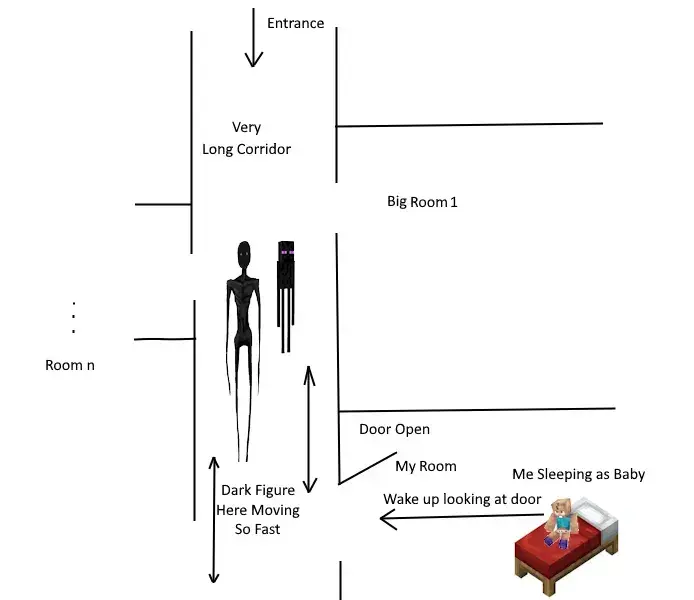
When I Was a Child, Mysterious Entities Used to Visit Me! Hey everyone 👋, This post is a little different from everything else I have written on this blog. All my other posts have been about technology, about language models, about the broken job market, about God, about aliens, about intelligence and what it actually means. This one is not about any of those things at the surface level, though I promise by the end you will see how everything connects, because everything I write always ends up connecting. This post is a documentary. It is a personal record of things that happened to me during my childhood that I still do not have clear answers to, events that I have carried in the back of my mind for decades without being able to fully explain them, and that I am finally putting down in writing partly because this blog has become the space where I am honest about things I would not say anywhere else, and partly because I genuinely want to know if anyone else has experienced what I experienced. I am not writing this to claim something dramatic or to construct a mythology around my own history. I am writing it because the experiences were real, they were documented in my memory with unusual clarity, and they have never fully let go of me. I wrote in my first post about my childhood in a small village, about the poverty, the isolation, the absence of internet and all the technology that most people assume shaped their worldview from birth. I had none of that. And yet I saw things. I experienced things. And for the first time, I want to talk about them in full. I also want to be clear about something from the start, because I know how this kind of post reads if you are coming to it with a skeptical mind, and I respect that skepticism because I share it. I am not a gullible person. I have spent post after post on this blog demanding evidence, rejecting comfortable myths, and following arguments wherever the logic leads even when the destination is uncomfortable. I wrote in Be Aware of the Current UFOs Pandemic that I do not believe in alien visitation, that I think the alien narrative is a combination of classified government programs, psychological phenomena, and the deeply human need to not feel alone. I stand by everything in that post. But the events I am about to describe happened before I had any exposure to alien mythology, to shadow people legends, to internet rabbit holes, or to any of the cultural machinery that might have planted those images in my head from the outside. I was a child in a poor village with no technology. Whatever I saw came from somewhere that I still can not fully account for, and that is exactly why it has stayed with me. The House, the Corridor, and the Complete Absence of Explanations Let me set the scene as precisely as I can, because I have learned from years of trying to explain this to people that the details matter more than the summary. I grew up, as I described in my first post, in a small village in northern Lebanon called Sfireh in the Danniyeh region. I shared a house with my parents and five brothers, and through a combination of circumstances I ended up with my own room, which was unusual for a family at that economic level and which I realize now was both a privilege and the source of a particular kind of nocturnal isolation that shaped some of the strangest years of my early life. My room was at the end of a long corridor, which is the most important physical detail in this entire story, and I need you to hold onto that image as you read the rest of this section. The corridor ran from the main entrance of the house to the far wing where my room was located. It was the kind of corridor that a child walking through late at night notices more than an adult ever would, because children are closer to the ground, closer to the shadows, and much more attuned to the peripheral vision experience of something moving at the edge of sight. The image below is a diagram I put together to give you a spatial sense of what I am describing, because words alone do not fully capture the geometry of the experience: !wat dat dawg doin What I saw, on more than one occasion and over a period of several years starting from when I was roughly five or six years old and continuing through early childhood, was a dark figure moving at extremely high speed through that corridor. Not walking. Not running in any way that a human body moves. Moving in a way that is hard to describe without sounding like I am dramatizing, which I am actively trying not to do. The figure was dark, distinctly darker than the surrounding space, with a shape that was humanoid but not quite right in proportions I noticed even as a small child without being able to articulate what specifically was wrong about them. It passed near the door of my room when I was lying in bed, moving from one end of the corridor toward the other, and it happened fast enough that each individual sighting lasted only a second or two. But in those one or two seconds, the impression left on my nervous system was so strong that I would lie awake afterward for a long time, perfectly still, waiting to see if it would come back. I want to be extremely careful about the framing here because I spent years second-guessing these memories. I know what childhood imagination is. I know what surreal hallucinations are, those vivid perceptual experiences that happen at the boundary between waking and sleep when the brain starts generating imagery before the body fully loses consciousness. I have read the sleep science on this, and I understand the mechanism well enough to know it is a serious candidate explanation for some of what I experienced. But there are details that do not fit cleanly into the hallucination explanation. The sightings did not happen at the boundary of sleep. They happened when I was awake and alert, sometimes when I had been awake for a while and was simply lying in the dark the way children do when they cannot sleep. I was not in a sleepy state. I was watching the door of my room because I was already alert, already paying attention, and the figure moved across my field of vision while my eyes were open and my mind was fully engaged. That combination of full wakefulness and clear perceptual experience is what has made these memories impossible to fully dismiss, even decades later. I also want to note something that is easy to overlook: I never told anyone about these experiences at the time. Not my parents, not my brothers, not anyone. This was not because I was afraid of being disbelieved, though I probably would have been. It was because something about the experience felt private in a way that I did not have language to explain when I was 5 or 6 years old. Children often sense, without being able to articulate why, that certain experiences are not meant to be shared through normal channels. I kept these sightings entirely to myself for years, which means there was no feedback loop, no external shaping, no one telling me what I had seen or what it meant. The memory developed in isolation, uncontaminated by other people's interpretations, which is one of the reasons I trust it more than I might otherwise. Shadow People: When the Internet Confirmed Something I Already Knew In recent years, when I finally had internet access and started exploring the world of information that had been closed to me during my childhood, I discovered that there is an entire documented phenomenon called shadow people, or the shadow person. I want to be precise about the timeline here because it matters for the integrity of what I am saying. I did not start with the internet, discover shadow people, and then construct a memory that fit the mythology. The experience came first, followed by years of carrying it alone, followed by the discovery that other people across different cultures and different countries had described something strikingly similar. I am not claiming that the similarity is proof of anything supernatural. What I am saying is that the convergence is significant enough to be worth taking seriously rather than dismissing out of hand. The Wikipedia entry on shadow people defines the phenomenon as the perception of a patch of shadow as a living, humanoid figure, and it has been documented across cultures in remarkably consistent terms: dark, often featureless, distinctly human in shape but wrong in some detail of proportion or movement, typically observed flickering at the periphery of vision, through doorways and corridors, and disappearing when looked at directly [(1)](#ref-1). The folklore database at Villains Wiki catalogues the cross-cultural history of shadow figure encounters in detail that is striking precisely because many of these accounts predate the internet, predate mass media, and predate the possibility of global cross-contamination of stories [(2)](#ref-2). People in medieval Europe, people in pre-colonial indigenous cultures, people in isolated rural communities across Asia and the Middle East, have described experiences that map almost precisely onto what I experienced in that corridor. This is either a remarkable coincidence of collective imagination, or it is pointing at something real that current scientific frameworks have not adequately addressed. I want to engage with the scientific literature here because I said at the start that I am not going to wave away empiricism, and I mean that. The most robust scientific explanation for shadow person experiences is a combination of hypnagogic and hypnopompic hallucinations, sleep paralysis phenomena, and a perceptual process called face and figure pareidolia, in which the human visual system, primed by evolution to detect humanoid shapes for survival reasons, generates false positives in ambiguous low-light conditions. These are all real mechanisms with good experimental support, and I am not dismissing them. Research published in the journal Nature has documented that focal electrical stimulation of the left temporoparietal junction, the region responsible for integrating the brain's multisensory signals into a coherent sense of bodily self, can generate a vivid, repeatable perceptual experience of a humanoid presence standing close behind the subject, with no external physical stimulus present whatsoever [(3)](#ref-3). The question is whether these mechanisms fully account for all reported experiences, including mine, and I am genuinely uncertain about that. What I am certain about is that I was not asleep, I was not in a state of altered consciousness, and the experience was clear and repeatable over a period of years, all of which makes the simple sleep-phenomenon explanation feel like it is carrying more weight than the evidence strictly supports. There is also a compelling thread in the parapsychology and consciousness research literature, which I approach with significant skepticism but do not ignore entirely, suggesting that certain persistent visual phenomena might be connected to infrasound, to electromagnetic field anomalies, or to other physical variables that affect the visual and auditory cortex in ways that produce consistent perceptual experiences across different individuals. Vic Tandy's research into infrasound at around 18.98 Hz and its documented ability to produce feelings of dread, cold sweats, and peripheral visual disturbances through mechanical resonance of the human eyeball is one of the more interesting data points here, though it has not been replicated widely enough to be treated as established science [(4)](#ref-4). I mention it not to claim that infrasound explains what I saw but because it illustrates that the space between "I saw it, therefore it is real and supernatural" and "you imagined it, therefore it is nothing" is larger and more scientifically interesting than either of those poles acknowledges. What makes my case genuinely unique, and I am careful with the word unique because I know how it sounds coming from anyone describing their own childhood experiences, is the specific context of no external influence. I grew up without television, without internet, without books that contained any shadow person mythology, and without a cultural environment in which these entities were discussed. My village was religious and conservative, and supernatural conversation in that context was about djinn, about evil eye, about angels and demons in the specifically Islamic framework I described in my first post. Shadow figures moving at high speed through corridors were not part of that vocabulary. So wherever the experience came from, it did not come from cultural contamination. It came from somewhere else, and that somewhere else remains the open question at the center of this post. Dreaming of Rockets, Space, Wars, and Things Far Too Large for a Child !humble bumble dababy The corridor figures were not the only thing from my childhood that I have never fully resolved. From roughly the same period, I had dreams, and I use that word carefully because some of them had a quality that is hard to distinguish from ordinary dreaming. I described the most significant of these in my first post: the recurring dream of a great battle between God and the Devil, a cosmic war that I was somehow a participant in rather than an observer. I was a soldier in that dream, standing at the front lines of something vast, and I would wake up crying with an emotional weight that felt completely disproportionate to anything that a five or six year old child should be experiencing. I want to expand on that here because I said more than I intended to in the first post and less than I needed to, which is a paradox I seem to encounter often when writing about things that matter. These were not ordinary nightmares. Nightmares in the clinical sense are fear-arousal experiences tied to the amygdala's threat-processing during REM sleep, and they are common in children, well-documented, and generally connected to daytime stressors or fears that the child's brain has not fully processed. But these experiences did not have the texture of fear. They had the texture of grief and exhaustion, which is a completely different emotional register and one that is not typically associated with childhood dream content. I was not afraid in these dreams. I was tired. I was sad. I was fighting something enormous for a cause that I understood to be important but could not have named or explained in language available to a child that age. And when I woke up from them, the exhaustion did not fade quickly the way nightmare fear fades. It lingered for hours, which is unusual enough that I still remember it distinctly even after all these years. Alongside these cosmic battle dreams, I had an equally strong and equally persistent dream about space. About rockets. About leaving the Earth and going somewhere vast and cold and beautiful and silent. I wrote in my first post that the adults around me used to say I would one day work for NASA and change the world, which as I noted there is an ironic thing to say about a child in a poor village in northern Lebanon with no access to technology. But the dream preceded the adults' commentary. Before anyone told me that NASA existed, before I had any coherent understanding of what space was in scientific terms, I was dreaming of it. The dreams were detailed in a way that I find difficult to explain: not just dark sky with stars the way a child who had seen a picture book might render space, but actual experience of weightlessness, of looking back at something very small and very bright in the distance, of the specific quality of silence that is not quiet but is the absence of the medium through which sound travels. I do not know how a child in Sfireh in the nineteen-nineties accessed that phenomenology. I genuinely do not. Part of what makes the space dreams remarkable in retrospect is that they connected so directly to something I later discovered was a real intellectual passion, as I described in my posts about mathematics and physics and the structure of reality. In Mathematical Equations are Multimodal by Default, I wrote about the moment in electrical engineering college when I realized that equations are not just symbols on a page but descriptions of how reality actually works, and how that moment felt like recognition rather than discovery. That feeling of recognition is relevant here, because the space dreams had the same quality. Not that I was learning something new, but that I was remembering something I already knew and had temporarily forgotten. I am not making a mystical claim about past lives or soul memory or anything that requires extraordinary evidence. I am describing a phenomenological quality of the experience that was distinct and that I have never found an adequate naturalistic explanation for, and the honest response to that is to report it as accurately as I can rather than to paper over it with an explanation that does not actually fit. The rockets I dreamed of were not the toy-rockets of a child's imagination. They were large, technical, complex structures. I had never seen a real rocket. I had no access to anything that would have provided that level of detail. And yet in the dreams, they were specific enough that when I eventually, years later, looked at images of actual launch vehicles, the visual match was close enough to produce the same quality of recognition that the equations produced in college. Something in me already knew what it was looking at. I still do not fully understand what that means. But I think it means something, and I think refusing to look at it carefully because it makes the naturalist framework slightly uncomfortable is exactly the kind of intellectual timidity I have been arguing against in every post I have published on this blog. The Brain-Cloning Theory and Other Things I Believe Might Be True This section is the most speculative in the post, and I want to flag that clearly before I say anything in it, because speculative and wrong are different things and I do not want to conflate them. What follows is my honest attempt to integrate a set of experiences that I cannot fully explain using only the frameworks that science currently offers, and I am aware that this puts me in uncomfortable territory. I am going to say it anyway because intellectual honesty is the only value I have consistently held throughout these years, and I am not going to abandon it now when the subject matter is personally sensitive. I believe that something during my childhood was paying attention to me in a way that went beyond ordinary coincidence. I know how that sounds. I know how it reads on a page in a context where I have spent several posts arguing for empiricism, for evidence, for the rejection of comfortable myths. But the accumulation of experiences, the corridor figures over multiple years, the vivid dreams with qualities that my current knowledge of neuroscience does not fully account for, the early intellectual development that multiple adults found unusual, the IQ of 142 that I mentioned in my first post and that was itself a surprising data point to everyone who administered the test, all of these together have pushed me toward a hypothesis that I cannot prove but cannot dismiss. The hypothesis is this: I think that something or someone, in a framework I do not currently have language adequate to describe, was interacting with my cognitive development during childhood in ways that were not random and were not benign in the simple sense of being purely pleasant. The figure in the corridor, whatever it was, appeared over multiple years, always near the door of my room, always moving in the same direction, always at the same unusual speed. That is not the behavior of a random perceptual glitch. Random perceptual glitches are random. What I observed had a pattern, and patterns require either an explanation or an acknowledgment that no explanation is currently available. I choose the latter because the former would require inventing something I cannot support with evidence. I also believe, and this is the part that sounds most unusual and that I hold most tentatively, that my unusually strong performance in school during childhood was connected to these experiences in a way I still find hard to articulate. I was the first in my class consistently. I processed information with a speed and accuracy that my teachers commented on regularly. I had an intuitive grasp of abstract patterns and structural relationships in subjects like mathematics and logic that went beyond what my educational environment should have been able to produce. I wrote in my first post about my interest in tinkering, in taking things apart to understand how they worked, in the almost obsessive desire to find the mechanism behind the appearance. Where did that come from? I grew up poor, isolated, without models of intellectual achievement around me, without libraries, without any of the environmental inputs that developmental psychology would point to as predictors of that kind of cognitive profile. The question of where it came from remains genuinely open to me, and the corridor figures are part of the same open question even if I cannot formally connect the two. I am aware that the brain-cloning hypothesis, which is the shorthand I use in my head for the idea that something external was systematically influencing my cognitive architecture during early development, is not a scientific claim in the formal sense. It does not make specific, testable predictions that could in principle be falsified. But neither is it purely superstitious. It is an attempt to make sense of a pattern using the most honest framing available to me, and the most honest framing available to me is that something unusual was happening during my childhood and I do not currently have an adequate explanation for what it was. I would rather say that plainly than pretend the experiences did not happen or that they fit more neatly into existing frameworks than they actually do. What I Understand Now That I Didn't Then The thing about carrying strange experiences from childhood into adulthood and then into a life of serious intellectual work is that they do not stay static. They get filtered, reinterpreted, and reorganized by everything you learn along the way, and what they mean in your twenties is genuinely different from what they meant when you were eight. I want to try to articulate what these experiences mean to me now, in the context of everything I have written on this blog, because I think the connection is real and important rather than retrofitted. In Language is Limited. ASI is Impossible, I made the argument that the brain operates through channels that language can only approximate, that huge portions of what we know and experience exist in a pre-linguistic or non-linguistic register that words can point at but never fully contain. That argument was made in the context of AI and the limitations of language models, but it applies directly to childhood experience. A child of five or six has almost none of the linguistic scaffolding that adults use to categorize and defuse unusual experience. When I saw the figure in the corridor, I had no word for it, no frame, no story to put it in. The experience existed raw, in the pre-linguistic register, and it is precisely because of that rawness that it has been so persistent. It never got adequately packaged into language, which means it never got adequately processed and filed away the way experiences that fit into known categories eventually are. It sat in the same uncompressed, unfiled state that it had when it first happened, which is why it still carries its full original weight when I think about it now. This is also why I am skeptical of the explanation that childhood memories of unusual experiences are reconstructed confabulations rather than genuine retained events. The neuroscience of memory reconsolidation is real and important, and I am not dismissing it. Elizabeth Loftus's work on false memories is some of the most important research in cognitive psychology, and the central finding, that memories are not recordings but reconstructions that can be influenced by post-event information, is well-established [(5)](#ref-5). But there is a crucial difference between memories that have been socially processed, discussed, and potentially cross-contaminated by other people's narratives, and memories that were held in isolation. I never told anyone about the corridor for years. I never heard anyone describe anything similar. There was no social context in which the memory could have been reconstructed from outside materials during childhood. What I have is an isolated, undiscussed, uncontaminated perceptual record from a period of life where I had no access to the cultural frameworks that would have given it meaning, and that is a different epistemic situation from the typical false-memory case. I have also spent enough time thinking about consciousness to take seriously the possibility that the standard materialist account of mind is incomplete in ways that occasionally become visible at the edges of ordinary experience. I said in my first post that I started as a born Muslim and moved to agnosticism, and in the posts on God I explored what a theory of consciousness and divinity might look like that takes phenomenological experience seriously as evidence rather than dismissing it as noise. The experiences I am describing in this post are part of that phenomenological evidence base. They do not prove anything supernatural. But they are real data points about the range of human experience, and a complete theory of consciousness needs to account for them even if it ultimately explains them in materialist terms. The interesting question is not whether I am right about the metaphysics. The interesting question is why so many people across so many cultures and so many historical periods have had experiences that share these specific structural features, and whether the overlap is telling us something about the relationship between consciousness and the world that we do not yet have adequate frameworks to describe. I think about the shadow people phenomenon in particular in connection with what I have been building with Wise AI and with the argument I made in LLMs are Useful. LMMs will Break Reality about the difference between systems that describe reality and systems that model it. The corridor figure was, in some sense, a data point that my internal model of the world could not account for. My five year old mind had a model of what belonged in that house, of what moved through corridors at night, of the shapes that physical objects take, and the figure violated every constraint of that model. The response to an unmodeled observation is either to dismiss it as noise or to update the model. I was too young to dismiss it, and too honest to update the model by pretending I had not seen it. So I have been carrying a persistent contradiction between my internal model of the world and the data from my own perceptual experience for decades, and this post is my latest attempt to sit with that contradiction without resolving it prematurely. The Questions I Am Still Asking I will not close this post by pretending that writing it has resolved anything, because it has not, and I have a profound disrespect for the kind of reflective essay that wraps hard questions in a ribbon of false resolution for aesthetic purposes. The questions that drove me to write this are the same questions I have when I finish it. What were those figures in the corridor? Where did the space dreams come from? Is the connection between those early experiences and my subsequent intellectual development meaningful, or is it the kind of retrospective pattern-recognition that human minds perform automatically on any sufficiently complex personal history? I do not know. I genuinely do not know, and saying that is not defeat. Saying that is the only honest position available. What I do know is that these experiences were real in the sense that matters most, which is that they happened in my subjective experience with a clarity and persistence that has survived decades of attempt to rationalize them away. I also know that I am not unique in having them, which is the part that I find most interesting from a scientific standpoint. The shadow person phenomenon is documented across cultures and across centuries in ways that predate any possible common media contamination. The experience of early childhood visitation by anomalous entities is a recurring feature of the biographical accounts of people who later show unusual intellectual or creative development, a pattern that has been noted if not rigorously studied in the literature on prodigies and exceptional cognitive development. I am not claiming I am a prodigy. I am noting the pattern because patterns deserve examination even when they do not yet have explanations. I also want to note something that I think is important for the broader conversation this blog is building: these experiences have shaped how I think about the limits of scientific frameworks. I am a deeply empirical person. I built a cryptocurrency trading system. I built an automated reasoning tool in Rust. I spend my intellectual energy arguing for mathematical models over verbal ones, for equation discovery over statistical correlation, for simulation over description. None of that changes when I sit in front of a childhood memory that the available scientific frameworks do not fully account for. If anything, the experience has made me more committed to the idea that the interesting territory is always at the edges of what current models can handle, because that is where the genuine unknowns live and where the most important work is still to be done. If you are reading this and you have had experiences that sound like what I am describing, I want to hear about them. Not because I am collecting anecdotes for a paper, but because the most honest thing I can do with this post is treat it as a genuine request for information. I spent my childhood alone with these experiences. I spent decades not talking about them. I am talking about them now because silence has never served the search for understanding, and the search for understanding is the only project I have consistently believed in across all the years of building things and losing things and searching for something that I still cannot fully name. Whatever those entities were, I do not believe they were random. Whatever they wanted, I do not believe they got it completely. Whatever unfinished business exists between my childhood self and that corridor, it is still unfinished. And I have learned, slowly and with considerable resistance, that unfinished is not the same as concluded. Till next time 👋! References <span id="ref-1"></span>1. Wikipedia contributors. 2026. "Shadow Person." Wikipedia. September 25, 2026. en.wikipedia.org. <span id="ref-2"></span>2. Wiki, Contributors to Villains. n.d. "Shadow People (Folklore)." Villains Wiki. [villains.fandom.com/wiki/Shadow_People_(folklore)](<villains.fandom.com)>). <span id="ref-3"></span>3. Arzy, Shahar, Margitta Seeck, Stephanie Ortigue, Laurent Spinelli, and Olaf Blanke. 2006. "Induction of an Illusory Shadow Person." Nature 443 (7109): 287. DOI: 10.1038/443287a. <span id="ref-4"></span>4. Tandy, V. & Lawrence, T. R., _A Ghost in the Machine_, Journal of the Society for Psychical Research, Vol. 62, No. 851, pp. 360-364, 1998. Background and overview: Wikipedia: Vic Tandy <span id="ref-5"></span>5. Loftus, E. F., _The Reality of Repressed Memories_, American Psychologist, Vol. 48, No. 5, pp. 518-537, 1993. DOI: 10.1037/0003-066X.48.5.518
GitHub 的 5w 多 star 的项目: fanqiang【翻墙】 名字直白,毫无遮掩。 翻墙软件怎么下、苹果美区账号怎么注册,到自己搭 VPS、折腾软路由,一步步都写清楚了。 GitHub:bannedbook/fanqiang 更新快十年了,攒了 5w 多 star,Windows、macOS、Linux、Android、iOS 全平台的教程都有。 t.co
@suyashcrypto @ambire we build on the Kohaku SDK (ethereum/kohaku), and the demo above is based on the PrivacyPools protocol
Go だが、PHP, Python, Java の雰囲気を感じた moriyoshi/textcodecs
SH codebooks are now supported in the Node.js 3DGS → RAD converter in Gaussian-Splat-Lite, my #Threejs/WebGPU 3DGS renderer! On a 60M-splat scene: • 55.6% smaller files • Full conversion, including SH clustering: 11m vs Spark’s 11h 20m (~58× faster) github.com/WilliamLiu-1997/Gaussian-Splat-Lite/bl… t.co
今年はOSSのORMに22個のPRをマージしてもらい、新しいLoadも作りました。 stephenafamo/bob
Drag one running .exe onto another. One window vanishes, the other never stops, 36 s later it does both. Same process, state intact. No prompt: the AI worked out how they connect. N.E.O., a tech study of what's possible: hf75/N.E.O t.co
Locus Earth: Building an Open-Source 3D Globe That Runs Directly in Your Browser 🌍 Have you ever wanted to explore the Earth in 3D without installing a dedicated desktop application? That's exactly what I wanted to build. Locus Earth is an open-source, browser-based 3D globe application inspired by Google Earth. It combines interactive 3D terrain, satellite imagery, 3D buildings, measurement tools, location search, and more — all accessible directly from a modern web browser. No complicated installation. No account registration. Just open the page and start exploring. But this project is about more than displaying a 3D globe. I wanted to build something that feels like a complete mapping application, works across desktop and mobile devices, and remains relatively easy for other developers to explore and modify. Let's take a look! 🌍 What is Locus Earth? Locus Earth is built with CesiumJS, an open-source JavaScript library for 3D geospatial visualization. The application provides an interactive virtual globe with: - Global satellite imagery and 3D terrain. - Global 3D buildings based on OpenStreetMap data. - Multiple imagery providers and map styles. - Location search and navigation. - Distance and area measurement. - Custom markers, paths, and polygons. - Day/night lighting simulation. - Dark and light themes. - Offline imagery caching. - Progressive Web App (PWA) support. The interface is designed for both desktop and mobile devices, with touch-friendly controls and an adaptive layout. 🗺️ Exploring the World One of the main features is the ability to switch between different imagery sources. Instead of relying on a single basemap, Locus Earth integrates several providers: - Sentinel-2 - Blue Marble - Nighttime satellite imagery - Tianditu satellite imagery - Tencent Maps This gives users different ways to explore the same location. The application also supports terrain visualization and 3D buildings, making the experience more immersive than a traditional flat map. Region-aware features Some features are activated depending on the geographic area being viewed. For example: - In supported cities such as Denver, Washington, D.C., and Sydney, the application automatically switches to higher-detail city models. - When browsing mainland China, a Street View button becomes available, allowing users to jump to panoramic imagery. There is also an experimental Google 3D mode that uses a Google 3D Tiles demonstration asset hosted on Cesium ion. Its availability depends on network connectivity and the continued availability of that asset. 📐 More Than Just a Globe I didn't want Locus Earth to be just something users open, look at, and close. So I added several practical mapping tools. Measurement tools Users can measure distances and areas directly on the globe. Both polylines and polygons follow the terrain rather than simply floating above the surface. Completed measurements can also be named and saved for later use. Markers, paths, and favorites Users can create custom markers, paths, and geometric shapes. These objects are organized in a unified favorites system and stored locally in the browser. They can also be exported and imported using KML (XML), making it easier to preserve or transfer user-created geographic data. Location search Simply enter a place name to navigate to it. The built-in geocoder makes it possible to jump between locations without manually navigating the globe. 🌗 A Few Details That Make It Feel Like an Application There are also several smaller features that make everyday interaction more convenient: - Day/night simulation with adjustable time. - Sun and Moon lighting. - Optional 3D terrain. - Building model visibility controls. - Compass and camera tilt reset. - Draggable floating toolbar. - System-aware light and dark themes. These features may seem relatively small individually, but together they help make the application feel more complete. ⚙️ The Technical Side: Why Zero Build? One of my most important architectural decisions was to avoid a traditional build pipeline. Locus Earth uses native JavaScript ES Modules. There is no bundler, transpiler, or complicated compilation process required to run the application. The project is essentially a static web application. This approach has several advantages: - The source code can be inspected directly. - There is no build step before deployment. - Changes can be tested quickly. - Hosting is straightforward. - Contributors can work with the actual source files. The application also uses a Service Worker and Web App Manifest to provide PWA functionality. For deployment, it can be hosted on static hosting platforms such as GitHub Pages or Cloudflare Pages. 📱 Offline Support Offline functionality was another feature I wanted to include. Locus Earth supports local caching of imagery tiles. Once an area has been visited and its imagery has been cached, users can revisit that area even without an active network connection. However, offline functionality has limitations: - Previously cached imagery can still be displayed. - Terrain data still requires a network connection. - 3D buildings still require a network connection. - Location search still requires a network connection. The goal isn't to turn the entire globe into a fully offline application, but to make previously explored areas more accessible. 📲 Bringing It to Android Although Locus Earth is fundamentally a web application, I also wanted to provide an Android installation option. Instead of rewriting the entire application in Kotlin or building a separate native mapping engine, I created a lightweight Android WebView wrapper. The APK essentially opens the online application in a fullscreen native window. It provides: - A fullscreen experience without a browser address bar. - Domain whitelisting. - External links opened in the system browser. - A simple first-launch explanation that the application is web-based. And here's an interesting part: The Android application does not contain the actual mapping logic. The web application is still the main product, and its content is loaded online. This means that when I update the website, existing Android installations automatically receive the updated version. There is no need to rebuild or redistribute the APK for ordinary website updates. The Android wrapper only needs to be rebuilt when its own configuration changes, such as the application icon, package name, or allowed domains. The Android project is also included in the repository, so developers can build their own versions. 🤖 Built with AI Assistance Locus Earth has been developed with assistance from several large language models. The models used during development include: - DeepSeek-V4.1-Flash - Hunyuan4 - ChatGPT-4o AI assistance has been part of the development process, helping with implementation, debugging, and exploring possible solutions. However, the project still involves plenty of testing, integration, troubleshooting, and decisions about how different components should work together. Getting individual features to work is one thing. Making them work together reliably across different browsers and devices is another challenge entirely. 🛠️ Technology Stack Here's a quick overview: Component| Technology 3D Globe Engine| CesiumJS 1.118.2 Architecture| Native JavaScript ES Modules Rendering| WebGL 2 PWA| Service Worker + Web App Manifest Android| Native Android WebView wrapper Geographic Data| Cesium ion, OpenStreetMap, Natural Earth Imagery Providers| Multiple map providers Deployment| GitHub Pages / Cloudflare Pages The entire project is released under the MIT License. Both the web application and Android wrapper source code are available in the repository. 🚀 Try It Yourself! You can access Locus Earth directly in your browser: GitHub Pages: zhunemo.github.io Cloudflare Pages: locus-earth.pages.dev Source Code: ZhuNemo/locus-earth For developers interested in contributing, modifying, or self-hosting the project, the repository also includes documentation covering development decisions, configuration, deployment, and Android APK builds. One important note: the API keys included in the repository are restricted to the project's own domains. If you fork or deploy your own instance, you'll need to obtain and configure your own API keys. Final Thoughts Locus Earth started as a personal project, but it gradually grew into something much more substantial. There were plenty of challenges along the way: rendering compatibility, mobile browser behavior, integrating different geographic data sources, caching strategies, and making the interface work well on different screen sizes. It's still an independently maintained project, and there is always room for improvement. For now, I'm happy with where it has arrived. If you're interested in 3D maps, CesiumJS, geospatial visualization, or just want to explore an alternative browser-based globe, give it a try! Happy exploring! 🌍
Blockbench style model skill for Claude Here is a Claude skill for Blockbench-style models; I wanted to share this in case anyone is interested,includes some texture presets, rules like pixel art skill, you can take a look here. mankidev/3dixel
Finite-resource cooling of qudits beyond thermodynamic length Ansh Mishra, Aryan Senthilkumar arxiv.org [𝚚𝚞𝚊𝚗𝚝-𝚙𝚑] 💬Code: anshM123/Resonant-Collision-Cooling t.co
Someone was annoyed that Backapack downloads from Logos Storage are slow... (Not that they used it, just saw my screenshot..) We fixed it... logos-storage-nim#1575 t.co
If anyone needs to make a static HTML tree from a #linkeddata file in Turtle format, I got you covered. I'd love to say it was the sweat of my brow wot done it, but it's the result of a 5 minute LLM query when I needed a quick way to explore my data. JennyList/turtle-to-web
paperclip ai: How to Set Up the Free, Open-Source App for Managing AI Agents paperclip ai is trending again on GitHub this week, and a lot of people are searching for a "paperclip ai tutorial" or "paperclip ai setup". If you run a small business or a small dev team and you already use one or more AI coding agents, here's a plain, research-based walkthrough of what Paperclip is, how to install it, and what to watch before you let agents run on their own. What Paperclip is According to its GitHub README, Paperclip is "open-source orchestration for teams of AI agents". In practice it's a Node.js server with a React dashboard where you: - set a goal for the work, - "hire" agents into roles on an org chart ("any bot, any provider", in the README's words), - assign tasks, approve plans, set budgets, and watch progress from one place. It's MIT-licensed and self-hosted, and the README says no Paperclip account is needed. The repo had just over 110,000 stars when we checked the GitHub API today. It works with agents you may already use. The README lists OpenClaw, Claude Code, Codex, Cursor, Gemini CLI, OpenCode, Pi, Hermes and Kimi Code, among others, plus custom processes and HTTP endpoints. Quick setup The README's quickstart needs Node.js 24.11 or newer. Then one command: npx paperclipai@latest onboard --yes The CLI runs from npm's cache, and your instance settings and data stay on your machine. For a local run, the README's FAQ says a single Node.js process manages an embedded PostgreSQL database and local file storage, so there's no separate database to set up. For production you can point it at your own Postgres. If you'd rather build from source, the README's development steps are pnpm install then pnpm dev, which starts the UI and API at http://localhost:3100 (it needs pnpm 9.15+). The full installation guide covers pinned versions, updates, rollback and uninstalling. A simple first project for a small team Keep the first run small and boring: 1. One goal, one or two agents. For example, "Clean up our website's FAQ page and open a pull request." Don't start with a company-wide goal. 2. Turn on review gates. Paperclip has configurable approval stages, so a human checks a plan before work starts. 3. Set a budget. The README says you can set company, agent and project budgets, get threshold alerts and pause work at a limit. Paperclip itself is free, but the AI models your agents call are not, so set the cap before you hit "go". 4. Read the task threads. Plans, blockers, files and run history stay attached to each task, which makes it easier to see what an agent actually did. Things to check before going autonomous - Scope the secrets. The README mentions scoped secrets and permissions. Give each agent only the keys and repos it needs. - Start in a test repo. Let agents work on a copy before they touch anything customers see. - Keep a human on merges. "Approve and run" is the README's own workflow. Keep the approve part. Is it worth trying? If you're juggling several agent terminals and losing track of who's doing what, Paperclip is a free way to put that work on one board with budgets and approvals. If you only use one assistant now and then, it's probably more structure than you need today. This is a research-based overview from the project's own README and docs. We haven't tested Paperclip hands-on yet. More plain-English AI tool guides for small businesses and creators: ainews.useaifix.com. If you'd like help setting up AI automation for your business, see useaifix.com.
MILK and Bonsai: practical value beyond single-cell atlases? I've been looking into two recent approaches to representing single-cell data through hierarchical structures: 1. MILK — Global tree encoding of atlas-scale single-cell genomics - Paper - GitHub 2. Bonsai — Tree representations for distortion-free visualization and exploratory analysis of single-cell omics data - Paper - Original GitHub - scverse/AnnData-compatible implementation Although their methodologies differ, both offer interesting perspectives on representing cellular relationships beyond conventional embeddings. The papers do a great job demonstrating their potential on large reference atlases. What I'm less certain about is how useful these approaches would be in exploratory analyses, particularly in cancer settings, where cellular states, heterogeneity, and relationships are not necessarily known. I work primarily with large PBMC scRNA-seq datasets (500k+ cells), planning to expend to multiome (RNA + ATAC). My main interests are visualization, preservation of cellular relationships, and computational scalability, particularly when resolving closely related immune populations or identifying unexpected cellular states. I'd be interested in hearing from anyone who has tested either approach, especially regarding: - Runtime and memory: How practical are they at scale, and do the computational costs justify the additional information? - Visualization: Do these hierarchies results practical to visualize? - Exploratory analysis: How well do they perform outside curated atlases, particularly in heterogeneous cancer datasets? - Workflow integration: How easily can they be incorporated into existing Scanpy / scVI or even R / Seurat pipelines? One specific concern with Bonsai is the additional preprocessing through Sanity and the reliance on a separate visualization interface (Bonsai-scout). Even with a fork giving the scverse-compatible implementation, this seems less straightforward to integrate into a fully local, reproducible analysis workflow. Has anyone found a compelling use case for either method outside atlas construction, particularly in cancer or large immune-cell datasets?
Langflow: unauthenticated auth bypass + RCE, both CVSS 9.8. IBM lists 1.0.0–1.12.8 as affected; upgrade to 1.13.0. The public Metasploit module enumerates MCP tools—it does not execute code. 🔐 IBM: ibm.com | module: github.com/rapid7/metasploit-framework/blob/maste… t.co
Revisited 11/39: Leader-Follower Copy Trading. Mirror a chosen wallet's on-chain fills in the same token. The question: is any edge left once the fill is public? Main failure: you never get the leader's price, so leader PnL isn't yours. Not advice. github.com/Polytutor-AI-Labs/polymarket-strategy-… t.co
Ingress 遷移評估:實測 Traefik 相容模式與 Gateway API 的差異 > 一句話結論:先區分「換處理 Ingress 的程式」和「改寫路由設定的格式」。這次在臨時叢集比較兩條路,驗證常用功能,沒有把正式叢集遷移完成。 遇到的問題 單機叢集常見的配置是:k3s 的內建 Traefik 關掉,自己用 Helm 裝 ingress-nginx,所有服務掛 ingressClassName: nginx,再用幾個 nginx.ingress.kubernetes.io/... annotation 處理 HTTPS 轉址、逾時、IP 白名單。 這個專案已經退役了。官方 repo 的說明寫得很直接: - 2026 年 3 月之後,不再有新版本、bug 修正,也不再修補新發現的安全漏洞。 - 已經部署的不會壞,Helm chart 和映像也還在。 - 沒有安裝過的人,建議直接找一個 Gateway API 的實作。 也就是說現有的叢集不會馬上出事,但每一天都在累積「沒人修」的風險。接下來有兩種做法: 1. 先換執行路由的程式。 保留 Ingress 檔案,讓 Traefik 的相容功能解讀已測過的 nginx 設定。 2. 連設定格式一起換。 把入口與轉送規則改寫成 Gateway API 的 Gateway、HTTPRoute。 這篇不下結論要選哪個,而是在隔離的臨時叢集把兩條路都實際跑一遍,記下哪些順利、哪些要注意。 先把幾個名稱翻成白話 Ingress 是寫在 YAML 裡的入口規則;controller 是讀規則、真正接收和轉送流量的程式;annotation 則是寫在物件上的附加設定。Gateway API 把入口(Gateway)與路由(HTTPRoute)分開描述。 例如使用者開啟 https://app.example.com:先進入口,再依主機名稱或路徑轉給後端。原本用 Ingress 表達的這件事,改寫後要確認行為仍一致;檔案能被接受,只是第一步。 測試環境 整個實驗用一個臨時的 k3d 單節點叢集,不佔主機的埠,測完就刪。 | 項目 | 版本 | |---|---| | k3s(k3d 預設) | v1.31.5 | | Traefik(Helm chart 42.2.0) | v3.7.16 | | Gateway API CRD(standard) | v1.7.0 | | cert-manager | v1.21.3 | | ingress2gateway | v1.2.0 | 測試用的後端是 traefik/whoami,它會回傳請求的標頭,還有 ?wait=25s 這種可以讓後端故意慢回應的參數,以及 /echo 的 WebSocket 端點,很適合拿來測逾時。 要先講清楚的限制: - 叢集裡用自簽憑證,沒有真的向 Let's Encrypt 申請。 - 從叢集內的 Pod 發請求,沒有經過 NodePort 或 LoadBalancer,所以「來源 IP 會不會被改掉」沒有驗證。 - 單節點,沒做效能比較。 手把手步驟 前置:k3s 內建的 Traefik 不能直接用 先查了 k3s 自帶的 Traefik。k3d 預設的 k3s v1.31.5,內建的是 Traefik 2.11.18。 Traefik 的 ingress-nginx 相容 provider,官方文件寫明需要 v3.6.2 以上。所以 v1.31.5 附的版本沒有這個功能(用 traefik --help 也確實只看到 kubernetesgateway,而且還需要 --experimental.kubernetesgateway)。 比較新的 k3s 會附 Traefik 3.7.x:查 k3s v1.37.1 的內建 manifest,chart 是 41.4.0,對應 Traefik v3.7.12。但舊版 k3s 的叢集,得自己用 Helm 裝新版 Traefik。 下面的實驗都是這樣做:建叢集時停用內建 Traefik,再用 Helm 裝。 k3d cluster create demo --servers 1 --agents 0 --no-lb \ --k3s-arg "--disable=traefik@server:0" 路線一:讓 Traefik 直接吃 nginx 的 Ingress Helm values 只要打開 provider: providers: kubernetesIngressNGINX: enabled: true # 預設 ingressClass 是 nginx 原本的 Ingress 完全不用改。測試用的是三種最常見的寫法,原封不動貼進去: # 1. HTTPS 轉址 metadata: annotations: nginx.ingress.kubernetes.io/force-ssl-redirect: "true" nginx.ingress.kubernetes.io/ssl-redirect: "true" # 2. 長時間逾時 nginx.ingress.kubernetes.io/proxy-read-timeout: "3600" nginx.ingress.kubernetes.io/proxy-send-timeout: "3600" # 3. IP 白名單 nginx.ingress.kubernetes.io/whitelist-source-range: "192.0.2.0/24" 實測結果: | 項目 | 結果 | |---|---| | HTTP → HTTPS 轉址 | 308 Permanent Redirect,Location 正確帶回原本的路徑,和 ingress-nginx 的預設一致 | | whitelist-source-range | 名單外的來源收到 403 Forbidden | | proxy-read-timeout | 有生效。為了方便驗證,改成 5 秒、後端 25 秒才回應,結果在 5.0 秒收到 504;改成 60 秒就正常通過 | | backend-protocol: "HTTPS" | 後端用自簽憑證的 HTTPS,收到 200;拿掉 annotation 就變成 400 | | WebSocket | 透過這個 Ingress 連線、閒置 30 秒後仍可收發 | 這個 provider 可以和 Gateway API 的 provider 同時開著。Traefik 官方文件沒有說明兩者能不能並存,所以實測了:同一個 Traefik 裡,Ingress 和 HTTPRoute 都正常回應。 有一個小地方:Ingress 的 ADDRESS 欄位是空的。這個 provider 預設沒有回填 status.loadBalancer,chart 有 publishService 這個選項,我沒有測它有沒有用。依賴 Ingress status 的工具(例如自動建立 DNS 記錄的)要留意。 另外,如果打算讓 ingress-nginx 和 Traefik 並行一段時間再切換,官方文件提醒兩個 controller 會互相覆寫 Ingress 的 status,路由不受影響,但監看 status 的工具會被干擾。這一點我沒有實測。 路線二:改寫成 Gateway API 先裝 Gateway API 的標準 CRD,再裝 Traefik 並打開 Gateway provider: kubectl apply -f https://github.com/kubernetes-sigs/gateway-api/releases/download/v1.7.0/standard-install.yaml providers: kubernetesGateway: enabled: true gateway: enabled: false # 自己建 Gateway Traefik 的 chart 輸出訊息建議安裝 v1.5.1,我裝的是 v1.7.0,GatewayClass 仍然正常被接受。 在這份 Helm 設定中,外部 80、443 會轉到 Traefik 裡面的 8000、8443。因此 Gateway 的 listener 要對準內部 entrypoint,而不是直接照抄外部埠。這是這份測試設定的對應方式,修改 entrypoint 後也要一起核對: apiVersion: gateway.networking.k8s.io/v1 kind: Gateway metadata: {name: main, namespace: traefik} spec: gatewayClassName: traefik listeners: - name: web port: 8000 protocol: HTTP allowedRoutes: {namespaces: {from: All}} - name: websecure port: 8443 protocol: HTTPS tls: mode: Terminate certificateRefs: [{name: demo-tls}] allowedRoutes: {namespaces: {from: All}} HTTP 轉 HTTPS apiVersion: gateway.networking.k8s.io/v1 kind: HTTPRoute metadata: {name: app-redirect, namespace: demo} spec: parentRefs: [{name: main, namespace: traefik, sectionName: web}] hostnames: [app.example.test] rules: - filters: - type: RequestRedirect requestRedirect: {scheme: https, statusCode: 308} 這一段有三個發現: - 不要寫 port。 一開始寫了 port: 443,Location 變成 https://app.example.test:443/x。拿掉之後才是乾淨的 https://app.example.test/x。 - statusCode 預設是 302。 沒寫的話,原本 ingress-nginx 的 308 會變成臨時轉址。 - 308 可以用,但屬於 Extended。 CRD 的說明是「301 與 302 是 Core,其餘是 Extended」。實測 Traefik 3.7.16 接受並回傳 308 Permanent Redirect。換別的 Gateway 實作就不一定支援,要看該實作的文件。 IP 白名單 Gateway API 標準沒有 IP 白名單的欄位。Traefik 的做法是建一個 Middleware,再用 ExtensionRef 掛到 HTTPRoute: apiVersion: traefik.io/v1alpha1 kind: Middleware metadata: {name: only-office, namespace: demo} spec: ipAllowList: sourceRange: ["192.0.2.0/24"] --- apiVersion: gateway.networking.k8s.io/v1 kind: HTTPRoute metadata: {name: internal, namespace: demo} spec: parentRefs: [{name: main, namespace: traefik, sectionName: websecure}] hostnames: [internal.example.test] rules: - filters: - type: ExtensionRef extensionRef: {group: traefik.io, kind: Middleware, name: only-office} backendRefs: [{name: whoami, port: 80}] 名單外的來源收到 403 Forbidden,把 sourceRange 換成 Pod 網段就通過。這裡用到 Traefik 專屬的擴充,換成別的 Gateway 實作時,要重新確認對應功能,不能以為同樣叫 Gateway API 就全部通用。 cert-manager 整合 憑證的位置從 Ingress 的 annotation,搬到 Gateway 的 listener。cert-manager 要打開 Gateway 支援: config: apiVersion: controller.config.cert-manager.io/v1alpha1 kind: ControllerConfiguration enableGatewayAPI: true Gateway 加上 issuer 的 annotation,listener 指向一個「還不存在」的 Secret: metadata: annotations: cert-manager.io/cluster-issuer: selfsigned spec: listeners: - name: auto hostname: auto.example.test port: 8443 protocol: HTTPS tls: mode: Terminate certificateRefs: [{name: auto-tls}] 大約 12 秒後,cert-manager 自動建出 Certificate(READY=True)和 auto-tls 這個 Secret,Traefik 開始用它提供 HTTPS,請求回 200。 這裡用的是自簽的 issuer。真正用 Let's Encrypt 時,DNS-01 或 HTTP-01 的流程這次沒有驗證。 長連線與逾時 先用一個情境分開看:後端花 25 秒才產生 HTTP 回應,和 WebSocket 連上後先閒置 30 秒,並不是同一種等待。前者可能被回應寫入期限切斷,後者已經切換成持續連線;不能因為其中一項通過,就推論另一項也通過。下面的秒數都是原測試的條件。 原本 annotation 裡的 proxy-read-timeout: 3600,主要是為了 WebSocket 和長時間回應。到了 Traefik,要分三種情況看。 預設值。 不調任何逾時: - WebSocket 連上之後閒置 400 秒,再送一次訊息,仍然收到回應。 - 後端 100 秒才回應的 HTTP 請求,等到 100.1 秒成功收到 200。 3600 秒本身沒有實際等待測試,只能說預設值下,閒置幾百秒不會被切斷。 調得很短的 entrypoint 逾時。 為了確認哪些設定會影響,把 HTTPS entrypoint 的 readTimeout、writeTimeout、idleTimeout 都設成 10 秒: ports: websecure: transport: respondingTimeouts: readTimeout: 10s writeTimeout: 10s idleTimeout: 10s - WebSocket 閒置 30 秒,仍然正常。升級成 WebSocket 之後,連線不受這幾個逾時影響。 - 一般 HTTP 請求,後端 25 秒才回應,在第 10 秒被切斷(客戶端看到連線被中斷,沒有收到 HTTP 狀態)。 也就是說,要讓「長時間才回應」的請求(例如串流輸出)不被切掉,要看的是 entrypoint 的 writeTimeout。預設值下 100 秒的回應沒有被切斷(前面實測過),所以一般不用動,但一旦被調過就會是問題。 nginx annotation 不能蓋過 entrypoint。 在 entrypoint 設了 10 秒的情況下,即使 Ingress 寫了 proxy-read-timeout: "3600",後端 25 秒的請求還是在 10 秒被切斷。annotation 控制的是後端那一段的逾時,不會改寫 entrypoint 的設定。 ingress2gateway 轉出來的東西 轉換工具像替你先寫一份新格式草稿,不會替你證明行為一樣。例如白名單原本只允許部分來源,轉換後若漏了限制,路由雖然通了,存取範圍卻變大。所以下面同時看警告與產出的內容。 官方的轉換工具 ingress2gateway 可以把現有的 Ingress 轉成 Gateway API。拿上面的三個 Ingress 餵給 v1.2.0: ingress2gateway print --input-file ing.yaml --providers ingress-nginx 轉換器會印出警告,值得逐條看: - force-ssl-redirect 被標為 Unsupported annotation。不過因為 Ingress 有 TLS,工具仍然自動產生了 308 的 HTTP → HTTPS 轉址路由,結果是對的,警告看起來只是沒有逐個 annotation 處理。 - whitelist-source-range 轉換失敗:IP-based authorization is not supported。白名單會直接掉,轉完的路由是沒有限制的。 - 逾時 annotation 會做「best-effort」轉成 timeouts.request,但數字不對。 最後一點值得單獨講。同樣的 annotation,轉出來的結果: | proxy-read-timeout(秒) | 轉出的 timeouts.request | |---|---| | 60 | 10m0s(應該是 1 分鐘) | | 100 | 16m40s(應該是 1 分 40 秒) | | 3600 | 10h0m0s(應該是 1 小時) | 每一筆都是預期的 10 倍。從原始碼看,解析 annotation 的那一步是正確的(秒數轉成 Duration),所以問題出在後面哪一步,這裡沒有追到,也沒找到對應的 issue。這是 v1.2.0 的觀察,之後版本可能已經修掉,重點是轉換結果一定要人工逐項核對,不要直接 apply。 踩到的坑 整理一下實測中遇到的: 1. k3s 內建的 Traefik 可能太舊。 v1.31.5 附的是 2.11.18,沒有 ingress-nginx 相容 provider,要自己用 Helm 裝 3.6.2 以上。 2. Gateway 的 listener 埠是 entrypoint 的埠。 寫成 80、443 會對不上。 3. RequestRedirect 不要寫 port,也別忘了 statusCode。 前者會讓網址多出 :443,後者預設是 302,不是 ingress-nginx 的 308。 4. IP 白名單在 Gateway API 沒有標準寫法。 得靠實作專屬的 Middleware,轉換工具也不會幫你處理。 5. 轉換工具的輸出要核對。 至少逾時數字要自己重算。 為什麼這樣評估 如果現有叢集的 Ingress 很多,而且多半只用到轉址、逾時、白名單這幾個 annotation,路線一的成本最低:換掉 controller 就好,YAML 一行不改,風險也最小。缺點是 annotation 的相容只涵蓋「一部分」。Traefik 官方文件也寫了某些 annotation 的行為有差異,所以還是要逐項驗證。 路線二是長期比較乾淨的方向,因為 Kubernetes 官方文件說 Ingress API 已經凍結,並建議改用 Gateway。但每個服務都得重寫,白名單、逾時這類能力要換成實作專屬的寫法,等於把鎖定換了一個地方。 所以比較務實的順序是:先用路線一把 controller 換掉,擺脫退役的專案;再依需求,一個服務一個服務搬到 Gateway API。這篇只是把可行性驗過一遍,哪一天真的動手,仍然要在自己的叢集重新驗證,尤其是真實憑證、來源 IP 與多節點的情境。 延伸閱讀 - Ingress NGINX 退役說明(官方 repo) - Kubernetes:Ingress(含 API 已凍結的說明) - Traefik:從 ingress-nginx 遷移 - Traefik:Kubernetes Ingress NGINX provider - ingress2gateway - cert-manager:Gateway API 支援
XIAO ESP32-S3 Bit Pirate as USB to I2C Bridge with GUI Control Everything here happens in your browser. Flash a XIAO ESP32-S3 with ESP32 Bit Pirate, put it into BPIO2 mode, and have UXB-300 read and write any I2C or SPI peripheral, all from Chrome or Edge with no additional code changes. This example does it with an LPS22 pressure sensor on the expansion board's Grove port, and you can be polling it in no time without writing a single line of code. Your peripherals are read and written by register name and real units instead of raw bytes, which makes bring-up and tuning fast. Thanks to geo-tp for the Bit Pirate project: geo-tp/ESP32-Bit-Pirate Steps, pin map and the LPS22 project to make your own via GitHub (ESP32S3_BPIO2_I2CBridge): labs16/ESP32S3_BPIO2_I2CBridge Already have a XIAO in BPIO2 mode? Try the LPS22 GUI now: apps.labs16.com Any other devices, protocols or GUI suggestions to make your hardware bring-up, debug or tuning more efficient? Feel free to reply or PM.
No API key, no rate limit, no per-token bill. DeepSeek's R1 is MIT licensed and the repo ships the R1-Zero training pipeline with the RL prompts. Open weights plus a training recipe mean you own the capability instead of renting it. deepseek-ai/DeepSeek-R1
「100 美元買個 ChatGPT」?卡帕西的 nanochat 今天漲 325 星,總星近 6 萬。 讀完 README:練出來是 GPT-2 水準,作者說聊起來像幼稚園小孩。48 美元是租 8 張 H100 跑 2 小時。 這是練模型的教材,不是替你幹活的 ChatGPT。 沒 H100 用 Mac 跑 runs/runcpu.sh 走一遍。 karpathy/nanochat
@dangreenheck Try this approach, MIT. I'm curious. Yesterday added the second demo scene with 250k Lucy statues, 4M tris each, and 1 trillion total. Still at 144 FPS. VictorZakharov/threejs-nanites
Updated some of the weaker looking bits of the water Github: Humpalumps/Ultra-Water Can see live at: gelatin.games t.co
520 块的二手 Kindle,向阳乔木越狱装了自己改的 KOReader 插件,划线就能 AI 翻译、问答。 我觉得最妙的是配置:Kindle 弹个二维码,手机扫码填 API Key,不用在墨水屏上戳字母🤣 其实老设备缺的不是算力,是顺手的输入口。 你们哪台吃灰的设备最想让 AI 救活? joeseesun/qiaomu-simpleui
通过整合目录抓取与搜索引擎 Dork 检索,定位全球范围内的开放 IP 摄像头,并执行实时流验证与 GeoIP 地理信息补全。 🔗Y0oshi/Project-Eyes-On t.co
@itsSanwalZia Yes, let's be mutuals Sanwal! 🤝 This is my AI in life sciences (bioinformatics) and health informatics repo for your reference🧬: github.com/Johnkecops
Día 2 de orquestación multi-agente con Munder Difflin HarnessMD/munder-difflin Open 5.5 y Glm 5.3 flash t.co
Martı TAG kullanıcıları için haberleri ve dava sürecini tek sayfada takip edebileceğiniz bir site yaptım. Açık kaynak,reklamsız: tagnewspaper.vercel.app Kod: Yigtwxx/tagnewspaper #martitag #MartıTAG
I built an open-source AI chatbot for websites that Claude Code or Codex can set up for you on your own Cloudflare account (free) I run a small web agency, and clients kept asking for an AI chatbot on their site. Every option I found was another monthly subscription per site, with the good features locked behind higher plans, and the client's leads sitting in someone else's database. So I built my own and open-sourced it. It's called HelpPuff. The part I like most is that you don't really install it yourself. You paste this into Claude Code, Codex or Cursor: > Follow the HelpPuff instructions at raw.githubusercontent.com and install it in this project. and the agent does the setup on your Cloudflare account. It deploys the bot, adds it to your site, tests it with some questions and gives you the dashboard link. You only step in for things like logging into Cloudflare. What it does: - Learns your website and any PDFs or Word docs you give it, and keeps itself updated when the site changes - Lightweight chat widget, one script tag, works well on mobile - Can collect name, email and phone before or during a chat - Has a small CRM built in: leads, pipeline stages, notes, CSV export - "Can someone call me?" turns into a callback task for your team - Summarises every chat (what they wanted, how keen they were, what the bot couldn't answer) - Analytics and ratings - Webhooks for Zapier, Make, n8n or your own CRM - Uses Cloudflare's free AI by default, but you can switch to OpenAI, Claude or Gemini Cost-wise, it fits on Cloudflare's free plan, which is roughly 300 answers a day. If you go over, it just shows your contact details instead of charging you. All the chats and leads stay in your own Cloudflare account, so there's no subscription and nobody else holds your customer data. GitHub: knowtific/helppuff (MIT) If you'd rather set it up by hand: npx @knowtific/helppuff It's still early, so I'd genuinely love feedback. If you try the agent install, tell me where it got stuck.
Show HN: Stream any GUI to a webpage in a single command (no noVNC included) Hello HN! A few months ago I told you about WebX11, my project turning any X11 GUI into a web interface. Recently I experimented with webtransport (and chose to keep using websockets instead), added various optimizations on the image format, cache and managing window areas and resizing. Right now I'm happy with how the project turned out and I'm ready to show it to the world! I hope the project might be useful to someone else! PS: anyone know how to (re)activate notifications on GH when someone adds a PR or opens an issue? I just realized that I missed plenty because they don't show up in my inbox on the web interface
How the MCP server works: github.com/besidka/besidka/blob/main/docs/mcp-ser…
My local setup for video creation (still refining) 👉 Claude code via cmux for major orchestration 👉 local TTS model on neural chip on my Mac huggingface.co 👉 Visuals via /brag skill for editing videos latent-spaces/brag whats your setup looks like? t.co
Huge Update It's been a while since my last update post where I added a keyboard shortcut to the extension settings. I've been working on Syncify and I have a lot of exciting updates to share with everyone: - You can now have your own account. This helps protect your backups and unlocks new features. Highly encouraged, but not required for the base Syncify. It only needs an email, and you get to pick your handle. I recommend doing it from the extension's Account tab. - There's a website and a Discord server. This allows me to provide better support and catch issues early. It also allows users to build a community around their setups! More on this below. - Share and Discover. You can now create a share code for any of your backups (up to 5 codes) and share them anywhere! Any user can copy your build or merge it with their own. If you want, you can also post your code on Discover or browse it and pick up a new setup. - Backup previews. You can now preview what's in a backup/shared setup before applying it. This also warns you if an item is not trusted, so you don't accidentally run malicious code. >But Wassim, I hate accounts, what can I still do without creating one? I hear you: |Without an account|With an account| |:-|:-| |Backup and restore|Make, update or delete a share code| |Load someone else's share code|Post a setup to Discover, or heart someone else's| |Browse Discover and load a setup from it|Report a post or profile| |---|Name your backups and see your stats on the Account page| You can delete all your data at any point if you decide to leave. If you've previously installed Syncify manually, from before 1.3.0, make sure you update to the latest (currently 1.15.2 at the time of writing this post). Future updates will apply automatically. There's more surprises coming so tune in and drop by! Also do let me know if there's features you want that aren't there yet. I know about backing up extension settings and I'm working on a solution for that. Give the repo a star if you can and consider supporting Syncify to keep it alive! Thank you 💚
[For Hire] ML / Computer Vision Engineer – Paris, South of France, or Piedmont/Liguria (Italy) Hi everyone, I’m struggling to land interviews and would really appreciate leads, referrals, or honest feedback on my profile. Background : - 8 years in finance (audit at KPMG, then financial consolidation at Veolia) - Switched to software/ML via École 42 Paris (2021–2026, 47 projects validated, from C/C++ to ML and infra) - I just finished an internship as ML / Computer Vision Engineer at Veolia What I’ve built: - A multi-camera vehicle re-identification system deployed on 18 industrial sites: Siamese network on a DINOv3 ViT backbone, trained with triplet loss, PyTorch - Production work: data pipelines, model training/evaluation, deployment on real site cameras (not just notebooks) - Side projects: reinforcement learning (DQN), plus the 42 curriculum (algorithms, systems, ML) What I’m looking for: - CDI / full-time role in ML, Computer Vision or Data Science (junior to mid-level) - Locations: Île-de-France, South of France (Nice, Marseille, Lyon…), or Piedmont / Liguria in Italy (Turin, Genoa…) - Languages: French (native), English (fluent), Italian (B2) Where I could use help: - Any open roles or teams hiring in those areas - Companies in Northern Italy doing CV/ML that I might not know about - Feedback on how to pitch a finance → ML switch (I suspect recruiters filter me out on “years of ML experience”) Happy to share my CV by DM. GitHub: github.com/vessfils Thanks a lot!
Sources - Gym-Anything for Robotics paper — arxiv.org Project and benchmark — gym-anything.github.io Code repository — gym-anything/robotics
Window Rotate Plugin I got tired of tilting my head at my monitor, so I made a plugin. preview.redd.it You know when someone turns their camera during a video call, but the app doesn't rotate the stream, and now you're talking to a sideways person? Or a friend sends you a sideways photo with “look at this” and you're sitting there bending your neck to figure out what you're looking at? It's a tiny annoyance, but it kept coming up. Opening an image editor just to look at something for five seconds felt like too much effort, so I made a shortcut that rotates the whole window. Have a look, turn it back, carry on. Apparently this was annoying enough for me to make a plugin for it. dox187/hypr-window-rotate The plugin supports both 0.56.2 and 0.57.0.
@JoeMartinDE Es gibt auch das recht auf vergessen werden. Vorsorglich alle paar Monate löschen lassen. 😎⚡ Regulation (EU) 2016/679 - in force since 25 May 2018, Article 17. github.com/kutlusoy/elektron-net/blob/main/right-…
EU5 1.4.6 on an M4 Pro — tested Wine setup and GitHub guide I’ve been running my Steam copy of Europa Universalis V on my MacBook and have documented the setup for other Mac players who want to try it. Guide and helper: The Windows version runs locally through Wine, Rosetta and MoltenVK. My tested configuration: - M4 Pro, 48 GB RAM, macOS 27.0.1 - EU5 1.4.6 from Steam - Sikarugir Template 1.0.21 - Gcenx Wine 11.13 and MoltenVK 1.4.1, using Vulkan After updating the game, I confirmed that it launches, advances through a month of gameplay, and successfully saves and reloads. The repository includes setup instructions, troubleshooting notes and a small Python helper for configuring an existing Sikarugir Steam wrapper. It creates recovery backups and fixes a launcher-signing issue encountered during testing. You’ll need your own Steam copy and must prepare the wrapper first. It has only been tested on my Mac, and I haven’t validated long campaigns or measured performance. An earlier test froze after changing a graphics preset but after a restart it did change the graphics and it run smoothly. That issue remains unresolved. If you try it on another Apple Silicon Mac, compatibility reports would be useful! Please include your chip, macOS version, game version and Wine version, plus what worked or failed.
@resauce_ @robiartec No its not, the author it's just stupid and dont know how to paste links, you can try searching in google by the visible part of the link in the post, example: Google for "icsharpcode/IL%E2%80%A6" and you will get the github repository
I built OpenStand: a free, open-source iReal Pro alternative that runs in your browser OpenStand is a play-along band for practising musicians. Pick a tune, key and tempo, and bass, piano and drums play along with you. It runs in the browser, it's free and open source, and there's nothing to install or sign up for. It also works on your phone. You can import your iReal Pro charts or write your own, loop the bars you're working on, and practise in all 12 keys. It's still early, and I'd like to make it better together: - Try it and tell me what you think, especially where the band sounds wrong. - If you're a musician who also codes, I'd love your help developing it. Try it: openstand-eta.vercel.app Code: canbmaj7/openstand
🎯 ffuf Content Discovery: Cut the False Positives, Prove the Hits --- title: "🎯 ffuf Content Discovery: Cut the False Positives, Prove the Hits" published: true description: "A practical ffuf workflow: why directory brute-forcing floods you with fake 200s, how to filter them, and how to prove a hit is real before you report it." tags: security, bugbounty, cybersecurity, tutorial cover_image: xalgorix-publisher.xalgord.workers.dev --- You point ffuf at a target with a decent wordlist, and thirty seconds later the terminal is a wall of green: hundreds of 200 OK lines. /admin, /backup, /config, /.git. It looks like the jackpot. Often it isn't. Often every one of those lines is the same page: a single-page app's shell, a custom "not found" template served with status 200, or a login redirect. The tool did exactly what you asked. You just asked the wrong question. This article is the ffuf workflow I'd teach someone on day one: how content discovery works, why it produces so much noise, how to filter that noise with ffuf's own options, and how to prove that a hit is real before it goes anywhere near a report. Only run this against applications you own or are explicitly authorized to test, and respect the program's rate limits. Every example uses stand-ins like app.example.com. What content discovery is Content discovery (also called forced browsing or directory brute-forcing) means requesting paths that aren't linked anywhere, to find what the server will serve anyway: old backups, admin panels, debug endpoints, API versions nobody removed. OWASP's testing guide covers it under WSTG-CONF-04, reviewing old, backup and unreferenced files. ffuf is a fast web fuzzer written in Go. You put the keyword FUZZ wherever you want words from a list to go, and ffuf sends one request per word: ffuf -u https://app.example.com/FUZZ \ -w ~/wordlists/SecLists/Discovery/Web-Content/common.txt FUZZ can go in the URL, in a header (-H) or in POST data (-d), which is why the same tool also does parameter and virtual-host fuzzing. The wordlist here is common.txt from SecLists, a good small starting list. Why you get so many fake hits By default ffuf keeps any response whose status code is in this list: 200-299, 301, 302, 307, 401, 403, 405, 500. That's in both the README's usage section and the option parser in the source. It's a sensible default for a classic server that returns a real 404 for missing paths. Modern apps often don't: - Catch-all routes. Single-page apps return the same index.html with status 200 for every path, so the client-side router can decide what to show. - Soft 404s. A custom "page not found" template, served with 200. - Blanket 403s and redirects. A WAF or reverse proxy that blocks everything it doesn't recognize, or an auth layer that sends every unknown path to /login. In all three cases, the status code tells you nothing. What tells you something is the shape of the response: its size, word count and line count. If 900 different words all produce a 200 with exactly the same number of words and lines, that's one page, 900 times. Filter the noise Find the baseline by hand Before tuning anything, request a path that can't exist and look at what comes back: curl -s -o /dev/null -w '%{http_code} %{size_download}\n' \ https://app.example.com/this-does-not-exist-8f3a1c If that says 200 4242, you know what "not found" looks like on this target. Filter on size, words or lines ffuf has a filter for each property of the response: | Flag | Filters out responses with… | |---|---| | -fc | these status codes (-fc 404,429) | | -fs | this size in bytes (-fs 4242) | | -fw | this many words | | -fl | this many lines | | -fr | a body matching this regex (-fr "Page not found") | Each accepts a comma-separated list, and the numeric ones accept ranges. Word and line counts are often better than size: if the catch-all page reflects the requested path back into the HTML, its size changes with every word, but its word and line counts usually don't. ffuf -u https://app.example.com/FUZZ -w common.txt -fw 312 Or let ffuf calibrate itself -ac turns on auto-calibration. Before the run, ffuf requests a handful of random paths built to be nonexistent (random strings, and variants like admin or .htaccess followed by random characters), looks at what the server returns, and adds a filter for it. Reading the calibration code, it tries the most specific match first: if the calibration responses share a size, it filters that size; if not, the word count; then the line count. ffuf -u https://app.example.com/FUZZ -w common.txt -ac Two cautions. First, calibration only works if "not found" responses look alike; a page that changes its word count per request will slip through, so you're back to -fr. Second, check what it decided: run with -v, or spot-check a few filtered words by hand. If you're scanning several hosts in one run, -ach calibrates per host, since each one has its own idea of "not found". Treat 403 carefully A 403 on /admin and a 403 on /zzzz mean different things. If everything is 403, filter it (-fc 403), or use -sf, which stops the run when more than 95% of responses are 403. If only a few paths return 403, keep them: they're leads. A 403 on its own still isn't a finding. A run you can defend Here's a full command for an authorized test, with the options I'd actually reach for: ffuf -u https://app.example.com/FUZZ \ -w common.txt -ic \ -e .bak,.old,.zip \ -ac \ -t 10 -rate 20 \ -recursion -recursion-depth 2 \ -o ffuf-app.json -of json - -ic ignores comment lines in the wordlist. - -e .bak,.old,.zip adds an extra request per word for each extension, appended to the word (include the dot). Backups and archives are exactly what forced browsing is for. - -t 10 -rate 20 drops ffuf's default of 40 concurrent threads and caps it at 20 requests per second. A test that knocks the target over isn't a test. Use whatever the program's rules say. - -recursion starts a new scan inside each directory ffuf finds. By default it only treats a hit as a directory when the server redirects /backup to /backup/, and -recursion-depth 2 stops it from going deeper than two levels. (-recursion-strategy greedy recurses into every match instead, which gets loud fast.) - -o ffuf-app.json -of json saves the results so you can triage them properly instead of scrolling. If you'd rather inspect hits in Burp, -replay-proxy http://127.0.0.1:8080 sends only the matched requests through your proxy, so your HTTP history isn't buried under thousands of misses. Triage: look for the odd ones out Even after filtering, sort by how unusual each result is. In ffuf's JSON output, every result has url, status, length, words, lines and content-type. This short script groups results by shape and lists the rare ones first: import json import sys from collections import Counter with open(sys.argv[1]) as f: results = json.load(f)["results"] # Group hits by response "shape". A shape shared by many words is almost # always a catch-all page; the rare shapes are the ones worth a look. shape = lambda r: (r["status"], r["words"], r["lines"]) counts = Counter(shape(r) for r in results) for r in sorted(results, key=lambda r: counts[shape(r)]): n = counts[shape(r)] tag = "noise?" if n > 5 else "LOOK" print(f'{tag:6} x{n:<4} {r["status"]} {r["length"]:>7}B ' f'{r["content-type"]:<24} {r["url"]}') Against a local mock app with a catch-all route, the output looks like this: LOOK x1 403 9B text/plain http://127.0.0.1:8765/admin LOOK x1 301 0B http://127.0.0.1:8765/backup noise? x6 200 118B text/html http://127.0.0.1:8765/about noise? x6 200 118B text/html http://127.0.0.1:8765/blog ... The six identical 200s are the app shell. The two odd ones are where you spend your time. The threshold of 5 is arbitrary; adjust it to the size of your wordlist. !From wordlist to proven finding Prove the hit before you report it A line in ffuf's output is a lead, not a finding. "/backup/app.zip returned 200" can still be the catch-all page. Detection isn't proof. Before you write anything up, a hit should pass three checks: 1. It's different from "not found". Request the hit and a path next to it that can't exist, and compare. Same status and same body means it's the catch-all. 2. It's what its name says. A file called app.zip should start with the ZIP signature PK\x03\x04 (PKWARE's format spec calls it the local file header signature). A .bak of source code should look like source code. A .git/ hit should serve Git's files, not HTML. 3. It's reachable without the access it shouldn't need. Request it with no cookies or tokens. If it's only reachable when you're logged in as an admin, it's probably working as intended. This script does checks 1 and 2 in one go. It sends no cookies, so it covers check 3 too, and it reads at most 4 KB of each response, so you never pull down a whole backup: import secrets import sys import urllib.error import urllib.request def fetch(url): req = urllib.request.Request(url, headers={"User-Agent": "authorized-test"}) try: with urllib.request.urlopen(req, timeout=10) as r: return r.status, r.headers.get("Content-Type", ""), r.read(4096) except urllib.error.HTTPError as e: return e.code, e.headers.get("Content-Type", ""), e.read(4096) def confirm(hit_url): base = hit_url.rsplit("/", 1)[0] control_url = f"{base}/{secrets.token_hex(8)}" # a path that can't exist hit = fetch(hit_url) control = fetch(control_url) same = hit[0] == control[0] and hit[2] == control[2] print(f"hit {hit[0]} {len(hit[2]):>6}B {hit[1]} {hit_url}") print(f"control {control[0]} {len(control[2]):>6}B {control[1]} {control_url}") print("verdict " + ("catch-all, not a finding" if same else f"distinct response, first bytes: {hit[2][:16]!r}")) confirm(sys.argv[1]) On the same local mock: $ python confirm.py http://127.0.0.1:8765/backup/app.zip hit 200 64B application/zip http://127.0.0.1:8765/backup/app.zip control 200 121B text/html http://127.0.0.1:8765/backup/c695c3437f322ce8 verdict distinct response, first bytes: b'PK\x03\x04\x00\x00\x00\x00\x00\x00\x00\x00\x00\x00\x00\x00' $ python confirm.py http://127.0.0.1:8765/login hit 200 121B text/html http://127.0.0.1:8765/login control 200 121B text/html http://127.0.0.1:8765/d8870273aa8f0068 verdict catch-all, not a finding One caveat: if the catch-all page includes something random per request (a CSRF token, a request ID), the bodies will never match exactly and everything will look "distinct". In that case compare word and line counts instead, or strip the changing part before comparing. Then stop Once you've shown that a backup exists, is a real archive and is publicly reachable, you have the finding. Don't download and unpack it to "show impact", and don't go looking for credentials inside it. Report the URL, the request, the first bytes, the Content-Length and the fact that no authentication was needed, and say what such a file could contain. Let the owner check the rest. A finding isn't real until it's proven, and that proof is small enough to reproduce in one request. Try it yourself These are built for exactly this, and legal to hit: - ffuf.me, by Adam Langley, is a set of lessons made for practicing ffuf. It's also available as a Docker image if you'd rather run it locally. - PortSwigger's Source code disclosure via backup files lab hides a backup in a directory. Solve it once the intended way, then try finding the directory with a wordlist and a rate limit instead. - PortSwigger's Information disclosure in version control history lab exposes a .git directory, a classic content-discovery find. For each one, run ffuf once with no filters and once with -ac, and compare how many results you get. Then run the confirm script on the hits that survive. Conclusion ffuf is fast, which is the easy part. The skill is in what you do with its output: learn what "not found" looks like on the target, filter on the shape of the response rather than the status code, sort for the odd ones out, and prove each hit with a control request and a few bytes of content before you call it a finding. Most of the green lines in a raw run are the same page. The one that isn't is what you're there for. Further reading - ffuf on GitHub: README, usage and the wiki - OWASP WSTG-CONF-04: Review Old Backup and Unreferenced Files for Sensitive Information - SecLists: Discovery/Web-Content wordlists - PortSwigger Web Security Academy: Information disclosure I'm Krishna, a pentester and the founder of Xalgorix, an open-source AI pentester that only reports vulnerabilities it has actually exploited. --- 🔐 If this was useful, follow me for more hands-on web & API security write-ups. 🔗 Connect with me on LinkedIn: linkedin.com
一个开源的bi系统, 后续应该会慢慢更新, 感兴趣可以试用一下, 有问题可以提issues, 看到了就会处理 supazd/supabi
Fellow Linux Users, I updated the GenPatcher for Linux When I tried to play some Generals on Linux I ran into issues with Genpatcher. I found this version for Linux by ZeNx98 but It didn't work with Flatpak Protontricks. And since the original dev didn't respond to issue reports, I decided to overhaul the existing project and forked it for improvement. A Pull-request was made to merge back to the original Project. It now supports native and Flatpak Protontricks, automatically detects the correct PT version (in case both are detected, FP version is preferred) and has extended localization support. I also did some code overhaul, seperated Data for program, CSS and translations and gave it an AppImage release. Since I myself only have one system to test on, feel free to test and submit feedback. Find the Tool here: Fennek88/GenPatcher-Linux
user1303836/kumi We've just added native control over the entirety of the Fabfilter plugin suite, come check it out :)
@yhara ありがとうございます!似たようなので、moriyoshi/sccache-wrapper を使っているのですが、mr boxingtonも試してみますね!