Mentions
Conversations linking to GitHub, newest first. Times are UTC.
Mentions by source
X
Bluesky
Hacker News
V2EX
Qiita
DEV
Mastodon
Latest posts
Magnifique launcher DriveClub Recomp 0.4.1 !! News !! Thx for OverkillLabs3
ShotDrop update: you can now right-click remote image links in Claude Code sessions in iTerm2 (such as /tmp/file.png) to open them locally!
Show HN: X Mode – macOS-style window management for Omarchy
ShotDrop (roytomeij/shotdrop) update: you can now right-click remote image links in Claude Code sessions in iTerm2 (such as /tmp/file.png) to open them locally!
LuCiD VRPをMOSS-Imageで試す、ちなみにサンプルWFは⬇️のサイトの参考画像に埋め込まれています、特定の生成モデル専用ということではないらしいので、WFを分けた方がいいのかも EBEBEEBE/comfyui-lucid-vrp #AIイラスト #AIart t.co
Every Cloud Security Tool Works. None of Them Prevented Cloudflare, CrowdStrike, or AWS From Going Down. --- title: Every Cloud Security Tool Works. None of Them Prevented Cloudflare, CrowdStrike, or AWS From Going Down. published: true description: "A cloud security tool analyzes misconfigurations. An outage is caused by a misconfiguration. Why didn't any security tool prevent the three largest cloud outages in recent history? Because security tools check external threats. The outages were caused by trusted internal data. Same structural pattern. Different label." tags: cloud, security, architecture, devops --- > ✓ Human-authored analysis; AI used for formatting and proofreading. If you are wondering how cloud outages is related to cloud security, CIA triad and Lamport's theory will answer that question. In CIA triad, nothing bad happens in Lamport terminology means none of the pillar in that triad is affected. Confidentiality and integrity is mostly aligned with security where as availability is affected the most in outages. However the CIA triad is used in security policies and all three core pillars can be affected. From a system's perspective, it does not matter whether a malicious actor was present to affect the triad or it was caused by a mistake of an employee of the company that resulted in the outage. The result is still loss of billions of dollars. Cloudflare went down in November 2025. A feature file update crashed edge proxy processes globally. CrowdStrike took out millions of Windows machines in July 2024. A sensor content update triggered kernel crashes worldwide. AWS lost DynamoDB routing in October 2025. A stale DNS automation plan deleted endpoint records across US-EAST-1. Three outages, different companies and different layers of the stack. Combined cost: billions of dollars in downtime and downstream impact. Nobody asked: why didn't any cloud security tool prevent any of them? Every one of these companies runs world-class security tooling. Scanners, CSPMs, SIEMs, runtime detection, IAM analyzers, policy engines. None caught the configuration that caused the outage. Not one alert, finding or a gate. The reason reveals that cloud outages and cloud security breaches share an identical root pattern that both the security industry and the reliability industry are missing. Why a cloud security article is discussing outages A cloud security tool checks for misconfigurations that could be exploited by attackers. An outage is caused by a misconfiguration that was exploited by... the system itself. The configuration was wrong. The system faithfully executed the wrong configuration. The result was catastrophic. The only difference between the three outages and the Capital One breach is WHO exploited the misconfiguration: | | Capital One breach | Cloudflare outage | |---|---|---| | Root cause | Misconfigured WAF + overprivileged IAM role | Oversized feature file with no bounds validation | | Who exploited it | An external attacker | The system itself | | What trusted the bad config | The cloud API trusted the IAM policy | The edge proxy trusted the feature file | | Validation failure | No compound check across WAF + IAM + S3 | No size/structure check on internal data | | Blast radius | 100 million customer records | Global traffic disruption | Same structural pattern: trusted configuration makes a destructive change without validation. The label changes to breach when an attacker exploits it, outage when the system exploits it. The root cause is identical: a configuration crossed a boundary it shouldn't have crossed, without anything checking whether the crossing was safe. Security tools miss outages because they only look for configurations that could be exploited by EXTERNAL threats. They don't check whether internal data could be exploited by the system itself. Trusted data making destructive changes without validation is the same in both cases. The eight principles that prevent breaches also prevent outages. The gate that blocks an overprivileged IAM role also blocks an oversized feature file, if the gate checks structural properties, not just "is an attacker likely to exploit this?" The three outages, one pattern Three companies. Three layers. One root: | | Cloudflare (Nov 2025) | CrowdStrike (Jul 2024) | AWS (Oct 2025) | |---|---|---|---| | What failed | Feature file update | Sensor content update | DNS automation plan | | Where it landed | Edge proxy (Nginx-based) | Kernel-mode driver (ring 0) | Internal DNS routing | | Root cause | Oversized file, no bounds enforced | Schema mismatch (20 vs 21 fields) | Stale plan overrides current; race condition | | Was the data internal? | Yes — treated as trusted | Yes — implicitly trusted content | Yes — old plan assumed safe | | Was it validated? | No strong bounds by consumer | QC tool missed mismatch | Plan version not strictly enforced | | Was it staged? | Global release, no size simulation | Global push to all Windows instantly | Applied to critical services without canary | | Blast radius | Global edge network | Millions of Windows machines | US-EAST-1 and everything depending on it | Six shared traits across all three: 1. Internal data treated as safe by default 2. Validation incomplete or missing 3. Update applied automatically 4. No strong rollback before damage 5. Propagated broadly and quickly 6. Hit a critical-path component Six dimensions. Three unrelated outages. All six check in all three. This is a recurring failure class. The insight the security industry missed > Scale amplifies mistakes. Configuration is the most scalable mistake. The conventional framing of scale is about handling MORE such as more traffic, users and requests. The three outages reveal a different property: a system that scales also amplifies the consequences of every flaw in its own configuration plumbing. Cloudflare's feature file reached every edge node. CrowdStrike's channel file reached every Windows machine. AWS's DNS plan reached every dependent service. The data was innocent looking such as a feature file, a sensor update, a routing plan. The catastrophe came from WHERE the data was allowed to flow. The critical-path landing point amplified a minor error into a civilization-scale outage. Security tools don't check this. They check "is this S3 bucket public?" and "does this IAM role have admin?" They don't check "does this internal configuration file have bounds validation before it reaches the edge proxy?" because that's an operations concern, not a security concern. But the structural pattern is the same: trusted data crossing a boundary without validation. Call it a breach when an attacker is involved. Call it an outage when the system is involved. The prevention is identical: validate at the boundary. Check before propagation. Gate before deployment. Refuse the unsafe transition. The Law of Defensive Configuration The three outages distill into one law: > If internal configuration or data affects a critical system, it must be treated as untrusted input with strict bounds, versioning, validation, reversible rollout, and cannot be applied globally without survival testing. Eight principles operationalize it: 1. Trust nothing, even internally All three outages involved internal data that was trusted by default. The feature file was internal. The sensor content was internal. The DNS plan was internal. Each was treated as safe because it came from inside. The principle: Internal data has the same threat potential as external input. Because of bugs, race conditions, schema drift, and human error. The origin doesn't determine the safety. The validation determines the safety. 2. Bound everything Cloudflare's feature file exceeded a size the proxy couldn't handle. No bound was enforced. The principle: Hard limits on size, count, depth, and destructive capability. If it can be measured, it must be bounded. If it exceeds the bound, it's rejected at the boundary. 3. Version explicitly or reject CrowdStrike's channel file had 20 fields where the kernel expected 21. No explicit version field flagged the mismatch. The principle: Every configuration artifact has an explicit format version. Unknown or mismatched versions are rejected at parse time. No backward-compat heuristics. No "try to figure out what this is." 4. Validate in depth, independently AWS's DNS plan was applied without an independent check that the plan was current and correctly ordered. The principle: Two separate validation passes on generator-side and consumer-side. If either fails, the data is rejected. N-version verification (multiple independent checkers) for critical paths. 5. Never parse in critical path CrowdStrike's malformed content was parsed by a kernel-mode driver. The parse failure crashed the kernel. The principle: Critical-path components consume only pre-validated, normalized data. Raw parsing happens at the boundary, not in the kernel/proxy/routing layer. 6. Roll out slowly on purpose All three outages propagated globally in one step. No canary, staged rollout or "apply to 1%, observe, expand." The principle: Canary → partial → global. Expand only if the canary is healthy. The gate checks at every stage. 7. Make reversion automatic All three outages had difficult or impossible rollback. CrowdStrike machines couldn't boot to accept a rollback. AWS's DNS state was already corrupted. The principle: Rollback requires no human intervention. The default path (gate failure) preserves the previous state. Merging only happens on exit code 0. 8. Prefer regional independence All three outages had global blast radius. One configuration change affected every edge node, every Windows machine, every service in a region. The principle: No failure propagates beyond one shard. No shared global state for configuration evaluation. Per-operator isolation. How the same architecture prevents both The architecture that prevents cloud security breaches with invariant evaluation before deployment, deterministic gate, exit codes, schema validation also prevents the outage pattern. Because the structural root is the same: | Architecture feature | How it prevents breaches | How it prevents outages | |---|---|---| | Schema validation at boundary | Rejects observations with unknown fields that could hide attack surface | Rejects configurations that exceed size bounds or have schema mismatches (Cloudflare, CrowdStrike) | | Explicit version tags | Ensures controls and observations are format-compatible | Prevents stale formats from being silently accepted (CrowdStrike) | | Deterministic evaluation | Same predicate + same observation = same finding, every run | Same plan + same validation = same verdict. No race conditions in evaluation (AWS) | | Exit code gate | Blocks overprivileged IAM role before merge | Blocks oversized feature file before deployment (Cloudflare) | | Preflight evaluation | Catches compound breach path before deployment | Catches invalid configuration before it reaches the critical path (all three) | | Air-gapped operation | Evaluator can't be compromised through the infrastructure it evaluates | Evaluator's failure can't propagate through the system it checks | | No destructive capability | Can't modify cloud resources even if the evaluator has a bug | Can't propagate a bad configuration even if the evaluator has a bug | Same features. Two threat models. One architecture. The architecture doesn't check "will an attacker exploit this?" It checks "does this configuration violate a structural invariant?" The invariant "configurations must not exceed bounds," "schema versions must match," "plans must be monotonically ordered" is the same whether the exploitation is by an attacker or by the system itself. The "what would have been caught" test Replay each outage against the architecture: Cloudflare — oversized feature file: The observation of the feature file would have failed bounds validation at the schema layer. The CI gate would have returned exit 3. The deployment would have been blocked before the file reached any edge node. Catch: structural. The architecture refuses the CLASS of input that caused the outage. CrowdStrike — schema mismatch (20 vs 21 fields): The observation would have failed version validation additionalProperties: false rejects unknown fields, required enforcement rejects missing fields. The gate would have returned exit 3. The channel file would never have reached a kernel-mode driver. Catch: structural. Mismatched schemas fail at the boundary, not in the critical path. AWS — stale DNS plan overrides current: The plan would have required a monotonic generation ID. An out-of-order plan application would have failed the ordering invariant. The gate would have returned exit 3. The stale plan would never have been applied. Catch: structural. The race condition is precluded by version discipline. Each catch is structural, not tactical. The architecture refuses the CLASS of input that triggered each outage, because the invariants it enforces (bounds, versions, ordering) are the Prior Action sub-patterns that make the input class structurally impossible. The convergence The three outages confirm the extreme-version analysis. At the extremes, autonomous propagation, catastrophic blast radius, near-zero human attention only prevention survives. The three outages ARE the extremes, realized: | Extreme-version parameter | Three outages | |---|---| | Propagation speed | Global in seconds (all three) | | Blast radius | Nonlinear — one config, millions of machines (CrowdStrike) | | Human attention | The outage happened before anyone could react (all three) | | Failure cost | Billions of dollars (all three) | The methodology predicted these extremes as the condition where observe-react fails. The three outages are the empirical confirmation: observe-react DID fail. Nobody detected the problem in time. Nobody reacted before the blast radius was global. The only approach that would have worked is prevention. Validating the configuration BEFORE it propagated. Prevention is Prior Action. The eight principles are Prior Action operationalized. The three outages are the empirical evidence that Prior Action was the right principle. Asking the right questions If your system propagates configuration to critical paths, any configuration, internal or external, feature files or sensor content or routing plans, ask: 1. Is internal data validated with the same rigor as external input? If not, you have the same vulnerability Cloudflare, CrowdStrike, and AWS had. 2. Does every configuration artifact have an explicit version? If not, you have CrowdStrike's schema-mismatch vulnerability. 3. Is there a gate between authoring and propagation? If not, you have all three vulnerabilities simultaneously. 4. Is the worst case bounded? If one bad configuration can reach every node, every machine, every service — the blast radius is the scale of your deployment, and the scale amplifies the mistake. The label doesn't matter. Security breach and operational outage are different labels for the same structural failure: trusted configuration crossing a boundary without validation. The prevention is the same: validate at the boundary. Gate before propagation. Make the unsafe transition impossible. Scale amplifies load. It also amplifies mistakes. Configuration is the most scalable mistake. Validate it like you validate input from the internet, because the consequences are the same. --- The eight principles including trust nothing, bound everything, version explicitly, validate independently, never parse in critical path, roll out slowly, make reversion automatic, prefer regional independence are implemented in Stave, an open-source Risk Reasoner. Schema validation at every boundary. Explicit versions. Deterministic gate. No destructive capability. The same architecture that prevents breaches prevents outages. Because the structural root is the same. Try it: bash examples/demo-ai-security/run.sh
Alguém ainda lembra do Café Mania? Famoso jogo do Orkut Imagem do jogo clone em desenvolvimento O café mania foi um jogo que fez muito sucesso no orkut, e posteriormente após o orkut fechar, tentou continuar no facebook, tem até bastante vídeo e imagens do jogo, mas para mim o que mais faz falta é o jogo em si, e infelizmente os arquivos do jogo virou lost midia total, é muito díficil mesmo encontrar qualquer vestígio dos arquivos do jogo original, sendo que na época a maioria desses jogos eram em flash, e quando o jogo fechou os servidores tudo se foi. Nunca vi ninguém que tenha salvado os arquivos flash .swf do jogo, tornando todos lost midia. Bem, até que outro dia pesquisando aqui na internet, encontrei um post sobre uma possível recuperação do jogo, e vi que a Vostu usou como base um outro jogo chamado Restaurant City, meio que a Vostu usou toda a estrutura base pronta para fazer o Café Mania tirada desse jogo base (se quiserem saber mais podem ver o post ai no link). Por meio disso descobri que tinha um fã do jogo tentando reconstruir o Café Mania do zero, usando esses arquivos do jogo, ele é chamado de Pitar, um clone do jogo 1:1, igualzinho, e ele disponibilizou os arquivos do jogo e o código fonte na github, um alpha simples do jogo, sem muitas mecânicas implementadas, ele disponibilizou o jogo e disse que estava permitido pegar esses arquivos e fazer nossas próprias versões. Foi nesse momento que me surgiu a ideia de mim mesmo, criar minha própria versão, apenas para eu lembrar de como era o jogo, eu queria muito rejogar e ter aquela nostalgia de ter o jogo de volta. Bem, dito e feito, minha vontade de jogar fez eu criar minha própria versão do jogo, que no caso ainda está em desenvolvimento. Isso fez eu relembrar dos tempos que eu ia nas lan houses e abria meu orkut só pra jogar Café Mania, Colheita Feliz, Mini Fazenda, Vila Mágica, Pet Mania e afins, e um dos meu favoritos era justamente o Café Mania E é isso, o jogo ainda tá em alpha, em teste, o acesso não tá liberado para todo mundo, e o desenvolvimento demanda muito tempo, mas se quiser acompanhar pode entrar nesse discord
[Update v0.1.6] My Claude diagram tool Sketchy now uses 29% fewer output tokens than plain text in my benchmark I built Sketchy with Claude Code because I got tired of AI explaining everything in walls of text. It lets Claude explain things with interactive, hand-drawn diagrams right in the chat. I built it step by step, asking Claude Code to explain each part so I could understand the code as we went. The core idea is simple: Claude describes what to draw, ELK handles the layout, and Rough.js gives it the hand-drawn look. Claude never has to calculate coordinates. A few people asked about token usage on my last post, so I benchmarked it with Sonnet in Claude Code and introduced a more compact scene format in v0.1.6. Across five topics, Sketchy averaged 686 output tokens vs 962 for plain text, so about 29% fewer. It also came out slightly cheaper: $0.58 vs $0.61. The first diagram still costs more, so this is a small benchmark rather than a blanket claim. Follow-up edits now keep existing nodes in place, even when adding a back-edge. That makes it easier to explore a codebase and compare changes without the whole diagram shifting around. Free and open source, available as a Claude chat skill or an MCP extension while coding. GitHub · Full benchmark breakdown in the Docs. Feel free to try it out, I'd love to hear what you think! [](/submit/?source_id=t3_1xlvedj&composer_entry=crosspost_prompt)
I drew a 7 inside DOOM and voodoo dolls read it: I tried doomformer (honest review) doomformer is a free, open-source Python project that compiles small integer neural networks into DOOM maps, where voodoo dolls do the arithmetic, and checks every value against NumPy with tolerance 0. I installed it with pip from GitHub (v0.7.1, it runs on ViZDoom with the free Freedoom game data), ran its doctor and hello checks, walked a 7 onto a DOOM floor myself and let the level's MNIST network read it, then watched the museum map rewire one connection so a 7 reads as a 1. DOOM is a trademark of id Software/ZeniMax; neither doomformer nor this video is affiliated with them. Chapters 0:00 Intro 0:09 What is doomformer? 0:48 Installing it (pip + doctor) 1:25 I draw a 7 in DOOM 1:57 DOOM reads my digit 2:14 The museum: rewire one connection 2:33 My honest take 2:53 Maya's Scorecard 3:19 Outro Links - doomformer on GitHub: mottopanikeiku/doomformer - ViZDoom, the DOOM engine it runs on: Farama-Foundation/ViZDoom - Freedoom, the free game data you see on screen (BSD license, bundled with ViZDoom): freedoom.github.io Music (CC0, OpenGameArt): "Countryside", "A cup of tea", "Cat caffe", "Morning rain" by Tad; "First Snow" by HoliznaCC0; "Chill lofi inspired" by omfgdude. Maya is an AI persona: her voice is synthetic (ElevenLabs) and the desktop is a scripted Linux machine. The tools, commands and results on screen are real.
Repo: sumit-1/diffusion-conveyer-llm Weights on HF: huggingface.co
Built InstaDesk, an open-source desktop console for @instabox_sh ☁️ Manage VMs across API keys with live terminals/desktops, lifecycle controls, and a local encrypted key vault. Windows/Linux. @tonychang430 Hope you like it! Yupkidangju/instadesk t.co
OpenAI-Compatible Edge-TTS API
@Biggest Oh yes. you may squeeze more tokens out of it👇 serrynaimo/rdna-fast
Meltypeのバグ報告/機能提案/誤変換等については GitHub Issue(github.com/yksr-melt/Meltype/issues%EF%BC%89 Meltype公式サイトの報告フォーム(meltype.moe よりお願いします!
Pour approfondir l'implémentation : 🔗 Verlintas/NOIR
レスポンシブ対応大変...。世の中のアプリ作ってる方、皆リスペクト Gemini がいるおかげでサクっと出来たけど、このプロパティにこの値入れたらどうなるのかとかでライブラリのコード潜って気付いたら小一時間経ってるとかザラだったので本当にありがたい時代 github.com/HarukiKamiyo/flutter_deck_practice/com…
Close to 30K CRAN downloads: atomashevic/transforEmotion
made an open source Robin Hood node: robert-schmidt/rhnode Im running it on a super low end mini PC in my garage now, keeping it synced with the chain. Reindexing wallets & tokens took about 3 days. Saved about $1000/month on alchemy bill.
Junky Noize (free vst to emulate sound collr of classic samplers) ​ Hey everyone! I'd like to share Junky Noize, a free bitcrusher plugin I've made (with AI). Download from Github The idea behind it is pretty simple: it recretes the physical architecture and signal characteristics of some of the most iconic samplers in music history. A few things you can do with it: Color section: Shape the character of your samples with controls inspired by classic digital sampling hardware. Adjust bit depth and sample rate to introduce that crunchy, gritty, vintage digital texture. Bass Boost: Give your samples some extra low-end weight and punch. It features an adjustable frequency control, so you can choose where the boost hits and add anything from subtle warmth to a much heavier, boomier sound. I designed it with dusty hip-hop, boom bap, old-school sampling and gritty textures in mind, but there's plenty of room to experiment with other styles too. And yes, it's completely free! I'd love to hear what you think, especially if you're into sampling, vintage hardware emulations or making things sound a little less clean. Thanks for checking it out!
Built my second project after learning React for 2–3 months – Feedback appreciated! Hey everyone! I've been learning React for the past 2–3 months, and I've recently built my second project, GameVault, using my own knowledge and what I've learned so far. GameVault is a gaming e-commerce website where users can explore games and browse a gaming store. Project Links: - Live Demo: gamevault-rhlydav216581.vercel.app - GitHub Repository: rhlydv216581/Gamevault I'm still learning and improving my development skills, so I'd really appreciate honest feedback from experienced developers and the community. I'd love to know: 1. What do you think about the overall UI/UX? 2. Is my React code structure and component organization good? 3. What should I improve in terms of performance and best practices? 4. Does this project demonstrate enough skills for a React/frontend developer internship? I'm open to constructive criticism and suggestions. I want to learn from my mistakes and become a better developer. Thanks for taking the time to check out my project!
9/ Meetily: grátis, open source e roda no seu computador, sem nuvem (32 mil+ ★, MIT). Zackriya-Solutions/meetily
Frame Generation tool without needing Lossless Scaling Hello everyone!! Created a frame generation tool with AI and nasa alpha stage na siya. Working in my Steam Deck and Linux machine. You can test it out if you want habang developing pa since libre lang naman siya. Meron siya normal Linux install.sh at Decky install. Check niyo na lang din README.md Senor-F/vkIFrames
THIS IS INSANE!!! wagmi97/bwaminator an ex-meta dev just created an open-source version of bwam's deploy bot called "bwaminator" it watches a list of high-signal X accounts, names a coin from each tweet, and ships it on-chain in seconds fees to dev t.co
Sound Tweaks – Open-source Android system sound customization Hey everyone! To be honest, I originally made this module just for myself. But eventually, I thought others might find it useful too, so I decided to share it. Anyway, here's a quick explanation of what it does: The module uses the libxposed API to hook SoundEffectsHelper.getResourceFilePath and ScreenshotSoundProviderImpl.getScreenshotSound, allowing you to replace keyboard, touch and screenshot sounds. Lock screen sounds and some other system sounds are handled by redirecting their file paths through Settings.Global. In short, it lets you customize most (but not all) Android system sounds. Hope you find it useful! One last thing I should mention: I relied quite heavily on AI during development. I know that might make some of you a bit skeptical. Honestly, I'd probably feel the same way. But I've been using the module on Nothing OS 4.1 for about a month now, and so far, I haven't run into any issues. That being said, I can't say how well it'll work on heavily customized ROMs like One UI or HyperOS. If you're using one of those, I'd really appreciate it if you gave the module a try and let me know how it goes. Repository: MrRaita/Sound-Tweaks Download: github.com/MrRaita/Sound-Tweaks/releases/tag/v0.1…
AI-Developed DAWs and Plugins Could Completely Change the Music Industry, and LYNX Is an Example of What's Coming Most conversations about AI in music revolve around generating songs, replacing musicians, and flooding streaming platforms with content. But I think we're overlooking something potentially much bigger: AI is making it possible for independent developers, producers, and musicians with limited programming experience to build their own professional audio software. I'm talking about digital audio workstations (DAWs), synthesizers, compressors, equalizers, reverbs, virtual instruments, and even complete live performance systems. A project called LYNX is a particularly interesting example of where this could be heading. WHAT IS LYNX? LYNX is an open-source DAW being developed in C++20 using JUCE 8. Its workflow is heavily inspired by FL Studio, including a Channel Rack, Piano Roll, Playlist, and Mixer. What's particularly interesting is that the developer isn't simply building another basic audio editor. The project aims to provide a lightweight alternative to established DAWs, with native effects and instruments inspired by popular commercial plugins. According to its GitHub documentation, LYNX includes 24 dedicated plugin engines and a compatibility system designed to substitute certain missing commercial plugins with its own equivalents while preserving project settings. It also includes work on importing FL Studio projects, plugin isolation, and cross-platform support for Windows, macOS, and Linux. To be clear, LYNX is still in alpha. Its developer explicitly warns that it isn't ready to replace an established DAW for everyday production. Compatibility and audio quality shouldn't be assumed to match the commercial products that inspired it. But the significance isn't necessarily what LYNX can do today. It's what projects like this demonstrate about the changing economics of software development. Project: Ka1-S/LYNX THE TECHNOLOGY MAKING THIS POSSIBLE One of the most important technologies behind this movement is JUCE, a C++ framework widely used for developing professional audio applications. JUCE provides developers with many of the building blocks required to create audio software, including DSP components, graphical interfaces, MIDI handling, audio device management, and support for plugin formats such as VST3, Audio Units, AAX, and LV2. Instead of writing separate applications for different operating systems and plugin formats, developers can reuse much of the same code. JUCE isn't the only option, either. - iPlug2: A lightweight, permissively licensed C++ framework for building plugins across multiple formats. It offers considerable flexibility, although developers may need to implement more functionality themselves. - DISTRHO Plugin Framework (DPF): A relatively minimal framework with permissive licensing, particularly attractive for lightweight plugins and Linux audio development. - FAUST: A specialized language for digital signal processing that can generate code for different audio platforms. Excellent for developing DSP algorithms, but not a complete replacement for a DAW development framework. - HISE: Particularly useful for developing sample-based instruments and sophisticated virtual instrument interfaces, although licensing and distribution requirements need consideration. - CLAP: An open plugin standard that can improve how plugins communicate with compatible hosts. It's a plugin interface rather than a complete development framework. These technologies aren't new, and they don't automatically make someone an audio engineer. JUCE, for example, has commercial licensing considerations, and professional plugin development still requires understanding DSP, real-time processing, memory management, latency, and compatibility. AAX distribution also involves additional requirements. What has changed is the availability of AI coding assistants capable of helping people navigate these frameworks, generate code, troubleshoot compilation errors, and rapidly prototype ideas. Tasks that previously required extensive programming knowledge can now be approached by someone who understands the audio problem they're trying to solve, even if they still need help implementing the technical solution. MY PERSPECTIVE AS A PRODUCER AND INDEPENDENT LABEL OWNER I've been making music for over 20 years. I've recorded on tape, worked with ADAT machines in the 1990s, and watched computer-based production completely transform the recording industry. I've also watched the software side of the industry develop into an expensive ecosystem. Consider the costs of running an independent record label with multiple recording rooms. A label might need Pro Tools for recording and engineering, FL Studio for production, and dozens of additional plugins for mixing, mastering, vocal processing, and virtual instruments. Now imagine that label expanding from one recording room to three or four. Every additional workstation potentially requires more software licenses, plugin authorizations, subscriptions, and maintenance. Some products offer multiple activations, site licenses, or different licensing arrangements, but expanding a studio can still become expensive very quickly. And that's before considering computers, audio interfaces, microphones, monitors, and acoustic treatment. For a small independent label, these recurring expenses can consume money that could otherwise go toward artist development, marketing, or recording equipment. This is one of the reasons I've already started developing my own line of audio plugins for my label. I'm not suggesting that I'll replace every commercial product overnight. I still use established professional software, and there are good reasons why those products have become industry standards. But if I can develop a reliable plugin that performs a particular task exactly how I need it, why should I automatically depend on a third-party subscription or purchase additional licenses every time I expand my studio? The economics become even more interesting when you consider software developed specifically for internal use. A label could potentially deploy its own tools across multiple recording rooms without paying a separate commercial plugin license for every workstation, provided it complies with the licenses of the frameworks and other components it uses. Of course, development, testing, maintenance, and support still have costs. Building software isn't automatically cheaper than buying it. But once a reliable internal tool exists, the cost of deploying it to another workstation can be dramatically lower. I wouldn't be surprised if we eventually see more independent labels developing their own software, whether that's individual plugins, custom recording tools, or even specialized DAWs. I'm already moving in that direction with my own label. And I think that's an important part of this conversation that gets overlooked. AI isn't just helping people create music. It's giving music businesses new opportunities to build and control their own production infrastructure. HOW THIS COULD CHANGE RECORDING STUDIOS Imagine a recording studio where the engineer no longer has to adapt every project to the limitations of existing software. Instead, the software can increasingly be adapted to the engineer. A mixing engineer could develop a custom channel strip combining their preferred EQ, compression, saturation, and metering into a single interface. A mastering engineer could create specialized processors designed around particular monitoring systems or delivery requirements. A producer could build an instrument around a unique synthesis technique rather than waiting for a commercial developer to release something similar. Studios could also create custom workflow automation, session management tools, routing systems, and hardware integrations. For independent labels, these tools could eventually become part of a standardized internal production environment, where every recording room has the same software, presets, routing configurations, and production capabilities. Some of this is already possible through scripting, macros, modular environments, and existing plugin development tools. AI simply makes more ambitious customization accessible to a wider audience. LIVE PERFORMANCE COULD CHANGE JUST AS MUCH The implications extend beyond recording studios. Live performers depend on reliable software for effects processing, MIDI control, virtual instruments, backing tracks, monitoring, and synchronization. Imagine a keyboard player developing a custom performance environment that combines several instruments, automatically changes sounds between songs, and communicates with lighting equipment. Or a live engineer building a dedicated interface for a specific touring setup, with custom controls, routing, and monitoring. DJs and electronic performers could develop performance tools that combine traditional audio processing with custom sequencing, controllers, and real-time interaction. Of course, live audio introduces another level of responsibility. Software crashes, unpredictable CPU spikes, excessive latency, and unreliable hardware communication can ruin a performance. AI-generated code doesn't eliminate those risks. Professional live systems still require rigorous testing, predictable real-time behavior, and dependable fallback options. But the ability to develop specialized tools without employing an entire software engineering team could fundamentally change how performance systems are designed. WHAT HAPPENS TO EXPENSIVE AUDIO SOFTWARE? This is where things get particularly interesting. For decades, professional audio software has benefited from substantial development costs and technical barriers to entry. Creating a competitive DAW or sophisticated plugin traditionally required experienced programmers, DSP engineers, interface designers, and significant financial resources. Those barriers haven't disappeared, but they're becoming easier to overcome. If independent developers can build increasingly capable software using AI assistance and existing frameworks, the market could see a much larger selection of affordable, specialized, and open-source tools. That could be especially important for younger artists and producers building their first home studios. A beginner shouldn't necessarily need thousands of dollars in software to access advanced recording, mixing, and mastering capabilities. This doesn't mean a newly developed plugin automatically sounds as good as a mature commercial product. Professional software includes years of optimization, testing, support, and accumulated engineering expertise. It also doesn't mean established companies will disappear. They can use the same AI-assisted development techniques, and their experience, reputation, and existing customer relationships remain valuable advantages. But I believe they'll face increasing pressure to justify premium prices through genuine innovation, reliability, support, and measurable improvements rather than simply controlling access to specialized tools. THE BIGGER PICTURE When people talk about AI replacing musicians, they're usually thinking about AI-generated songs. I'm looking at something different. What happens when musicians can create not only the music but also the instruments, effects, and software environments they use to produce it? What happens when independent labels can build their own production tools instead of continuously expanding their software licensing budgets? And what happens when an artist with a modest home studio can access tools that once required a much larger investment? Projects like LYNX don't prove that commercial DAWs are about to become obsolete. They demonstrate that the tools and knowledge needed to build alternatives are becoming more accessible. I don't believe every producer will suddenly become a software developer, any more than every musician became a recording engineer when home studios became affordable. But enough people will experiment that we'll probably see entirely new categories of audio software, specialized plugins, and production workflows. I watched computers make professional recording accessible to people who couldn't afford traditional studios. I think AI-assisted software development could bring a similar shift to the tools we use inside those studios. And personally, I find that possibility far more interesting than another argument about whether AI-generated music qualifies as art. The next major disruption in music might not be AI making songs. It might be musicians and independent labels making their own software. What do you think? Could independently developed DAWs and plugins eventually compete with the established companies, or is the engineering behind professional audio software still too complex for AI-assisted development to make a significant difference? REFERENCES LYNX: Ka1-S/LYNX JUCE: juce.com iPlug2: iplug2.github.io DISTRHO: DISTRHO/DPF FAUST: faust.grame.fr HISE: hise.dev CLAP: cleveraudio.org
I'd love to hear feedback on my movie picker site. I'm coming into the final stages of my first side project - a web app to help find a movie to watch, without spending hours scrolling through Netflix. I often find myself spending as long searching for a movie as I do watching it, so I came up with a simple solution: a site that picks a movie for you. It began very simply as a short script that returned the title of a completely random film, and progressed into a fully featured web app with filters for genre and streaming services, as well as an "obscurity" score to determine how well known a movie is, which can filter from only blockbuster hits down to niche indie titles. Currently, the watch region is set to the UK, but the next feature on the list to add is to allowing region selection. I'd really appreciate any feedback (positive or negative) or suggestions to help me improve this. I'm sure there are plenty of similar projects to this, but I just wanted to share my version. Site: projects.ben-robertson.com Source Code: b3nsr2317/randomMovieFinder
今日 GitHub 热榜 +115:Worktrunk Git worktree 命令行。开分支目录,让几个 Agent 并行改同一仓库。 brew install worktrunk && wt config shell install · wt switch --create 新建并切过去 · wt merge 提交、合并、清理 · 提交说明可从 diff 生成 max-sixty/worktrunk
@lucuha_rfm qurataro/sonson パッチ配布始めました。
今日 GitHub 热榜 +115:Worktrunk Git worktree 命令行。开分支目录,让几个 Agent 并行改同一仓库。 brew install worktrunk && wt config shell install · wt switch --create 新建并切过去 · wt merge 提交、合并、清理 · 提交说明可从 diff 生成 max-sixty/worktrunk
Neural Canvas My Journey to Understanding Neural Networks: From Matrix Algebra to JAX and Optimizers I wanted to understand neural networks as deeply as possible. Rather than simply using an existing framework and training a model, I decided to build an interactive MNIST webpage called Neural Canvas, using p5.js for visualization. My primary goal was not just to achieve high accuracy. I wanted to understand what was actually happening inside a neural network, mathematically and computationally. 1. Starting with Linear Algebra and Matrix Operations One of the first decisions I made was to avoid working with individual scalar values and complicated subscripts and superscripts everywhere. They made the mathematics unnecessarily confusing for me. Instead, I decided to approach neural networks through matrix algebra. I represented the forward propagation equation as: [ Z=WX+bC ] Where: - (X) is the input data matrix. Rows represent features, and columns represent individual samples. - (W) is the weight matrix. Rows represent neurons, and columns represent the weights associated with each neuron's inputs. - (b) is the bias column vector, containing one bias value per neuron. - (C) is a row vector containing only ones, allowing the bias vector to be broadcast across all samples through matrix multiplication. Interestingly, many popular deep learning frameworks, including PyTorch and TensorFlow, commonly use a different convention for arranging their data and parameters. They also handle bias broadcasting without explicitly introducing a matrix like (C). However, I preferred my own mathematical convention because it helped me understand the operations and perform calculus directly in matrix form. I believe the mathematics should handle the indices, not me! 2. My First Model: NumPy, MSE and Vanilla Gradient Descent For my first model, I used the original MNIST dataset. Architecture: [ 784➜ 20 ➜ 20 ➜ 10 ] I manually wrote all the forward propagation equations, derivatives, and backpropagation calculations on paper before implementing them in Python using NumPy. I deliberately chose: - Two hidden layers with 20 neurons each. - Mean Squared Error (MSE) as the loss function. - Vanilla Gradient Descent. - Linear output values. Why such a simple approach? Because I didn't want to start with complicated algorithms. I wanted to understand the fundamentals first. After 2,000 epochs, the model achieved approximately 92% test accuracy. I then successfully created an interactive neural network visualization in p5.js, using Math.js for matrix multiplication in JavaScript. The webpage could perform inference using my trained NumPy model. That was the beginning of Neural Canvas. 3. My Second Model: Cross-Entropy Loss For the second model, I kept the same mathematical approach but made a few improvements. Architecture: [ 784➜40 ➜ 40 ➜10 ] This time, I replaced MSE with Cross-Entropy Loss and used a softmax output layer. I was still using vanilla Gradient Descent. After 2,000 epochs, the model achieved approximately 96% test accuracy. At this point, I was finally starting to understand how neural networks worked, rather than just following tutorials or using existing implementations. 4. My Third Model: Discovering JAX and Automatic Differentiation For my third model, I wanted to experiment with three hidden layers. However, I realized that manually deriving every equation, especially the derivatives and chain rule calculations required for backpropagation, would take a considerable amount of time. Then I discovered JAX, a Python library developed by Google. JAX provides automatic differentiation (Autograd), allowing me to calculate derivatives of a loss function with respect to parameters, including entire weight matrices. This was a significant change in my workflow. I no longer needed to manually derive every gradient and implement the chain rule myself. I only needed to define the model, its parameters, and the loss function. JAX handled the differentiation. For this model, I used the Arabic Digits MNIST dataset. Architecture: [ 784 ➜ 20 ➜ 20 ➜ 15 ➜10 ] I used: - JAX for training and automatic differentiation. - Cross-Entropy Loss. - Vanilla Gradient Descent. - Three hidden layers. After 2,000 epochs, I achieved approximately 96% test accuracy. I genuinely fell in love with JAX. It saved me considerable time and allowed me to focus more on understanding the mathematics and experimenting with neural network architectures. 5. My Fourth Model: Mini-Batch Gradient Descent and Momentum For my fourth model, I moved to the Persian Digits MNIST dataset. I kept the same architecture as my third model but decided to experiment with optimization algorithms. My original plan was to implement Mini-Batch Gradient Descent with Adam. However, I realized that understanding Adam required learning a few concepts first. So, instead of jumping directly into Adam, I decided to start with Momentum. I implemented Mini-Batch Gradient Descent with Momentum using JAX. And here came a surprising result! I achieved approximately 96% test accuracy in just 200 epochs. Previously, my models required around 2,000 epochs to reach a similar accuracy. This was another important step in my journey. I started understanding how optimization algorithms could significantly influence the training process. 6. What's Next? I haven't created my fifth model yet, but I already have a learning roadmap: - Model 5: Mini-Batch Gradient Descent with RMSProp. - Model 6: Mini-Batch Gradient Descent with Adam. - After that: Start exploring Convolutional Neural Networks (CNNs). I want to understand each optimization algorithm mathematically and implement it myself before moving to the next one. My Biggest Takeaway If you are starting to learn neural networks, my suggestion is: Start with Linear Algebra. Don't immediately jump into advanced architectures, optimizers, or high-level frameworks. You don't need to master every mathematical concept before starting, but at least understand matrix multiplication and how it represents the operations inside a neural network. For me, representing neural networks using matrices made everything much easier to understand. Start with the basics, build something yourself, experiment, make mistakes, and gradually increase the complexity. Don't just train neural networks. Understand them! Project: Neural Canvas GitHub Repository: MuhammadEssa2002/neural_canvas Live Demo: muhammadessa2002.github.io
Your coding agents are stuck on one desk. You're on a train with a phone. T3 Code: open-source control plane for Claude Code, Codex, Cursor, Grok, OpenCode — desktop, web, iOS/Android. 35.4k stars. pingdotgg/t3code #GitHub #OpenSource t.co
My agent burned $31 in a week. I asked which tool ate it - so I built the receipt. I can tell you my AI bill to the cent. Ask me which tool call caused it and I used to shrug. Last week I stared at my provider dashboard: a clean per-key total, zero line items. Which MCP tool ate the budget? Which framework surface did the agent re-read forty times? Was that "heavy" framework actually heavy for my workload? The dashboard had no answers. Hacker News had opinions - 215 points on ChatGPT/Codex limit merges, 291 on the AI cost of JavaScript frameworks. One dev.to author cut their MCP server from 15 tools to 4 by hand-counting tokens with tiktoken. All vibes. No receipts. So I built the receipt: aibill, a small CLI that reads your real agent session transcripts and attributes tokens and estimated USD to every tool call. What it does Four commands, one idea: measure first, cut second, verify third. aibill scan ~/.claude/projects/my-project/ TOOL CALLS MEAN TOK P95 TOK TOTAL TOK USD* ------------------------------------------------------------------------ mcp__doc_lookup 30 23,265 26,947 697,938 $16.55 mcp__codebase_search 24 15,427 18,889 370,241 $7.81 ... aibill scan parses Claude Code session JSONL (or a generic MCP tool-call JSONL you feed it) and prints per-tool rows - call counts, mean and p95 tokens, totals, USD - plus per-model and per-framework-surface breakdowns. aibill cut --top 3 then suggests cut candidates: duplicated calls with identical inputs, tools whose huge outputs were never referenced again, costly one-shot tools. Candidates, not autopilot - it changes nothing on its own. Then the part I actually wanted: aibill diff --before old.jsonl --after new.jsonl measures the before/after. On the demo run: 137 calls, 1,425,208 tokens, $31.68 estimated, one doc-lookup tool eating 52% of the bill. After trimming the obvious waste: -49.0% tokens, -52.3% USD - measured on the two transcripts, not promised about your future. aibill budget --max-usd 20 exits non-zero when projected spend exceeds the cap, so the same check runs in CI. !aibill demo (The GIF runs on synthetic seeded fixtures - run scan on your own transcripts for real numbers.) The honest fine print - USD is an estimate from public rate cards (verified 2026-11-02, sources in src/pricing.ts), not your invoice. Discounts, caching, tiers and regional multipliers change the real number. Unknown models price at $0 and get flagged, never guessed. Bring contracted rates with --pricing-file. - Claude Code logs token usage per message, so when one message carries several tool calls the usage is split evenly and flagged as shared attribution in the report. - aibill measures. It does not reduce tokens, rewrite prompts, or compress anything. Any "% saved" you see from diff was measured on the two transcripts you gave it. - It reads local transcripts only - never calls billing APIs, never touches credentials, never sends anything anywhere. Transcripts contain your proprietary code; the tool is 100% offline by design. Zero runtime dependencies, Node 20+. Where rivals beat us The AWS "MCP Token Cost" piece measures something aibill does not: the upfront tool-schema/context tax - 55k tokens just to describe GitHub MCP's 93 tools before a single call happens. aibill attributes per-call tokens from transcripts; it is blind to that schema tax. The two are complementary: use their number for "should this MCP server be connected at all", use aibill for "now that it is, which 3 calls are eating the bill." Provider dashboards win on authoritative totals; hand-rolled tiktoken audits win on nothing except proving the demand is real. Try it Install from source for now (aibill-cli isn't on npm yet - publish pending): git clone https://github.com/techdevfun/aibill.git cd aibill && npm install -g . aibill scan <your-transcript.jsonl> The point was never the $31. It's that every cost conversation about coding agents is currently vibes - headline benchmarks measured on someone else's workload, gut-feel tool cuts, surprise limit changes. A receipt won't make the bill smaller by itself. But at least now you can argue with it. Repo: techdevfun/aibill - MIT, issues and redacted-transcript bug reports welcome.
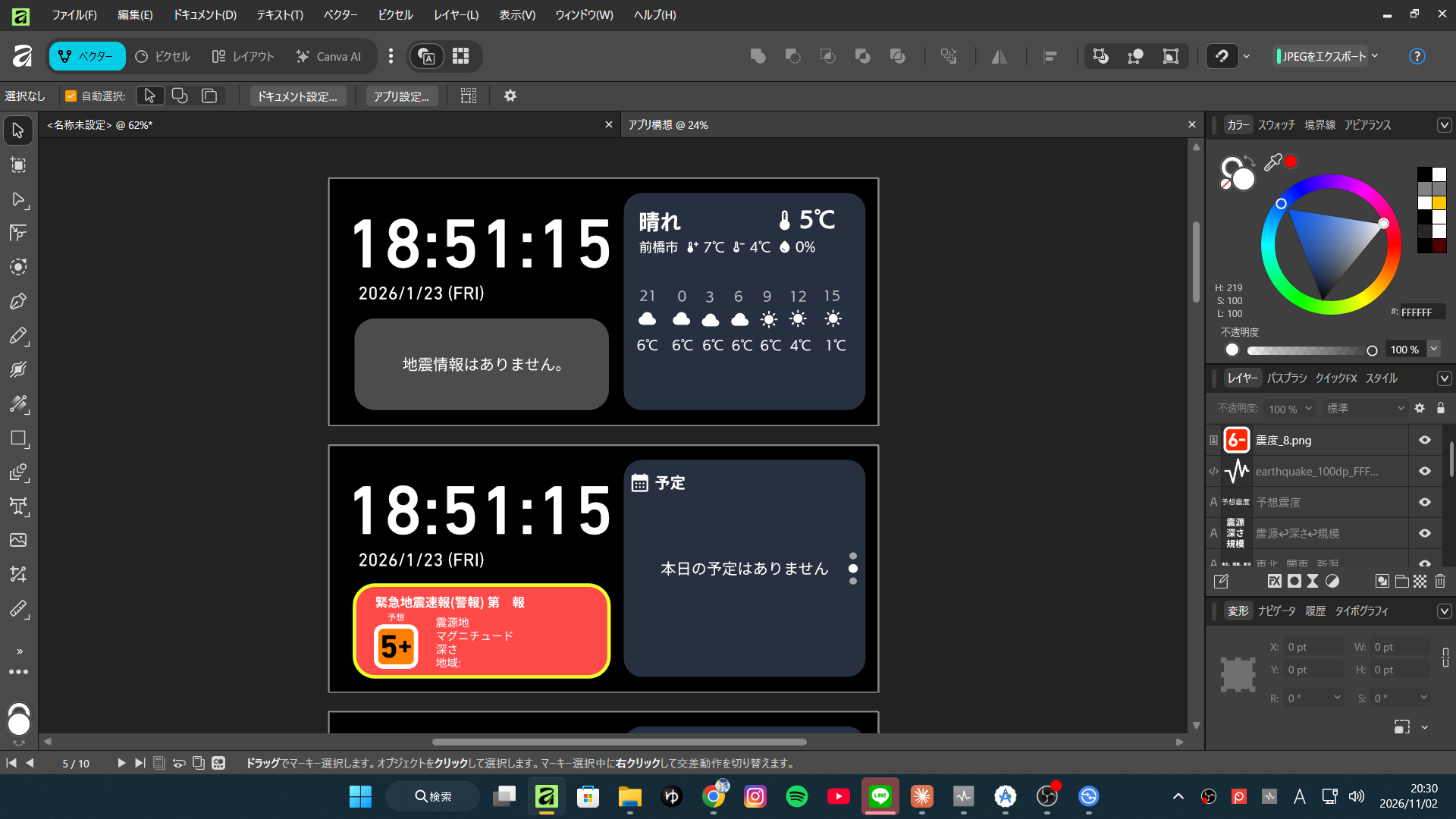
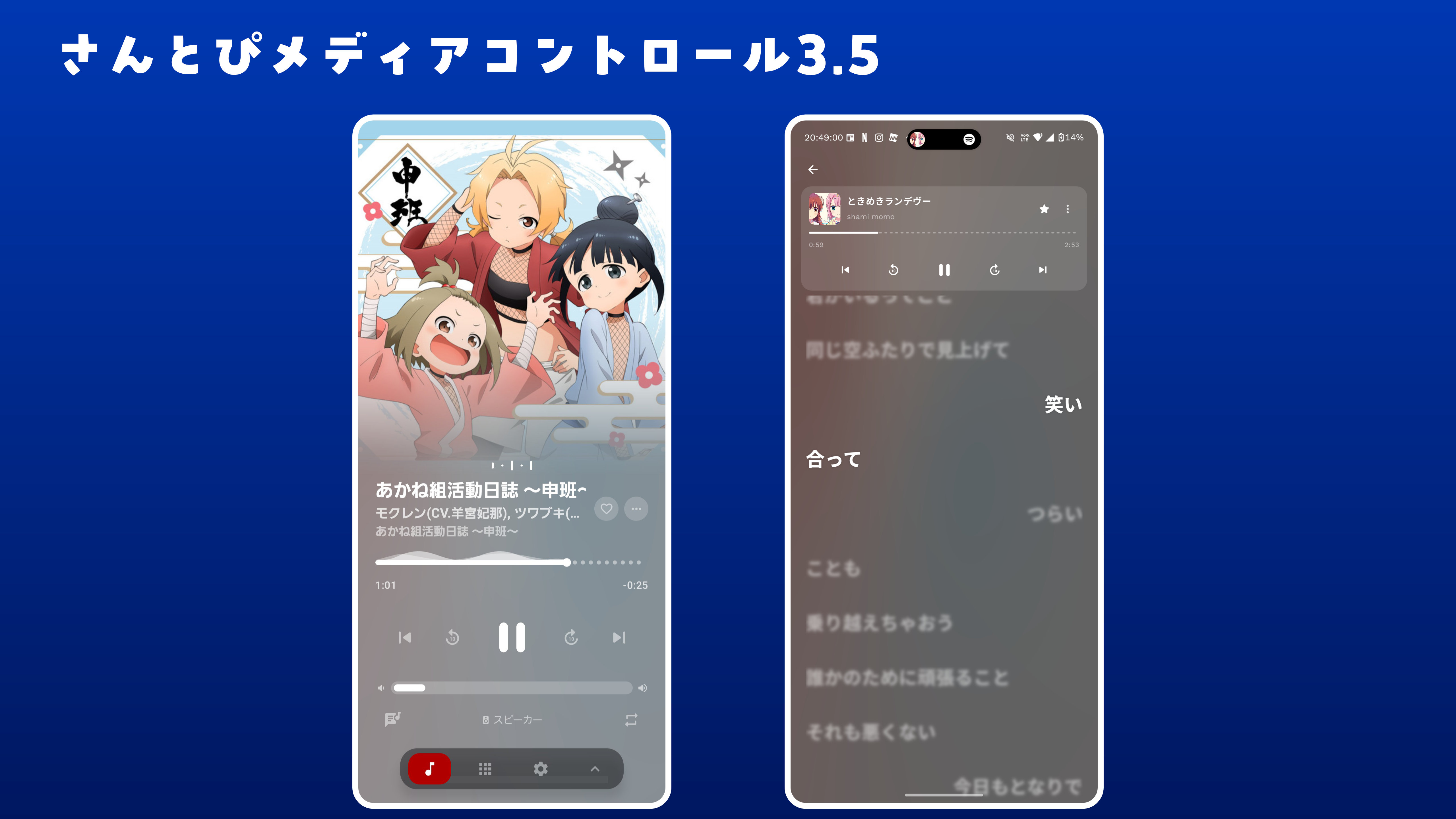
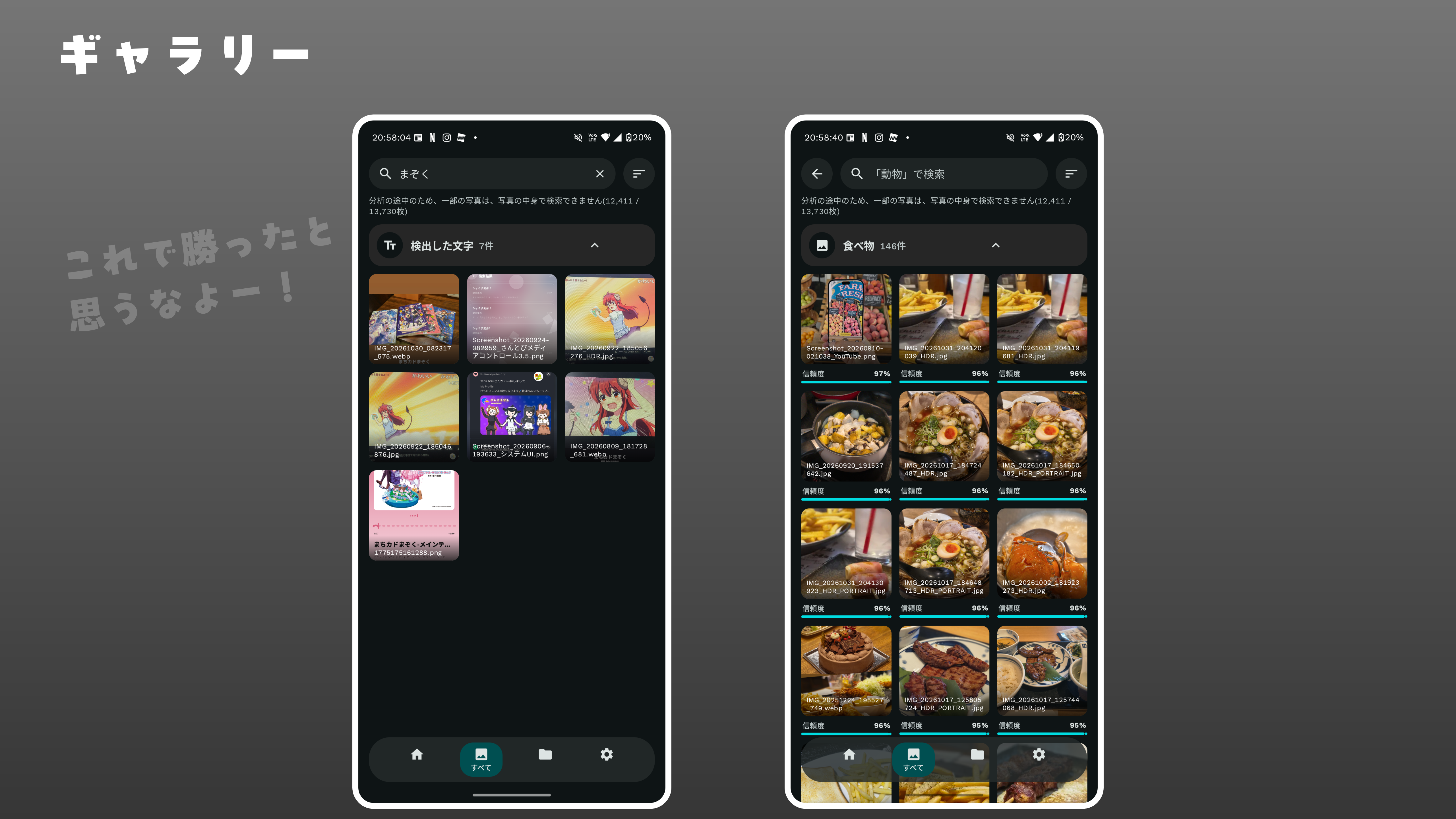
自己紹介 初Qiita&md練習ということで自己紹介をしたいと思います。 みなさまはじめまして、さんどるぴんです。 ここでは、普段作っているアプリの制作状況などについてお話していきます。 多分更新頻度は低めですが首を長くして待っていてください。 マイプロフィール ・なまえ さんどるぴん ・生年月日 2008年6月12日 ・ところ 群馬県民 AIを駆使してアプリをつくります。 作ったアプリはgithubで公開しています。ぜひご覧ください。 github.com/sandolpin アプリ開発のきっかけ きっかけは今年1月。当時Gemini2.5とかがあったころでしょうか確か... 当時、私は全くアプリに関しては詳しくなく、知識もありませんでした。UIについての知識が若干あるくらいで、アプリを作る気はなかったです。 しかし、転機が訪れました。 いしこけん様がアップしていた動画を目にしました。 youtube.com そこで私の中の何かが呼び起こしました(?)。 「おいてめぇ、アプリ作らねぇか」と。 まぁ先述の通り、私は経験値0のただの私服ので装備のない勇者じゃないですか(知らん)。 やっぱ無理だと思ったその時、また私の中の何かが呼び起こしました(??)。 「AIってアプリつくれんじゃね?」 と思ってGeminiに話しかけました。 「まかせろ☆」と回答をいただきました。これはやるっきゃないでしょう! というわけでまずアプリの構想をデザインしました。 !2026-11-02_20h30_55.png これが当時デザインしたようす。まだまだ初心者なので許せです。ただこの時から、すべてAIに任せず、UI設計は私が担当するというこだわりを持ちました。 当時のGeminiはコーディング性能があまりにもなく、300行程度が限界で、また会話ごとにファイルをつくりなおすのか、会話を繰り返すごとにアプリのUIが大幅に変わってしまうなど問題がありました。 まぁ私がある程度コード知識持ってればいい話ですけど。 そして今、複雑で長文なコードも生成できるClaudeに乗り換えてから、作れるアプリの幅が広がり、私はこういうプロジェクトを発足しました。 !さんどるぴんアプリ.png これは、メーカーによってUIの違うアプリに縛られない、いろんなメーカーで共通して使えるアプリを作るというプロジェクトです。現在、電卓とギャラリーアプリは完成しました。 代表作アプリ さんどるぴんオリジナルUI+こだわり機能を加えた自慢のアプリたちです。 ・さんとぴメディアコントロール sandolpin/SantopimediaControl3.5 (ここで初公表。"さんとぴ"はさんどるぴんを略した言い方です。さんどぴだろとツッコむ方、わかるで。でもな、さんどぴよりもさんとぴのほうが言いやすいんや許せ) 再生しているメディアをコントロール。シンプルなアプリですが、カスタマイズが豊富です! !apuri1.png また、聴いた履歴の保存もできます。メディアアプリに縛られない、メディアコントロールアプリならではの強みです。まぁこっちメインなんですけどね。 ギャラリー sandolpin/Gallery みなさん、写真をさがすとき、わざわざスクロールしまくって探すのは面倒...ですよね。 しかしご安心ください!このアプリなら、写真に写っている文字や認識されたカテゴリから画像を検索できます。(事前に解析が必要です) この解析機能は、オフラインで外部に情報を送ることなく端末のみで解析できます。 !apuri2.png え?シャミ子がいる?気のせいです これからよろしくお願いします! あまりqiitaの更新頻度は高くありませんが、よろしくお願いします! ここではアプリのことだけ書きます。ほかの趣味などに関してはNoteをやっていますのでそちらもぜひ。 note.com 次回は没にしたアプリなどについて書いていこうかな...?
5. 영상과 어긋난 자막을 파일만 넣으면 말하는 시점에 맞춰 옮겨줘요. 언어에 상관없이 되고, 브라우저에서 설치 없이 쓸 수 있어요. smacke/ffsubsync
@tukasa_suzukaze パッチ配布はじめました。よかったら遊んでみてください qurataro/sonson
4. 방에서 찍은 영상이나 제품 사진의 배경을 AI가 지워줘요. 영상도 되고 폴더째 한 번에 처리해요. 명령어로 쓰니 설치는 조금 필요해요. nadermx/backgroundremover
@awp_Athar Gboard's voice typing drove me mad too. I ended up building an open source Android app for it: a floating bubble that types cleaned up text into whatever app you're in, on your own API key. w6liam/OSSFlow
i need help to countine build this app 🚀 Introducing Neshe — Looking for Contributors to Help Build a Privacy-Focused Messaging App Hello everyone, I'd like to introduce Neshe, an experimental Linux desktop messaging project I'm currently developing. The goal is to build a messaging experience focused on privacy and security, with support for communication over the Tor network. Neshe is still under active development. The current version is an experimental preview, and many parts still need implementation, testing, and improvement. I'm sharing this project not only to introduce it, but also because I genuinely need help to keep building it and move it forward. I'm looking to connect with developers and people interested in helping with: - C++ and Qt development. - UI/UX improvements. - Code review and software quality. - Testing, bug reports, and troubleshooting. - Documentation and technical feedback. - Practical ideas for future development. You don't have to be an expert or contribute code. Testing the current preview, reporting issues, and sharing constructive feedback are also valuable contributions. A note about the current state: Neshe is experimental. I am not claiming that all encryption and security features are complete or independently security-verified. The current license is a restricted evaluation license, not an OSI-approved open-source license. 🔗 GitHub Repository: 1M0q/Neshe-App If you're interested in the project or can help in any way, I'd really appreciate your feedback and support. I'm serious about developing Neshe into a better project, and I hope to find people who would like to help make that happen. #Linux #Qt #Cplusplus #Privacy #Tor #SoftwareDevelopment
github.com/dgkim-lab/example/tree/main/google-aut… google authenticator 샘플앱도, 코덱스한테 시켜서 뚱땅 만들어봤다. ㅋ 되긴 되네.
DeepSeek 开源编程 agent 原型,两天 1.1 万 Star,核心是尽量少占人注意力 · 盯一个 GitHub 仓库(可接飞书),授权的人点名或团队规则允许才动,干完回原对话,如提 PR · 源自团队日常开发,大量工程由编程 agent 完成,非正式产品 我觉得「少占注意力」比功能更值得抄 deepseek-ai/dsh-superagent-prototype t.co
Trending repository of the week 🏅 impeccable by @pbakaus The design vocabulary for your coding agent. Steer with polish and bolder, review with critique and audit, catch AI slop before it ships. Last week: 12,017 ⭐ Total: 99,982 ⭐️ pbakaus/impeccable
I built Damdit because “the website looks fine” wasn’t enough for me Hi r/sideprojects, I’m Tony. I design, build, and maintain client websites. When I hand over a website, I want to be confident in the work I’ve done. And when I keep looking after it, I want to know that it still holds up after the next content edit, update, or deployment. But checking a website thoroughly takes time. There’s what you can see in the browser, and then there’s everything you need to look closer to catch: indexing settings, broken links, accessibility issues, redirects, security headers. I wanted to spend less time repeating those checks and putting reports together, while having better evidence of what needed attention. So I built Damdit. Version 1.0 is now available for Mac. Damdit audits websites and shows the evidence behind each finding: affected pages, relevant elements, what it found, and how to fix it. You can schedule daily, weekly, or monthly audits and compare the results. Scheduled audits run in the background through an optional login item. What appeared since the last check? What still needs work? Did that fix actually resolve the issue? From the same findings, you can create a report for a client, export technical details for a developer, or pass them to an AI tool. There’s also a CLI and an MCP server, so Claude Code or Cursor can read the audit results directly. Optional integrations add Webflow CMS checks, Google Search Console data, and PageSpeed Insights. It doesn’t replace reviewing a website yourself. It gives that review a more consistent starting point and keeps a record of what was checked and fixed. The most useful lesson was that “nothing found” and “nothing checked” must be different results. If a page times out or a check can’t run, the absence of findings can make the result look reassuring. But there’s no evidence that the page passed. Damdit explicitly shows incomplete checks and why they couldn’t run. That decision shaped both the results interface and the reports. Another lesson was to keep the audit engine separate from the desktop app. It’s a TypeScript package with no Electron imports, using a small rendering interface. The current app uses Chromium, but that separation leaves room for a Playwright implementation later. Stack and local storage Electron, React, TypeScript, Tailwind, and Radix, with Vitest for tests and axe-core for accessibility checks. I built it with a lot of help from AI coding agents, with my own specs, reviews and automated tests. Projects, findings, and reports are stored locally on your Mac. Damdit reads websites without modifying them. Licence verification happens online, the optional PageSpeed Insights and Search Console modules send your site’s URLs to Google, and anonymous diagnostics are only sent if you opt in. Availability and price Damdit is paid. You can try it free for 14 days with just an email address, no card. After that it’s €12.99 a month or €119.88 a year plus VAT, and one licence covers two Macs. Currently available for Apple silicon Macs running macOS 14 or later, signed and notarized. Windows and Linux are planned. - Website: damdit.com - Launch write-up: damdit.com - Docs: docs.damdit.com - Public roadmap and bug reports: antoninbures/damdit-public If you try it on a website you know well, I’d especially appreciate feedback on findings that look wrong or don’t give you enough information to act. A warning is only useful if you can understand it and trust the evidence behind it.
I made Automatic Infravision / Thermal Vision Module for Foundry VTT [OSE], [B/X], [1e] aand many more Hi guys! This is a free FoundryVTT module I created for my OSE game, but it can be used with any old-school D&D edition in which darkvision works like thermal vision: it only works in darkness and does not function in illuminated areas. Features - Per-token range. The GM sets an infravision range in feet for each token from the Token HUD. It can also be saved to the actor so new tokens get it. - Works only in true darkness. Infravision switches on only when the scene darkness is at its maximum (adjustable) and the token is not in any light: not its own torch or lantern, not ambient lights, not other tokens’ light. It turns off and on again automatically as the token moves in and out of light. - Heat vision look. Through infravision the map is shown as a dark, reddish, low-contrast and blurred image with no fine detail. Lit areas stay sharp. - Heat silhouettes. Creatures that aren’t lit are shown as glowing heat shapes instead of their token art. Living creatures appear bright and undead appear black, set per token from the Token HUD. Their names, health bars and status icons are hidden. - Image Hover compatible. Players don’t get the enlarged portrait of a creature they can only see as a heat shape. - GM preview. Select a player’s token to see exactly what that player sees. - Settings: required darkness level, whether dim light cancels infravision, map darkness, contrast, blur strength, and the brightness of living and undead silhouettes. Video presentation youtu.be Module github.com/Jordasnovac115/ose-infravision/release…
[Update v0.1.6] My Claude diagram tool Sketchy now uses 29% fewer output tokens than plain text in my benchmark I built Sketchy because I got tired of AI explaining everything in walls of text. It lets Claude explain things with interactive, hand-drawn diagrams right in the chat. Claude describes what to draw, and a layout engine handles the positions. A few people asked about token usage on my last post, so I benchmarked it and built a more compact format for v0.1.6. With Sonnet in Claude Code, Sketchy averaged 686 output tokens vs 962 for plain text, so about 29% fewer. It even came out slightly cheaper: $0.58 vs $0.61. The first diagram still costs a little more, so it depends on the conversation. Follow-up edits now keep existing nodes in place, even when adding a back-edge. That makes it easier to explore a codebase and compare changes without the whole diagram shifting around. Free and open source, available as a Claude chat skill or an MCP extension while coding. GitHub · Full benchmark breakdown in the Docs.
そういえばAIで画像のようなMOパウチャレのレポートを作っていて、よく考えたら誰でも見られると思うのでもし気になる方いたらどうぞ github.com/MarkG666/mtgo-pauper-reports/blob/main… SEのブラケットとか大体のメタ推移とか面白そうなリストを把握する目的のレポートですただ自分用なので要望苦情は一切受け付けません!! t.co
Cadence v0.92 lets builders grow a trained brain with new memory tools and outputs, or graft compatible trained regions into another brain. Build on what you’ve already taught. Give it room to learn more. Combining skills still takes teaching. muellerberndt/cadence
[Release] PlayLog: a 3DS-style Activity Log for Switch I missed the 3DS Activity Log, so I vibe codded a version for the Switch. It reads the console’s own play records, so your whole history shows up the first time you open it. Nothing has to run in the background, and games you’ve since deleted are included. preview.redd.it preview.redd.it Games tab - Every game you’ve played, ranked by play time, with launches and last-played date - Sort by play time, recently played, launches, first played or title - Per-game details: total time, average per launch, longest session, days played, first/last played, a 30-day chart and recent sessions Activity tab - Today, last 7 / 30 days, daily average and current play streak - A chart you can browse by day, week or month, going back through your whole history - Each period shows its total, average per day, change vs the previous period and your top games - A “when you play” hour-of-day chart Other stuff - Supports multiple user profiles (ZL/ZR) - Touch screen support (nice on the Lite) - CSV export of your stats to the SD card - Press − for a screenshot of the app - Homebrew forwarders aren’t counted as play time Compatibility: Switch, OLED and Lite on any firmware current Atmosphère supports. Tested on a Switch Lite. Download / source: github.com/fidd0x/PlayLog/releases/latest Drop PlayLog.nro into sdmc:/switch/ and open it from the Homebrew Menu. Feedback and feature requests welcome!