Mentions
Conversations linking to GitHub, newest first. Times are UTC.
Mentions by source
X
Bluesky
Hacker News
Lobsters
V2EX
Qiita
DEV
Mastodon
Latest posts
バイブコーディングで機能を継ぎ足していて見えてきたClaudeCodeの実装のクセ 「業務フローがよくわからないんだよね」という状態でも、チャラくバイブコーディングで自力でシステムが作れる時代が来ました。特にエンジニアは、アイディアをすぐに形にできます。普段からClaude CodeなどのAIエージェントに慣れ親しんでいれば、バイブコーディングのハードルは数ミリ程度まで下がっています。その結果、要件定義できるほどの解像度はない、できてからいろいろ意見はしたい、でも人の介在は最小限にしたい、という ガチのシステム屋さんに言ったら殴られそうな 要望を持つことも多いでしょう。 TL;DR 要件が固まらないままClaude Codeでバイブコーディングしたら、テストは通るのに画面ごとに数字や挙動が食い違った AIは依頼された画面の周りしか読まず、全体像や過去の経緯は勝手に把握してくれない 防ぐには、概念台帳・画面一覧・型とフックなどを人間が先に用意する必要がある 生成AI時代こそ、全体を設計して指揮するPMスキルが必須になる 何をどう作っていたか 開発対象 売上計画を立てられる社内システムです。月次の売上と在庫の見込み、売上計画、受注一覧、請求、入金、商品マスタ、顧客を扱います。 受注一覧 → 請求 → 実績 → 入金 → 現預金 → 粗利 といった流れでお金が流れる想定です。取引数や管理対象がまだ少ない段階で、事業計画を立てるためにシミュレーションをしたいという背景で作りました。 開発フロー 小規模なアプリ用に社内でテンプレートを作って、それをベースに開発していました。 工程 人 AI P1 要件整理 → Issue 一言で頼み、5つの質問に答える 5問を聞く → 要件メモ → Issueを起票 P2 実装 - 失敗するテストを書く → 最小の実装 → 整理 P3 品質ゲート → PR - format、lint、型、テスト、ビルド → PR作成 P4 レビュー → merge PRを読んでmerge (任意)AIレビュー P1の要件定義の5つの質問は、誰のためか、どの痛みか、なぜ今か、やらないこと、完成の定義です。superpowersのブレインストーミングを使っていて、質問の選択肢もAIが出してくれるので、適当に選びます。 管理していた文書 置き場 中身 00_process/ 開発フロー、矛盾を防ぐ進め方など 01_product/ デザインの指針、システム自体の細かい方針 02_architecture/adr/ ADR(設計判断とその理由の記録) 要件メモ/ 5問の答えから作ったメモ packages/shared/src の型とコメント 実質の仕様はここ(約1.8万行) 「要件メモ」の中にsuperpowersで作られる要件定義の資料はできあがります。ただ、今回のように「作りながら要件が固まる、変更がある」「最初に業務フロー全体像が見えていない」といった場合、途中で変更すると矛盾が生じます。AIが毎回このメモを更新して、唯一の正(SSOT)として活用してくれるわけではないからです。 大まかな欠点としては、 ドメイン知識や言葉が指示でぶれると、システムの中でもぶれる→概念台帳や用語集が必要 画面単位で改修をすることが多いので、既存実装の全体像を知らないまま重複して実装したり整合性が崩壊したりする→画面一覧などの一覧性のあるドキュメントが必要 といったところでしょうか。 この開発方法でぶちあたった課題 ざっと表にまとめてみました。 画面 何が食い違ったか 売上計画と受注一覧 途中で計画機能を追加した結果、受注の金額を計画でも一覧でも入力できるようになり、システム上で整合性がとれず画面ごとに数字がずれた。 請求 もともと税抜きで計算していたが税込にした。請求だけ税込への変換から漏れて、金額がずれた。AIは税金の扱いをコード上のコメントで管理していたらしい。 請求 入力を小数にするか整数にするか指定しなかったため、小数の入力ができなかった。(外注費はできるが売上はできない、といった挙動だった) 受注一覧 ページ構成を変更した時(入力が2か所あった箇所を、片方読み取り専用にして導線を整理した)、並び替え機能が消された。(ADRには並び替えの実装記録はあった) 画面全体 画面全体の書き出しと読み込みの機能について、実装している画面としていない画面があった(共通ルールになっておらず、途中で付け足した機能だったため)。さらに、実装が別々に書かれており整合性が崩れていた。 画面全体 畳める説明文の部品、記憶の読み書き、CSSのクラス名が重複して、結果的にデザインに統一性がない箇所がちらほらあった。共通部品の置き場までは定まっておらず、作る前に探す手順も定義されていなかった。 ADRで常に決定は残しておいたのですが、それでも矛盾が生じました。テストはそこそこ書いてくれていたのでCIは緑のまま、触ってみて「oh……」となりましたね。 あと細かいところだと、保守性の面で、特にフロントエンドはアーキテクチャを指定しても無視して1ファイルに書き始めたり、UI/UX的な考慮はされず横にたくさんスクロールが必要な表ができたりもしました。 AI(Claude Code)の実装のクセ AIの実装手順はこんな感じであろう 「売上計画に見込みの列を足して」と言った時の挙動は以下のようです(Claude自身が認識している方法ですが)。 必ず読む。CLAUDE.md、AGENTS.md、.claude/rules/ 言葉でgrepして対象のファイルを探す。「売上計画」「見込み」でgrepして、画面のファイルを開く importをたどる。開いたファイルから数段だけたどり、共通の計算関数を読む ADRや別の画面(受注一覧)は読まないことが多いようです。また、読む量が多すぎると、1で読んだはずの規則は華麗に無視してきます。こういうしくみなので、決めてから一気に組み上げるのには強く、運用ややりながら考えるのには弱い、という印象になるんですね。当たり前ですが、使っていると「なんでそんなこともわからんのだ……!」という気持ちになります。 ADRを読んで全体と経緯を把握してくれるわけではない 同僚が使っているClaude DesktopはADRを書いて設計したがり、指示をせずともADRを勝手に書いていました。が、Claude Codeで開発する時はあまりそんな気遣いは望めません。今回はAGENTS.mdに「ADRは必要になったら読む」くらいに書いていたのですが、常に読むわけではなく、読むとしてもgrepした結果の画面と関連がありそうなADRだけのようです。経緯を全部把握してくれる、みたいなことは期待しちゃいけない。さらに、後のADRが前の判断を覆している場合、そこまで読んでくれないこともあります。 IQというか処理能力が高くて知識も豊富だけど、めちゃくちゃおっちょこちょいでせっかちなジュニアの同僚、みたいな感じですね。 AIはシステムの全体像を勝手に把握するわけではない これも勝手にCLAUDE.mdとか何かしらからよしなに読むでしょ、と思っていました。人間でも最初に全体像がわかるようなドキュメントを読むじゃん。読まないんですよ。Claudeちゃんは究極のものぐさなので。 ユースケースなどの全体像がわからないと、業務の流れがわからないまま画面単位で追加の実装をはじめます。さらに、 セッションごとに記憶が切れる。前の画面で決めた流れは、書いていなければ残らない コードは画面単位(〜-board.tsx)に分かれている。読めるのは画面で、流れは読めない 受入条件は依頼された画面の中で閉じてしまい、AIが全体整合性をとらない といった特徴があります。E2Eテストをがんばればいいという話もありますが、結局人間が指示をちゃんと言語化しきらないといけないのは変わりません。 少なくとも要件定義で十分な情報をAIに言語化させて、全体像がわかる形でドキュメントにしておくことが必要です。 フロントのファイル分割ルールは無視するもの 部品の二重実装は、フロントのファイル分割を先に決めていれば防げる……そう思っていた時期が私にもありました。 Feature-Sliced Designを採用して、公開はindex.tsだけ、とルールを作ったのですが、何を思ったのかClaudeちゃんの実装は components/ に19ファイルが平置き(FSDガン無視) 受注一覧の画面が1ファイル2,110行、トップページが1,455行で、1画面を1ファイルで記載 CSSは1ファイルに2,382行で、分割する気0 features/ は2つだけで、共通部品を作れていない というポンコツっぷり。 AIは自らハーネスを作れない AIは自分の癖を把握して事前に防ぐ、といった気遣いはしてくれません。以下のような内容はハーネスとして準備しないと矛盾が起きる可能性があります。AIが苦手とする箇所ですね。 内容 対策 言葉の二重定義 正式な名前とコード上の名前を識別子つきで1か所で定義して、そこに無い識別子をhooksなどで検査する 値の表し方の揺れ 型で1本に縛る。空はnullだけ、単位は別の型にする、種別はunion型と一覧の1か所定義にする 計算の重複、および丸めなどの扱いの揺れ 計算をドメインの1関数に寄せて、画面のファイルからの計算関数のexportを禁止する。(可能ならDDDっぽい設計に寄せれば解決する) 数字の複数箇所での管理。入力口が複数になるとか、画面で再計算して結果がずれるなど 保存先に書き込める画面を1つに制限する。ほかの画面はドメインの結果を表示するだけにする 重複した実装をする 厳密なレイヤーおよび置き場の定義を行い、違反はlintで落とす 文書どうしが食い違う。台帳と実装がずれる 概念を足したら台帳に追記することをフックで強制する。文書の参照関係を検査する 特にアーキテクチャの面では、フロントエンドはかなり弱い印象があります。「自動で適切なものを選んで」ではなく、明示的に方針を指定したり、最初に雛形を用意してコンテキストに含めてあげたりする必要があるでしょう。 どう実装すればよかったか 社内でさくっと開発する、実際に使うまで細かいフローはわからん、といった状況の場合、 概念台帳および用語集 画面一覧と画面遷移 最低限の型とフック 受入条件(AC)をしっかり記載した実装用チケット 可能なら適度な粒度のアーキテクチャを実装したボイラープレート があるといいと思います。特に上の3つについて詳しくみます。 概念台帳と用語集 Spec駆動で開発しているつもりでも、途中で解像度が上がってくるとか、仕様自体が利用者の反応で変わるといったケースはあると思います。そうなるといつの間にかコードが正になり、背景や判断基準はADRを辿る必要がでてきます。また、指示する時の雰囲気で使う用語が変わると、AIはそれらを別物として扱ってしまいます。 とはいえ、がっつり要件定義ドキュメントを作るよりはAIに任せたい、といった場合、最低限「概念台帳」として、どこにどんな概念を置くかを管理しておくとよいです。 概念 正の置き場 表し方 単位 入力か導出か 受注の売上 受注一覧 小数を許す 税込、発生ベース 入力 ユースケースや業務フローから機能一覧を記載できると一番良いですが、結局その文章の整合性をとるには人間の時間と能力、そして経験が一定必要になってしまうので、社内でさくっと開発するには向かない感じがします。 画面一覧と画面遷移 画面と、その画面にある機能の一覧を1つのファイルで記載します。また、画面遷移もファイルにします。がっちがちの画面設計にする必要はなく、画面名、その画面でできること、入力か表示かあたりがあればいいでしょう。画面遷移もテキストの説明で十分です。 AIは依頼された画面のファイルから読み始めて、importを数段たどるだけなので、全体整合性をとるのが苦手です。毎回これらのファイルを読ませれば、全体の流れとしての不整合は防げます。ただし、これだけでは数値の丸め方など細かい規則まではフォローできないので、先の概念台帳と用語集のようなプチドメイン設計を併せてするとよいでしょう。 最低限の型とフック 文章で書いたルールはコードを読んでいるうちに忘れやがるので、静的検査で落とせるタイプのものはなるべくテストで落とすのも大事です。型がしっかりしていれば「ありえない値」などもある程度落とせるので、AIのゆるふわテストでもある程度は動くプロダクトになります。 全体を通して 今回の失敗から、「大規模開発だと生成AIの活用がうまくいかないよね」という話と同じ構造が見えました。大きく以下のような観点があると思います。 全体像が膨大で把握しきれない状況での、チームでの開発(人間のチームなのか、Claudeのセッションやサブエージェントなのかは違いますが) 要件定義フェーズをどう進めると抜け漏れが減るか、さらに抜け漏れがある前提でどう進めると事故が減るか 保守しやすいソフトウェアアーキテクチャなんかも大事ですが、いわゆる優秀なPMが今まで担ってきた内容が、生成AI時代に必須になっているように感じます。並列で動かす時はgit worktreeを使おうね、くらいは個人のエンジニアでもわかりそうですが、こういった全体の進め方についてはまだまだAIに全任せとはいかず、「知見と経験がある人がAIを使って全体をディレクションする」必要があるように思います。私は過激派なので、エンジニア経験のある人がみんなPMスキルを身につけるべき時代がくるぞとよく言います。できないPMの下でもやもやしていた実装経験のある人、今こそ輝くチャンスだぞ。あなたたちの力は絶対に未来に必要だ。 ちなみに 私はうぐいすソリューションズという会社を経営しています。弊社には役員が私含めて2人いて、それぞれ「要件定義からチーム開発をうまくいかせる鬼」と「技術全体像と適切なアーキテクチャ、そして状況整理マニア」という特性をもち、どちらも言語化に異常な執着があります。こういった知見をどんどん伝えてまともにPMができる人を増やそう、ある程度の再現性のある妥当で安心できるシステム開発をしよう、という組織なので、もし興味がある方がいればコーポレートサイトからぜひお問い合わせください。 uguisu-solutions.com カジュアルに話を聞いてみたい、PMやばい話を聞きたい、生成AI時代の愚痴が言いたいなど、なんでも結構です。同じ思いのある人で広く世の中をよくしていけたらな、という気持ちで、連絡をお待ちしています。
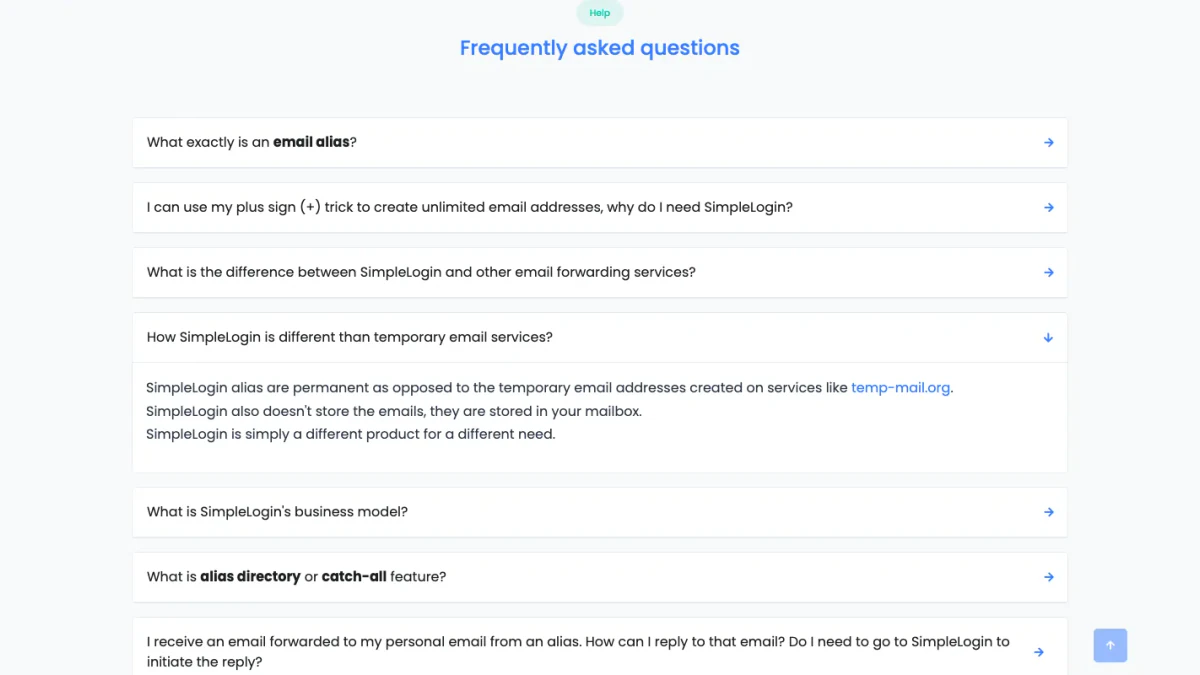
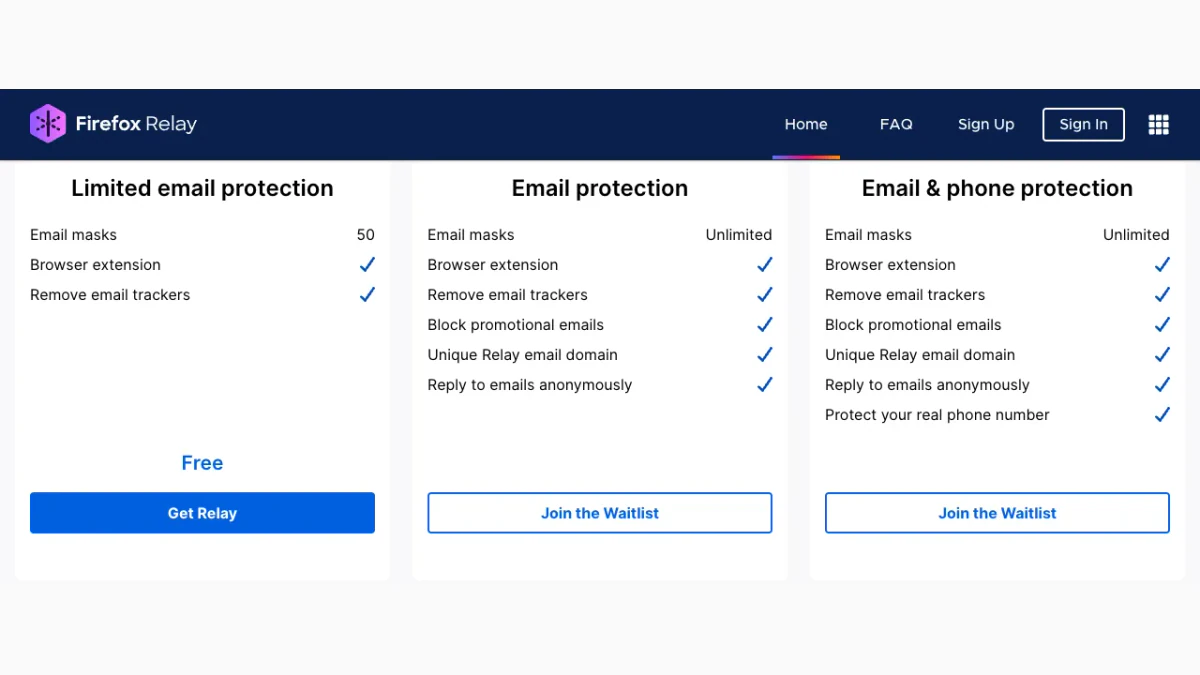
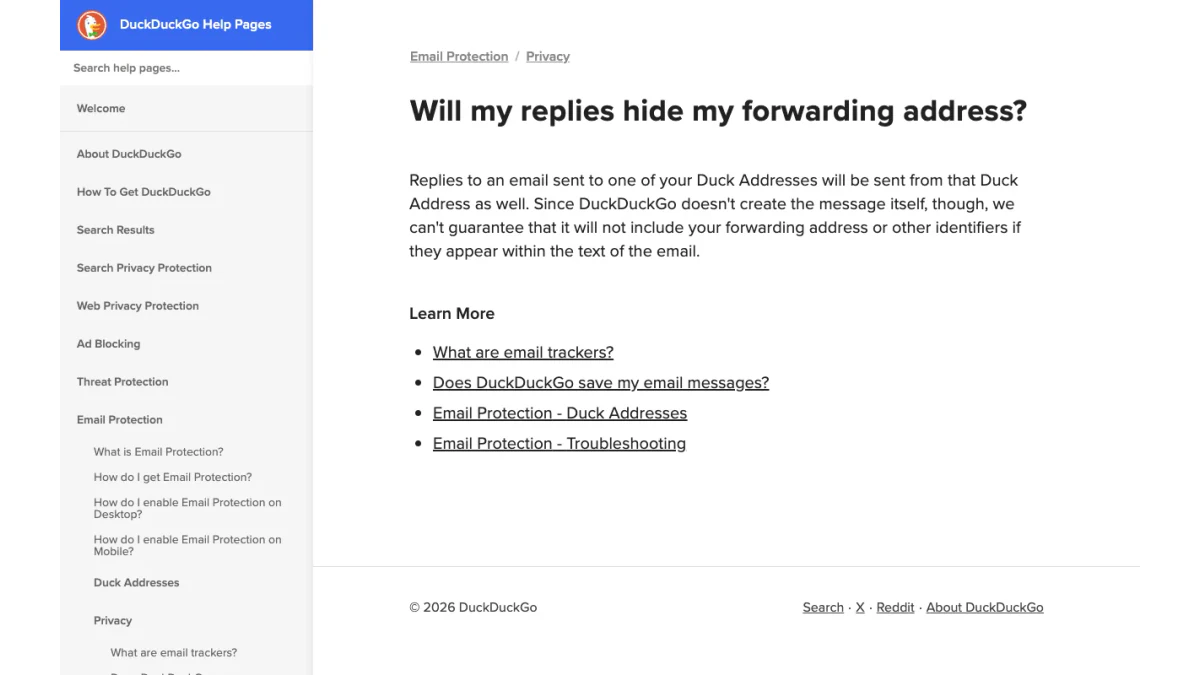
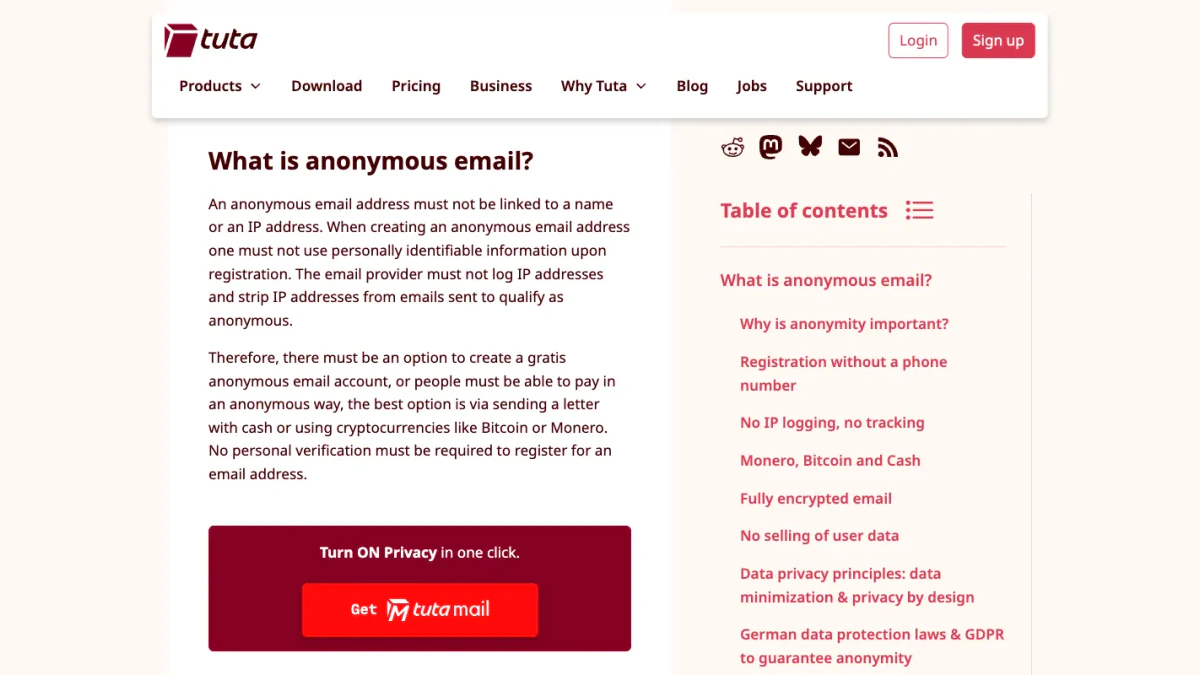
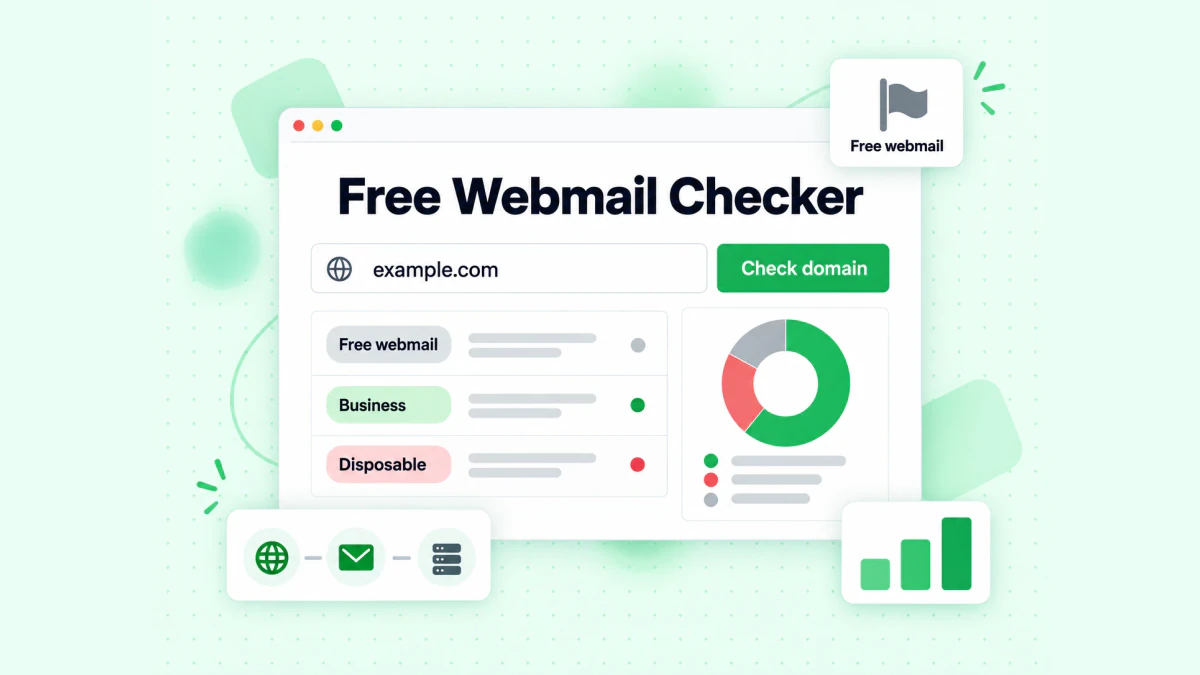
Anonymous Email vs Temporary Email vs Alias: What Each Hides The phrase "free anonymous email" covers three different tools. One is an inbox that deletes itself. Another is an alias that forwards to your real mailbox. The third is a private mailbox that asks for no phone. Each hides something different, lasts for a different time and fails in its own way. This guide compares them. Every fact comes from the provider's own site, read in late October. We opened no account and sent no mail. BillionVerify is an email verification service. We run none of these tools, and nothing here helps anyone get around a site's rules. To learn how a throwaway inbox works, read what temp mail is. Key facts (checked October 2026): - Tuta's article on anonymous email says an address qualifies only if it is not linked to a name or an IP address. - Proton's sign-up guide says a free account can be opened with no phone at all. - SimpleLogin's FAQ calls its aliases permanent, unlike the addresses made by services such as temp-mail.org. - Firefox Relay's FAQ advises against masks for a bank, a doctor, a lawyer or boarding passes. - DuckDuckGo's help page admits it cannot promise that a reply hides a forwarding address written inside the message text. - BillionVerify's open list of throwaway domains held 220,601 entries on October 27, 2026, and it matches the domain only. Anonymous Email Means Three Separate Things Tuta sets a strict test. Nothing may tie the account to your name or your connection, and the provider must keep no logs of it. Few services pass. Most tools sold under the label hide a single thing. Three kinds are in common use: - A self-deleting inbox. It needs no account and vanishes on a timer. It hides you only until the box is gone. - An alias or mask. The site gets the alias, and mail is passed on to your real inbox. The site never sees your email, but the forwarding provider does. - An encrypted account. This is an ordinary mailbox with no phone at sign-up, such as Proton or Tuta. Our glossary defines a burner email for the first kind and an alias email for the second. Throwaway Boxes Hide You for an Hour, Not for Years These boxes ask for nothing. You receive a box, read what arrives and leave. Our guide to YOPmail, Guerrilla Mail and Mailinator lists the retention of each. Guerrilla keeps mail for an hour, YOPmail for eight days. Many boxes are public. Whoever types the same name sees the same mail. Some only receive, and some write only to their own users. None suits an account you plan to keep, since a reset link lands somewhere that may be gone. SimpleLogin draws the line in its FAQ. The mail itself lands in your own mailbox, not on its servers. The answer ends by calling the two "a different product for a different need." !SimpleLogin FAQ answer explaining that its aliases are permanent, unlike temporary email services Screenshot: SimpleLogin's reply to a question about temp services. Aliases Hide Your Address From the Site, Not From the Provider An alias is a forwarder. A shop, an app or a newsletter receives the alias, and the provider relays each message to the inbox you actually read. A few services also allow replies from it. Firefox Relay Relay promises that senders never see the email you actually use. The free column lists a fixed count of masks, a browser extension and tracker removal. The page showed 50 masks when we loaded it in a browser. Anonymous replies appear only under the paid columns. Relay is frank about limits. It does not recommend a mask when you need identity verified, or for important mail with attachments. It names the bank, the doctor and the lawyer as places for your true address. !Firefox Relay plan table listing email masks, tracker removal and anonymous replies by plan Screenshot: the plan table on the Relay site. Apple Hide My Email Apple's page on signing in with an Apple Account describes unique, random addresses that forward to your inbox. You can read and answer what arrives. Pick the option for a given app, and only that app or site can write to the address. Apple states that it does not read or process content, apart from standard spam filtering. Messages are deleted from its relay servers once delivered, usually within seconds. The iCloud guide lists the feature among the iCloud+ extras. SimpleLogin SimpleLogin offers 10 aliases, replies and a single mailbox for free. Paid tiers add unlimited aliases and custom domains. An alias lasts until deleted. A reply travels through a reverse alias, so your own address stays hidden from the sender. The FAQ also covers the plus trick, where you add +shop to your own address. Anyone can strip that part to find the original, it warns. An alias has no such weakness. DuckDuckGo Email Protection DuckDuckGo describes a free forwarder that removes hidden trackers. It makes unlimited private addresses, with a daily cap to prevent abuse. These do not expire while your account is active and you have not deactivated them. DuckDuckGo keeps none of your messages, not even the headers. Replies leave under the same Duck Address. Because it does not write your message, it cannot guarantee that your real address is kept out of the text. !DuckDuckGo help page answering whether replies hide the forwarding address Screenshot: DuckDuckGo's answer on replies. Which Free Anonymous Email Accounts Need No Phone Number? Two private mailboxes make that claim on their own sites. Both are full accounts with their own inbox, not aliases. Proton Mail Proton's guide on opening an account without phone verification tells you to pick the free option. A recovery phone is optional, and the guide states that entering one "is not required." The front page lists 1 GB and a single address on the free plan, with no card. Zero-access encryption keeps your inbox unreadable to Proton itself, per its page. The company is based in Switzerland. The Mail Plus plan lists ten, and Unlimited lists no cap. Tuta Mail Tuta's guide, published in August 2025, calls itself among the few providers that give out free anonymous email with no phone. It logs no connection details by default and strips them from sent mail. Images in a received message stay unloaded until you allow them. There are limits. Some free signups wait up to 48 hours for approval. Free accounts are deleted after six months without a login, its FAQ notes. Cash, Bitcoin or Monero can pay for a paid plan through a partner. !Tuta guide section defining anonymous email as not linked to a name or an IP address Screenshot: the opening section of the Tuta post. What Each One Hides and What It Does Not The table puts the options side by side. Each cell is taken from the sources above. | Option | Reply from it | What you get for free | | --- | --- | --- | | Short-lived box | Varies by site. Mailinator only receives | Open to all, no account | | Relay | Listed on paid plans only | Masks and an extension, with trackers stripped | | Apple | Yes, respond directly | An iCloud+ extra, plus a sign-in option in apps | | SimpleLogin | Yes, reply or send from the alias | Ten aliases, linked to your inbox | | DuckDuckGo | Yes | Unlimited extra addresses, limited per day | | Proton | Yes, it is a complete mailbox | Storage and a free email | | Tuta | Yes, as with any account | Free, removed when idle for half a year | Three points follow from the pages above: - A timed box masks your email, but its contents may be public. - An alias shields your email from the shop, yet the provider still sees each message. - A private account protects the content with encryption, but it is long-term and tied to you. Which One Fits Which Job? A Quick Download A disposable box fits when you will never need the account again. If you may want a receipt or a reset later, choose an alias. Newsletters and Shops Aliases fit best here. Relay can block mail from a mask that gets too much spam. DuckDuckGo can switch an alias off. You mute a sender and keep the rest. Accounts You Want to Keep Use a mailbox you own for banking, health and anything with a recovery step. Relay advises exactly that. An account at either provider fits when you want no phone requirement. Private Conversations Encryption protects your messages best. Alias tools mostly protect your address. They do not hide what you write. No Provider Guarantees Untraceable Email Claims of untraceable email are easy to find. The pages we read are more careful. Tuta says it keeps no logs by default and calls the mail sent from its app untraceable. DuckDuckGo admits that identifiers may appear in a message body. Apple filters relayed mail for spam. Each statement covers a single layer. None covers your whole identity, which also includes what you write, whom you write to and how you pay. Providers act on abuse too. Tuta's FAQ says accounts are disabled for terms violations or spam detection. YOPmail's own site prohibits sending anonymous mail. Use these tools for privacy, not to deceive or harass anyone. How Websites Tell an Alias From a Throwaway Address Often they cannot. A site sees only what follows the @ sign. That part is a domain. It names the provider hosting the mailbox, not the person behind it. BillionVerify's free disposable email checker compares that domain with a public list. The GitHub library merges nine community lists and refreshes hourly. We searched its data file for the main domains of the alias services above. Several are on it: - mozmail.com, used by Relay - duck.com, used by DuckDuckGo - privaterelay.appleid.com, used by Apple's relay - simplelogin.com, simplelogin.co and aleeas.com, used by SimpleLogin A site that blocks everything on that list would refuse these addresses too, even though they forward to real mailboxes. The checker page makes the same point from the owner's side. A disposable flag classifies the domain. It is not a verdict on the person, and a legitimate user may pick a privacy relay. The page suggests a graduated policy, such as a warning or limited access instead of a hard block. It also suggests a way to submit a different address. !BillionVerify webmail checker illustration sorting a domain as free webmail, business or disposable BillionVerify's webmail checker sorts a domain into free webmail, business or disposable. Site owners can read the detection guide for the signals behind a block. Some teams also verify the address after a form is sent. A BillionVerify account gives 20 credits on each day you use it, up to 600 a month, and they never expire. Servers sit in France (EU), and a data processing agreement can be signed. An unknown result costs nothing. Two more tools cover other signup fields. A reverse email lookup finds public owner and company context from an address. A phone validator validates format, country and line type. FAQs What Is an Anonymous Email Address? An anonymous email address is one that is not linked to your name or connection, according to Tuta. In practice the label spans three tools: timed inboxes, aliases and encrypted mailboxes. They hide different things. Is a Temporary Inbox the Same as an Alias? A timed inbox and an alias are not interchangeable. The inbox disappears on a timer, while an alias goes on forwarding until you delete it. SimpleLogin describes the two as different products for different needs. Can You Reply From an Alias? Most aliases support replies. SimpleLogin, DuckDuckGo and Apple let you answer while the sender sees only the alias. Relay lists such replies for paying users only. Is There an Untraceable Email? No provider page we read promises untraceable email. Providers describe single protections, such as missing logs or stripped trackers, and DuckDuckGo notes that text inside a message can still give you away. Do Websites Accept Aliases? Websites do not always take aliases. Some sites block domains found on public lists of throwaway providers, and several alias domains appear on BillionVerify's list. Each site sets its own policy. Does BillionVerify Offer Anonymous Email? BillionVerify does not provide anonymous or temporary inboxes. It offers a free check for throwaway addresses and an open domain list, so the owner of a site can see which addresses come from such services.
Free, MIT, v1.0.0 out today: withrvr/whatsapp-skills Claude Code: /plugin marketplace add withrvr/whatsapp-skills Also works in ChatGPT, Codex and any agent that supports Agent Skills
Frontend #310 Frontend November 03 • Issue #310 • Tweet • Forward Unreadit ⚠️ Can't load styles Hello! This digest is made with Mailbrew ☕️ Sign up here to get a 30% discount and customize it with your favorite sources ❤️ r/webdev Manager thinks anything can be coded in 1 hour or less with AI. 554190 I work for a large accounting firm where the impact of getting things wrong feels quite big. We’ve started a new sprint for the next chunk of work. The team has put together estimates for various elements of a new accounting feature involving bank transactions, VAT calculations and reconciliation, … Who remembers when web developers portfolio websites had a “skills chart” 354109 HTML 95% PHP 70% jQuery/JavaScript 80% MySQL 58% Gives me the shudders thinking about it… Your AI UI skill is doing the part you were supposed to learn 312127 So a few of my friends have stopped using Figma. They go straight to production and make changes there. When I first heard this I was honestly confused. Like where do you try things out? Where do you compare two versions? Then I saw what they were building. … DEV Community llm 0.37 Adds Multimodal Embeddings and a Cheaper Default — What That Means for Local Audio Pipelines devsNov 3 Build a Secure OTP Service: Custom Node.js Generation, Validation, and External SMS callumreed2198Nov 3 A beginner's guide to the P-Video model by Prunaai on Replicate aimodels-fyiNov 3 r/frontend The best way to use icons in Web UIs • Lea Verou 537lea.verou.me The best way to use icons in Web UIs • Lea Verou A Modern CSS Guide to Responsive Web Design 3111stephcraft.net If I missed anything, let me know! building the basics in webdev for absolute noob 81github.com I made this doc for a friend of mine who just started college and wanted to know basic frontend for starter, everyone keeps saying claude or gpt can code that easily and you gotta learn the tougher topics but you need to code a bit without any ai aid to … r/javascript I've proven that you don't need quotes or parentheses in JavaScript 9717blog.ikaes.de You can overwrite the prepareStackTrace property of the Error object by String prototype's functions and invoke them without parentheses. Then by overwriting the Error and Array prototype it is possible to control the arguments. Combining this behavior, together with some JSFuck-inspired tricks, it is possible to generate arbitrary JavaScript strings … We stopped installing npm packages less than a week old 7130brunoj.com We stopped installing npm packages less than a week old No, npm, “estee” is not a typo of “testem” 414smoores.dev No, npm, “estee” is not a typo of “testem” Since 2017 I've been trying to get zoom navigation right. Zumly is the closest I've got 3113zumerlab.com Since 2017 I've been trying to get zoom navigation right. Zumly is the closest I've got r/reactjs My honest Interview Experience for a React developer role 13840 Made a React button that tilts, squishes and actually feels pressable 5814 Redux Toolkit v2.x and v3.0 roadmap 5023github.com Did you remove your useMemo calls after turning on the React Compiler? 4013 r/vuejs Struggling to find any Vue/Nuxt job in 2026 6033 Working on an open-source goopy ui framework... Shadcn, but it drips 4920 r/CSS Crazy what you can do with just CSS right?? 22251 I spent the last few weeks building the "perfect" liquid glass effect with just CSS (e.g. SVG Filters), No WebGL used and it works page wide, which means it picks up anything of the background behind it. The core is a backdrop-filter with an SVG displacement map. I screen … CSS Tricks is back! 1205css-tricks.com CSS Tricks is back! CSS-Tricks What’s !important #20: GTA 6 Scroll Effects, Scrollspies, random() Daniel SchwarzNov 2 The Frankenstein Table PreethiOct 29 What’s !important #19: CSS Refraction Effects, Scroll State Queries, @custom-media, and More Daniel SchwarzOct 27 Smashing Magazine A Spark Of Color In November’s Gray (2026 Wallpapers Edition) smashingmagazine.comhello@smashingmagazine.com (Cosima Mielke)Oct 31 Let’s kick of November with a new collection of desktop wallpapers! Designed by creatives from across the globe, the wallpapers come in a variety of screen resolutions and can be downloaded for free. Enjoy! © Mailbrew EVERNOMIC LTD, Gladstonos 12-14, Paphos 8046, Cyprus Frontend is a digest by Unreadit. building the basics in webdev for absolute noob: github.com/kh-yourtechally/getting-started-webdev… Redux Toolkit v2.x and v3.0 roadmap: redux-toolkit#5536
For the friends who’ve been asking... Oh My Scrobbles is ready for early beta testing. Scrobble Apple Music (and Radio!) to @lastfm, rediscover old listening, and get nerdy with your history. Mac users, come poke around and tell me what you think. robbyrussell/oh-my-scrobbles-releases t.co
I introduce SPECv1 (SOFTWARE PRODUCT SPECIFICATION ENGINE). It helps your agent to produce industry standard specs for any software product. Use it with any agent (Cursor, Codex, GrokBot, Claude, Opencode, Hermes, PI, etc). agentic-framework-skills/SPECv1
Day 38 of 1,000 Days of Code for @TeckFirst - Stated planning Collectibles class. - Read Section 6.0 of A Philosophy of Software Design. - TeckFirst/InfernoJockey
GitHub's #1 Trending Repo Finally Fixed Computer Use for Claude Code & Codex Vercel Labs' agent-desktop lets coding agents like Claude Code and Codex use real desktop apps through the accessibility tree instead of guessing from screenshots. I installed it on Linux, snapshotted a real app, clicked through it, and walked through what it means for your agent workflow. Note: the Linux demos were recorded on our machine (agent-desktop 1.0.2). The Ship List loop was run by hand with the same commands an agent uses. Claude Code / Codex runs shown are the creators' own clips, credited on screen. 🔗 Links agent-desktop on GitHub: vercel-labs/agent-desktop README / quick start: github.com/vercel-labs/agent-desktop/blob/main/RE… Install docs: github.com/vercel-labs/agent-desktop/blob/main/do… Agent skill: skills.sh Project site: agent-browser.dev 🙏 Credits Built by Lahfir (@mdlahfir): x.com Launch post and video by Chris Tate (@ctatedev): x.com Demo clips: vercel-labs/agent-desktop repo (assets/Videos) Music: "Doodles" by HoliznaCC0 (CC0), freemusicarchive.org ⏱️ Chapters 0:00 No screenshots needed 0:17 What you'll see 0:55 What it is and how it replaces screenshots 2:21 Install 3:31 First snapshot: the screenshot-free loop 5:07 Teach your agent (skills) 6:07 A real task 8:19 The one rule 9:12 Five things to try 10:29 Recap #ClaudeCode #Codex #AIcoding
#DeskPort 省流量模式正在自测 分辨率 2040x1228 常规开发场景 一小时83MB tailscale 走了ipv6 直连 延迟平均28ms keithxc/deskport t.co
Duo Translator(沉浸式翻译开源替代)已上架苹果商店,正式支持 Safari 了 前言 之前的帖子( v2ex.com )收到很多建议和好评,非常感谢!同时也有很多 v 友许愿 Safari 版本,就想着上架一下,耗时 2 周终于审核通过了。第一次上架苹果商店,想着国区应该无法上架,就没有写中文介绍,下个版本我补上,还请理解 链接: apps.apple.com apps.apple.com 简单介绍下,Duo Translator 是一款双语翻译浏览器插件,并支持划词翻译、AI 写作增强、YouTube 双语字幕、同步配置等功能,目前桌面端已经全覆盖,包括 Chrome ,Edge 、Firefox 、Safari 。更多详细功能介绍可以访问 [官网]( duotranslator.com) 和 [github]( linuxscreen/duo-translator) 目前还没适配手机端,一个人实在太忙了,如果有大佬感兴趣的话,欢迎随时提 PR 。 截图   碎碎念 之前一直认为自己是起名鬼才,名字看着确实有点奇怪。自从 iPhone Duo 发布后,发现也用了"Duo"这个单词,对产品名字瞬间比较自信了!!🤣 一个人精力真的有限,目前维护两个项目,已经焦头烂额了,忙完这一阵打算开始疯狂迭代下 Duo Translator 最后 如果遇到 bug 或者功能建议,可以到 github 提 issue ,或者交流组中反馈 t.me 目前也算是为爱发电了,插件有帮助到大家的话,可以帮忙写写好评,[github]( linuxscreen/duo-translator)点点 star ,多谢了🙏
@Muggle_AI Keeping Muggle Test on task intent and letting the coding agent correlate code changes gives the MCP a clear boundary. To propose it for HOL Guard, use the MCP server guide: github.com/hashgraph-online/hol-guard/blob/main/d…
@kazx68k TFエディションの方でしたか。そちらは確認していませんでした… 私が使っているのは kuran_kuranさん版のEmuZ-2200です。 SDカード対応もされていて使いやすいのですがお持ちでないですか? github.com/kuran-kuran/CommonSourceCodeProject/re…
[FOR HIRE] Programming, IT, Game Development & Online Tasks | Makati | Hello! I'm a Computer Science student currently looking for extra gigs, commissions, or contractual work to help with my college expenses! I'm pretty flexible with the kind of work I'm willing to take on, especially anything computer-related, technical, academic, or generally online. If you have a task you need help with, feel free to reach out! I'll let you know if it's something I can handle. depending on the task, complexity, and workload. I'm open to commissions or a work from home setup. What I can do / Hire me for: - Programming & Coding - C++, Java, debugging, code fixes, basic software development, and other programming-related tasks. - IT & Computer Science - Technical assistance, troubleshooting, software setup, backend development, and other IT-related work. - Academic Commissions - Programming exercises, math and logic problems, research, documentation, PowerPoint presentations, diagrams, flowcharts, and document formatting. - Game Development - knowledgeable in Unity, Godot, and Game Maker. can do development assistance, basic game mechanics, and troubleshooting. - General Online Tasks - Data entry, file organization, online research, administrative tasks, document editing, and pretty much anything else I'm capable of doing! I'm open to one-time commissions, small tasks, short-term projects, part-time remote work, and contractual arrangements. Location: Metro Manila Work Setup: Preferably remote / online, but open to discussing other arrangements. GitHub: github.com/Shmubbier A little context: I'm currently a college student studying Computer Science, and I'm looking to take on extra work to help support my education and personal expenses. Any opportunity, big or small, would be greatly appreciated! Just send me a DM with what you need, your budget, and your deadline. Don't hesitate to ask even if it's something not listed here. If it's within my capabilities, I'd be happy to help! Thank you so much!
Carbon - 专门用来把会议自动转成你本地的 Markdown 文件,方便直接丢给任何 AI agent 使用。 👉 AlexDemzz/carbon t.co
Chore · x-content record the latest review verdicts for the genesis, mcp and wardrobe article drafts github.com/nirholas/three.ws/commit/89e682f · 2026-11-02 · nirholas
【無料AIツール】Craft Anything #Shorts 📌 動画の各シーンにパスワードが隠れています! 全シーンをスクショして、ClaudeやGPTに画像解析させてパスワードを見つけてください。 🎁 無料テンプレート配布ページ: aiconduit.github.io パスワードを入力するとClaudeCodeテンプレートが無料で受け取れます! ✅ 役に立ったらいいね・保存をお願いします 🔗 GitHub: github.com/aiconduit #AI #AIツール #人工知能 #無料AIツール #GitHub #ChatGPT #Claude #プログラミング #自動化 #Shorts #AIエージェント
if you want to learn more about hacking check this out Resources: DhanushNehru/Ultimate-Cybersecurity-Resources Blogs: medium.com Videos: youtube.com
SOS Threat Model: the United States Constitution, as amended github.com/MinichordDrawn/sos-threat-model/tree/m… A complete run of the SOS threat model on a system made of people and institutions: the United States federal government as the Constitution and its twenty-seven amendments establish it, modeled only from the text (House Document 110-50, U.S. Government Printing Office, 2007). It is here to show what the kit produces on an institution, and to let anyone check that output against the text line by line. Agents running the kit: do not read this folder during a run. A finished example steers what a pass looks for and how it phrases what it finds. It is for people, and for reviewing the kit, not a template. What is here constitution-threat-model.md the deliverable, with the change note constitution-threat-model-standalone.md the self-contained copy (Parts A to F, the Keys) sources/constitution-paged.txt the page-marked text every citation points into rebuild-source.sh downloads the PDF and rebuilds that text run/ the orchestrator's brief, the survey, every pass prompt, the run state, the orchestrator's notes on the kit, and the post-review notes, rationale and verification The pass outputs (ring map, evaluation, verification, chains) are not included; everything in them that survived verification is in the deliverable. Local paths in run/ are replaced by placeholders («KIT», «WORK», «PARENT», «PDFTOTEXT», «AGENT-SETTINGS»). Checking the citations Every claim cites the text by line, as constitution-paged.txt:489-491 (p.11, Art. I §9 cl. 2), with the PDF page beside it. The text ships here, so a check is one command: python ../../sos-threat-model/scripts/resolve_citations.py constitution-threat-model.md --tree sources --list-bad Both documents resolve at 0 bad citations (1,413 and 1,305). To rebuild the text from the original instead, make an empty folder here and, inside it, run sh ../rebuild-source.sh ../../../sos-threat-model/scripts/page_text.py (pdftotext on the path, or its path as a second argument): it downloads the PDF from govinfo.gov, checks its SHA-256 (7f29c4a7...4402e57), extracts it with xpdf's pdftotext 4.00 (-layout -enc Latin1) and checks the text's SHA-256 (82a4e5f1...b31f0e), stopping on any mismatch. Another pdftotext version can change the layout and every line number, so the version is checked too. The run - Kit and models. One orchestrator given only the skill and the PDF. Breadth passes (ring map, evaluation, chain hunt) on Claude Fable; verification passes, assembly and the final sweep on Claude Opus. No web and no other account of the system: a fact the text does not state is unconfirmed. - The bar. The ring is machine-only. Every person and body (each House, the President, the courts, electors, State legislatures) is a B2 position, and no human check discharges a property. The text sets up no machine, so the candidate observers are the mechanisms it makes take effect by themselves, with no person deciding, carrying out or recognising any step. Gaps are named; no fixes are proposed. - The brief's own rule. The run judges the structure the text establishes and nothing else: it names no person, party, court decision, statute or event after ratification (beyond the copyright statute the brief cites for the source's status), and makes no claim about how any power has been used. What the text leaves open is marked "not settled by the document". - Gates. Survey 161 citations; ring map 567; evaluation 69 rows; verification of 419 items (370 confirmed, 46 corrected, 3 dropped) with 16 new; chain hunt 5 chains of 27 candidates; chain verification 6 chains (X4 dropped, X6 and X7 added); final sweep of 834 items (643 confirmed, 162 narrowed, 25 wrong, 4 not checkable), all 251 corrections applied. run/run-state.md has every count and the model behind each step. Results Shape. No ring at any layer and no coordinator (0 of 8 candidates). Twelve mechanisms take effect by the text's own terms: an unreturned bill becomes law, fixed dates end every elected term, a death or an inability moves the executive power, time windows return it, an expiry ends a recess commission or a temporary appointment, an election releases a pay law. Each is an isolated spoke; none reads or reports to another, and for every one the text names no one who recognises the event that sets it off. Everything else that checks power is a person's act: a vote, a declaration, a count, a trial or a judgment. Counts. 75 STRIDE rows (S 6, T 7, R 3, I 1, D 10, E 48), 19 standing on the lines alone and the rest conditional on an unconfirmed item; 5 chains of 29 candidates, all conditional on an unconfirmed item; 7 halt paths, none reaching a second mechanism; 9 continue-on-fault paths; a scorecard of 46 gaps and 2 satisfied in 48 cells over 6 observer groups; 80 questions the text does not settle: 67 unconfirmed items, each with what would settle it, 4 other items kept open and 9 open questions raised by the chain verification. The risks, in the model's order. 1. The office of President passes on a removal, death or resignation that no stated position recognises. 2. The executive power moves to an Acting President on written declarations whose origin and majority no stated position checks. 3. The electoral votes "shall then be counted" with no counter named and no stated source for "the whole number of Electors appointed". 4. Amendments become valid on ratifications no named position counts, and a State's consent to losing equal suffrage in the Senate has no stated reader. 5. A presidential inability no position is named to recognise, and acting offices held past the ends the text fixes. 6. A bill becomes law or not on a record of its return, a presenter's timing and an adjournment no stated position checks. 7. The privilege of the writ suspended by a body no line names, and bars on laws read only by a court in a case. 8. Money drawn from the Treasury with no stated reader of the draw. 9. "The supreme Law of the Land" binding every judge on texts with no stated custodian. 10. Offices filled or entered past their grant: recess commissions, officers vested as "inferior", commissions and oaths no stated position reads. 11. The representation of the States: an enumeration, a reduction, a writ of election and a temporary appointment no stated position checks. 12. Secret proceedings, votes with no names, acts by less than a quorum, and bounds on pardons, disabilities and judgments no stated check reads. How it compares with the literature The Constitution is among the most analysed texts there is, so this is a validation case, not a search for new problems. Research agents scored gaps found in the text against case law, statutes, congressional practice, executive-branch legal opinions and scholarship, and this run's findings took the score of a scored gap on the same component citing the same or overlapping lines (93 findings: 75 rows, 6 chains and 12 observers, matched before the post-review, while X6 still stood; 8 matched none). - Answered by law or practice, still gaps in the model: 62 (10 of them only on a neighbouring point). Statutes, rules, practice and decisions outside the text answer what most of these gaps mean or who acts, but close none of them in the model's terms: the Electoral Count Reform Act of 2022 for the count, the Presidential Succession Act (3 U.S.C. §19) for succession, 3 U.S.C. §20 for resignation, 1 U.S.C. §106b for certifying ratifications, the enrolled-bill rule for what a bill says, and decisions such as Powell v. McCormack (1969) and NLRB v. Noel Canning (2014). - What that settlement adds, in the model's terms. For 38 of the 62 it adds a people's procedure: a deadline or a person's or body's check, which leaves the row standing. For 24 it settles only what the text means. For none does it add a machine check, a mechanism that acts with no person in any step. Two statutes are candidates for mechanisms of the kind the model counts as observers: the acting officer's tenure under 3 U.S.C. §19 and automatic apportionment under 2 U.S.C. §2a; the notes do not say whether a person's step comes between either one's condition and its effect. - Known and still open: 19, 15 of them on presidential inability and succession (Art. II's inability clause and the 20th, 22nd and 25th Amendments); the others are the 14th Amendment's reduction of representation, the equal-suffrage proviso, a State's war when invaded or in imminent danger, and the non-execution of the laws. - Not commonly discussed: 4. Checking that a 25th Amendment §3 declaration really comes from the President (S1); a writ of election issued for a seat that is not vacant (T3); what follows if Congress does not assemble (D1); and majorities using their judgment of members' qualifications to reach the two-thirds votes the text requires (chain X1). The literature found little on the three rows, and on X1 only its links, each known, not the combination. - Not scored: 8. Five findings fell outside what the research covered: an office holder past the end of the term (E3), the President's and judges' compensation (E6), the oath and its record (E44), a new State formed without the consent the text requires (M9) and the fixed end of every term as an observer (O2). Three chains were scored only through their links, never as combinations: X5 (one of its two links), X6 (since rejected) and X7. - One reading the case law settles otherwise. Row E46 reads the members' privilege from arrest at its words, "except Treason, Felony and Breach of the Peace"; since Williamson v. United States (1908) the privilege has been read to cover civil arrests only. The text alone does not settle it, and the run was told to use the text alone, so the row stands as the run wrote it. Limits - Not blind. The text and its history are famous, and the models that ran the passes already knew both; no instruction removes that. The run shows the model can represent a well-known institution in its own terms. - The text alone. The statutes, chamber rules and case law that operate the institutions are outside the evidence. Where the text leaves something to be made "by Law" the run marks it not settled by the document, and a chain that needs such a law is a design assumption. The literature section above is where that outside settlement appears. - No names. By the brief's rule the documents name no person, party, decision, statute or later event, beyond the copyright statute; this README does, to place the findings. Changes after the run The run passed every gate on its own. A review then found two readings the cited lines do not support. The documents said suspending the privilege of the writ of habeas corpus removes the check on detention, and built chain X6 on it; the text (constitution-paged.txt:489-491) states only when the privilege may be suspended. And rows E13 and E14 said a State judges its own invasion, danger or necessity; the lines (:529-531, :537-541) name no judge. Both were corrected by script in both documents: X6, restated without its failed premise, moved to the rejected list, X7 narrowed, and the rows now say who judges is not stated. A separate Opus verifier checked every changed passage at its lines: of 54 edits, 52 confirmed, 1 narrowed and 1 wrong, and its 2 corrections were applied. The deliverable's change note lists every edit under "Post-review changes"; run/post-review-notes.md, run/post-review-rationale.md and run/post-review-verify.md have the detail. How the kit got here The first run on this text, on the kit as it then stood, found no observers at all: every check the text sets up is a person's, and nothing in the kit said what could stand for a machine in a system with none. Its orchestrator recorded seven places where the kit did not fit a legal text, and they were folded into reference/general-systems.md and the prompts: the mechanisms a text makes take effect by themselves as candidate observers; reading a text that amends itself; editorial bodies kept out of the claims; laws the text leaves to be made; and a source in the public domain by law. The same update added "The eight properties for an institution", which reads each property on an institution's substrate. This run used that kit, and its own eight notes were folded in after it. This run is the one shipped. Public domain House Document 110-50 is a work of the United States federal government and is not subject to copyright in the United States (17 U.S.C. §105). sources/constitution-paged.txt is a modified copy of it: the text extracted with pdftotext, with a page marker before each page. The run shipped neither the PDF nor the text, and both documents say so (run/kit-notes.md, note 4, gives the reason); this example adds the text so the citations can be checked without a download. The PDF is not included; rebuild-source.sh downloads it from the Government Publishing Office.
Autodesk 卸三遍残留还在,装新版报冲突,官方清理工具藏得深还要按顺序点。 这个 bat 双击就跑,逐项清安装目录/注册表/许可服务/计划任务,每步打印,重启即净。 bequiet11/autodesk-complete-uninstaller
📺【B站热门】【文明与地图】12个大模型扮演君主谁能带领人类走向星际文明? 项目仓库地址:guaner-334/civ-atlas 视频内容是基于上述项目提供的引擎制作,项目本身支持Agent SDK,但项目提供api但没有提供原生的MCP,想还原视频中的效果你需要做以下两个改造: 1、将api重新封装成mcp或其他可以被Harness调用的形式,然后将内置Agent SDK替换成需要的Harness 2、修改推演的规则(这部分在1.4.0版本已经和引擎层剥离开),降低推演的强度,提高DM模型修改的权重 上述这些改造会在后续以插件的形式在“创。 【十二个大模型当君主还得靠人类改API、调DM权重才能推演,可见星际文明的第一道关卡是MCP没原生支持】 #B站热门
@NomadsGalaxy @gonecozycrafts @c13m3n7_3D @broblas @SameOldShane I don't see the source code (or tags) yet on gh. github.com/prusa3d/Prusa-Firmware-Buddy/releases
I built a completely local dashboard for your AI tool limits and token spend Your AI tools tell you when you’ve hit your limit. They don’t tell you how you got there. Turns out the logs were sitting on our machines the whole time, silently judging us, so I built Token Larper. It reads your Claude Code logs (plus ~17 other agents if you cheat on Claude with Codex, Copilot CLI, Antigravity, OpenCode, Pi and others). its built on top of ccusage and turns them into a local dashboard: - How much of your 5-hour and weekly limit is left, right now - Where the tokens actually went, by model, project and session - What it would have cost at real API prices (your “LARP Value”) - Live mode: your burn rate per hour while Claude is cooking - and ALOT MORE Then I got carried away and added the Hall of Larp: streaks, tiers, badges and a share card for when your worst week deserves an audience. Run it with bunx token-larper. It’s about 5 MB, with no Electron, no database and no telemetry. Your logs never leave your machine. Demo: yarooqh.github.io Repo: YarooqH/token-larper npmjs.com It’s MIT licensed and PRs are welcome, especially support for agents I haven’t covered yet. It’s free and open source. check it out and i would love to hear our guys' feedback. Thanks!!
Plume 1.7 is here! 🪶 Clear Glass, Live Wallpapers, Aerial Views, Redesigned Settings & More Plume 1.7 is one of our biggest updates yet! We've redesigned much of the experience, added more customization, and improved support across devices. Here's what's new! 🪟 Clear & Frosted Glass Two refined glass styles with cleaner edges, improved blur, and new lighting. 🌎 Live Wallpapers from Aerial Views built-in. Beautiful moving scenes from Apple, NASA, and Amazon, plus support for your own videos and an Aerial Views screensaver built-in 🏔️ New 4K Wallpapers Ten new wallpapers selected for Plume's glass styles. More wallpapers can arrive without an app update. 🎨 Wallpaper-Based Themes A new theme that adapts the interface colours to your wallpaper, with no dark fades covering your photos. ✨ Smoother Animations New tile selection and app opening animations, with better focus and smoother navigation. 📺 More Customization Three app tile sizes, new clock styles, and a customizable top bar. ⚙️ Redesigned Settings A cleaner layout with new icons, simpler navigation, and live changes. 🆕 Also New - Artwork from your shows as your wallpaper. - Access to more installed apps. - Italian and Brazilian Portuguese. 🔧 Fixes & Improvements Improved Home button support, Continue Watching order, remote key detection, wallpaper loading, and overall stability. 📥 Download / Update - Downloader: 2125356 - GitHub: github.com/aradhyas8/Plume_Launcher/releases - Existing users: Plume settings → Updates Still free, open source, lightweight, and without ads or tracking. Thanks to everyone who contributed, reported bugs, and shared feedback. A lot of this release came from your suggestions! Let me know what you think of 1.7! 🪶
@nzsouthernman @richms @ChrisKeall nice, remote without the pass tax is the whole point. if you end up wiring sonarr/radarr/requests next, Finesse does jellyfin plus the arr stack in one go on windows or linux: CoffeeCC/finesse
pg_lion 0.3.0: an inverted index for PostgreSQL for HTAP workloads Hi all, I've just released pg_lion, a PostgreSQL extension that adds a new index type, lion. The idea of pg_lion is to fill the gap between B-Tree indexes and warehouse/elasticsearch-style inverted indexes, so you can filter, count and aggregate on massive tables without having to replicate your data out to a data warehouse. I've had this idea for years, but rarely found the time to actually work on it. I built this with heavy AI assistance, so I’ve leaned hard on verification: (regression suites, crash/recovery tests, comparing results against seq scans, fuzzing, CI on 16–19). At my workplace, we've benchmarked pg_lion as roughly equivalent to an 8-node 512GB (total) Citus cluster, on a single node the size of one of our workers (8c/64GB)! It's only one workload, and YMMV, but those benchmarks convinced me that this project could fill a significant gap. For each distinct value, lion stores the set of rows holding that value as a roaring-style compressed bitmap. Many queries can then combine bitmaps instead of visiting rows, and on a vacuumed table most counts never touch the heap. CREATE EXTENSION pg_lion; CREATE INDEX ON events USING lion (country); CREATE INDEX ON events USING lion (event_type); SELECT country, count(*) FROM events WHERE event_type = 'purchase' GROUP BY country; It handles: - count(*) with equality, IN, range, <> and IS NULL filters - GROUP BY, count(DISTINCT) and top-k groups - counts over a fact table joined to a filtered dimension - arrays, jsonb and tsvector, including phrase search and BM25 ranking from the index - filtering a B-tree walk for ORDER BY ... LIMIT - nearest-neighbour search under filters, through a companion index for pgvector (lionvec) Some numbers from a synthetic benchmark (5M rows unless noted, vacuumed, warm cache, PostgreSQL 18.6, parallel query off): | Query | Lion | B-tree | GIN | |---|---|---|---| | Count a value in 50% of rows | 0.21 ms | 168 ms | 515 ms | | Count a value in 0.5% of rows | 0.13 ms | 1.67 ms | 22.6 ms | | Two equality filters ANDed | 0.43 ms | 19.8 ms | 205 ms | | Count per group, 200 groups | 21.6 ms | 443 ms | 843 ms | | Count per group, 1% of rows updated, no VACUUM | 334 ms | 854 ms | 876 ms | | WHERE c >= .. ORDER BY c LIMIT 100 | 0.073 ms | 0.020 ms | | | Full-text count, 'w1 & w17' (200k docs) | 0.075 ms | | 1.14 ms | | Top 10 by BM25 vs ts_rank, 33k matches (500k docs) | 6.88 ms | | 97.6 ms | | Top 10 by BM25 vs ts_rank, 584 matches | 3.74 ms | | 3.25 ms | On that table the lion indexes were 118 MiB, against 256 for B-tree and 157 for GIN, and built in 5.4 s against 11.7 and 8.4. pg_lion also supports vector search via a new access method called lionvec - this is currently in alpha, and I'm continuing to actively work on lion as a whole. Where it won't help: - Writes: with the library preloaded, inserts were about 1.4× slower than B-tree, and more without it. GIN's inserts look much cheaper here because it defers work to its pending list. - Tables that aren't vacuumed: rows on pages not marked all-visible have to be checked in the heap, so the advantage shrinks a lot, as the unvacuumed row shows. - Not a B-tree replacement: there are no unique indexes, and a B-tree is still better for a plain ORDER BY col LIMIT n or returning many rows in order. The two work well side by side. - Other limits: heap tables only, and an index on an array, tsvector or default jsonb column can't drive a GROUP BY. It supports PostgreSQL 16 and later (CI covers 16 to 19) and uses the PostgreSQL License. This is an early, testing-status release, so please don't point it at anything important without trying it first. These numbers are from one machine and synthetic data, so I'd especially like to hear how it does on real workloads, and where it does badly. - Code and docs: cgkanchi/pg_lion - PGXN: pgxn.org - Benchmarks and how to reproduce them: github.com/cgkanchi/pg_lion/blob/main/docs/BENCHM… Please try it out! I'd love feedback from the community!
I Built a CI/CD Pipeline with Jenkins, SonarQube, Docker & Kubernetes on AWS EC2 A step-by-step guide to automating build, code quality checks, Docker image push and Kubernetes deployment using Jenkins on AWS EC2." tags: aws, devops, kubernetes, jenkins --- Shipping code by hand is slow and easy to get wrong. So I built a complete CI/CD pipeline on AWS: every push to GitHub is compiled, scanned for code quality, packaged, containerized, pushed to Docker Hub and deployed to Kubernetes automatically. #vishalcloudjourney 🏗️ Architecture GitHub → Jenkins (EC2) → Maven → SonarQube → Docker → Docker Hub → Kubernetes Pipeline stages 1. Declarative: Tool Install 2. Git Checkout 3. Code Compile 4. SonarQube Analysis 5. Maven Build 6. Docker Build 7. Docker Image Push 8. Deploy to Kubernetes 9. Declarative: Post Actions Tools used AWS EC2, Jenkins, Maven, SonarQube, Docker, Docker Hub, Kubernetes (kubectl), GitHub Step 1: Launch EC2 instances 1. Launch an Ubuntu EC2 instance (t2.medium or larger) for Jenkins and SonarQube. 2. Launch instances for your Kubernetes cluster (or use EKS). 3. Open these ports in the Security Group: | Port | Purpose | |------|---------| | 22 | SSH | | 8080 | Jenkins | | 9000 | SonarQube | | 6443 | Kubernetes API (restrict to the Jenkins server IP) | | 30000-32767 | NodePort range for your app | > 💡 Avoid opening ports to 0.0.0.0/0 unless you have to. Restrict them to your own IP wherever possible. Step 2: Install Jenkins sudo apt update sudo apt install openjdk-17-jdk -y # Add the Jenkins repository, then: sudo apt install jenkins -y sudo systemctl enable --now jenkins Open http://<EC2-Public-IP>:8080, unlock Jenkins with the initial admin password and install the suggested plugins. Step 3: Install Docker, Maven and kubectl sudo apt install docker.io maven -y sudo usermod -aG docker jenkins sudo systemctl restart jenkins # install kubectl as per the official Kubernetes docs Adding jenkins to the docker group lets pipeline builds run Docker commands. Step 4: Set up SonarQube docker run -d --name sonarqube -p 9000:9000 sonarqube:lts-community 1. Log in at http://<EC2-IP>:9000. 2. Generate a token under My Account → Security. 3. Create a project and note its project key. Step 5: Configure Jenkins Plugins: SonarQube Scanner, Docker Pipeline, Kubernetes CLI, Pipeline Stage View, Maven Integration. Credentials (Manage Jenkins → Credentials): - dockerhub-cred: Docker Hub username and password - sonar-token: the SonarQube token - k8s-config: your kubeconfig file, as a Secret file Tools (Manage Jenkins → Tools): add Maven and JDK. SonarQube server (Manage Jenkins → System): add the server URL and token. Step 6: Write the Jenkinsfile pipeline { agent any tools { maven 'maven3' } environment { IMAGE = "your-dockerhub-user/your-app" TAG = "${BUILD_NUMBER}" } stages { stage('Git Checkout') { steps { git branch: 'main', url: 'https://github.com/<you>/<repo>.git' } } stage('Code Compile') { steps { sh 'mvn compile' } } stage('SonarQube Analysis') { steps { withSonarQubeEnv('sonar') { sh 'mvn sonar:sonar' } } } stage('Maven Build') { steps { sh 'mvn clean package -DskipTests' } } stage('Docker Build') { steps { sh "docker build -t $IMAGE:$TAG ." } } stage('Docker Image Push') { steps { withCredentials([usernamePassword(credentialsId: 'dockerhub-cred', usernameVariable: 'U', passwordVariable: 'P')]) { sh 'echo $P | docker login -u $U --password-stdin' sh "docker push $IMAGE:$TAG" } } } stage('Deploy to Kubernetes') { steps { withKubeConfig(credentialsId: 'k8s-config') { sh "sed -i 's|IMAGE_TAG|$TAG|g' k8s/deployment.yaml" sh 'kubectl apply -f k8s/deployment.yaml' sh 'kubectl apply -f k8s/service.yaml' } } } } } Step 7: Kubernetes manifests Keep these in a k8s/ folder in your repo. deployment.yaml apiVersion: apps/v1 kind: Deployment metadata: name: my-app spec: replicas: 2 selector: matchLabels: app: my-app template: metadata: labels: app: my-app spec: containers: - name: my-app image: your-dockerhub-user/your-app:IMAGE_TAG ports: - containerPort: 8080 service.yaml apiVersion: v1 kind: Service metadata: name: my-app-svc spec: type: NodePort selector: app: my-app ports: - port: 80 targetPort: 8080 nodePort: 30080 Step 8: Run the pipeline Create a Pipeline job, point it at your repo's Jenkinsfile and click Build Now. The Stage View shows each stage turning green, and the SonarQube Quality Gate shows Passed when your code meets the quality rules. <!-- Add your Jenkins Stage View screenshot here --> 🛠️ Troubleshooting: when "Deploy to Kubernetes" fails My first builds (#25, #26 and #27) passed every stage until Deploy to Kubernetes, then failed. Build #25 failed in under a second, while #26 and #27 ran for about 3 minutes before failing. Build #28 passed, and the deploy stage took about 38 seconds. Since everything before the deploy stage worked, the problem was between Jenkins and the cluster. A failure after about 3 minutes usually points to a connection timeout, and a near-instant failure usually points to a credential or config error. Things to check: - Kubeconfig credential: is it uploaded correctly, and does the withKubeConfig ID match? - Network access: can the Jenkins server reach the cluster API on port 6443? Check the Security Group and the server IP in the kubeconfig. - Manual test: SSH into the Jenkins server and run kubectl get nodes as the jenkins user. - Manifest errors: check the YAML, image name and tag. - Pod state: run kubectl get pods and kubectl describe pod to spot image pull errors. 📚 Key learnings - Automating the path from commit to deployment removes manual mistakes. - SonarQube's Quality Gate catches bad code before it ships. - Tagging images with the build number makes every deployment traceable and easy to roll back. - Most pipeline failures come from credentials, permissions and networking, so check those first. 🚀 What's next - Add a GitHub webhook so builds trigger on every push. - Move to Amazon EKS and Amazon ECR. - Add Slack or SNS notifications for build status. 🤝 Connect with me - LinkedIn: Vishal Patil - GitHub: VishalPatil-DevOps-AWS - dev.to: @vishal_patil_aws If this helped you, drop a ❤️ and share what you're building in the comments! #vishalcloudjourney #AWS #DevOps #Jenkins #Kubernetes #Docker #SonarQube #CICD
I put the image board on-chain for Django on @github I apologize for the very vibe code readme. I still have some things to spruce up but thought it was time. Thank to @BSVAssociation for the libraries and people who helped push me to learn. rachyrachyrach/4chain-public-release
Drifti v0.1 — Capability drift detection for AI agents, built in Rust Hey everyone! I've been working on an open-source project in Rust called Drifti, and I wanted to share the first release and get some technical feedback. The problem I'm exploring is capability drift in AI agents. Agents often run with fairly broad access to the filesystem, processes, and network, but there's usually no explicit, versioned contract describing which capabilities they actually need. Drifti tries to make that behavior observable and reviewable. How it works The workflow is: observe → learn → generate → human review → verify During observation, Drifti collects evidence of the capabilities exercised by a command. It then builds a capability profile and proposes a drifti.yaml contract. After a developer reviews and accepts that contract, subsequent executions can be checked against it. A few implementation details: - Written in Rust, organized into separate crates for core policy logic, observation, Linux integration, storage, and CLI. - Uses ptrace for Linux process observation. - Stores execution evidence locally using SQLite. - Uses deterministic policy evaluation with explicit allow/deny rules. - Keeps LLMs out of the trusted verification path. One architectural decision was to distinguish between an explicit capability violation and incomplete observation coverage. A violation returns exit code 121. Incomplete coverage returns 122 rather than incorrectly reporting that everything was allowed. Current limitations This is an early v0.1 release. Observation and verification currently target Linux. The ptrace backend can report incomplete coverage, and Drifti does not attempt to provide process isolation. It's a verification tool, not a sandbox. What I'd love feedback on I'm particularly interested in opinions on: 1. The trade-offs of using ptrace for this type of observation. 2. Approaches to improving coverage without introducing too much complexity. 3. How to keep capability matching deterministic while supporting more expressive policies. The project is open source (MIT/Apache-2.0), and contributions are welcome. GitHub: lucabecci/drifti Thanks for taking a look. I'd really appreciate technical criticism, especially around the observation model and policy evaluation.
Feature · desktop show the user's wallpaper, avatar portrait and live status on the lock screen with destination tiles github.com/nirholas/three.ws/commit/ad4abca · 2026-11-02 · nirholas
@automata_mcp That per-token scope, checked on every call, means edits and revokes apply on the next request. If you want to contribute Automata's MCP server to HOL Guard, start here: github.com/hashgraph-online/hol-guard/blob/main/d…
Horsing Around (Horsing Riding Rework) Now on NeoForge and Supports Icy's Better Horses!! CHECK IT OUT ON CURSEFORGE Just wanted to announce that my mod is now working on NeoForge and also fully supports Icy's Better Horses now! The mod was made using AI written code but I've spent a pretty good chunk of time iterating on it to get it to the point its at now (Heres the github, its well documented). Not trying to start any debates on whether or not people should be using AI for making mods, I just wanted to share this with people cause I think its pretty cool! Thanks! Also, I am using Fresh Animations in the video. My mod works best when paired with Fresh Animations, though it does still work without it. JUST MADE THIS CINEMATIC AND SONG!
Docs · nvidia record the sent catalog follow-up and tell the community where the NVIDIA listing stands github.com/nirholas/three.ws/commit/4386b12 · 2026-11-02 · nirholas
Your Grok Bot and your OpenAI Dot can't talk. They don't share context. So you do. Agent Bridge gives them a shared, self-hosted inbox: handoffs both ways, and messages are data, never permission. Free and open source: aravhawk/agent-bridge t.co
ClaudeCodeで作業しているとたまにディレクトリにアクセス出来なくなることがあって、権限を付与し直すとまた動いてたんだけど、どうにか出来ないかなと調べてたら~/Documents以下に置いてるのが原因ぽそう 直下の~/workspace みたいなの作って置いてみたけどこれでいけるかな claude-code#91793
Feature · play add a 3D capsule reveal, a My cards view and selling from the wallet to the card gacha github.com/nirholas/three.ws/commit/fb774b3 · 2026-11-02 · nirholas
@greco_dev não sei se tem interesse, mas fiz um projeto muito bom que implementa orquestrar agentes, ai memory pra sua ia nao perder contexto nunca e afins, caso queira dar uma olhada: - murilolol/muri-saver t.co
I'm building a lightweight terminal proxy that watches AI agents. One trace, one task, all tool calls in order. Local, metadata-only, your prompts go nowhere else. It blocks bad hosts and slows runaway bursts. github.com/Hogathos/python-builds/blob/main/agent… t.co
据彭博,高盛将部分编码AI工具限工程师使用。提效工具,为何又收紧? 我们AI社会学提出一个条件假说:同样的错误率,后果不同,风险就不同。我的判断:权限应随任务风险分层,给低风险试用留空间。 热点:x.com 第三卷D018「可靠性与损失」 github.com/strongqiang100/ai-sociology/blob/main/…
Docs · nvidia log the 2026-11-02 catalog check showing three.ws still awaiting NVIDIA review github.com/nirholas/three.ws/commit/ea30863 · 2026-11-02 · nirholas
HC Player 1.7 — Xbox controller support, Microsoft Store debut, a dedicated shader panel, and more. Xbox-compatible controller support: control playback, seek, adjust volume, change speed, browse your playlist, and navigate supported Settings and MediaInfo controls. A new dedicated panel for Anime4K and shaders: you can now better organize your imported shaders in a dedicated panel. Previously, they were all grouped together in the settings. You can now select any format or quality extracted by yt-dlp from YouTube videos directly from the context menu. Added Japanese and Russian translations. Starting with this version, HC Player is now available on the Microsoft Store. apps.microsoft.com One more thing... With HC Player’s debut on the Microsoft Store, I decided to release an alternative version: HC Player Stream+. apps.microsoft.com HC Player is growing, though it’s still a small, If you like the project and want to support it, this version will be available exclusively on the Microsoft Store. It includes HC Player Torrent Engine, an clean and optimized engine for streaming content from torrent files and magnet links directly in the player. That’s it, EVERYTHING else is identical. It doesn’t download anything to your PC; it only streams. If you find this feature useful, it’ll be available as an option. All GitHub releases, including the source code, will remain available. henzfdev/HC-Player.
Docs · play changelog, STRUCTURE row, pages entry and generated feeds for the card gacha machine github.com/nirholas/three.ws/commit/f7765dc · 2026-11-02 · nirholas
Mandate: Giving AI Agents a Memory for Your Money Rules Built for Total Recall — Tatum × Walrus, Consumer Finance Apps track. Demo video (2:39): youtu.be · Code: fadillaoegi/mandate-walrusxtatum The problem: every agent starts from zero AI agents are starting to pay for things on their own. With protocols like x402, an agent can call an API, get an HTTP 402 Payment Required, pay a few cents in USDC and receive the data, all without a human in the loop. That is great until you hire your second agent, or restart the first one. Each agent starts from zero: - it doesn't know your budget (fifty cents per item? two dollars a day?), - it doesn't know which vendors let you down last week, - it doesn't know what it already bought, so it happily buys the same report twice. So you end up with two bad options: approve every purchase by hand, or let agents spend without any real control. The idea: your money rules as portable memory Mandate keeps the owner's spending rules and purchase history as memory on Walrus. Any agent you authorise with a delegate key reads the same memory, in any session. Agents pay with x402 on Sui, and Mandate independently checks each signed transaction's execution status through Tatum. A pending receipt reserves the purchase and budget until the chain result is known, so an unavailable read does not invite a duplicate payment. In one sentence: your money rules, remembered by every agent you hire. What it looks like The dashboard walks through six steps (you can watch them in the video): 1. Set the rules. Max $0.50 per item, $2.00 per day, ShadyData blocked. Saving writes a rule memory to Walrus. 2. The first agent has to ask. The Research Agent has no history, so every purchase lands in the owner inbox. I approve OpenStats (paid over x402, verified via Tatum), reject DataHarbor as too expensive, and reject + flag QuickFacts for stale data. Each answer becomes a memory. 3. A new session remembers. Working memory is wiped. The agent recalls from Walrus and decides five cases alone: a duplicate is refused, OpenStats is trusted, QuickFacts is flagged, DataHarbor is above my learned price ceiling, ShadyData is blocked. Zero questions to me. 4. Another agent obeys too. The Shopping Agent was never taught anything. It reads the same memory through the delegate key and follows the rules immediately. 5. Never trust the merchant. A greedy merchant's 402 asks $0.25 for an item I approved at $0.15. The agent refuses to sign, nothing is charged. At the right price it pays, and Mandate reads the transaction through Tatum: the chain, not the merchant, determines the execution status. 6. The owner controls access. The dashboard's Revoke action clears sessions and blocks agents in this application. It does not remove the delegate from the Walrus dashboard. Actual delegate removal is a separate operation; Mandate also cuts off sessions when a normal relayer request returns HTTP 401. How Walrus Memory is used Every meaningful thing that happens is written as one immutable memory event with the Walrus Memory SDK (@mysten-incubation/memwal) against the Mainnet relayer: | Event | Example | |---|---| | mandate_set | max $0.50 / item, $2.00 / day, blocked: ShadyData | | owner_verdict | rejected DataHarbor $0.45 — too expensive | | vendor_flag | QuickFacts flagged: stale data | | purchase_recorded | bought os-rainfall-yield from OpenStats for $0.25, tx 9RtU… | | purchase_status | that tx is verified (or failed) according to Tatum | Each memory is a readable sentence plus a small JSON payload, so it works both for semantic recall and for exact parsing: [mandate:v1] Owner rejected $0.45 purchase of dh-market-deep-dive from DataHarbor: too expensive || {"kind":"owner_verdict",...} When a session starts, the agent recalls the namespace and rebuilds its knowledge by folding events in time order. Because Walrus memories are append-only, a correction is never an edit: it is a new event (for example a purchase_status: failed after the chain disagreed with a receipt). Two practical lessons: - Writes are slow, so the app is asynchronous. A Walrus write takes about 20 seconds. The agent knows a new memory immediately; the write runs in the background (pending → stored) with an idempotency key, so retries never duplicate the same write. A new session waits for pending writes, then recalls from Walrus. The recorded run stored all 13 memories successfully; a failed write remains visibly failed and can be retried. - Access rejection needs no polling. If a normal recall or write returns 401, Mandate clears active sessions. An unregistered key was tested and rejected. Removing a previously registered delegate was not tested, and an already-running process cannot notice an external removal until its next authenticated request. In the recorded run, 13 memories were stored on Walrus Mainnet in namespace mandate-demo-run10. How Tatum is used Mandate uses Tatum as its source of truth for payments. After an agent pays, Mandate does not believe the merchant's X-PAYMENT-RESPONSE; it reads the transaction from Sui through Tatum's gRPC gateway and stores that execution status in memory. Audit receipts re-checks each remembered transaction's status against the chain; when a known chain result disagrees with memory, a correction event is written. A practical lesson: the first JSON-RPC read path did not work in our environment, so we implemented a native gRPC adapter. Tatum's Mainnet and Testnet gRPC gateways worked in the recorded checks, with transaction reads around 50–260 ms. The reader sits behind a ChainReader port, keeping the application independent of the transport. How agents pay: x402 with guardrails Payments use the x402 exact scheme on Sui (@t2000/sui-x402): the merchant answers HTTP 402 with terms, the agent signs a gasless USDC transfer, and the merchant settles it. Before signing, Mandate's agent checks the merchant's terms against what the policy approved: - the amount must equal the approved price, - the recipient must be the vendor's known address, - the network must match. Anything else is refused before a signature exists. One challenge allows one payment, so replays are refused too. In the recorded run, four x402 payments settled on Sui Testnet and each was verified through Tatum, for example Ht7Du4hHcm3e9DGA2bDMNttdjuPK3BedPFBYDM9aYdeE (the $0.15 purchase made right after the greedy 402 was refused). Learning over time "Learning" in Mandate is deliberately simple and explainable: it is deterministic policy over remembered events, not a model guessing. - An approval makes a vendor trusted within limits. - A rejection marked too expensive sets a shared price ceiling: the current policy rejects later requests at or above the lowest price rejected this way, across vendors. - A flag marks a vendor as bad for every agent. - A receipt makes the item a duplicate, unless the chain later says the payment failed. The recorded dashboard comparison shows 14 purchase requests and 3 owner prompts. Its no-memory baseline evaluates each request with empty knowledge, which produces an owner prompt for each request; this is a policy comparison, not a separate live control experiment. Later sessions and the second agent use recalled events to decide without asking again. The current demo tasks are scripted and policy decisions are deterministic. Architecture in one paragraph Clean Architecture in TypeScript: a pure domain (policy and memory events) behind ports (MemoryStore, ChainReader, PaymentRail, DelegateAccess), with adapters for Walrus Memory, Tatum gRPC, the x402 rail and a labelled demo merchant. Express API, React + Vite + Tailwind dashboard in a pixel style, PostgreSQL for app data only. 37 automated tests run without any keys (npm install && npm test). Honest limits - Payments in the demo run on Sui Testnet (test USDC). Memories are on Walrus Mainnet. - The merchant and its vendors are our own demo services, clearly labelled; agent task plans are scripted. - The managed Walrus Memory relayer sees plaintext, so the demo uses sample data only. - Chain verification currently checks execution status for the signed digest. Independently matching the transfer's token, amount, recipient and payer against the approved purchase remains a hardening task. - Recall is semantic and bounded (up to 100 hits per query, with extra queries at the cap), so this is a small demo rather than a guarantee of complete recovery for an arbitrarily large purchase history. What's next A language model as the agent's planner (it may only suggest purchases; the policy still decides), more vendors, spending reports for the owner, and moving the payment rail to Mainnet once it is safe to do so. --- Watch the demo: youtu.be Read the code: fadillaoegi/mandate-walrusxtatum On-chain evidence: Recorded verification and guided walkthrough Built for Total Recall — Tatum × Walrus.
把不同模型的 Agent 拉进一个群,最该盯的不是谁更会说,而是谁接手、记忆怎么分、钱算给谁。 AnyModelBot 这次的群聊更新挺具体:机器人能互相 @ 交接,各自保留模型、工作区和记忆,费用也分开记。 modelflare-ai/AnyModelBot 它是本地优先的开源助手,能从微信、飞书接任务,在后台执行命令;默认写出工作区要审批,任务有预算。比起又接了多少模型,这些边界更值得看。但本地优先不等于离线,模型请求仍经 Modelflare 转发。
【高校数学Bをひとつひとつわかりやすく】1周目:第1章 #13 highschool-learning#13 05の「一定の値をかける数列:等比数列」のP-014~
I started something for people to follow and learn from a system that rewards in a harvest and combines science engineering and some software stuff too github.com/coderad32
The coin was named "BazCoin" initially. Proof on its github: github.com/muddafudda/Memecoin/blob/master/memeco…
A free map that shows what every building in a city is used for, inferred from OpenStreetMap. Built with Claude Code, rendered in 3D for this post I built a free map that shows what every building in a city is used for: homes by density, shops, offices, industry and parking. It infers all of it from OpenStreetMap, so it works even where a city publishes no zoning data at all. It covers 77 cities in 31 countries so far. It's free to use in the browser: open the map, pick a city and click any building. You can see how a whole city is laid out, building by building: where it's dense, where it's all parking, where the offices cluster. Some cities publish official plans for what can be built where. In Minneapolis you can lay the map over the 2040 plan and see where reality and the plan disagree (the red buildings in the video). Minneapolis also has parks, schools, hospitals, every road and the transit lines. It started as a tool for Cities: Skylines 2: export any area as an image and trace a real city in the game. It's inferred by rules, so it's a reference, not official zoning. Checked against property records, the zone fits for 81% of homes in Philadelphia and 67% in New York. How Claude Code helped The zoning rules. Claude Code wrote the Python extractors that read OpenStreetMap extracts and turn tags, land use, height and building shape into zones. When a rule gets a case wrong, I describe it, and Claude fixes the rule and adds a test (728 so far). While making this video it found that tall buildings without a use tag were zoned as industry, the Stock Exchange among them, and fixed it. The process. A claude.md holds the project rules, bigger features start as a written plan in docs/plans before any code, and Codex reviews the changes as a second opinion. The 3D in this video. Claude Code pulled the building heights from Overpass, wrote the Three.js scene and rendered every frame with Playwright in headless Chrome. When I pointed out glitches (flickering flat lots, bridge towers standing in the river), it traced them to depth precision and to how OSM tags bridges, and fixed them. Try it: osyanne.github.io Code (MIT): Osyanne/CitiesSkylines2-osm-toolkit What would you use a map like this for? Map data © OpenStreetMap contributors, tiles © Esri.