Mentions
Conversations linking to GitHub, newest first. Times are UTC.
Mentions by source
X
Bluesky
Hacker News
V2EX
Qiita
DEV
Mastodon
Latest posts
@ox0pine 有什么理由不用 Entwining/rexume 呢
Metroid: Samus Returns PC "Port" Out NOW; a CPU recomp much of the heavy lifting is the modding of the game itself but you can build a recomp version as well: gminustwo/msr2ds
6/6 What's honest about the build: • Test token, not USDC (faucet failed) • Settlement amount is a constant, not verified earnings • No custom on-chain program What works: cost, latency, and reconciliation-by-reference. syed-ghufran-hassan/streampay-rail
@pkp_io @elie2222 @rakazobot @QodoAI Curious what you find running them side by side. Disclosure, I built OpenQodex, an open source reviewer that runs locally before push on your own Claude Code or Codex login. Happy to have it in the comparison: openqodex/openqodex
Esta es la línea de código de X que dejó invisible mi cuenta durante meses. AuthorHasLabel(NsfwHighRecall) → drop_post() Una etiqueta automática y TODOS mis posts desaparecen de las recomendaciones para quien no me sigue. Fuente: xai-org/x-algorithm
My subtitle workflow: full-film ASR, context-aware translation and waveform review in Subtitle Foundry Disclosure: I built Subtitle Foundry, a free, open-source subtitle workbench. I'm not making money from it, and I'll keep maintaining it. My purpose is to help films, documentaries and other material reach a global audience when usable subtitles would otherwise be missing. I'm a former professional translator, subtitler and interpreter. The project brings state-of-the-art (SOTA) speech recognition and language tools into a configurable workflow, with transcription, alignment, translation and review kept as separate stages. Repo and setup guide: mrtdlgc/subtitle-foundry Here is the workflow I've been using for Turkish-to-English and Ukrainian-to-English: 1. Start with the best available source. Choose a local video or YouTube URL. The app checks for suitable existing subtitles before generating a new transcription. An existing SRT can also go straight to the Translations desk. 2. Transcribe when needed. My current default is ElevenLabs Scribe v2 with the complete recording and native word timestamps. Other ASR providers and speech-aware chunks are available, so you can choose what suits the source and provider limits. 3. Translate with context. I use Codex with my existing subscription on a personal installation. The translation can preserve cue timing, or the editorial mode can form target-language cues using source timing evidence. Claude Code, Grok Build and explicitly selected API providers are also supported connections; my film testing has mainly used Codex. 4. Watch and correct. Review against the video and audio waveform, fix wording or timing, save corrections, and export SRT or ASS. The intermediate results remain available, and manual edits don't make another model request. For a first try, install with the README's Docker/local instructions, add your provider credentials in Connections, and use a short clip or an existing SRT. The default cloud workflow doesn't need a local GPU. You can also deploy the app to a VPS using the deployment guide. A few practical limits: dialogue context can help with ambiguity, but a fluent translation still needs checking against the audio. I haven't published a benchmark comparing the complete pipeline against other tools. The software is AGPL-3.0; any model API charges or subscription usage go to the providers, not to me. Running the app locally doesn't make cloud ASR and translation offline. The part I most want to keep improving is the path from generated text to subtitles someone has actually listened to, corrected and can share with another audience.
Make your app's launch video with one Claude skill. onetake turns a few screenshots into one smooth 4K shot with no cuts. Free for your own projects; client work needs a licence. feitangyuan/onetake t.co
Run Flux, Wan and other giant open models fully offline on just 4GB of VRAM with ComfyUI's node graph engine. 🔗 Comfy-Org/ComfyUI Credits: Comfy-Org/ComfyUI #comfyui #python #pytorch
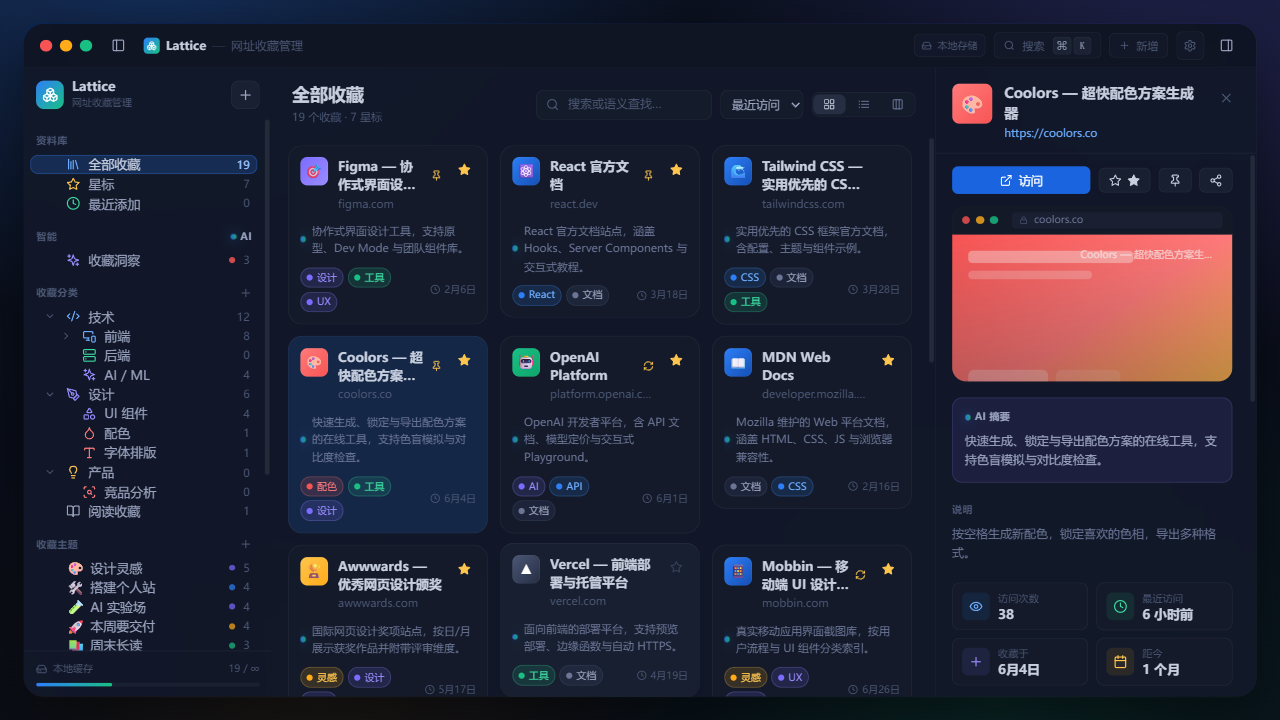
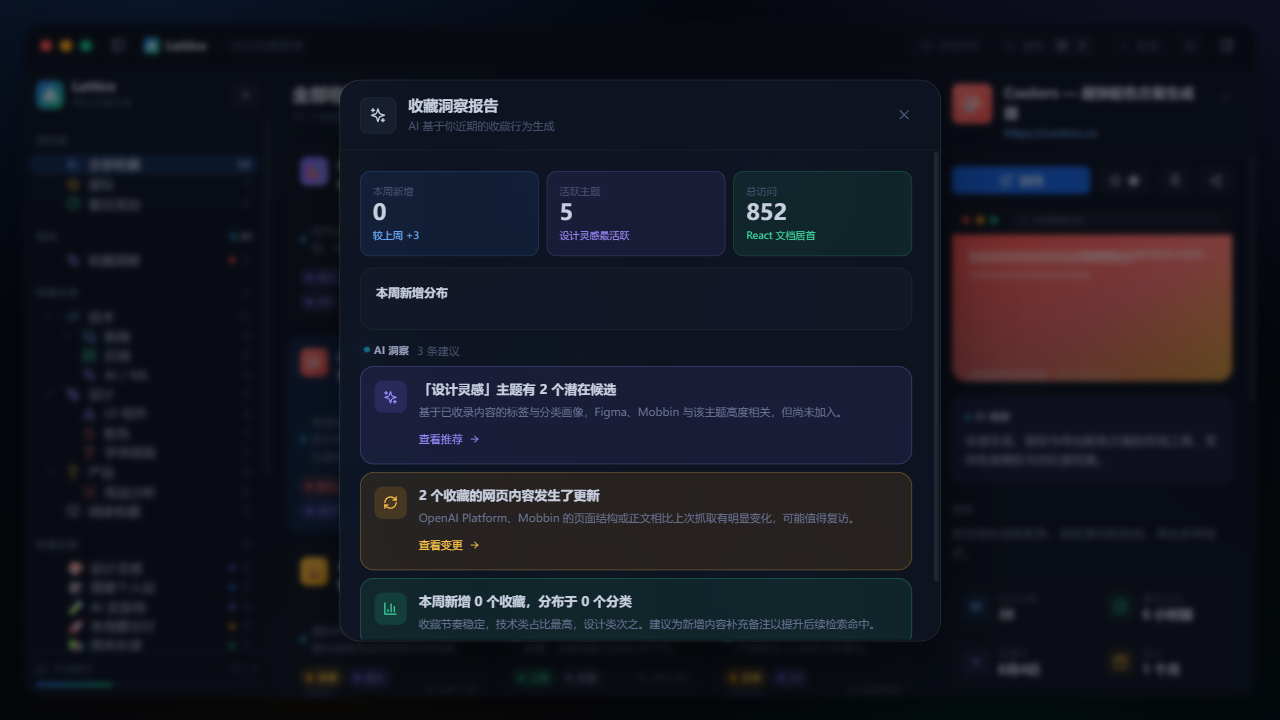
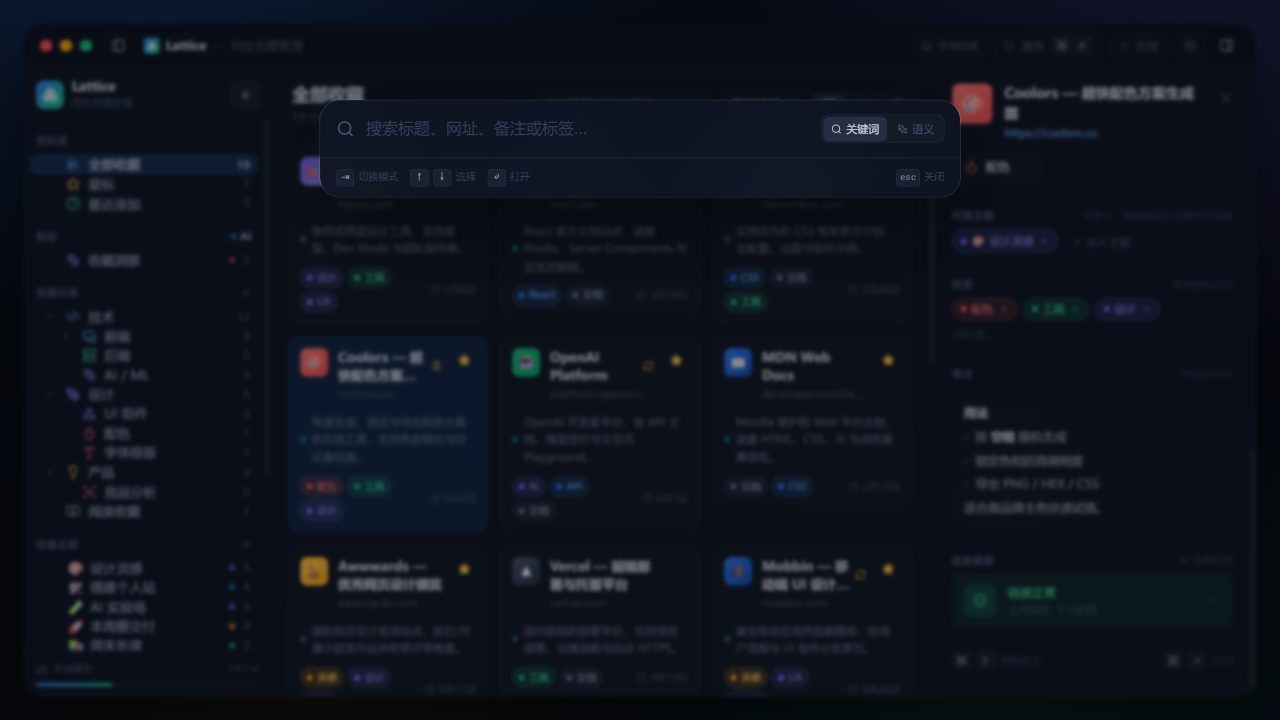
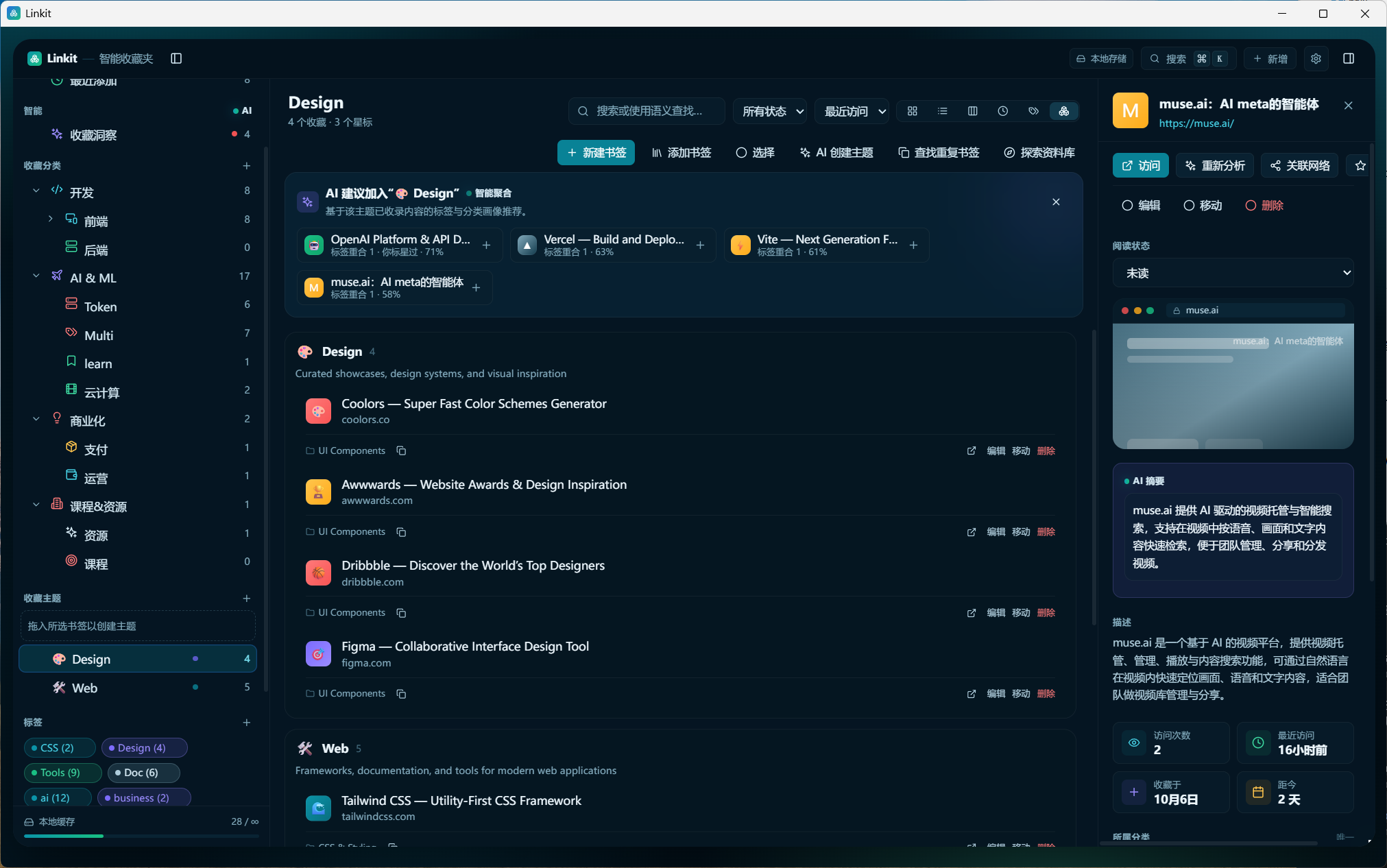
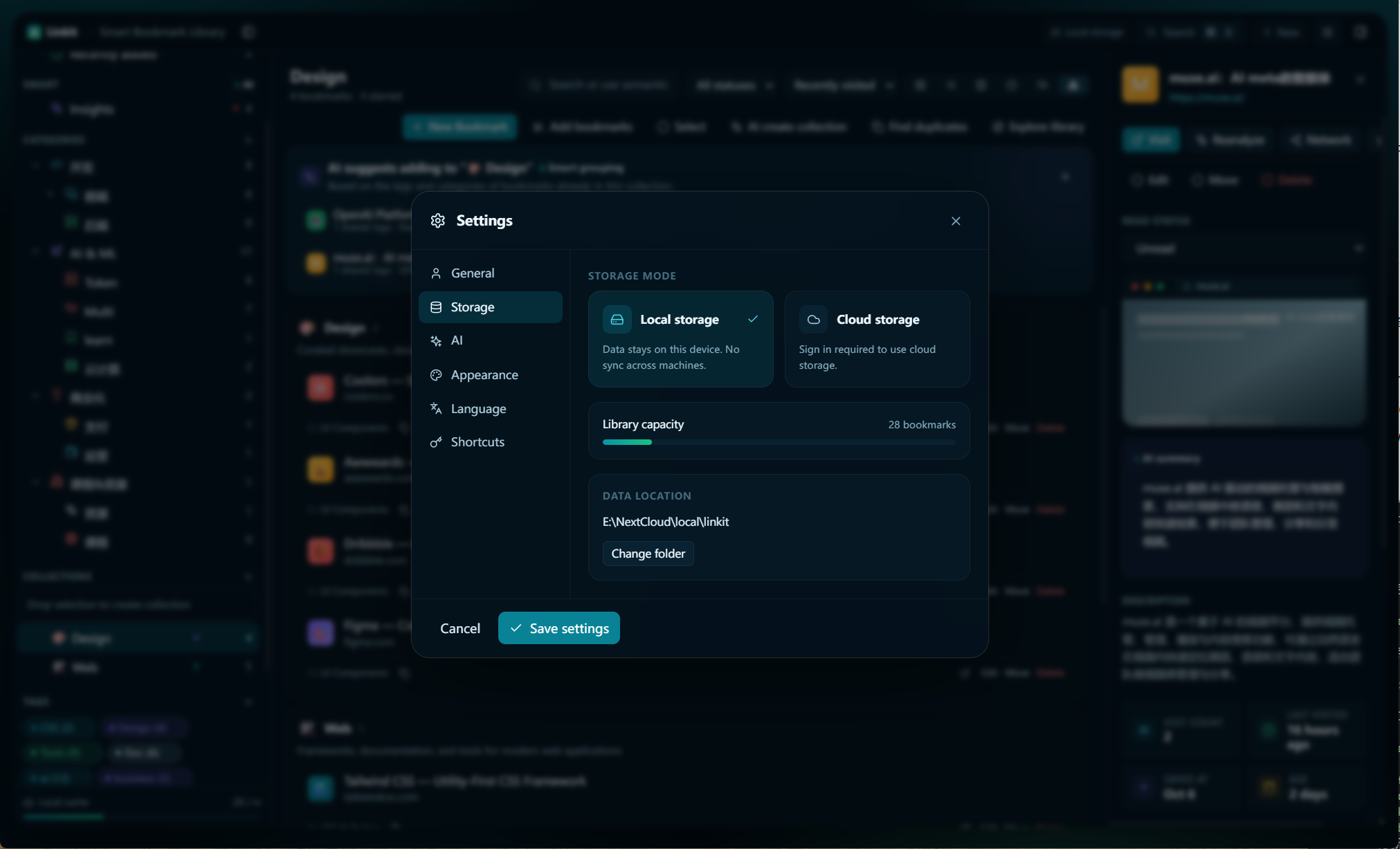
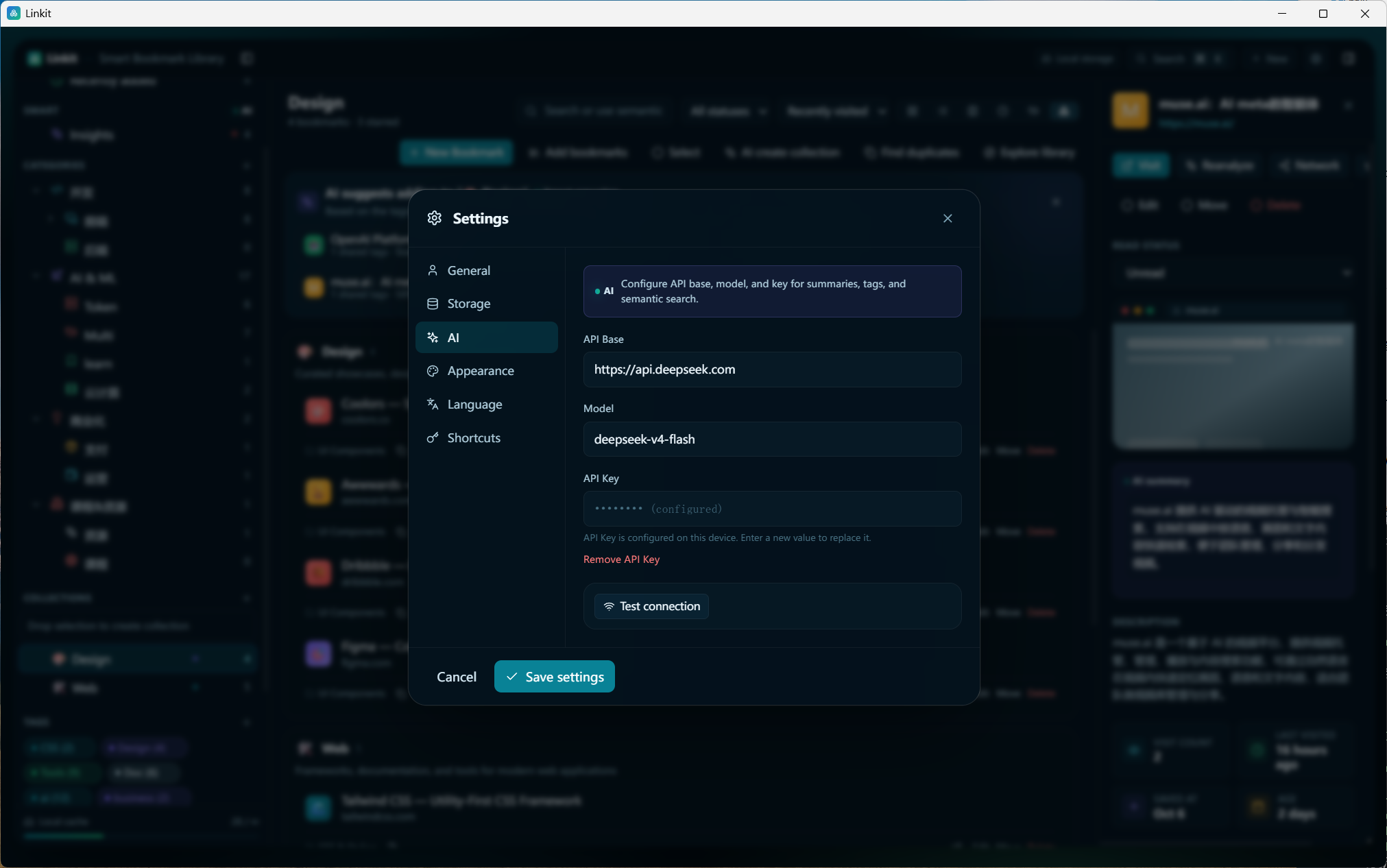
I built a local-first bookmark manager that actually remembers what you saved I saved links faster than I could find them again, so I built Linkit, a free desktop bookmark manager that fetches and summarizes every link as you save it. A browser bookmark stores a URL and nothing else. That leaves three gaps: keyword search only matches exact titles, you have to open a link to know what it says, and the same article saved from three URLs looks like three entries. Linkit works on the saved content instead. !Dashboard What it does Summaries and key takeaways. Every saved link is fetched, summarized, and broken into a few takeaways. You scan the summary instead of opening twelve tabs. Point it at any OpenAI-compatible API, or run a local model through Ollama. !AI insights Search that matches on meaning. Keyword search fails the moment you don't remember the wording. "How to make large file transfer faster" should find a link whose title says "transfer optimization". Search here embeds your library and matches on vector similarity. !Spotlight search A knowledge graph. Your library renders as an interactive network, connected by shared tags, collections, and semantic similarity. It shows which topics you keep circling and which areas you've never touched. AI-curated collections. Give it a goal in plain language, like "collect modern frontend tooling and design resources", and it builds a collection out of bookmarks you already saved, writes the title and description, and recommends tags. Inside a collection, a banner keeps suggesting related bookmarks, and every suggestion is an editable preview until you confirm it. !AI collections Duplicate detection. Exact URL matches, plus AI-detected near-duplicates where the same content lives at different URLs. Review and merge with one click. Link health checks. A background scan finds 404s and silently changed pages, so dead links don't quietly rot. Curation insights. Linkit summarizes your habits on a recurring schedule: the tags you lean on, how far you got through your unread pile, and the highlights worth a second look. What's new in v0.5.x Interface scaling that actually tracks your display. Linkit now has eight interface sizes, and the zoom couples to the system display scale instead of fighting it, clamped to a safe range so the layout never breaks. The layered zoom architecture also eliminated the black borders and stray outer scrollbars that used to show up at non-native scale factors. Storage mode switching with a confirmation step. Moving between local and cloud storage now opens a dialog that shows a summary of both sides before you commit, and the settings screen has a real data-management section instead of a scattering of buttons. Import and export you can actually roll back. The import/export utilities now write a portable library document, and if an import goes wrong the app restores from a snapshot rather than leaving you half-migrated. Batch browser import also resolves save conflicts correctly, which stops a large import from colliding with itself. Simpler AI tag selection and reanalyze. The bookmark analyzer returns at most three suggested tags, and when it has nothing useful it says so instead of showing an empty picker. There's a dedicated reanalyze dialog for re-running analysis on an existing bookmark, and the new-bookmark dialog was extracted into its own component so both entry paths behave the same. Friendlier sync errors. Sync failures now surface in a dedicated toast with an explicit "return to sign in" action when the cloud session has expired, and an AI authorization dialog no longer blocks saving unrelated sections. Shortcuts you can actually rebind. The shortcut panel used to accept a single modifier plus one key, so anything else got rejected. Ctrl, Alt, Shift, and Cmd now combine freely, and the panel shows a live preview of the combination as you hold it, with a note when another app already grabbed that combination. The macOS, Linux, and Windows modifier mappings were wrong for everything except plain Cmd-or-Ctrl, which meant Alt and Cmd combinations never reached the app at all on those platforms. The AI tag suggestions in the new-bookmark dialog are buttons now too, so a suggested tag can be picked or created with one click, and the sync indicator stopped flashing a progress bar across the top of the window. Batch actions when you have a pile to clean. Switch the toolbar into selection mode and the bulk bar appears. A Select all button takes every bookmark in the current view and turns into Deselect all once they are all picked, Shift-click extends a range, and Cmd/Ctrl-click adds single items. From there you can move the selection to another category, delete it, pull it out of a collection, or turn it into a new collection. A couple of smaller fixes. Writing to a library whose root path is not a directory now returns a stable error code instead of a raw system error, and the zod dependency moved from 4.0.1 to 4.6.7 to close an audit-reported vulnerability. Local-first by default All bookmarks live in a local SQLite database on your machine. The app runs fully offline and works without an account. If you want multi-device sync, there's an optional Supabase backend with row-level security where every record is bound to your own auth.uid(), unreadable to the developer. That sync is free as well. !Storage How it's built Go for the backend, Wails to ship it as a native desktop app, React for the UI. The AI layer is provider-agnostic, so OpenAI, DeepSeek, a local Ollama instance, or anything that speaks the OpenAI API shape will work. Cross-platform binaries ship through GitHub Releases and Homebrew. !LLM config Installing brew install blue-idea/tap/linkit Windows, macOS DMG, and Linux AppImage/DEB are on the releases page. Free forever MIT licensed and 100% free. Import from Chrome, Firefox, Edge, or Safari in one click to start from the collection you already have. If you've ever lost a link you swore you'd come back to, try it: blue-idea/linkit If it helps, a star genuinely helps other people find it.
cue: a minimal, open-source media player for windows with dynamic lighting and a phone remote hey! i'm a ui designer building cue around a simple idea: “the video is the interface.” it plays video and music, with controls that disappear when you don't need them and ambient lighting that follows the colors on screen. there's also customizable subtitles, a thumbnail queue with drag-and-drop, album artwork with a pixel visualizer, and a phone remote so you can control playback without leaving bed :) built with c++ and libmpv, with ai-assisted development. free and open source under gpl-3.0-or-later. feedback, bug reports, and contributions are welcome ♡ tinypeep/cue
10|Spice AI Skills 包含資料平台相關的 agent skills,README 列出 Grok Bot 的使用方式;適合研究如何讓代理處理資料工作流程。 spiceai/skills 你最想先試哪一個? 每天都會更新 AI 工具,記得關注!
🚀 Just added the official CA of $SecScanAI to its GitHub repository! 🪙 CA: "7iymoWrLNFFmMSAKSNfSMCp7UmXfd3ZRL1t7W6c3pump" 💻 GitHub: najafdev/secscan_ai Supporting open-source builders and the AI + crypto ecosystem. 🔥 #SecScanAI #Solana #AI #Crypto #Memecoin
08|Sentry Grok Plugin Grok 外掛,讓代理查閱 Sentry 的錯誤與問題,協助追查程式異常。需要 Sentry 服務與授權;Grok Bot 相容性需確認。 getsentry/plugin-grok
DeepSeek's New AI Agent Gets Its Own GitHub Account DeepSeek published dsh-superagent on GitHub on Oct 31, 2026: a proactive coding agent for one repository, packaged for DeepSeek Harness. The team gives it its own GitHub account. When someone the team allowed asks it for work, it opens a work item, works in its own session and folder, and answers in the same conversation, usually with a pull request. Its core rule: "take as little human attention as possible, and give as much value as possible." By default, people merge its pull requests. DeepSeek calls it a research prototype for reference only, not an official DeepSeek product, and says much of its engineering was done by coding agents. The repository passed 13,000 stars in under three days. The repository thread, terminal and pull request in this Short are an illustration, not a real repository. Sources: - dsh-superagent README: deepseek-ai/dsh-superagent-prototype - Philosophy: github.com/deepseek-ai/dsh-superagent-prototype/b… - Execution (merging): github.com/deepseek-ai/dsh-superagent-prototype/b… - Deployment (agent account): github.com/deepseek-ai/dsh-superagent-prototype/b… - DeepSeek Harness: deepseek.com - Star count: GitHub, Nov 2, 2026 #shorts #deepseek #aiagents #github
OnlyHuman ⭐ 448 A filter list that blocks AI content farms from appearing in search results for people who maintain ad and content blockers. 🔗 FranklyRocks/OnlyHuman #opensource t.co
Best GitHub Repos of October 2026: VoiceStudio, HyperFrames, claude-mem + 7 More The best GitHub repos of October 2026: the top 10, ranked by stars gained on GitHub's own monthly Trending page, and whether you should actually use each one. Each project's own demo, what it's for, how to run it, and the catch from its own docs: VoiceStudio (47,234 new stars), Cloudflare's security-audit-skill, Impeccable, HyperFrames, Ghidra 12.2, Taste Skill, FreeLLMAPI, Hallmark, claude-mem and T3 Code. Like, subscribe to Agent Mode HQ, and tell me which one I should test next month. CHAPTERS 0:00 Cold open 0:21 Intro 0:40 #10 · T3 Code 1:27 #9 · claude-mem 2:21 #8 · Hallmark 3:08 #7 · FreeLLMAPI 4:01 #6 · Taste Skill 4:57 Subscribe 5:09 #5 · Ghidra 6:03 #4 · HyperFrames 6:54 #3 · Impeccable 7:55 #2 · Cloudflare security audit 8:59 #1 · VoiceStudio 10:10 Verdict 10:39 Recap 10:59 End HOW TO START ☐ 1 · VoiceStudio: Local voice cloning, dubbing, audiobooks. voicestudio.sh/install or an installer. Clone only with permission. ☐ 2 · Cloudflare security-audit-skill: npx skills add … --skill security-audit, then "security audit this codebase". Run it more than once. ☐ 3 · Impeccable: npx impeccable install, then /impeccable init. The 62-rule detector needs no AI or key: npx impeccable detect src/. ☐ 4 · HyperFrames: npx hyperframes init → preview → render. Node 22+ and FFmpeg, or the Claude Code plugin. ☐ 5 · Ghidra 12.2: Install JDK 25, download the release file (not Source Code), run ./ghidraRun. ☐ 6–10: Taste Skill (one showpiece page) · FreeLLMAPI (learning only) · Hallmark (new pages) · claude-mem (choose the provider) · T3 Code (2+ agents). SOURCES GitHub Trending, monthly (saved Nov 1, 2026): github.com/trending #1 VoiceStudio: debpalash/VoiceStudio #2 cloudflare/security-audit-skill: cloudflare/security-audit-skill Cloudflare blog: Build your own vulnerability harness: blog.cloudflare.com #3 Impeccable: pbakaus/impeccable #4 HyperFrames: heygen-com/hyperframes #5 Ghidra: NationalSecurityAgency/ghidra Ghidra 12.2 What's New: github.com/NationalSecurityAgency/ghidra/blob/Ghi… #6 Taste Skill: Leonxlnx/taste-skill #7 FreeLLMAPI: tashfeenahmed/freellmapi #8 Hallmark: Nutlope/hallmark #9 claude-mem: thedotmack/claude-mem #10 T3 Code: pingdotgg/t3code WHAT YOU'LL SEE GitHub's monthly Trending page sorted by stars gained in October, then a countdown from #10 to #1. For every repo: its own demo (README GIFs, screenshots, showcase), the use case, the exact install commands from its README, the catch in its own words, and a verdict: worth installing, worth a try, niche, or careful. Then the three I'd try first. Music under the intro and Shorts is an original bed made for this channel. No sponsorship, and not affiliated with any project shown. Demos are each project's own media; nothing was installed or benchmarked for this video. This channel renders its videos with Remotion. #GitHub #OpenSource #AIAgents #ClaudeCode #AgentModeHQ [de-DE] Die besten GitHub-Repos im Oktober 2026: VoiceStudio, HyperFrames, claude-mem + 7 weitere Die Top 10 GitHub-Repos vom Oktober 2026, sortiert nach den Sternen auf GitHubs monatlicher Trendseite, und eine Empfehlung, ob sie sich lohnen. Jedes Projekt mit Demo, Anwendungszweck, Anleitung und den wichtigsten Hinweisen aus der Dokumentation: VoiceStudio (47.234 neue Sterne), Cloudflare security-audit-skill, Impeccable, HyperFrames, Ghidra 12.2, Taste Skill, FreeLLMAPI, Hallmark, claude-mem und T3 Code. Abonniere Agent Mode HQ und teile mir mit, welches Projekt ich nächsten Monat testen soll. KAPITEL 0:00 Kaltstart 0:21 Einleitung 0:40 #10 · T3-Code 1:27 #9 · claude-mem 2:21 #8 · Hallmark 3:08 #7 · FreeLLMAPI 4:01 #6 · Taste Skill 4:57 Abonnieren 5:09 #5 · Ghidra 6:03 #4 · HyperFrames 6:54 #3 · Impeccable 7:55 #2 · Cloudflare-Sicherheitsprüfung 8:59 #1 · VoiceStudio 10:10 Fazit 10:39 Zusammenfassung 10:59 Ende SO GEHT'S: ☐ 1 · VoiceStudio: Lokales Klonen von Stimmen, Synchronisieren, Hörbücher. voicestudio.sh/install oder ein Installationsprogramm. Klonen nur mit Genehmigung. ☐ 2 · Cloudflare-Sicherheitsaudit-Skill: Führen Sie `npx skills add … --skill security-audit` aus und geben Sie anschließend „Sicherheitsaudit dieser Codebasis“ ein. Führen Sie den Befehl mehrmals aus. ☐ 3 · Impeccable: Führen Sie `npx impeccable install` aus und anschließend `/impeccable init`. Der 62-Regel-Detektor benötigt keine KI oder keinen Schlüssel: `npx impeccable detect src/`. ☐ 4 · HyperFrames: Führen Sie `npx hyperframes init` → Vorschau → Rendern aus. Node 22+ und FFmpeg oder das Claude Code-Plugin werden benötigt. ☐ 5 · Ghidra 12.2: Installieren Sie JDK 25, laden Sie die Release-Datei (nicht den Quellcode) herunter und führen Sie `./ghidraRun` aus. ☐ 6–10: Geschmackstraining (eine Beispielseite) · FreeLLMAPI (nur zum Lernen) · Hallmark (neue Seiten) · claude-mem (Anbieter auswählen) · T3-Code (2+ Agenten). QUELLEN GitHub Trends, monatlich (gespeichert am 1. November 2026): github.com/trending #1 VoiceStudio: debpalash/VoiceStudio #2 cloudflare/security-audit-skill: cloudflare/security-audit-skill Cloudflare-Blog: Erstellen Sie Ihr eigenes Sicherheits-Harness: blog.cloudflare.com #3 Impeccable: pbakaus/impeccable #4 HyperFrames: heygen-com/hyperframes #5 Ghidra: NationalSecurityAgency/ghidra Ghidra 12.2 – Neuerungen: github.com/NationalSecurityAgency/ghidra/blob/Ghi… #6 Taste Skill: Leonxlnx/taste-skill #7 FreeLLMAPI: tashfeenahmed/freellmapi #8 Hallmark: Nutlope/hallmark #9 claude-mem: thedotmack/claude-mem #10 T3 Code: pingdotgg/t3code WAS SIE ERWARTET: Die monatliche GitHub-Trendseite, sortiert nach den im Oktober gewonnenen Sternen, gefolgt von einem Countdown von Platz 10 bis Platz 1. Für jedes Repository: eine eigene Demo (README-GIFs, Screenshots, Showcase), der Anwendungsfall, die genauen Installationsbefehle aus der README-Datei, die wichtigsten Punkte im Repository und ein Fazit: Installation lohnt sich, einen Versuch wert, Nischenprodukt oder Vorsicht geboten. Anschließend die drei Projekte, die ich zuerst testen würde. Die Musik im Intro und in den Kurzvideos ist eine Originalkomposition für diesen Kanal. Es handelt sich weder um Sponsoring noch um eine Verbindung zu den gezeigten Projekten. Die Demos stammen von den jeweiligen Projekten; für dieses Video wurde nichts installiert oder getestet. Die Videos dieses Kanals werden mit Remotion gerendert. #GitHub #OpenSource #AIAgents #ClaudeCode #AgentModeHQ [es-US] Los mejores repos de GitHub de octubre de 2026: VoiceStudio, HyperFrames, claude-mem y 7 más Los 10 mejores repositorios de GitHub de octubre de 2026, clasificados según las estrellas obtenidas en la página de Tendencias mensuales de GitHub, y si realmente deberías usar cada uno. Cada proyecto incluye una demo, su propósito, cómo ejecutarlo y la información clave de su documentación: VoiceStudio (47.234 nuevas estrellas), la habilidad de auditoría de seguridad de Cloudflare, Impeccable, HyperFrames, Ghidra 12.2, Taste Skill, FreeLLMAPI, Hallmark, claude-mem y T3 Code. Dale a "Me gusta", suscríbete a Agent Mode HQ y dime cuál debería probar el próximo mes. CAPÍTULOS 0:00 Inicio 0:21 Introducción 0:40 #10 · T3 Code 1:27 #9 · claude-mem 2:21 #8 · Hallmark 3:08 #7 · FreeLLMAPI 4:01 #6 · Taste Skill 4:57 Suscríbete 5:09 #5 · Ghidra 6:03 #4 · HyperFrames 6:54 #3 · Impeccable 7:55 #2 · Auditoría de seguridad de Cloudflare 8:59 #1 · VoiceStudio 10:10 Veredicto 10:39 Resumen 10:59 Fin CÓMO EMPEZAR ☐ 1 · VoiceStudio: Clonación de voz local, doblaje, audiolibros. voicestudio.sh/install o un instalador. Clonar solo con permiso. ☐ 2 · Habilidad de auditoría de seguridad de Cloudflare: `npx skills add … --skill security-audit`, luego "Auditar seguridad en este código fuente". Ejecútalo varias veces. ☐ 3 · Impeccable: `npx impeccable install`, luego `/impeccable init`. El detector de 62 reglas no necesita IA ni clave: `npx impeccable detect src/`. ☐ 4 · HyperFrames: `npx hyperframes init → preview → render`. Node 22+ y FFmpeg, o el plugin Claude Code. ☐ 5 · Ghidra 12.2: Instala JDK 25, descarga el archivo de lanzamiento (no el código fuente) y ejecuta `./ghidraRun`. ☐ 6–10: Habilidad de Gusto (una página de muestra) · FreeLLMAPI (solo aprendizaje) · Sello distintivo (páginas nuevas) · claude-mem (seleccione el proveedor) · Código T3 (2 o más agentes). FUENTES Tendencias de GitHub, mensuales (guardado el 1 de noviembre de 2026): github.com/trending #1 VoiceStudio: debpalash/VoiceStudio #2 cloudflare/security-audit-skill: cloudflare/security-audit-skill Blog de Cloudflare: Crea tu propio sistema de análisis de vulnerabilidades: blog.cloudflare.com #3 Impeccable: pbakaus/impeccable #4 HyperFrames: heygen-com/hyperframes #5 Ghidra: NationalSecurityAgency/ghidra Novedades de Ghidra 12.2: github.com/NationalSecurityAgency/ghidra/blob/Ghi… #6 Taste Skill: Leonxlnx/taste-skill #7 FreeLLMAPI: tashfeenahmed/freellmapi #8 Hallmark: Nutlope/hallmark #9 claude-mem: thedotmack/claude-mem #10 T3 Code: pingdotgg/t3code LO QUE VERÁS La página de Tendencias mensuales de GitHub, ordenada por estrellas obtenidas en octubre, seguida de una cuenta regresiva del puesto n.° 10 al n.° 1. Para cada repositorio: su propia demo (GIFs del README, capturas de pantalla, ejemplo), el caso de uso, los comandos de instalación exactos del README, la desventaja explicada por el propio repositorio y un veredicto: vale la pena instalarlo, vale la pena probarlo, es un nicho o requiere precaución. Luego, los tres que yo probaría primero. La música de la introducción y los cortos es una composición original creada para este canal. No hay patrocinio ni afiliación con ningún proyecto mostrado. Las demos son el material de cada proyecto; no se instaló ni se realizó ninguna prueba de rendimiento para este video. Este canal renderiza sus videos con Remotion. #GitHub #OpenSource #AIAgents #ClaudeCode #AgentModeHQ [fr-FR] Meilleurs dépôts GitHub d'octobre 2026 : VoiceStudio, HyperFrames, claude-mem et 7 autres Les 10 meilleurs dépôts GitHub d'octobre 2026, classés selon le nombre d'étoiles obtenues sur la page Tendances mensuelles de GitHub, et leur intérêt. Chaque projet est présenté avec sa propre démo, son utilité, son mode d'emploi et ses points faibles (d'après sa documentation) : VoiceStudio (47 234 nouvelles étoiles), Security-audit-skill de Cloudflare, Impeccable, HyperFrames, Ghidra 12.2, Taste Skill, FreeLLMAPI, Hallmark, claude-mem et T3 Code. Abonnez-vous à Agent Mode HQ et dites-moi lequel je devrais tester le mois prochain ! CHAPITRES 0:00 Ouverture 0:21 Intro 0:40 #10 · Code T3 1:27 #9 · claude-mem 2:21 #8 · Hallmark 3:08 #7 · FreeLLMAPI 4:01 #6 · Taste Skill 4:57 S'abonner 5:09 #5 · Ghidra 6:03 #4 · HyperFrames 6:54 #3 · Impeccable 7:55 #2 · Audit de sécurité Cloudflare 8:59 #1 · VoiceStudio 10:10 Verdict 10:39 Récapitulatif 10:59 Fin COMMENT COMMENCER ☐ 1 · VoiceStudio : Clonage vocal local, doublage, livres audio. voicestudio.sh/install ou un programme d'installation. Cloner uniquement avec autorisation. ☐ 2 · Compétence d'audit de sécurité Cloudflare : `npx skills add … --skill security-audit`, puis « auditer la sécurité de ce code source ». Exécutez cette commande plusieurs fois. ☐ 3 · Impeccable : `npx impeccable install`, puis `/impeccable init`. Le détecteur à 62 règles ne nécessite ni IA ni clé : `npx impeccable detect src/`. ☐ 4 · HyperFrames : `npx hyperframes init` → aperçu → rendu. Node 22+ et FFmpeg, ou le plugin Claude Code. ☐ 5 · Ghidra 12.2 : Installez JDK 25, téléchargez le fichier de distribution (et non le code source), puis exécutez `./ghidraRun`. ☐ 6–10 : Taste Skill (une page de démonstration) · FreeLLMAPI (apprentissage uniquement) · Hallmark (nouvelles pages) · claude-mem (choisissez votre fournisseur) · Code T3 (2 agents ou plus). SOURCES Tendances GitHub (mensuelles, mises à jour le 1er novembre 2026) : github.com/trending N° 1 VoiceStudio : debpalash/VoiceStudio N° 2 cloudflare/security-audit-skill : cloudflare/security-audit-skill Blog Cloudflare : Créez votre propre outil d’analyse des vulnérabilités : blog.cloudflare.com N° 3 Impeccable : pbakaus/impeccable N° 4 HyperFrames : heygen-com/hyperframes N° 5 Ghidra : NationalSecurityAgency/ghidra Nouveautés de Ghidra 12.2 : github.com/NationalSecurityAgency/ghidra/blob/Ghi… #6 Taste Skill : Leonxlnx/taste-skill #7 FreeLLMAPI : tashfeenahmed/freellmapi #8 Hallmark : Nutlope/hallmark #9 claude-mem : thedotmack/claude-mem #10 T3 Code : pingdotgg/t3code CE QUE VOUS VERREZ La page des tendances mensuelles de GitHub, triée par nombre d'étoiles obtenues en octobre, puis un compte à rebours du n° 10 au n° 1. Pour chaque dépôt : sa propre démo (GIFs du fichier README, captures d'écran, présentation), le cas d'utilisation, les commandes d'installation exactes tirées du README, le principal inconvénient (exprimé par le projet lui-même) et un verdict : à installer absolument, à essayer, de niche ou à utiliser avec précaution. Ensuite, les trois que je testerais en premier. La musique de l'intro et des Shorts est une composition originale créée spécialement pour cette chaîne. Aucun partenariat, et aucune affiliation avec les projets présentés. Les démos proviennent des ressources propres à chaque projet ; aucun logiciel n'a été installé ni testé pour cette vidéo. Cette chaîne utilise Remotion pour le rendu de ses vidéos. #GitHub #OpenSource #AIAgents #ClaudeCode #AgentModeHQ [hi] अक्टूबर 2026 के बेस्ट GitHub रिपो: VoiceStudio, HyperFrames, claude-mem + 7 और अक्टूबर 2026 के शीर्ष 10 GitHub रिपॉजिटरी, GitHub के मासिक ट्रेंडिंग पेज पर प्राप्त स्टार रेटिंग के आधार पर रैंकिंग की गई है, और यह भी बताया गया है कि क्या आपको वास्तव में इनमें से प्रत्येक का उपयोग करना चाहिए। प्रत्येक प्रोजेक्ट का अपना डेमो, उसका उपयोग, उसे चलाने का तरीका और उसके दस्तावेज़ों में छिपी कमियां: VoiceStudio (47,234 नए स्टार), Cloudflare का सुरक्षा ऑडिट कौशल, Impeccable, HyperFrames, Ghidra 12.2, Taste Skill, FreeLLMAPI, Hallmark, claude-mem और T3 Code। लाइक करें, एजेंट मोड HQ को सब्सक्राइब करें और मुझे बताएं कि अगले महीने मुझे किसका परीक्षण करना चाहिए। अध्याय 0:00 शुरुआत 0:21 परिचय 0:40 #10 · T3 कोड 1:27 #9 · क्लाउड-मेम 2:21 #8 · हॉलमार्क 3:08 #7 · FreeLLMAPI 4:01 #6 · टेस्ट स्किल 4:57 सब्सक्राइब 5:09 #5 · घिड्रा 6:03 #4 · हाइपरफ्रेम्स 6:54 #3 · इम्पेकेबल 7:55 #2 · क्लाउडफ्लेयर सुरक्षा ऑडिट 8:59 #1 · वॉइसस्टूडियो 10:10 निष्कर्ष 10:39 सारांश 10:59 समापन कैसे शुरू करें ☐ 1 · वॉइसस्टूडियो: स्थानीय वॉइस क्लोनिंग, डबिंग, ऑडियोबुक। voicestudio.sh/install या इंस्टॉलर। अनुमति के बिना क्लोन न करें। ☐ 2 · क्लाउडफ्लेयर सुरक्षा ऑडिट कौशल: npx skills add … --skill security-audit, फिर "इस कोडबेस का सुरक्षा ऑडिट करें"। इसे एक से अधिक बार चलाएँ। ☐ 3 · इम्पेकेबल: npx impeccable install, फिर /impeccable init। 62-नियम डिटेक्टर को किसी AI या कुंजी की आवश्यकता नहीं है: npx impeccable detect src/। ☐ 4 · हाइपरफ्रेम्स: npx hyperframes init → preview → render। नोड 22+ और FFmpeg, या क्लाउड कोड प्लगइन। ☐ 5 · घिड्रा 12.2: JDK 25 स्थापित करें, रिलीज़ फ़ाइल डाउनलोड करें (स्रोत कोड नहीं), ./ghidraRun चलाएँ। ☐ 6–10: स्वाद कौशल (एक विशेष पृष्ठ) · FreeLLMAPI (केवल सीखने के लिए) · Hallmark (नए पृष्ठ) · claude-mem (प्रदाता चुनें) · T3 कोड (2+ एजेंट)। स्रोत GitHub ट्रेंडिंग, मासिक (1 नवंबर, 2026 को सहेजा गया): github.com/trending #1 VoiceStudio: debpalash/VoiceStudio #2 cloudflare/security-audit-skill: cloudflare/security-audit-skill Cloudflare ब्लॉग: अपनी खुद की वल्नरेबिलिटी हार्नेस बनाएं: blog.cloudflare.com #3 Impeccable: pbakaus/impeccable #4 HyperFrames: heygen-com/hyperframes #5 Ghidra: NationalSecurityAgency/ghidra Ghidra 12.2 में नया क्या है: github.com/NationalSecurityAgency/ghidra/blob/Ghi… #6 Taste Skill: Leonxlnx/taste-skill #7 FreeLLMAPI: tashfeenahmed/freellmapi #8 Hallmark: Nutlope/hallmark #9 claude-mem: thedotmack/claude-mem #10 T3 Code: pingdotgg/t3code आपको क्या दिखेगा GitHub का मासिक ट्रेंडिंग पेज, अक्टूबर में प्राप्त स्टार रेटिंग के आधार पर क्रमबद्ध, फिर #10 से #1 तक की उलटी गिनती। हर रिपॉजिटरी के लिए: उसका अपना डेमो (रीडमी जिफ़, स्क्रीनशॉट, शोकेस), उपयोग का तरीका, रीडमी से सटीक इंस्टॉलेशन कमांड, खुद के शब्दों में उसकी कमियां, और एक निष्कर्ष: इंस्टॉल करने लायक, आज़माने लायक, विशिष्ट, या सावधानी बरतने लायक। फिर वे तीन जिन्हें मैं सबसे पहले आज़माऊंगा। इंट्रो और शॉर्ट्स के नीचे का संगीत इस चैनल के लिए बनाया गया एक मौलिक संगीत है। कोई स्पॉन्सरशिप नहीं है, और दिखाए गए किसी भी प्रोजेक्ट से संबद्ध नहीं है। डेमो प्रत्येक प्रोजेक्ट का अपना मीडिया है; इस वीडियो के लिए कुछ भी इंस्टॉल या बेंचमार्क नहीं किया गया है। यह चैनल अपने वीडियो को रिमोशन के साथ रेंडर करता है। #GitHub #OpenSource #AIAgents #ClaudeCode #AgentModeHQ [id] Repo GitHub Terbaik Oktober 2026: VoiceStudio, HyperFrames, claude-mem + 7 Lainnya 10 repositori GitHub teratas bulan Oktober 2026, diurutkan berdasarkan jumlah bintang yang diperoleh di halaman Trending bulanan GitHub, dan apakah Anda benar-benar harus menggunakan masing-masing repositori tersebut. Demo masing-masing proyek, kegunaannya, cara menjalankannya, dan poin penting dari dokumentasinya: VoiceStudio (47.234 bintang baru), security-audit-skill dari Cloudflare, Impeccable, HyperFrames, Ghidra 12.2, Taste Skill, FreeLLMAPI, Hallmark, claude-mem, dan T3 Code. Sukai, berlangganan Agent Mode HQ, dan beri tahu saya repositori mana yang harus saya uji bulan depan. BAB 0:00 Pembukaan 0:21 Pendahuluan 0:40 #10 · Kode T3 1:27 #9 · claude-mem 2:21 #8 · Hallmark 3:08 #7 · FreeLLMAPI 4:01 #6 · Taste Skill 4:57 Berlangganan 5:09 #5 · Ghidra 6:03 #4 · HyperFrames 6:54 #3 · Impeccable 7:55 #2 · Audit keamanan Cloudflare 8:59 #1 · VoiceStudio 10:10 Kesimpulan 10:39 Rekap 10:59 Akhir CARA MEMULAI ☐ 1 · VoiceStudio: Pengkloningan suara lokal, sulih suara, buku audio. voicestudio.sh/install atau penginstal. Kloning hanya dengan izin. ☐ 2 · Cloudflare security-audit-skill: npx skills add … --skill security-audit, lalu "security audit this codebase". Jalankan lebih dari sekali. ☐ 3 · Impeccable: npx impeccable install, lalu /impeccable init. Detektor 62 aturan tidak memerlukan AI atau kunci: npx impeccable detect src/. ☐ 4 · HyperFrames: npx hyperframes init → preview → render. Node 22+ dan FFmpeg, atau plugin Claude Code. ☐ 5 · Ghidra 12.2: Instal JDK 25, unduh file rilis (bukan Kode Sumber), jalankan ./ghidraRun. ☐ 6–10: Taste Skill (satu halaman unggulan) · FreeLLMAPI (hanya pembelajaran) · Hallmark (halaman baru) · claude-mem (pilih penyedia) · T3 Code (2+ agen). SUMBER GitHub Trending, bulanan (disimpan 1 Nov 2026): github.com/trending #1 VoiceStudio: debpalash/VoiceStudio #2 cloudflare/security-audit-skill: cloudflare/security-audit-skill Blog Cloudflare: Buat sendiri alat pendeteksi kerentanan Anda: blog.cloudflare.com #3 Impeccable: pbakaus/impeccable #4 HyperFrames: heygen-com/hyperframes #5 Ghidra: NationalSecurityAgency/ghidra Ghidra 12.2 Apa yang Baru: github.com/NationalSecurityAgency/ghidra/blob/Ghi… #6 Taste Skill: Leonxlnx/taste-skill #7 FreeLLMAPI: tashfeenahmed/freellmapi #8 Hallmark: Nutlope/hallmark #9 claude-mem: thedotmack/claude-mem #10 T3 Code: pingdotgg/t3code APA YANG AKAN ANDA LIHAT Halaman Trending bulanan GitHub diurutkan berdasarkan bintang yang diperoleh pada bulan Oktober, kemudian hitung mundur dari #10 hingga #1. Untuk setiap repositori: demo masing-masing (GIF README, tangkapan layar, contoh), kasus penggunaan, perintah instalasi persis dari README-nya, kekurangan dalam kata-katanya sendiri, dan penilaian: layak diinstal, layak dicoba, khusus, atau hati-hati. Kemudian tiga yang akan saya coba terlebih dahulu. Musik di bawah intro dan Shorts adalah musik latar asli yang dibuat untuk saluran ini. Tidak ada sponsor, dan tidak berafiliasi dengan proyek apa pun yang ditampilkan. Demo adalah media masing-masing proyek; tidak ada yang diinstal atau diuji kinerjanya untuk video ini. Saluran ini merender videonya dengan Remotion. #GitHub #OpenSource #AIAgents #ClaudeCode #AgentModeHQ [it] I migliori repo GitHub di ottobre 2026: VoiceStudio, HyperFrames, claude-mem e altri 7 I 10 migliori repository GitHub di ottobre 2026, classificati in base alle stelle ottenute sulla pagina mensile Trending di GitHub, e se vale effettivamente la pena utilizzarli. Per ogni progetto troverete una demo, la sua funzione, le istruzioni per l'uso e le avvertenze presenti nella documentazione: VoiceStudio (47.234 nuove stelle), la skill di audit di sicurezza di Cloudflare, Impeccable, HyperFrames, Ghidra 12.2, Taste Skill, FreeLLMAPI, Hallmark, claude-mem e T3 Code. Mettete "Mi piace", iscrivetevi ad Agent Mode HQ e ditemi quale dovrei testare il mese prossimo. CAPITOLI 0:00 Apertura 0:21 Introduzione 0:40 #10 · Codice T3 1:27 #9 · claude-mem 2:21 #8 · Hallmark 3:08 #7 · FreeLLMAPI 4:01 #6 · Taste Skill 4:57 Iscriviti 5:09 #5 · Ghidra 6:03 #4 · HyperFrames 6:54 #3 · Impeccable 7:55 #2 · Audit di sicurezza Cloudflare 8:59 #1 · VoiceStudio 10:10 Verdetto 10:39 Riepilogo 10:59 Fine COME INIZIARE ☐ 1 · VoiceStudio: Clonazione vocale locale, doppiaggio, audiolibri. voicestudio.sh/install o un programma di installazione. Clonare solo con autorizzazione. ☐ 2 · Cloudflare security-audit-skill: npx skills add … --skill security-audit, quindi "security audit this codebase". Eseguilo più di una volta. ☐ 3 · Impeccable: npx impeccable install, quindi /impeccable init. Il rilevatore a 62 regole non necessita di IA o chiave: npx impeccable detect src/. ☐ 4 · HyperFrames: npx hyperframes init → preview → render. Richiede Node 22+ e FFmpeg, oppure il plugin Claude Code. ☐ 5 · Ghidra 12.2: Installa JDK 25, scarica il file di rilascio (non il codice sorgente), esegui ./ghidraRun. ☐ 6–10: Abilità di degustazione (una pagina di presentazione) · FreeLLMAPI (solo apprendimento) · Hallmark (nuove pagine) · claude-mem (scegli il fornitore) · Codice T3 (2 o più agenti). FONTI Tendenze di GitHub, mensili (salvato il 1 novembre 2026): github.com/trending #1 VoiceStudio: debpalash/VoiceStudio #2 cloudflare/security-audit-skill: cloudflare/security-audit-skill Blog di Cloudflare: Crea il tuo strumento di analisi delle vulnerabilità: blog.cloudflare.com #3 Impeccable: pbakaus/impeccable #4 HyperFrames: heygen-com/hyperframes #5 Ghidra: NationalSecurityAgency/ghidra Novità di Ghidra 12.2: Italiano: github.com/NationalSecurityAgency/ghidra/blob/Ghi… #6 Abilità Gusto: Leonxlnx/taste-skill #7 FreeLLMAPI: tashfeenahmed/freellmapi #8 Hallmark: Nutlope/hallmark #9 claude-mem: thedotmack/claude-mem #10 Codice T3: pingdotgg/t3code COSA VEDRAI La pagina mensile delle tendenze di GitHub ordinata in base alle stelle guadagnate a ottobre, seguita da un conto alla rovescia dal #10 al #1. Per ogni repository: la sua demo (GIF nel README, screenshot, showcase), il caso d'uso, i comandi di installazione esatti dal README, le possibili criticità descritte con le parole del progetto stesso e un verdetto: vale la pena installarlo, vale la pena provarlo, è di nicchia o richiede cautela. Infine, i tre che proverei per primi. La musica sotto l'introduzione e i brevi video è una base originale creata per questo canale. Nessuna sponsorizzazione e nessuna affiliazione con i progetti mostrati. Le demo sono i contenuti multimediali originali di ciascun progetto; nulla è stato installato o testato per questo video. Questo canale renderizza i suoi video con Remotion. #GitHub #OpenSource #AIAgents #ClaudeCode #AgentModeHQ [pt-BR] Melhores repositórios do GitHub de outubro de 2026: VoiceStudio, HyperFrames, claude-mem e +7 Os 10 principais repositórios do GitHub em outubro de 2026, classificados pelas estrelas conquistadas na página de Tendências do GitHub, e se você realmente deveria usar cada um deles. Cada projeto inclui uma demonstração, sua finalidade, como executá-lo e os pontos negativos de sua documentação: VoiceStudio (47.234 novas estrelas), security-audit-skill da Cloudflare, Impeccable, HyperFrames, Ghidra 12.2, Taste Skill, FreeLLMAPI, Hallmark, claude-mem e T3 Code. Curta, inscreva-se no Agent Mode HQ e me diga qual devo testar no próximo mês. CAPÍTULOS 0:00 Abertura 0:21 Introdução 0:40 #10 · Código T3 1:27 #9 · claude-mem 2:21 #8 · Hallmark 3:08 #7 · FreeLLMAPI 4:01 #6 · Taste Skill 4:57 Inscreva-se 5:09 #5 · Ghidra 6:03 #4 · HyperFrames 6:54 #3 · Impeccable 7:55 #2 · Auditoria de segurança da Cloudflare 8:59 #1 · VoiceStudio 10:10 Veredito 10:39 Resumo 10:59 Fim COMO COMEÇAR ☐ 1 · VoiceStudio: Clonagem de voz local, dublagem, audiolivros. voicestudio.sh/install ou um instalador. Clone somente com permissão. ☐ 2 · Cloudflare security-audit-skill: npx skills add … --skill security-audit, depois "security audit this codebase". Execute mais de uma vez. ☐ 3 · Impeccable: npx impeccable install, depois /impeccable init. O detector de 62 regras não precisa de IA ou chave: npx impeccable detect src/. ☐ 4 · HyperFrames: npx hyperframes init → preview → render. Node 22+ e FFmpeg, ou o plugin Claude Code. ☐ 5 · Ghidra 12.2: Instale o JDK 25, baixe o arquivo de lançamento (não o código-fonte), execute ./ghidraRun. ☐ 6–10: Taste Skill (uma página de demonstração) · FreeLLMAPI (somente para aprendizado) · Hallmark (novas páginas) · claude-mem (escolha o provedor) · Código T3 (2 ou mais agentes). FONTES Tendências do GitHub, mensal (salvo em 1 de novembro de 2026): github.com/trending #1 VoiceStudio: debpalash/VoiceStudio #2 cloudflare/security-audit-skill: cloudflare/security-audit-skill Blog da Cloudflare: Crie sua própria ferramenta de vulnerabilidade: blog.cloudflare.com #3 Impeccable: pbakaus/impeccable #4 HyperFrames: heygen-com/hyperframes #5 Ghidra: NationalSecurityAgency/ghidra Novidades do Ghidra 12.2: github.com/NationalSecurityAgency/ghidra/blob/Ghi… #6 Taste Skill: Leonxlnx/taste-skill #7 FreeLLMAPI: tashfeenahmed/freellmapi #8 Hallmark: Nutlope/hallmark #9 claude-mem: thedotmack/claude-mem #10 T3 Code: pingdotgg/t3code O QUE VOCÊ VERÁ A página de Tendências mensais do GitHub, ordenada pelas estrelas ganhas em outubro, seguida de uma contagem regressiva do nº 10 ao nº 1. Para cada repositório: sua própria demonstração (GIFs do README, capturas de tela, apresentação), o caso de uso, os comandos de instalação exatos do README, o problema em suas próprias palavras e um veredito: vale a pena instalar, vale a pena experimentar, nicho específico ou cautela. Em seguida, os três que eu experimentaria primeiro. A música de fundo da introdução e dos vídeos curtos é uma composição original feita para este canal. Sem patrocínio e sem vínculo com nenhum projeto mostrado. As demonstrações são mídias próprias de cada projeto; nada foi instalado ou testado para este vídeo. Este canal renderiza seus vídeos com Remotion. #GitHub #OpenSource #AIAgents #ClaudeCode #AgentModeHQ
A free, open-source CapCut with no account (I tried it) A free CapCut, with no account, and open source: three clips on the timeline, hit play, and it's ready to export. OpenCut is an open-source video editor (MIT) that runs in your browser with no account. In the video we try it on its official site, opencut.app: we import three clips from our own channel, put them on the timeline, play them back and open the export menu. 📦 Find it on GitHub: OpenCut-app/OpenCut ⚙️ Commands: Install: git clone --depth 1 OpenCut-app/OpenCut && cd OpenCut && git log -1 --format='%h %cs %s' Update: cd OpenCut && git pull --ff-only Uninstall: rm -rf OpenCut && echo removed OpenCut ⚠️ The repository is being rewritten from scratch; opencut.app runs the classic version (opencut-app/opencut-classic, also MIT). It's a beta: keep a copy of your clips. We tried it on the official site, not installed locally. 💬 Questions? Ask me in the comments. 🔔 Subscribe: one useful repo every day. Data as of Oct 30, 2026 · Not affiliated with the project. #capcut #videoeditor #opensource #github #freetools
DiscImageStudio: burn visible artwork onto CDs, DVDs and Blu-ray discs JiaFeiMiao-K-Cat/DiscImageStudio #TechTrends #technology
Code and setup: Edge0-AI/Edge0 Join our Discord for setup help or to share what you’re building: discord.com Follow @Edge0_AI for implementation notes and upcoming releases.
DiscImageStudio: burn visible artwork onto CDs, DVDs and Blu-ray discs | Discussion
Let’s make @solana RWA agents a thing themusebook/solana-rwa-agents
Subtitle Foundry: separating ASR, timing evidence, context-aware translation and human review (AGPL-3.0) I'm the developer of Subtitle Foundry, an AGPL-3.0 subtitle workbench. I'm a former professional translator/subtitler/interpreter, and the goal is to make subtitles for films and other material that would otherwise struggle to reach a global audience. I'm not making money from the project, and I'll keep maintaining it. I'm building it around state-of-the-art (SOTA) speech and language tools, with replaceable stages so the workflow can evolve as those tools improve. Repository: mrtdlgc/subtitle-foundry A few implementation decisions that may interest people working on LLM pipelines: 1. Keep transcription, timing and translation separately inspectable. The default ASR route sends the full recording to ElevenLabs Scribe v2 and uses native word timestamps. Other providers and speech-aware chunking are available. Chunked workflows can use applicable energy/Silero speech-activity alignment; that is different from word-level forced alignment. Suitable existing subtitle tracks can also bypass ASR entirely. 2. Give translation dialogue context, while retaining source timing evidence. There is an exact-timing translation mode for existing cues and an editorial mode that forms target-language cues using source words and speaker turns. Context helps with ambiguous dialogue, but a plausible correction of an ASR error can itself be wrong. The source transcript and timing evidence remain inspectable, and the editor lets a person listen, compare and correct the output. 3. Make paid stages resumable without silently repeating uncertain requests. The pipeline keeps intermediate artifacts, raw provider responses and request identity. Matching completed work can be reused. An uncertain paid submission requires reconciliation instead of an automatic retry that could charge twice. Manual review doesn't rerun ASR or translation. 4. Treat authentication and billing as explicit choices. Personal installations prioritize subscription connections through Codex, Claude Code and Grok Build when available. API translation adapters include OpenAI, Anthropic, Gemini, xAI and OpenRouter. A failed subscription connection doesn't silently fall back to a billed API. Providers still impose their own availability, allowances and charges; the open-source app has no paid feature tier. 5. Finish in a review tool. The app includes video playback, a waveform, subtitle editing, persisted corrections and SRT/ASS export. Self-hosting the application does not make requests to cloud ASR/translation providers offline. My film testing so far has been Turkish-to-English and Ukrainian-to-English, primarily with ElevenLabs plus Codex. I haven't published a comparative benchmark, and the other provider integrations haven't all had the same film evaluation. The README links installation instructions and provider documentation. For a first run, use a short clip or an existing SRT before committing to a full film. Disclosure: I used Codex while building the project, and this write-up was prepared with Codex using the repository and my project notes.
model: Anima Base-1.0 (by CircleStone Labs LLC) LoRA: 自作LoRA 2xLexicaRRDBNet by Philip Hofmann (Phhofm), licensed under CC BY 4.0 – github.com/Phhofm/models/%E2%80%A6
agent-desktop 仓库,README 里有完整的快照和操作说明 vercel-labs/agent-desktop
RELEASE OF KERBAL DRIFT AGENCY :) Hey guys, I'm excited to finally release KDA for the community, I hope you guys like it. (links are down below). It may have some small bugs which I will correct in due time. Trophy suspension showcase Screenshots and images would be very appreciated if you guys share with me:) Kerbal Drift Agency on SpaceDock Kerbal Drift Agency Github - source code
Subtitle Foundry: an open-source subtitle pipeline to help films reach audiences across languages (setup tutorial) I'm a former professional translator, subtitler and interpreter. After about 15 years away from development, I started building the subtitle workflow I wanted to use. It's called Subtitle Foundry: an open-source subtitle workbench built around state-of-the-art (SOTA) speech recognition and language models, with configurable transcription, alignment, translation and manual review. I'm the developer, I'm not making money from this project, and I'll keep maintaining it. The purpose is to help films, documentaries and other material reach a global audience when the lack of usable subtitles would otherwise keep them inaccessible across languages. Repo: mrtdlgc/subtitle-foundry What it does - Start with a local video, a YouTube URL or an existing subtitle file. Suitable existing subtitles can be reused before paying for transcription. - Choose your ASR provider and supported processing options. My current film workflow uses ElevenLabs Scribe v2 on the full recording with native word timestamps; speech-aware chunking and other providers are available. - Translate with dialogue context. You can preserve existing cue timings or use the editorial workflow to form target-language cues from source timing evidence. - Review the result with video, an audio waveform and editable subtitles. Save corrections and export SRT or ASS. - Keep intermediate artifacts and matching checkpoints, so reviewing or resuming doesn't mean repeating every paid stage. I've tested Turkish-to-English and Ukrainian-to-English, primarily with ElevenLabs and Codex. Context can help resolve ambiguous dialogue, but fluent translation can still be wrong: listening and manual review remain part of the workflow. The SOTA tools are the building blocks; I haven't published a comparative benchmark establishing the pipeline as the best overall. Try it locally with Docker You'll need Git, Docker with Compose, and credentials for the providers you choose. The default cloud workflow doesn't require a local GPU. git clone mrtdlgc/subtitle-foundry cd subtitle-foundry cp .env.example .env Edit .env: set APP_PASSWORD to a unique password of at least 12 characters. Keep PUBLIC_ORIGIN=127.0.0.1 for this local setup. Create a file named compose.override.yaml containing: services: studio: ports: - "127.0.0.1:3000:3000" Then run: docker compose up -d --build Open 127.0.0.1 and sign in with that password. 1. In Connections, add the ASR credentials you want to use; ElevenLabs is the default route. 2. For Codex subscription translation on your personal installation, sign in inside the container: docker compose exec studio codex login --device-auth 3. In Studio, select your input, source/target languages and providers. Start with a short clip to check the workflow. Use Translations if you already have an SRT and only need translation. 4. Open Watch & correct, listen through difficult dialogue, edit wording/timing and export. Personal installations support subscription-based translation connections for Codex, Claude Code and Grok Build, plus explicitly selected API providers. Availability and usage limits depend on your provider account. There is no automatic switch to a paid API when a subscription connection fails. The app is AGPL-3.0 open source. Model providers may charge you or consume your subscription allowance; those charges don't go to me. Self-hosting the app also doesn't make cloud model processing offline. For VPS setup and provider details, use the deployment and translation-provider guides linked in the README. I'd especially value reports about difficult dialogue, underrepresented language pairs and parts of the review/editor workflow that get in the way of making usable subtitles.
こちらのIssueにお願いします。↓ github.com/JEEBIS27/Mejiro_Engine/issues
Let’s update @solana agents shall we? You deserve much more. themusebook/agents
Extreme Edge NN inference library, 97% Real time MNIST Arduino UNO R3 Pretty rough but works Benchmarks on Atmega328p 40k param model -> 97% Accuracy MNIST (49ms avg inference) 4k param model -> 93% Accuracy MNIST (6.7ms avg inference) Demo (I was in a deadline for this so no flashy demo, but I made the demo where you can draw digits and have the firmware classify them)
@Screeendev @grimcodes Check mine github.com/kamkmgamer
Shared blackboard for multi-agent teams: what Veynod is (and isn’t) TL;DR: Veynod is a runtime-agnostic shared blackboard and MCP control plane. Agents in Claude Code, Cursor, Codex, or custom clients connect over MCP (Streamable HTTP) or REST, share versioned documents with provenance, claim and hand off tasks under time-bounded leases, sync delta context, and route consequential changes through quality gates and human approval. - Site: veynod.com - Remote MCP: veynod.com - npm: veynod@0.5.2 — npx veynod init - GitHub (bridge / MCP metadata): veynod/veynod --- The pain: many agents, no shared board Modern coding agents are excellent in isolation and awkward as a team. Each session has its own context window. Plans live in chat. “Shared memory” is often a pile of Markdown files, a scratch Git branch, or a paste into Slack. That works for one human and one agent. It frays when: - Two agents edit the same contract or task list at once - An agent goes silent mid-task and nobody knows whether to retry - You need a human decision before a risky change merges - Every turn re-sends the whole workspace into the prompt Orchestration frameworks (LangGraph, CrewAI, AutoGen, and friends) address a related but different need: they own the runtime graph. You write the topology in code and they execute it. That is valuable. It is not the same as giving already running editor agents a place to meet. Veynod sits in that gap: a shared board your existing agents can join. --- What Veynod is Short form: shared blackboard + MCP control plane for multi-agent teams. Longer form: agents connect over MCP (Streamable HTTP) or REST to: 1. Share versioned documents with provenance — who wrote what, under which grant 2. Claim and hand off tasks under time-bounded leases — if an agent stops heartbeating, the lease expires and the task can return to READY 3. Sync delta context — workspace_sync is built so agents pull what changed instead of the entire world every turn 4. Route consequential changes through quality gates and human approval — money, identity, legal, destructive ops, external commitments The hosted MCP endpoint is: https://veynod.com/mcp/ Auth is an agent key from the Veynod console, sent as: Authorization: Bearer agt_… The open-source veynod npm package is the CLI and MCP bridge. Official registry name is io.github.veynod/veynod. Note: as of this writing the Official MCP Registry listing may still show 0.4.1 while npm is 0.5.2 — prefer the npm version when installing. --- When to use it Good fit: - You already run multiple agents (two Claude Code sessions, Cursor + Codex, a reviewer agent, a supervisor on a small VPS) - You need shared, versioned project memory that survives process death - You want leases so crashed workers don’t hold work forever - You want human gates on specific classes of change without babysitting every token - You prefer agents that speak MCP, not a new proprietary SDK as the only door Weaker fit (use something else, or use both): - Single-agent chat with no hand-offs - You need a full orchestration DSL and graph debugger as the primary product (LangGraph Studio, etc.) - You only need a vector store / RAG index - Air-gapped offline-only workflows (hosted MCP assumes network) --- Quickstart 1. Init npx veynod init Approve the device code in the browser. The CLI configures Claude Code, Cursor, or Claude Desktop for the remote MCP endpoint and keeps the agent key sealed to your terminal. 2. Point a client at the MCP URL If you configure MCP JSON by hand, the important bits are the URL and the bearer header: { "mcpServers": { "veynod": { "transport": "streamable-http", "url": "https://veynod.com/mcp/", "headers": { "Authorization": "Bearer agt_YOUR_KEY_HERE" } } } } Exact client schema varies (Cursor vs Claude Code vs custom SDKs). Prefer npx veynod init when you can — it writes the shape your installed client expects. 3. First call Once connected, agents typically start with orientation / sync primitives (on the product side: get_orientation, then workspace_sync for deltas). From there they can read and write shared docs, claim tasks, heartbeat, and hand off. Do not put agt_ keys in tool arguments, prompts, or git. --- Comparison framing (honest) | Approach | Strength | Gap Veynod targets | |---|---|---| | Ad-hoc shared Markdown / CLAUDE.md | Simple, local, no new service | Weak concurrency, no leases, easy context bloat, soft provenance | | Single-agent long memory (one session / one store) | Great for one worker | Doesn’t coordinate peers across runtimes | | Runtime orchestration (LangGraph, CrewAI, …) | Explicit graphs, retries, tooling | You adopt their runtime; editor agents aren’t first-class peers | | Veynod | Shared board + MCP/REST for heterogeneous agents | Not a graph engine; not a vector DB; early ecosystem surface | You can combine them: keep LangGraph (or a Crew) for a subgraph, and park cross-agent documents, leases, and human gates on Veynod. --- Limitations (please read) - Early product. Directory listings and registry metadata are catching up; GitHub stars are not a metric we lean on. - Version skew: npm veynod@0.5.2 vs Official Registry io.github.veynod/veynod at 0.4.1 until republish. Install from npm. - Hosted control plane. The public MCP URL is on veynod.com; treat network and key hygiene as part of the design. - Not magic. Leases recover crashed workers; they don’t fix a bad decomposition. Gates slow down risky merges; they don’t invent good taste. - Not a drop-in replacement for your CI, issue tracker, or RAG stack. --- Why MCP (Streamable HTTP) matters here Remote MCP lets heterogeneous clients share one tool surface without embedding a proprietary SDK in every runtime. Streamable HTTP is the transport many hosted servers standardize on. Bearer auth at the connection keeps secrets out of tool schemas and model context — the model sees semantic arguments; the client attaches Authorization out of band. That split is why a shared blackboard fits MCP well: the board is the durable state; each agent is a short-lived worker with a key. --- Links - Product: veynod.com - MCP: veynod.com - npm: npmjs.com - GitHub: veynod/veynod - Optional monorepo: MuadibUsul/veynod If you try it with a two-agent setup (builder + reviewer), I’d love a note on what broke first — leases, sync, or the human gate UX. --- Disclosure: I’m writing this as someone working on Veynod.
Aletheia 0.1.13: start the MCP server from npm, and a fix for the MCP Registry entry Aletheia (npm: aletheia-mem) is a free, local memory and rules hub for AI coding tools. Each coding agent forgets between sessions and keeps its own rules file. Aletheia keeps one SQLite store on your machine. Tools read it over MCP, REST or a CLI, and one rule set is synced into CLAUDE.md, AGENTS.md, GEMINI.md, Cursor and Windsurf rules, and Copilot and Aider files. Version 0.1.13 is a patch release. Here is what changed. Start the MCP server from npm aletheia mcp runs the MCP server over stdio. It is the same server as the aletheia-mcp command. With no checkout and no global install, an MCP client can start it like this: { "mcpServers": { "aletheia": { "command": "npx", "args": ["-y", "aletheia-mem", "mcp"] } } } Bun 1.1 or newer must be on the PATH. bunx aletheia-mem mcp works too. The MCP Registry entry starts the server Aletheia is listed in the official MCP Registry as io.github.mohamed-ashraf-elsaed/aletheia-mem. A registry client runs an npm package by its name, so it ran npx aletheia-mem. That is the CLI, and with no argument it only printed its help. Up to 0.1.12, a registry install got the help text instead of a server. The manifest now passes the package argument mcp, so the client runs npx aletheia-mem mcp. The published package answered initialize and listed its 13 tools through npx -y aletheia-mem@0.1.13 mcp. No registry client has installed it from the new entry yet, so that part is not tested. A new docs layout The docs site has a new layout: a sidebar of collapsible groups, an "On this page" column, and dark code blocks with a copy button. Every page has search (Ctrl K, Cmd K on a Mac, or /) and a light and dark theme switch. The pages still load no script file and nothing from another origin. Install npm install -g aletheia-mem aletheia-server It needs Bun 1.1 or newer. The server binds to loopback only. There is no account and no telemetry. Status Alpha. Hooks have run in real sessions of Claude Code, Command Code and Codex CLI, on one machine. Cursor, Gemini CLI and Windsurf configs are written from their docs and not yet tested on a real install. If you run it with a tool I have not tested, open an issue with the tool, its version, the command and the result. - Release notes for 0.1.13 - Documentation - Source on GitHub (Apache-2.0)
[Showcase] A read-only MCP server that tells your AI what’s in a folder, what’s stale, and where space went I built and published mcp-folder-scout, a small read-only MCP server that lets any AI assistant triage a folder: what’s in it, which files are stale, and where the space is going, without being able to touch or change anything. Why I made it: I kept wanting my AI assistant to help me clean up and understand messy directories, but I didn’t want to hand it write access to do it. So this is deliberately read-only, with safeguards that keep sensitive files out of reach. What it does: - Reports folder contents and structure - Flags stale or old files - Shows where disk space is going - Read-only by design, with protection for sensitive files It’s built with FastMCP in Python and published to PyPI and the official MCP registry, so it’s quick to install and plug into your client. Let me know your feedback and thoughts, what you’d want it to surface next, or any rough edges. Happy to answer questions. GitHub: Link PyPI: pip install mcp-folder-scout
机器挂过两次照片全没了。备份软件按容量分档收费,备份文件还大到放不下。 borg 去重压缩备份:相同内容只存一份,日增量几十兆,加密+快照恢复。 borgbackup/borg
@kevinlewis4801 The skill that builds these is open source. codepawl/viz3d
主な機能:ワンクリックでの起動、PWA、スライドショー、バックグラウンド再生、PiP(対応ブラウザのみ)、パスワード保護、HTTPS など 最新版は GitHub で公開中です。ストア版への反映は1〜2ヶ月ほど遅れる場合があります。 tuki0918/eagle-media-preview-server #Eagle
@neethanwu Here it is: spaceylamb/umbra-time-tracker Demo site: spaceylamb.github.io Everything is configurable: which sources, which model, which plugins
本来用 mika 来做安卓控制的,现在又得换回 ADB 直接控制。 是好项目 wangzan101/mika
A Tiny Regex Bug in Adyen's Java Library, and How My Fix Shipped in SDK v42.0.0 In my last posts I wrote about why I started open source and about my first merged PR in Zalando Logbook. This one is about a PR in the Adyen Java API Library, and it is a good example of how a very small bug can hide in plain sight. What is the Adyen Java library? Adyen is a global payments company, and this library is how Java applications talk to Adyen's APIs. The whole SDK has to build the correct base URL for every service, for both test and live environments. If that URL is wrong, the payment call goes to the wrong place. The bug The method createBaseURL in Service.java swaps test URLs for live URLs. It used String.replaceFirst() to do that. Here is the catch: replaceFirst() takes a regex, not a plain string. In regex, a dot . means "any character". So a URL part like pal-test.adyen.com was not matching a literal dot. It was matching any character in that position. Simplified, it looked like this: // Before: the dots are treated as "any character" because this is a regex url = url.replaceFirst("pal-test.adyen.com", "pal-live.adyen.com"); For normal URLs it worked fine, which is exactly why nobody noticed. But a URL that only looks similar, with other characters where the dots should be, could still be transformed by mistake. The fix The fix was small. I replaced the affected replaceFirst() calls with String.replace(), which matches plain text with no regex at all: // After: plain literal matching, no regex wildcard risk url = url.replace("pal-test.adyen.com", "pal-live.adyen.com"); I updated the pal-, checkout- and device-api- blocks. I left the two calls without dots (-live to -test and back) as replaceFirst() on purpose, because they were not affected by this issue. I also added a test, testLivePalUrlOnlyMatchesLiteralDots(), using a URL shaped like pal-testXadyenYcom. It looks like the real endpoint but has no literal dots, so it must not be transformed. The test proves the fix and protects against the bug coming back. What the review taught me - Keep the scope tight. The maintainer said he thought about asking me to use .replace in the other places in the method for consistency. Then he decided it was not necessary, because it was unclear whether that would cause some other issue. A good reviewer is careful about changes that were not asked for. It reminded me to fix the bug I was given, not everything I could. - Formatting is part of the PR. The project had recently enforced code formatting, and my PR was blocked until I ran mvn spotless:apply. A tiny thing, but it taught me to run the project's formatter and checks before pushing, every time. - Tests are the real proof. My first version of the test was not strong enough, and I improved it so the URL structurally matched the real one with non-dot separators. A test should fail without your fix, otherwise it proves nothing. The PR was approved and merged, and the change shipped in SDK v42.0.0. Seeing something I wrote inside a release of a payments SDK was a good feeling. The change was small, but real people who use the library get it. What I would tell someone starting out 1. Small bugs are good first PRs. You do not need a big feature to make a real contribution. 2. Read the project's contributing rules and run its formatter and tests before you push. 3. Write a test that fails without your fix. 4. Do not widen the scope. Fix what the issue asks for. Proof of my work Everything here is public, so you can check it yourself: - Adyen/adyen-java-api-library #1952: the regex fix (merged, shipped in v42.0.0) - The original issue #1838 - zalando/logbook #2301: StatusCodeBasedSink and LevelBasedHttpLogWriter (merged) - PicnicSupermarket/error-prone-support #2275: merged after review - Sionna Visualizer: my side project, a 6G + AI dashboard (live demo) - My GitHub: all my repos and contributions Next post: my PR in Picnic's error-prone-support, and what working with a strict reviewer taught me. If you are a maintainer, a recruiter or a team looking for someone who learns in public and likes to collaborate, my DMs are open. Tell me in the comments if you have hit a regex surprise like this one.
@VibeMediaStudio @fal @threejs Go cook your own game sir! abouchedidxcode/open-source-hands
Can you pay people to make one-off designs I want this kata0510/Lily58 but hall-effect
@realMinimasoft concurrent writes are weaker than something like btrfs of course, but less of a gap than you'd think! chrisdavies/dbench