Mentions
Conversations linking to GitHub, newest first. Times are UTC.
Mentions by source
X
Bluesky
Hacker News
V2EX
Qiita
DEV
Mastodon
Latest posts
🔗 GitHub: ryuxdsgn/design-intelligence --- ✉️ If you’re into AI, ML, agents, and building real systems, join my newsletter (it’s free): dankornas.substack.com
@Jaczaar No number makes one pass trustworthy: “sometimes” means each run rolls the dice. I’d run each case 10+ times and report a rate, not a pass. Delimiters lower the odds; they don’t remove them. AgentSec plants this exact attack if you want to compare: invarislabs/invaris-agentsec
@Athena_is_her @N0neyaBeeswax0 The algorithm is public: xai-org/x-algorithm
3/ I started from KDA mit-han-lab/kernel-design-agents, which placed top 3 in every full-agent track of the MLSys 2026 FlashInfer contest, so it's a solid baseline. I've moved to the latest Humanize flows and slowly started tuning things for this challenge.
BinSorter Pro — free auto-sort for Premiere Pro, After Effects, DaVinci Resolve & Unreal Engine BinSorter Pro — a free, open-source panel that sorts your project into bins in one click. Works in Premiere Pro, After Effects, DaVinci Resolve Studio and Unreal Engine 5. ⬇ Free download: github.com/YuriiErmyakov/BinSorterPro/releases/la… 💻 Source code (MIT): YuriiErmyakov/BinSorterPro #PremierePro #AfterEffects #DaVinciResolve #UnrealEngine
deepseek creator mode: What It Is, How to Try It, and How to Stay Safe --- title: "deepseek creator mode: What It Is, How to Try It, and How to Stay Safe" published: true tags: ai, deepseek, automation, tutorial description: "A research-based, practical guide to deepseek creator mode in DeepSeek Harness: what it does, the real install steps, and safety tips for small teams." --- deepseek creator mode is a new way to build add-ons for DeepSeek Harness by simply describing what you want. DeepSeek introduced it on Monday, 2 November 2026, and Bloomberg reported that the Harness team says it lets users "turn ideas into plugins that you can use." This research-based guide covers what it is, the official setup steps, and how small teams can use it safely. What DeepSeek Harness and Creator Mode are DeepSeek Harness (dsh) is DeepSeek's open-source agent app, released under the MIT licence and built on an "everything is a plugin" design. On its official page, DeepSeek says it is in public preview worldwide and can help with everyday work (documents, data, slides), coding, research and scheduled background tasks. You can run it as a desktop app or launch a web interface. On 3 November, the GitHub API showed the repo with more than 269,000 stars. Creator mode is the part that extends the app itself. According to that page, you can "install plugins, or create them through chat in Creator mode" to add tools, skills and interface pieces. The page's demo asks for a Pomodoro timer plugin, and the agent writes, installs and checks it. Quartz lists a design workspace, a sandbox game and a 3D model visualiser as examples DeepSeek shared. investing.com adds a 3D model rendering plugin and a video editing workbench, and notes that the agent is aimed at developers rather than casual users. How to install and try it These steps come straight from the project README and Web UI guide: 1. Install Node.js. 2. Start the web interface: npx @deepseek-ai/dsh web It starts at http://127.0.0.1:3080 and opens your browser. 3. Add a model. Go to Settings → Models and paste a DeepSeek API key. The model guide explains how to add other providers or an OpenAI-compatible endpoint. 4. Pick a workspace with Choose workspace. You can't send messages until one is selected. 5. Switch to Creator mode and describe a small plugin in plain words, for example a simple timer or a checklist panel. If you prefer the source, the README also lists git clone, then pnpm install, pnpm run build and pnpm dsh web. Keep in mind that the app is free and open source, but the model calls you make with your API key may be billed by the provider. Safety tips for small teams DeepSeek is unusually direct about the risks. Its safety notice says Harness has not had a security audit, can run code and commands the model writes, and can load third-party plugins that may change or delete files or leak data or credentials. The project also warns of compatibility-breaking changes during the developer preview. A design note in the repo explains that installing plugins needs full access or a one-time approval, because plugin code runs with the app's own permissions and stays installed across sessions and restarts. What that means in practice: - Read the plugin before you approve it. Creator mode writes real code. Open the generated files and make sure they only do what you asked. - Keep approval prompts on. Stick with the default "workspace write, ask first" style of permission rather than full access, so you see each sensitive step. - Run it somewhere disposable. DeepSeek suggests a throwaway virtual machine, container or separate environment, plus backups of any files it can reach. - Protect your API keys. Keys are stored locally (in $DSH_HOME/.credentials.yaml, per the docs). Don't put client passwords or payment logins in the workspace, and use a separate, spend-limited key if your provider supports one. - Only add plugin sources you trust. The plugin index guide calls indexes third-party content and recommends https: links. Who it suits Creators and small businesses comfortable with a terminal can use it to build small helpers without writing code. For client-facing work, treat it as an experiment for now and keep a person in charge of every install. --- For more research-based AI news, visit ainews.useaifix.com. For help with AI automations for your business, see useaifix.com.
So Capycoin just hit 600K but the entire narra is about a small movement trying to bring down Elon and Ultra Rich Their GitHub is the only place they have open that we could donate too. github.com/capytistass Imagine an interaction t.co
MetroWin Launcher - Free&OpenSource launcher like WindowsPhone for Android I grew up loving Windows Phone and missed how fast and clean it felt it needs MetroWin Launcher brings the Windows Phone 8/8.1 Start screen to Android: flat live tiles, an alphabetical app list, turnstile and tilt animations. It also does the system things a launcher can really do, and it does nothing at all when it's not on screen. Key Features: - Live tiles you can resize and group into folders, with multiple Start screens, widgets and a pinned-contacts "People" hub - Windows Phone-style Action Center, grouped notifications, Metro lock screen, voice commands and indexed search - Three themes (Classic, Modern Glass, Modern Droid) with custom colors, plus encrypted sync of your layout Cost: FREE AND OPEN SOURCE! Link: developerkenshi-coder/MetroWinLauncher Important Installation Notice: In recent versions of Google Play Services / Google Play Store, Google has begun restricting sideloading for apps not distributed through its official store, flagging them as potentially harmful. I am actively working on resolving this issue, and updates will follow soon. If you wish to install the app and are blocked from doing so, you can temporarily disable Google Play Protect in the Google Play Store settings.
The harness, grader, digital twin and its virtual instruments, all 32 evaluation worlds, and all 256 investigations with scores and traces are public. Run an agent, inspect a failure, test a learning method, or help us extend the environment. Code: Dynamical-Systems-Research/sdl2 Dataset: huggingface.co
@artyoyom В среднем не ругаются. Возможно, потому что и все разрабы уже активно вайбкодят. А в том же лендинге какая уж разница какой там код. Мои частоиспользуемые — это скиллы от Vercel (github.com/vercel-labs/agent-skills/tree/main/ski…). Превосходный набор, /writing-guidelines я использую достаточно часто. /break-ui от @emilkowalski — это превосходный скилл для самоконтроля. /web-animation-design это то, что калибрирует меня достаточно нередко. Кажется, достался мне из курса animations.dev.
Is it aware of projects like [1] and implementing those? [1] lyramakesmusic/neuron-explorer
curl trusted the hostname "localhost" instead of the wire. With a forward proxy, loopback isn't loopback, so the Secure cookie goes to the middleman. A name is not a route.
curl trusted the hostname "localhost" instead of the wire. With a forward proxy, loopback isn't loopback, so the Secure cookie goes to the middleman. A name is not a route. curl#23699
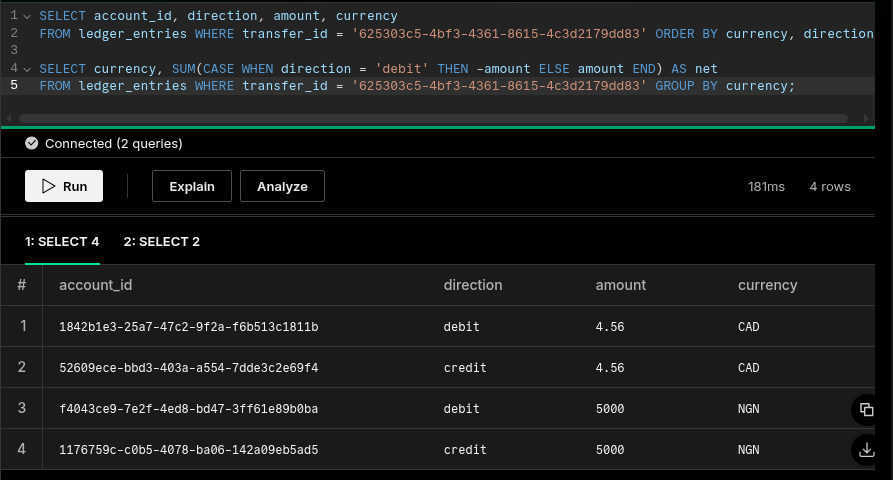
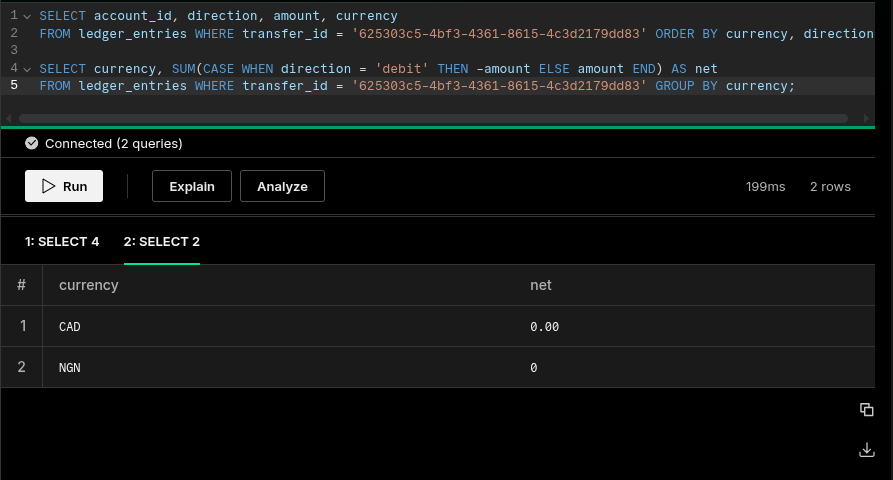
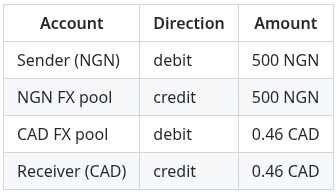
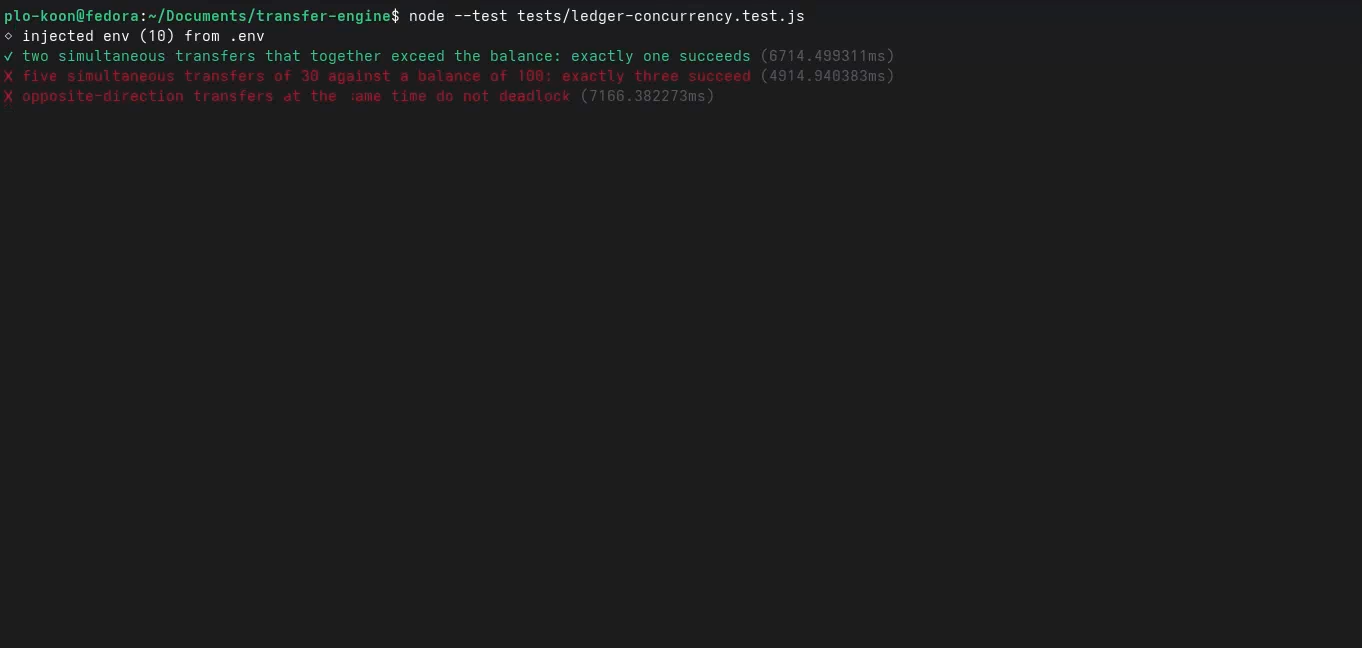
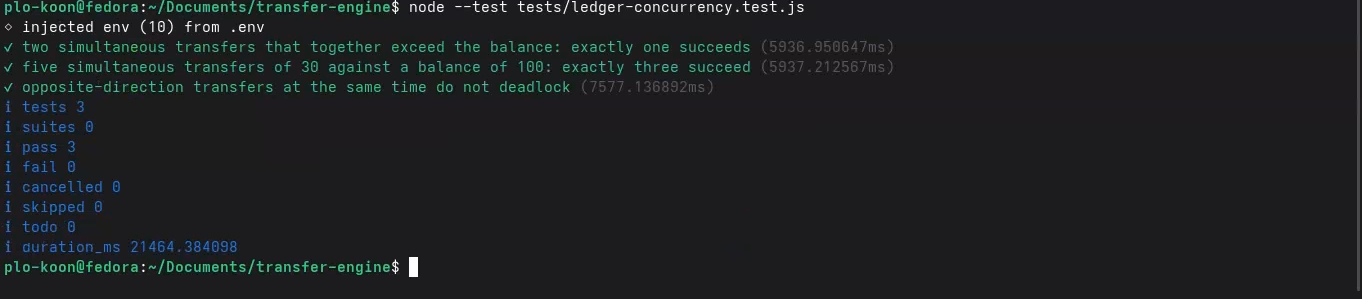
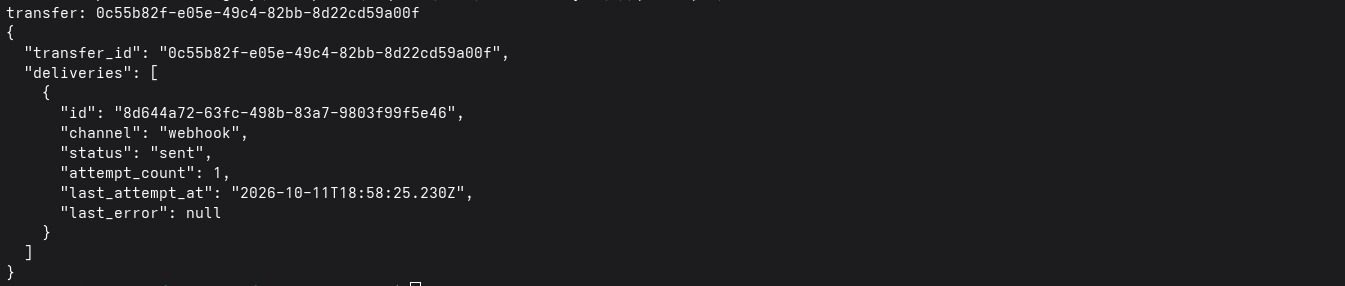
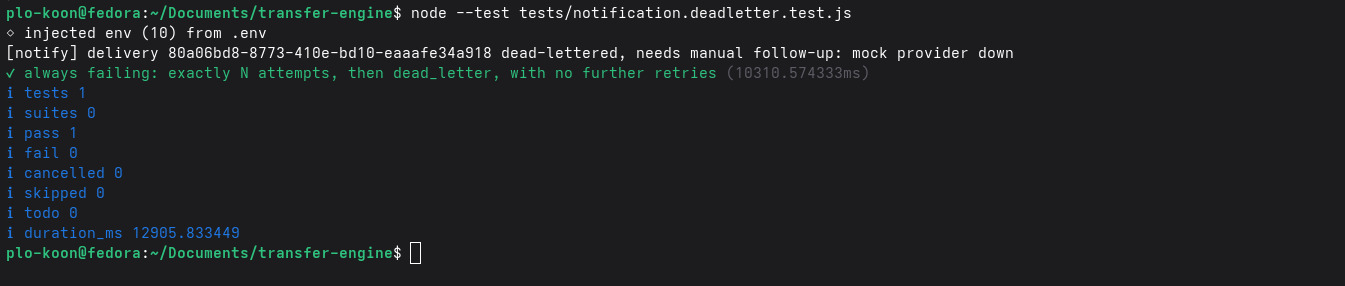
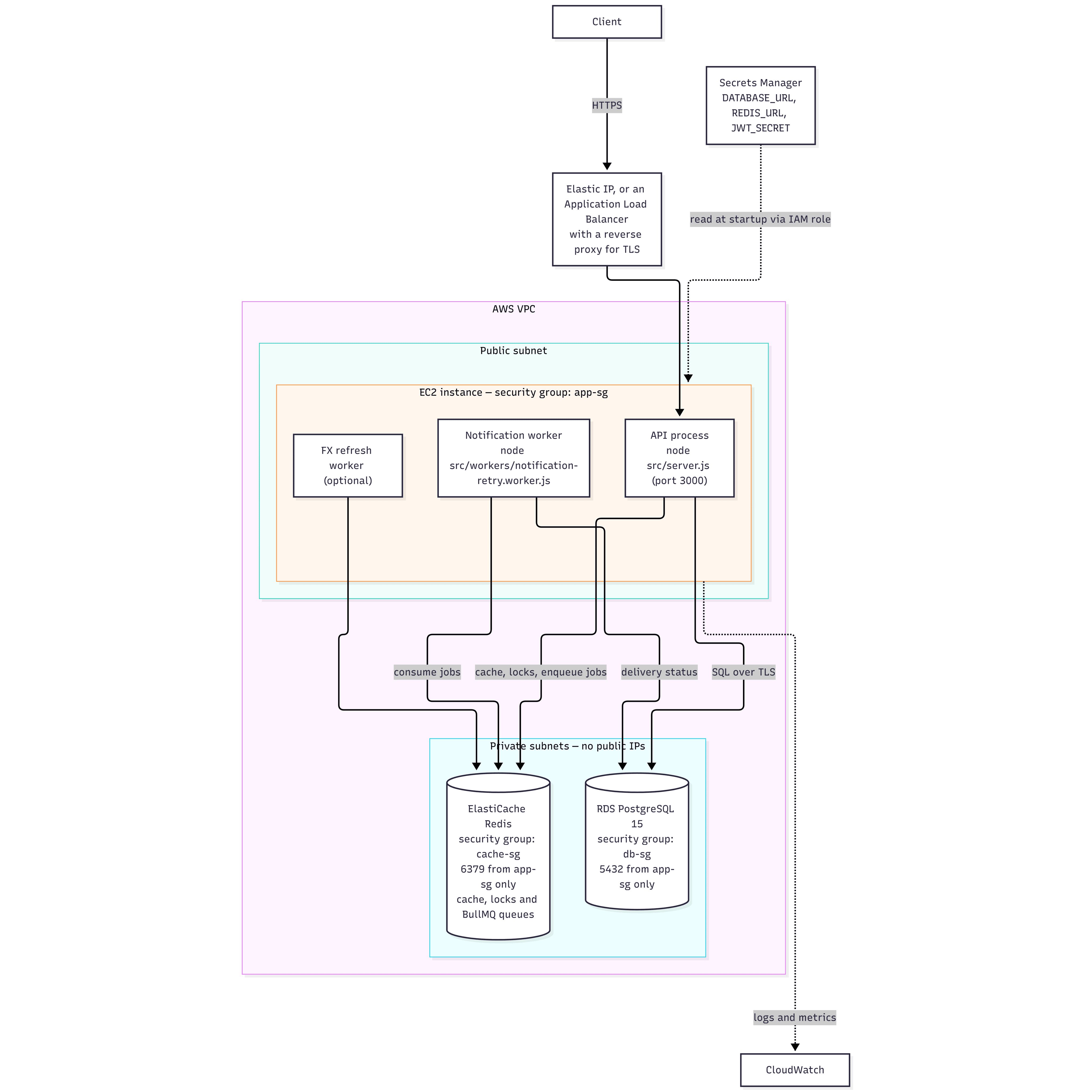
Six decisions behind a cross-border transfer engine I built a backend that moves money between currencies. The product is deliberately small: two currencies (NGN and CAD), mocked FX and webhook providers, and a handful of endpoints. The point was the layer underneath, where payment software fails: rounding errors, balances that drift from their history, retries that double-send, and customers who never know the money arrived. This post covers six decisions I would defend in a design review, what each one costs, and what went wrong along the way. The code and the README are here. 1. Money is never a float In JavaScript, 0.1 + 0.2 is 0.30000000000000004. In a ledger, that bug compounds. So amounts travel as strings, all arithmetic goes through one small module built on decimal.js, and the database stores them as NUMERIC. A unit test fails against a float implementation, which is how I know the rule is enforced and not just intended. The cost is ceremony: nobody gets to write a + b on money. I think that is the right price, because funnelling every calculation through one module is the only way a rule like this survives a team. 2. An append-only, double-entry ledger Every movement of money is a set of ledger entries that net to zero. Entries are never updated or deleted; a correction is a new, offsetting entry. That makes the system auditable by construction, and any balance can be rebuilt by replaying entries. I also keep a cached balance on each account, updated in the same database transaction as the entries, because summing a growing table on every request is a poor trade. The cost is that it is a second copy of the truth. A scheduled job that compares the cache with the ledger is the first thing on my “next” list, and the README says so plainly. !SQL query snippet 1 !SQL query snippet 2 3. Cross-currency transfers need four entries, not two Sending 500 NGN to a CAD account is not one debit and one credit. The two sides are different currencies and different amounts. I use a pool account per currency as the counterparty: !currency pool pair table The first two entries net to zero in NGN and the last two net to zero in CAD, so each currency balances on its own. The 0.46 is 500 multiplied by the rate locked when the transfer was created, rounded to two decimals. That rate is tied to the transfer with a unique constraint, so it can never be re-locked: the price shown is the price charged. The simpler option was a single debit and credit with a conversion note on the side. I rejected it because then no currency’s ledger actually balances. The cost is real: a pool’s balance goes negative in one currency and positive in the other, which represents the platform’s open position, and there is no liquidity management on top of it yet. 4. Lock the rows, then prove the lock works Two requests try to spend the same 100 at the same moment. Both read the balance, both see enough money, both proceed. The fix is pessimistic locking: inside the ledger transaction, I lock every account involved with SELECT ... FOR UPDATE before checking the balance, so the second request waits and then sees the true balance. Locks are always taken in account-id order, which prevents a deadlock when A is paying B while B is paying A. I chose pessimistic locking over optimistic retries because correctness matters more than throughput on a hot account, and because the failure mode is simple to reason about. The cost is that a very busy account becomes a serialization point. The part I care about most is the test. Two transfers of 60 against a balance of 100: exactly one must succeed. Five transfers of 30: exactly three. Then I deleted the lock and watched both go red. A test you have never seen fail has not proven anything. One accident helped. My database was on Neon and my Redis on Redis Cloud, about 190 milliseconds per round trip. That made every transaction slow and every race wide, which is exactly what you want when you are trying to catch one. !concurrency failed !concurrency passed 5. Idempotency has two layers Clients retry and networks time out, and a retried “send money” request must not send money twice. Each transfer request carries an Idempotency-Key. A short Redis lock ( SET NX with a 30-second expiry) ensures only one request with that key is processed at a time. A Postgres record stores the response. A concurrent duplicate waits for the first to finish and gets the identical response; a later duplicate gets the stored response straight away, and the same key with a different payload is rejected. Two details worth pointing out. Keys are namespaced by user, so one customer cannot collide with another. And I store 4xx responses but not 5xx ones: a 5xx means “we don’t know what happened,” and the client should be able to retry. The cost is that stored keys have no expiry job yet. 6. Notifications are data, not fire-and-forget “Money sent, no alert received” is a support ticket waiting to happen. So each notification is a row with a status, an attempt count, and the last error, created before the job is queued. A worker sends it. On failure, it retries with exponential backoff (1, 2, 4, and 8 seconds, five attempts), and after the last attempt the row becomes dead_letter, and the job stays in BullMQ’s failed set for manual follow-up. “Did they get notified?” becomes a query instead of an escalation. Two consequences. Delivery is at least once, so receivers should deduplicate. And a notification failure never fails the transfer, because by then the money has already moved: failing the request would invite a retry of something that already happened. !notification body !notification test Where it runs During development, the code runs against Neon (PostgreSQL) and Redis Cloud. The target deployment is one EC2 instance in a public subnet, with RDS PostgreSQL and ElastiCache Redis in private subnets, each reachable only from the instance’s security group. BullMQ is a library: its queues live in Redis, and the worker is simply a second process next to the API. !Infra diagram Smaller calls that mattered - The state machine is enforced twice: a pure module in the code and a CHECK constraint in the database. Status changes are compare-and-set, and the funds_moved update happens inside the ledger transaction, so money and status cannot disagree. - Redis holds only what can be recomputed: the rate cache, short locks, and queue state. If it vanished, no financial record would be lost. - Plain SQL through pg instead of an ORM, because transactions, locks, and constraints should be visible in code review. - Tests run against real PostgreSQL and Redis, with failure injection: one test makes the ledger throw halfway and checks that nothing persisted. What went wrong during development - I seeded demo balances straight into the cached column, so they have no ledger entries behind them and cannot reconcile. I caught it while writing the balance-reconstruction function. The lifecycle test now funds its account through the ledger, and a real deposit flow is on the list. - A timing test failed because 190-millisecond round trips swamped a 200-millisecond retry delay. I fixed it by making the delay dominate the noise instead of loosening the assertion. - A test teardown deleted rows in the wrong order, hit a foreign key, and hung the whole run because the connections never closed. Teardown now closes everything in a finally block. What I would build next 1. A reconciliation job that checks every cached balance against the ledger and alerts on drift. 2. A transactional outbox for notifications, which closes the window where Redis is down and a delivery row exists with no queued job. 3. A recovery job for transfers left between states by a crash. 7. Quote-then-confirm FX, where the stored rate expiry finally gets enforced. 9. A real FX provider with a spread model. 11. A per-attempt notification log, signed webhooks, and real push and SMS providers. The full README, with the diagrams and every trade-off above, is here. 73 tests pass. If you had decided any of these differently, I would like to hear why.
Tencent Hunyuan released Hyra 2.0, a research agent built to make reusable scientific tools 🔬 It has already trained and open-sourced two protein models, HyInv and HyPLM-Flash, with weights and code. #AI #AIAgents #Tencent Tencent-Hunyuan/hyra-results
I'd never made software before, so tried to build the media player I wanted with AI. Here's where it is after a few months :) I’ve had films on a NAS for years and used Plex, Jellyfin and Kodi. They’re all good, but I wanted something in between: like VLC or MPC-HC, but with the library and look of a Plex or Jellyfin. One app on the PC, at the desk or by the TV, no server, that sets itself up. Kodi always turned into an evening of add-ons and skins for me. It started as a small side project, mostly to see if it was even possible. I’m not a programmer, but a couple of months ago I started building it with a Claude Pro subscription. I decide what it should do, how it should work, what it should look like and what it shouldn’t, I test it on my own TV and receiver, and Claude writes the code. It’s called Kinema: a free, open source movie and show library and player for Windows and Linux, with an early Android TV version. Some things that went well: it reads what your screen and receiver support and sets up the picture and sound from that, and if it isn’t sure which film a file is, it asks instead of guessing. Making sure things actually work and not just look right has not been the easiest. A lot of the work has been automated tests, and now real people trying it. My first tester found about 20 things in two days. 🙈 It’s been very fun and interesting to see what’s possible for someone with close to no coding experience, both to put something like this together and to keep making it better. I’d love to hear what you think, especially if you’ve built something similar. Site: basswaves.github.io GitHub: basswaves/kinema
if you run agents on claude, this one's in a release note, not a launch post v2.4.0 of the python sdk adds tool_use_limit_reached_error and compaction_limit_reached_error two annoying ways a long agent run stops. now each one has its own error type github.com/anthropics/anthropic-sdk-python/releas…
github.com/Mira-Cult/math/blob/e745a507d0f451620b… Works for prime cubes, not just prime squares! Nonconstructive for this first version, but I'm working on a bound.
@PeefTwt La version gratuite : Faire payer quelque chose qui est gratuit et s’en approprier le travail 🧐 Sont dossier Claude qui vends 49€ il est gratuit ici : remotion-dev/skills
笔记党这波该乐了。 Obsidian 终于来了个开源替代,Tauri+React+TypeScript 三件套顶上,专接 Markdown 知识库这摊活儿。 往后不必再被订阅和闭源掐着脖子,知识库攥在自己手里,才叫踏实。 🔗 refactoringhq/tolaria t.co
@PeefTwt Sont dossier qu’il vend c’est juste sa vous faites pas avoir Faire payer quelque chose qui est gratuit et s’en approprier le travail 🧐 Sont dossier Claude qui vends 49€ il est gratuit ici : remotion-dev/skills
🌊 FeatWave v1.0.7 (beta) is live! 🪙 Points + leaderboard for Kick & Twitch 🎁 Giveaways + spinning wheel 📊 Polls 🛡 Spam-bot filters 🎛 Stream Deck + hotkeys 🎬 Stream summary + credits #FeatWave #Twitch #kick github.com/Viperprism/FeatWave-Releases/releases/…
3/ I started from KDA mit-han-lab/kernel-design-agents, which placed top 3 in every full-agent track of the MLSys 2026 FlashInfer contest, so it's a solid baseline. I've moved to the latest Humanize flows and slowly started tuning things for this challenge.
Figma and Adobe just changed how UI teams budget for AI tools. No independent benchmarks exist yet to rank these new AI features against each other. Config 2026 and new Firefly pricing reveal a shift from static mocks to interactive code. Here is what the latest features and costs mean for design workflows. - Does it generate production-ready code or just static images? - What is the monthly cost for high-volume usage? - Can it integrate with existing design systems? ⏳ NOT RANKED YET Figma Config 2026 Features - Adds code layers to the canvas for side-by-side code and design comparison. - Agent generates layers from prompts and moves between code and editable states. - Weave tools handle background swaps and aspect ratio edits for image assets. Adobe Firefly Pricing - Pro Plus tier costs $49.99/mo with 10,000 premium credits. - Standard plan is $9.99/mo with 2,000 premium credits and unlimited standard generations. - Firefly Image 5 costs 10 credits per generation on paid plans. What this means for your team: 1. Evaluate if code layers reduce handoff time between design and engineering. 2. Compare Firefly credit costs against your team's monthly generation volume. 3. Test Figma's agent in open beta to see if it fits your specific design system. Check your team's current tool stack against these new capabilities today. P.S. Figma's agent is in open beta, meaning feature stability may vary during the rollout period. --- Originally shared on LinkedIn. An AI interview question every day, leadership for tech people and hands-on AI learning: - Follow me on LinkedIn for daily AI updates - Follow me on GitHub for the AI projects I build - Follow me on Bluesky for AI in short - Follow me on X for quick AI takes - Follow me on Dev.to for full AI articles - Visit my AI R&D lab website
Figma and Adobe just changed how UI teams budget for AI tools. No independent benchmarks exist yet to rank these new AI features against each other. Full post · Follow me: LinkedIn · GitHub · Bluesky · X · dev.to #AI #UIDesign #Figma
titleunknown/Spotlight-Off: Disable spotlight indexing on external drives when connected. titleunknown/Spotlight-Off
titleunknown/Spotlight-Off: Disable spotlight indexing on external drives when connected.
found git github.com/StarPlatinum x.com
Location: Istanbul, Turkey (UTC+3) Remote: Yes Willing to relocate: No Technologies: Python/Django, Go, TypeScript/Node.js, React/Next.js, GraphQL, PostgreSQL, AWS, Terraform, Kubernetes, Vercel AI SDK, LangGraph Résumé/CV: ustunozgur.com Email: ustun@ustunozgur.com GitHub: github.com/ustun I'm Üstün, a hands-on engineer with 15+ years building products and infrastructure for US startups. Looking for a remote Senior / Staff / Principal role in backend, platform, full-stack or applied AI. Available immediately for full-time or long-term contract work. SellerCrowd: Built the entire Django/React application from zero, including database modeling, frontend, authentication and billing. It grew to more than 20,000 members. Edge Delta: Built Go backend services on AWS, led the successful platform-wide Angular-to-React migration and built Stripe billing infrastructure for an observability platform. G2I (Jan–Jun 2026, completed contract): Built an internal AI knowledge assistant with custom tools connecting GitHub, Linear and company resources. Automated AWS infrastructure with Terraform and implemented security controls supporting SOC 2 Type II audit readiness. Braid Health: Worked across healthcare software, infrastructure and enterprise integrations in a 3–4 person engineering team, including implementing SSO for Walmart Health. I'm particularly interested in developer tools, enterprise integrations and the backend systems behind AI products. CV and more background: ustunozgur.com
Revisited 17/39: Jump-Diffusion Fair Value. Model BTC as volatility plus jumps, get P(price > strike), buy only if it beats the ask. Test: walk-forward Brier vs market and a no-jump model. Main failure: jump params swing after one big move. Not advice. github.com/Polytutor-AI-Labs/polymarket-strategy-… t.co
MetroWin Launcher - Free&OpenSource launcher like WindowsPhone for Android I grew up loving Windows Phone and missed how fast and clean it felt it needs MetroWin Launcher brings the Windows Phone 8/8.1 Start screen to Android: flat live tiles, an alphabetical app list, turnstile and tilt animations. It also does the system things a launcher can really do, and it does nothing at all when it's not on screen. Key Features: - Live tiles you can resize and group into folders, with multiple Start screens, widgets and a pinned-contacts "People" hub - Windows Phone-style Action Center, grouped notifications, Metro lock screen, voice commands and indexed search - Three themes (Classic, Modern Glass, Modern Droid) with custom colors, plus encrypted sync of your layout Cost: FREE AND OPEN SOURCE! Link: developerkenshi-coder/MetroWinLauncher Important Installation Notice: In recent versions of Google Play Services / Google Play Store, Google has begun restricting sideloading for apps not distributed through its official store, flagging them as potentially harmful. I am actively working on resolving this issue, and updates will follow soon. If you wish to install the app and are blocked from doing so, you can temporarily disable Google Play Protect in the Google Play Store settings.
@liuzhao_666 exactly! github.com/momentic-ai/qa-bench/blob/main/src/eva…
UnoDraw - a Svg vector graphics editor build with @UnoPlatform and Svg.Skia rendering library. Editing iconic Svg tiger sample. wieslawsoltes/Svg.Skia t.co
PicotronNest beta 3: added a game library and worked on the sound 😁 Another little update to PicotronNest, my Picotron wrapper for Android 😁 Added a game library so you can tap a cover and jump into a downloaded or local cartridge. Splore is still there for finding new games. I've also worked on the sound and added three buffer settings. Tested the audio myself now — sounds good! First setup has a short guide, and importing Picotron is no longer locked to 0.3.0d2. You still need your own Linux/Raspberry Pi ARM64 copy; other versions depend on compatibility. You can install beta 3 over the old version without clearing your projects. Still early beta, so let me know how it runs on your device. Download, screenshots and info on my website: abysstail.art Source and full changelog on GitHub: github.com/EriArk/PicotronNest/releases/tag/v0.1.…
Also, solid devs using Zag (or Ark UI), we need your input 🙏 Solid 2 is coming, and we're deciding whether @zag-js/solid 2.x should support only Solid 2 or both Solid 1 and 2. Vote and drop your Solid version and migration timeline: zag#3577
Chat‑On‑Steroids: The Self‑Hosted ChatGPT Alternative Everyone’s Talking About Discover how this open‑source project lets you run a powerful chatbot locally, no cloud costs, no data sharing. Ready to boost your projects? Hit follow for more tech insights! totec448-spec/chat-on-steroids: totec448-spec/chat-on-steroids #opensource #chatbot #selfhosted #nocode #tech
Everything is open and MIT-licensed: harness, answer keys, grades and charts. Results: psinglap.github.io Code: psinglap/websearch-api-eval
Major updates to Claude Folders extension for Chrome/Chromium/Brave Major updates to Claude Folders extension that I built as a companion to help you manage your claude chats and view them offline. Free and open-source: lso2/claude-folders The current situation is that there is no good way to sort and organize your Claude chats. So, I built Claude Folders which integrates directly into Claude, and can export your chats for offline viewing which you can sort into folder categories for easy management of your chats and reduced usage (after first sorting, it uses zero Claude usage to search and filter). The alternative is making chats to ask claude to search your chats for something, which is both slow and uses your usage, as well as not working offline. This extension solves that. The extension now supports things like additional accounts, account-level filtering, searching title and content of all chats, additional views and sorting (cards, list, recent, etc), timestamps in exports, export updating, auto update ability, completely offline view (already existed in this plugin, but I updated it), cowork chats supported for export and offline, options page, help guide, additional settings, logs, themes (including custom theme color), and more. - Organizer: full UI for browsing and searching all your chats, list/cards/categories, sorting, analytics, folder pages - Offline library: your whole chat archive as an offline HTML site, rebuilds on every update - Auto sync: runs in the background on a timer you set, shows you which chats failed and why - Multi-account: each login has its own folders, switch between them or view all at once - Import from another account: pull chats and Cowork sessions from a different login into your folders - Organize in One Click: Claude sorts all your chats into folders, one click - Cowork sessions: export, sync, import, all working - Custom button color: pick a color, the whole extension re-themes around it - Activity log: 50k entries of everything that happened, filterable by type - Timestamps in exports: each message gets a date/time, stale exports get re-exported - Claude Folders Helper (Windows): opens Explorer at the right folder for you - Popup: sync status, folders, account switcher, update check, all in the popup - Settings page: sidebar layout, guided setup with screenshots, import/export, about - Custom dialogs: no more browser alerts, all styled - Shared chat import: button on project Activity tabs to grab shared chats\ Free and open-source: lso2/claude-folders Please star the repo if you found it useful. ------------------- Mod requirements: - I built it - The project was built specifically for Claude - The description is clear above - It is free (open source), no paid options - How Claude helped: Scaffolding background sync service - Marketing language is minimal/nonexistent - The post contains no affiliate or referral links (but link to the project is ok) - The post contains no job seeking requests or resumes.
AI HAS TAKEN OVER MY PC. IT’S TERRIFYING AS HELL... VERCEL JUST SHIPPED COMPUTER USE FOR ANY AI AGENT. I SCANNED IT BEFORE I INSTALLED IT. agent-desktop by Vercel Labs: ⭐ 8.8K, +2,243 today, #1 on GitHub Trending. vercel-labs/agent-desktop It reads any app's real UI through the OS accessibility tree, then clicks, types and scrolls by reference. No pixel matching. Version 1.0 landed on Oct 28. What the scan found: → npm install runs a postinstall script. It uses the binary bundled in the package, or downloads its own GitHub release and checks the SHA-256 before installing it → 10 prebuilt binaries in the npm package: its own CLI and helpers for macOS, Windows and Linux → 6 agent skills + 2 dev skills, 0 auto-run hooks, 0 MCP servers → 2 other repos already reuse its description. vercel-labs/agent-desktop is the original Verdict: CLEAR. The 12 flags were its own prebuilt binaries and that installer. If you install it: on macOS it needs Accessibility permission, and its snapshots and screenshots can hold whatever is on your screen. Keep them out of public logs. Repo and install line in the reply. Save this before you give an agent your desktop.
我们实验室已在消费级 RTX 5090 上跑通 NVIDIA Aerial cuPHY,兼容 O-RAN。补丁与脚本:Tongji708A/aerial-cuphy-rtx5090 #5G #ORAN
MetroWin Launcher - Free&OpenSource launcher like WindowsPhone for Android I grew up loving Windows Phone and missed how fast and clean it felt it needs MetroWin Launcher brings the Windows Phone 8/8.1 Start screen to Android: flat live tiles, an alphabetical app list, turnstile and tilt animations. It also does the system things a launcher can really do, and it does nothing at all when it's not on screen. Key Features: - Live tiles you can resize and group into folders, with multiple Start screens, widgets and a pinned-contacts "People" hub - Windows Phone-style Action Center, grouped notifications, Metro lock screen, voice commands and indexed search - Three themes (Classic, Modern Glass, Modern Droid) with custom colors, plus encrypted sync of your layout Cost: FREE AND OPEN SOURCE! Link: developerkenshi-coder/MetroWinLauncher Important Installation Notice: In recent versions of Google Play Services / Google Play Store, Google has begun restricting sideloading for apps not distributed through its official store, flagging them as potentially harmful. I am actively working on resolving this issue, and updates will follow soon. If you wish to install the app and are blocked from doing so, you can temporarily disable Google Play Protect in the Google Play Store settings.
I made my mouse pointer dance to music in KDE Plasma. Apparently that was something I needed. Hi! I wanted to share a small project called PulsePointer, which makes your mouse pointer react to system audio in KDE Plasma 6. The default effect stretches and squashes the cursor along with the audio, with optional rings on detected beats. There are also a few other modes, including a wobble effect and little spectrum and waveform visualizations. Does it improve productivity? I have no evidence of that. Does my cursor now enjoy my music with me? I like to think so. To be upfront, I built this with AI assistance, including help writing the code. It’s a small hobby project, and I’d welcome feedback, bug reports, or suggestions from people who know KDE development better than I do. There are packages for Kubuntu 26.04 and 26.10, and the source is MIT licensed: simonskrede/pulsepointer Hope someone else gets a little enjoyment out of it too :)
Spot the One Word That Changed in Git A local Git comparison changes seven days to thirty. See the plain word diff in action. Project: git/git . Documentation: git-scm.com
@illyism mole is a nice free/oss tool for this as well tw93/Mole
A open sourced PCB testing system, such a great idea! I imagine we will be seeing a lot more of these soon, with everyone vibe coding their own PCBs. superhouse/testomatic t.co
prototype repo: deepseek-ai/dsh-superagent-prototype. the eval section near the end is worth reading before you copy any of it
I built Response Chime because I wanted to step away and do things around the house while the agent kept working. Now it chimes when the turn ends, so I can hear it finish without watching the tab. Out now for the DeepSeek Harness: DevTarlow/dsh-response-chime
JVM thread analysis is going to be so much better in the next BootUI release 🤩 boot-ui#1570
I built Response Chime because I wanted to step away and do things around the house while the agent kept working. Now it chimes when the turn ends, so I can hear it finish without watching the tab. Out now for the DeepSeek Harness: DevTarlow/dsh-response-chime