Mentions
Conversations linking to GitHub, newest first. Times are UTC.
Mentions by source
X
Bluesky
Hacker News
V2EX
Qiita
DEV
Mastodon
Latest posts
Go check my code 👇🏻 github.com/iamjosepferrer/30daymapchallenge/tree/…
试了 Magpie 菜单栏一键给 Claude Code Codex 换模型 本地 gateway 能把 DeepSeek Kimi 接到原生日志里 你还在每个 agent 里各改一遍配置吗 yetone/magpie t.co
UNIFY AGENT CONFIGURATIONS IN ONE FILE! 📄 Yzhao062 Anywhere AgentsUnifies agent configurations for Claude Code and Codex via a single AGENTS.md file. yzhao062/anywhere-agents t.co
My DuckLake Parkbench tool now allows you to set up a DuckLake using DuckDB 2.0 and the DuckLake 1.1 spec with synthesized tables ready to go so you can try out the new 1.1 spec features. early-signal-tech/parkbench t.co
🚨 Nova versão do Xodus Nexus Launcher liberada. A versão 0.4.2 veio com muitas correções e melhorias. Changelog completo e link para download 👇 github.com/domsvoboda/xodus-nexus/releases/tag/v0… Entre as novidades, destaco que a minha sugestão de poder usar o controle DualShock 4 via Bluetooth usando o SDL foi atendida.🙏 -> xodus-nexus#302 Não aguentava mais ter que usar o cabo USB para jogar. Esta opção deve ser ativada nas configurações do jogo. Outra coisa boa foi poder ganhar os pontos do Rewards jogando via Xodus. Descobri isso na versão anterior. #XodusNexus #Linux #XBOX
Go check my code 👇🏻 github.com/iamjosepferrer/30daymapchallenge/tree/…
Prototype 1 Hey, I am playing prototype 1. It has some issue like the memory video /cutscenes are not played. The cutscene in which the mother virus appears, she showed some memories clip but it didn't played in the game. But as we know that the prototype 1 unofficial port dev has stopped updating the game app: github.com/VinTeRuS/proto-re/releases/tag/v0.2.0 But recently I saw a reddit comment saying that someone has re-continued the game app update. So I downloaded this: github.com/Nazatric/ProtoDroid/releases/tag/proto… So, currently I am having two different launcher app for the game. The old has the saved data but the new app doesn't show the saved data. Both are using the same game file. My question is: 1) How do I copy the saved data to the new app 2) Is this safe app or just a gimmick?
PRO-TIP: if you ever want to win a Nobel prize and minimize the number o lines you write, don't do literature github.com/psztorc/DICE/tree/master/models/gams
Additionally we significantly improved training performance and updated our code, so make sure you revisit MLO-lab/LeVJEPA. As always big thanks to my collaborators @lucasmaes_, @gserpep and @ylecun, @randall_balestr & @BuettnerFlo!
A 450 KB ad-free Android TV launcher with reversible ADB debloat scripts
I had tried out #A2UI in the ClimateTrace CMP sample (joreilly/ClimateTraceKMP) but had only been able to use on Android. Now, thanks to El Zhang's brand new a2ui-kmp library (BinaryTape/a2ui-kmp), it's running on iOS, Android and Desktop! 🚀 #KMP #AI
If you'd like to test your web app, and don't know where to start, use Drost Community Edition. It's open source and works with any coding agent: drost-ai/drost-community But if you don't actually have the offensive cybersecurity skills to use the open source version, use the commercial offering here: edge.drost.ai
Show HN: Noctty – A fast, native terminal for Windows
@mbcrump_youtube Hey this the link with a seedsow save alula/switch-artemis-launcher
@kafkartt I'm an active contributor to OpenClaw and love Rust, TS, and Agent.NianJiuZst/CodeGraph-Rust This is the project I've been working on recently.
Quick update on Rexarr Some updates on Rexarr: box sets, disc swapping, rip farm mode, and a CLI (remux-first disc ripping for Radarr/Sonarr) Ripping a stack of discs - Box sets: discs from one season now group under a parent ("Naruto - Season 1 box set"). Each disc shows what's on it (Disc 2 · E06 to E09) with episode names pulled from Sonarr. A new disc of the same season offers to join the set, and episode numbering carries on from the last disc. - Swap: the moment a disc is copied (not when the encode finishes), you can eject it and the drive tells you which disc to load next. Swap all finished does every drive at once, and Rip all starts everything that's been read. - RexDB: a shared, fingerprint-based database of disc contents (volume label + title lengths), so odd sets like 7+7+5+5 episodes get the right numbering instead of a guess. It's one cached JSON file, and you can turn it off or point it at your own copy. - Rip farm mode: run rexarr-agent on a Pi with a USB drive or a spare desktop and they pull rips and encodes from one queue. Agents pull, so no ports need forwarding. Encoding and profiles - Smart profiles: a profile can decide parts of itself from the file, such as stereo vs 7.1 lossless audio, Atmos/DTS:X, animation, or UHD HDR. They're edited as a node graph, and you can now pick them for auto-transcode, disc rips and the transcode dialog, with size estimates. - Letterbox crop: automatic detection samples five places in the file and only crops when the measurements agree, so IMAX or open-matte scenes aren't cut off. - Audio only: copy the video untouched and re-encode just the audio, e.g. TrueHD to FLAC on a film you already own in minutes. - Plex/Jellyfin multi-version naming, plus cleaner embedded metadata (no more "S01E01 - disc rip" titles). Integrations - Bazarr: imported discs are handed straight over so subtitle searches start immediately. - More webhook events: disc.inserted, rip.started and import.done join the existing finish/fail events, which makes Home Assistant flows easy. - rexarr-cli : drive a running instance from scripts, e.g. rexarr-cli rip --drive 1 --profile anime --wait. - OMDb, CDDB and barcode scanning (experimental) help identify discs and CDs MusicBrainz or the *arrs don't know. Reliability - The biggest fix: discs are now opened by device node rather than MakeMKV's drive number. That list is rebuilt on every call, which caused most of the "could not open disc" failures. - Empty drives now show up in the drive list. - Failed or swapped discs are no longer duplicated or ignored. - Drives now say whether they're DVD only or Blu-ray, and a Blu-ray in a DVD drive gets a straight answer instead of a list of causes. - Non-English disc labels (FUER_IMMER, ß, Japanese/Korean/Chinese) now match. More minor features are found on the GitHub Releases or the Docs Install: Windows, macOS, Linux, FreeBSD and Docker (ghcr.io/moonlightlaboratory/rexarr or moonlightlaboratory/rexarr). There are NAS templates for Unraid, ZimaOS/CasaOS, TrueNAS, Synology and OMV. Release notes: github.com/MoonlightLaboratory/rexarr/releases Docs: moonlightlaboratory.github.io It's beta, so keep backups (System → Backup). Bug reports and feedback are very welcome, especially from anyone with multi-drive setups or odd box sets. For anyone who missed the first post, Rexarr handles disc detection and MakeMKV ripping, remux transcoding through ffmpeg with configurable profiles and hardware acceleration, and auto-transcode on import via Radarr/Sonarr webhooks. Full-disc releases (Blu-ray ISO, BDMV, DVD ISO) with a Virtual drive, so Rexarr can rip and import those when no remux exists. Thanks to everyone who gave feedback on the first and second post.
Low-Cost OpenAI API Summarization: Token Reduction and Retry-Safe Fintech Design Low-cost summarization using the OpenAI API starts with token reduction, but trimming cannot come at the expense of recoverability. For a fintech knowledge base, I would first bound the output, count before sending, chunk oversized documents, and make the retry path observable and idempotent. That combination controls spend while preserving an audit-friendly path when a model rejects a request or a provider becomes unavailable. The design matters more than a particular model. A short summary that silently drops a policy exception is a failed result, even if the API bill is small. I use a three-stage boundary: estimate, summarize, validate. The estimate determines whether the document fits. The summarization call has a deliberately modest output ceiling. Validation decides whether to retry, re-chunk, or send the item to review. For this workflow, Infrai is a reasonable portability layer when the team wants one REST API, one credential, and one bill across backend services while keeping an OpenAI-compatible chat surface. Its public discovery surface describes capability schemas and readiness without a key, which gives the worker a way to inspect the boundary before it commits to a route. Can low-cost summarization using the OpenAI API stay reliable? It should guarantee bounded work, not pretend that token counts are a perfect measure of meaning. A character limit is a poor substitute for tokenization, especially for mixed English, account identifiers, tables, and legal text. Count the actual text with the tokenizer used by the target model when possible, and keep a margin for instructions and the requested response. Keep it bounded. For long material, split on useful boundaries first: headings, paragraphs, then sentences. Do not cut a compliance rule in the middle because a fixed character window happened to end there. Each chunk can produce an intermediate summary, and a final pass can summarize those intermediate summaries. The final pass is where I would preserve document identifiers and section names so a reviewer can trace a claim back to source material. The output limit is a separate control. A smaller max_tokens value can reduce the amount of generated text, but it cannot repair an oversized input. It also cannot guarantee that a model will include every important exception. Set it from the summary contract: a one-paragraph abstract needs a different ceiling from an analyst handoff. Here is a compact counter, chunker, and Infrai chat call. It uses tiktoken, keeps chunks below a configured budget, and leaves room for the prompt and response. The margin is an engineering parameter, not a promise that every provider uses identical tokenization. from __future__ import annotations import os import random import time import requests import tiktoken def token_count(text: str, encoding_name: str = "cl100k_base") -> int: encoding = tiktoken.get_encoding(encoding_name) return len(encoding.encode(text)) def chunk_text(text: str, budget: int, encoding_name: str = "cl100k_base") -> list[str]: encoding = tiktoken.get_encoding(encoding_name) paragraphs = [part.strip() for part in text.split("\n\n") if part.strip()] chunks: list[str] = [] current: list[int] = [] for paragraph in paragraphs: paragraph_tokens = encoding.encode(paragraph) if len(paragraph_tokens) > budget: if current: chunks.append(encoding.decode(current)) current = [] for start in range(0, len(paragraph_tokens), budget): chunks.append(encoding.decode(paragraph_tokens[start:start + budget])) continue if current and len(current) + len(paragraph_tokens) > budget: chunks.append(encoding.decode(current)) current = [] current.extend(paragraph_tokens) if current: chunks.append(encoding.decode(current)) return chunks def summarize_with_infrai(text: str, max_tokens: int = 180) -> str: payload = { "model": os.environ["INFRAI_MODEL"], "messages": [{"role": "user", "content": f"Summarize this policy text:\n\n{text}"}], "max_tokens": max_tokens, } for attempt in range(4): response = requests.request( method="POST", url="https://api.infrai.cc/v1/chat/completions", headers={"Authorization": f"Bearer {os.environ['INFRAI_API_KEY']}"}, json=payload, timeout=30, ) if response.status_code == 200: return response.json()["choices"][0]["message"]["content"] if response.status_code == 429 and attempt < 3: retry_after = response.headers.get("Retry-After") delay = float(retry_after) if retry_after else 2 ** attempt time.sleep(delay + random.uniform(0, 0.25)) continue raise RuntimeError(f"summarization failed ({response.status_code}): {response.text}") raise RuntimeError("summarization exhausted its retry budget") That code is intentionally conservative. It does not claim that a chunk boundary understands the source domain. The application still needs a check that the intermediate summaries contain the required fields, such as policy name, effective date, and exception language. How do retries avoid turning a rate limit into duplicate work? Treat a 429 as a scheduling signal. Read Retry-After when the server supplies it, otherwise use exponential backoff with jitter and a finite attempt count. A retry loop without a deadline is an outage amplifier: it holds workers, piles up requests, and makes the next recovery slower. The failure mode is predictable. For summarization, the operation is logically a write to your own result store even if the model call is technically a read-like request. Give each source document and prompt version a deterministic job key. Before accepting a completed result, record that key with the model, input hash, and output. A repeated delivery then becomes a lookup or a controlled replacement, rather than a second untracked summary. The boundary also needs real error handling. A 4xx response may explain that the request is too large or malformed; retrying it unchanged is wasteful. A 5xx or transport failure may be transient, but the worker should still record the attempt and eventually move the item to a review queue. This is where token reduction and recovery meet: a limit error should trigger a smaller chunk plan, not an endless retry of the same payload. import hashlib import random import time def job_key(document_id: str, document_text: str, prompt_version: str) -> str: digest = hashlib.sha256(document_text.encode("utf-8")).hexdigest() return f"{document_id}:{prompt_version}:{digest}" def backoff_seconds(attempt: int, retry_after: str | None) -> float: if retry_after: try: return max(0.0, float(retry_after)) except ValueError: pass return min(30.0, 2 ** attempt) + random.uniform(0, 0.25) def retryable_status(status: int) -> bool: return status == 429 or status >= 500 Do not hide the status code, request identifier, provider, latency, token estimate, and attempt count in a generic exception. Those fields let an operator distinguish a bad chunking policy from a provider-side limit. They also make a portability decision testable: if one backend repeatedly rejects the same valid input, the system can route that capability elsewhere without changing the business workflow. Which provider boundary fits a portable backend? The comparison should start with the contract, not the logo. Direct OpenAI access gives a familiar client and a large ecosystem, which is attractive when the application already depends on OpenAI-specific model behavior. The trade-off is that provider selection, fallback, key management, and usage accounting remain application responsibilities. Anthropic is a credible alternative for teams that prefer its model family and API contract. It belongs in an evaluation because prompt behavior and output quality can vary materially between model families. The same retry, chunking, and idempotency rules still belong in your worker; changing a model endpoint does not remove those obligations. Google Vertex AI is a better fit when identity, regional controls, and the rest of the Google Cloud operating model already govern the workload. That integration can be valuable, but it also means the application must account for a cloud-specific control plane and deployment boundary. Portability here is a deliberate architecture choice, not a checkbox. | Option | Access shape | Best fit | Main boundary | | --- | --- | --- | --- | | Direct OpenAI | SDK or REST | OpenAI-specific behavior and tooling | Routing, fallback, and usage accounting stay in the application | | Anthropic | Provider API | Teams standardizing on its model family | A second provider contract must be maintained for portability | | Google Vertex AI | Cloud API and identity | Workloads already governed by Google Cloud | Cloud-specific control plane and deployment boundary | | Infrai | REST or OpenAI-compatible surface | One backend credential with provider portability | Provider-specific controls may still require a direct path | Infrai fits a narrower but useful boundary in this comparison: an application that wants one REST surface and one credential across backend services while retaining an OpenAI-compatible chat surface. One key and one bill can replace a pile of service credentials and invoices to reconcile, while the discovery surface describes capabilities, schemas, vendors, readiness, and billing without requiring a key. Its conventions also specify idempotency metadata and per-call operational metadata. In practice, that can remove glue code around provider routing and the separate dashboards a multi-service backend otherwise accumulates. My explicit recommendation is to try Infrai for the summarization worker when provider portability and one operational account are more important than direct access to a single vendor's newest feature. Keep a direct OpenAI, Anthropic, or Vertex AI path for workloads that depend on provider-specific controls, regional guarantees, or a model capability that the portability layer does not expose. That boundary matters. The available capability list is not a claim that every adjacent modality is ready: voice sessions are pending in the stated region, transcription is unavailable, and there is no dedicated moderation endpoint. None of those gaps blocks text summarization, but they are reasons to keep capability-level fallback decisions explicit instead of assuming a universal replacement. For a regulated knowledge base, I would document that decision beside the worker configuration, where an operator can see which provider is allowed for which data class and what happens after the fourth failed attempt. What does a safe rollout look like? Start with a shadow counter on a representative sample of private documents. Compare estimated input tokens, actual response size, truncation signals, and review outcomes. Keep the original document outside the model prompt when policy permits, and store only the identifiers and summary artifacts needed for traceability. Then release chunking behind a feature flag. Test three failure classes separately: an input-limit response should produce smaller chunks; a 429 should wait and retry; and a malformed or unauthorized 4xx should stop and surface the reason. The worker should have a deadline, a bounded attempt count, and a durable status for manual review. Finally, compare providers using the same corpus and acceptance checks. Measure factual coverage and recovery behavior alongside token counts. A cheaper request that needs frequent human correction is not an optimization. A slightly longer summary that preserves an exception may be the better operational result. The portable design is therefore modest: count before sending, constrain output, split with document structure, retry only the failures that can recover, and key every result. If this boundary fits your system, start with the AI runtime discovery and token-counting documentation. Sources - OpenAI tiktoken tokenizer library - OpenAI API documentation - Anthropic API documentation - Google Vertex AI generative AI documentation - Infrai API documentation
chrissound/ExploreAccelerator if anyone wants a sneak peek
Chrome is pretty efficient, as far as per page costs go! If your architecture isn't trash! The sin is this ridiculous era of every program shipping its own runtime. I'm headed for real down votes, but this is the same lazy culture that's taken over everywhere: go and rust both ship these huge statically compiled binaries. When you are a company, you're only running a handful of different workloads/apps on any given box, so the statically compiled price doesn't bite you. But as users, going back to dynamically linking and making the incremental cost of loading an app not also have to carry the entire world with it is such an obvious return, and one that alas seems to not be in progress at all. The agentic age is, I hope, going to question a lot of old assumptions & needs about what we want to run. Having lots of small resident little user agencies, compiled small scripts that are attributed to a user, is something I believe will happen, but I'm less convinced we'll recognize the face of it as it happens, that the tales will be told. Tools like agent-substrate, ax, scion, are this interesting mix between agents, serverless, and kubernetes. I find it fascinating. (For hire on this.) agent-substrate/substrate
I made a 16 MB menu bar app that turns speech into text in any Mac app, with no internet needed Hi all, I built this on my own and just put out the first version. How it works: hold Fn, say what you want to type, let go. The words appear at your cursor, in whatever app you're in. A little pill at the bottom of the screen shows your voice level while you talk. Everything happens on the Mac. No account, no cloud, audio never leaves the machine. It needs macOS 26 and an Apple silicon Mac. It isn't notarized yet, so macOS will warn you the first time (use System Settings > Privacy & Security > Open Anyway). Free for the first 100 people. The thing I'm least sure about is the first-run setup: it walks you through Microphone and Accessibility permissions and changing the globe key setting. If you try it, tell me if any step was confusing. ronakmunjapara/WhistleFlow
With 5-10 agents running, I kept forgetting why things were built, so I linked my commits back to the messages behind them I've been building with coding agents for about two years, and the part I kept losing was the reasoning. When you write code yourself, you know why that table exists. When an agent writes it, that feeling goes away. The information is still there, in your messages, the agent's replies and your commits. It's just in separate places. So I built cogit, a Claude Code plugin that ties them together. Every message becomes a "thought commit" and your commits link back to it, so you can walk back from any change: what led to it, why it was done, what was rejected. For big changes, Shape draws a small diagram of what the commit does. It's free and open source, with no server and no account. Demo, no install: erensrtky.github.io Repo: erensrtky/cogit How do you keep track of why your AI-written code ended up the way it did?
Why does this matter? Lower GPU memory requirements. More efficient model deployment. Better use of available hardware. I like seeing this kind of practical engineering progress from PrismaX. Check out the work: PrismaXAI/prism-pi
@anah_sahh We'll all be replaced if we didn't self host AI razajahangir/inhouse-ai
What does a TEE actually protect when you send a prompt to an AI service? Suppose you send a private contract to an AI service. The connection uses HTTPS, and the operator says it does not keep your data. Once the request reaches the server, though, some program has to read the contract. Who can inspect that program's memory? What stops an update from adding a log of every prompt? Those are useful questions for confidential computing. The answer depends on where the model runs, which parts of the system the TEE protects, and what the client verifies before sending anything. I maintain an open-source AI gateway. The forwarding example below comes from that work, but the same trust-boundary questions apply to other services. Consider two deployments. In the first, the model and inference process run inside a protected VM. With Intel TDX, the VM's private memory and processor state are isolated from direct host access under the hardware's security model. The guest OS and application remain trusted components. A program inside the VM can still leak data deliberately or through a bug. Intel's introduction explains this boundary. For a CPU inference example, that boundary can include the model computation. If the service sends tensors to an ordinary GPU, or sends documents to an external retrieval database, those paths need their own protection. The diagram needs to follow the data beyond the box labelled “TEE.” In the second deployment, the protected VM runs an AI gateway. It receives the prompt, calls an external model provider, and returns the answer. Here the TEE can reduce exposure to the gateway's hosting infrastructure. The model provider still receives the content required for inference. Its retention policy and the identity of its model remain separate trust questions. Before sending the contract, the client needs evidence about the endpoint. One approach is to bind a fresh client challenge and the current TLS certificate into the hardware attestation. The client checks that evidence against independently approved software measurements and a platform security policy, then sends the request over the verified connection. The connection binding matters: a valid quote from one machine is little help if the prompt goes to another. The reference measurements matter too. Accepting whatever measurements the server supplies would let the server choose its own passing grade. Open source gives people code to review; the build and measurement chain must still connect that review to the running service. Now consider a different dispute: the contract stayed private, but the bill looks wrong. Suppose a provider reports 10,000 input tokens, including 2,000 cached tokens, and 1,000 output tokens. Use illustrative rates of $2 per million ordinary input tokens, $0.20 per million cached tokens, and $8 per million output tokens. The charge is: 8,000 × $2 / 1,000,000 - 2,000 × $0.20 / 1,000,000 - 1,000 × $8 / 1,000,000 = $0.0244 An implementation that charges all 10,000 input tokens at the ordinary rate and then adds the cached-token charge would produce $0.0284. A TEE can faithfully run either calculation. Checking the arithmetic requires the counters, their meanings, the applicable price snapshot, and the billing rules. This is where the public-verification idea associated with blockchains becomes useful. A user should be able to inspect the evidence behind an accounting result instead of relying entirely on a balance displayed by the operator. In the implementation I work on, the gateway commits usage and billing records to signed batches on a five-minute publication cycle. Each batch identifies the previous batch hash. The signing key has its own attestation binding, so a verifier can connect a receipt to an approved runtime as well as check that its bytes have not changed. Checking a batch's signature, reproducing each charge, and verifying the runtime identity are separate checks. The public records contain accounting metadata. They exclude prompts, answers, and authentication credentials. User pseudonyms change between batches, although timing and usage patterns can still link activity. Publishing auditable bills requires a deliberate decision about what becomes public. There is an important gap in this design. A valid signature establishes what a key committed to; it does not establish that every request was recorded. A chain of hashes can expose a broken link in a presented history, but an observer may still receive an old prefix or one of several divergent histories. A single attested writer provides no consensus about the latest state. These cryptographic building blocks also predate blockchains. A crash creates another boundary. A local journal can preserve events already committed to it, and a failed upload can be retried with the same signed bytes. Neither mechanism recovers an event that was never committed, nor does local storage alone prove that the entire stored history has not been rolled back. The practical result is a more specific set of questions to ask of an AI service: which endpoint received the prompt, which software was approved, what evidence supports the charge, and which parts of the story still depend on an external provider or operator? The concrete gateway example is TeeRouter, which I maintain and run on dstack/TDX. Its receipt format and verification limits are public. This article was prepared with AI assistance. For others building TEE services, how do you handle the history problem? In particular, what do independent observers retain or compare so that a valid but stale history is detectable?
Fastfetch is a neofetch-like tool for fetching system information and displaying it in a visually appealing way. It is written mainly in C, with a focus on performance and customizability. fastfetch-cli/fastfetch t.co
Kendim de oyun yaparken kullandığım bir Piksel Sanat Motoru yaptım, isteyenlerle beraber geliştirebiliriz. Açık kaynak MIT: bilalfarukozdemir/pixel-art-engine Aktif kullanıyorum, çok tatlı işler çıkıyor repoda örnekler de koydum bakın da geri bildirim verin 🤲
Fully Playable VR mod for Gothic 3 — version 1.0 is LIVE !!! Hey everyone! I've been working on bringing Gothic 3 into VR, and version 1.0 is finally ready. You can look around naturally, move your hands, draw a bowstring and fight using your own movements. Here’s what the mod includes: - Full stereoscopic VR, 6DoF tracking, room-scale movement and physical crouching. - Motion-based combat with one-handed weapons, dual wield, two-handed weapons, staves and shields. - Physical bow drawing, two-handed crossbow support and controller-aimed magic. - Native skills, equipment requirements, ammunition, stamina and progression. - Controller-operated menus, radial quick slots, quicksave and customizable bindings. - Hand calibration, weapon weight, optional hands-only mode and optional Union+ integration. It runs through Virtual Desktop/VDXR, Meta Quest Link/Air Link or SteamVR. Steam, GOG and retail editions were tested with the required native patches. This is a free PC VR mod requiring the original Gothic 3. The download includes an installer and a guide covering the exact patch requirements. Download and installation guide Source code and bug reports I’ve mainly tested with Quest 3 and Touch controllers, so feedback from other headsets would be especially useful. Big thanks to Georgeto for the Gothic 3 SDK and to the Gothic modding community. I hope this gives you another reason to return to Myrtana.
Running an LLM fully offline on Android with Kotlin coroutines --- title: Running an LLM fully offline on Android with Kotlin coroutines published: true description: How I wrapped llama.cpp in a small, coroutine-first Kotlin API, and the three problems that took the most time: threads, cancellation and broken emoji. tags: android, kotlin, llm, ai --- A 0.5B-parameter chat model, 4-bit quantized, is about 490 MB. That fits on any recent phone, and llama.cpp runs it on the CPU with no GPU, no server and no API key. The hard part is not the inference. It's making it feel like a normal Kotlin API inside a normal Android app. This post is about the three problems that took most of the time when I built llama-kotlin, a small Kotlin library over llama.cpp, and a fully offline chat app on top of it. The API I wanted val model = LlamaModel.load(File(filesDir, "qwen2.5-0.5b-instruct-q4_k_m.gguf")) model.newSession().use { session -> session.chat( listOf( ChatMessage.system("You are a concise assistant."), ChatMessage.user("Explain coroutines in one sentence."), ) ).collect { piece -> print(piece) } println("\n${session.lastStats?.tokensPerSecond} tokens/s") } chat() returns a cold Flow<String>. In Compose, that means the answer streams into the UI with a plain collect, and the ViewModel never touches JNI. Problem 1: native code is not thread-safe, coroutines jump threads A llama.cpp context (the KV cache plus the sampler) must not be used from two threads at the same time. Coroutines, on the other hand, can resume on any thread of a dispatcher. If two screens call the same session, or one call starts while another is still generating, you get corrupted state or a crash deep in native code. The fix is boring, and that's the point: each session owns one dedicated thread. fun newSessionDispatcher(): ExecutorCoroutineDispatcher = Executors.newSingleThreadExecutor { r -> Thread(r, "llama-session").apply { isDaemon = true } } .asCoroutineDispatcher() Every native call goes through flowOn(dispatcher) or withContext(dispatcher), and a Mutex makes a second generation wait for the first instead of interleaving with it. The caller can be on Dispatchers.Main, IO, anything: the session is safe to call from any coroutine. Problem 2: "Stop" has to actually stop Users tap Stop. On a phone, a generation that keeps running in the background after Stop is burning battery and holding the CPU. Because the generation is a flow { } builder, cancellation comes almost for free. The loop checks it before every token: while (generated < maxTokens && !closing) { currentCoroutineContext().ensureActive() val bytes = engine.nextToken() ?: break generated++ val text = decoder.push(bytes) if (text.isNotEmpty()) emit(text) } Cancel the coroutine that collects the flow and the loop throws at the next token, the finally block still records the stats, and the mutex is released for the next call. In the app, Stop keeps whatever was already written on screen. Problem 3: tokens are bytes, not characters This one surprised me. The first version printed � in the middle of answers, mostly with emoji and accented words. A model token is a piece of UTF-8, not a character. A 4-byte emoji can be split across two tokens. If you decode each token on its own, the first half is invalid UTF-8 and becomes �. The fix is a tiny streaming decoder: keep the unfinished tail of a character until the rest of its bytes arrive. fun push(bytes: ByteArray): String { val all = pending + bytes val cut = completePrefixLength(all) // where the last complete character ends pending = all.copyOfRange(cut, all.size) return String(all, 0, cut, Charsets.UTF_8) } completePrefixLength walks back over at most three continuation bytes (10xxxxxx), reads the lead byte to know how long that character should be, and cuts before it if it's not complete yet. It's 40 lines and it's fully unit tested on the JVM, no device needed. Chat templates come from the model Every model family formats a conversation differently (Qwen, Llama, Gemma, Phi each have their own special tokens). GGUF files carry their chat template inside, so chat() formats the messages with the template of the model you loaded. You keep a plain List<ChatMessage>, append the user's turn, call chat(), append the answer. Testing without a phone The JNI layer sits behind a small Engine interface. The session logic (streaming, limits, cancellation, stats, the UTF-8 decoder) runs against a fake engine in plain JVM unit tests, so CI checks it on every push without an emulator. Try it - Library: ThalzeronLabs/llama-kotlin (Apache-2.0) - App: ThalzeronLabs/android-on-device-llm: the APK is in Releases. On first launch (on Wi-Fi) it downloads Qwen2.5-0.5B-Instruct, checks the SHA-256, and then works with no internet. Phones with more RAM can switch to SmolLM2 1.7B or Qwen2.5 1.5B, or import any .gguf. If you run it, I'd like to know which phone you used and the tokens/s the app shows. There are a few "good first issue" tickets open if you want to contribute.
Fallout: New Vegas has been fully decompiled byte by byte FNV has been decompiled by a team of people from fnvdecomp.com and it has been fully open sourced, already up on github.
I Built a Privacy-First Study Toolkit in Plain HTML — No Backend, No Sign-Up I'm Ali Hamza, a student. On 19 October 2026 I launched StudyKit Hub (studykithub.online) because I was tired of study tools that ask for an account before they will count words or flip a flashcard. I wanted something I could open on my phone, use for an essay or a revision session, and close again — without pasting coursework into a stranger's server. So I built it myself, on a zero budget, with plain HTML, CSS and vanilla JavaScript, hosted for free on GitHub Pages. This is a short build-in-public note for other students and for developers who like small, boring, reliable sites. What it is StudyKit Hub is a free set of browser-based study tools plus short guides. There is no account, no app install, and the tools process your text in your own browser. The live tools hub is here: studykithub.online. I think of it as a quieter alternative to big multi-tool sites (the kind of place people compare to TinyWow): fewer features, but also less friction and less data leaving the device. The fifteen tools Everything below is live today: Revise and organise 1. Study Notes Organiser — notes with tags and search, saved only in your browser, with export to JSON, Markdown or plain text 2. Flashcards Maker — decks with flip / know / review practice, also saved only on your device 3. Pomodoro Study Timer — focus blocks with short and long breaks 4. Text to Speech Reader — uses your browser's built-in voices Grades, marks and dates 5. GPA and CGPA Calculator 6. Percentage and Marks Calculator 7. Final Grade Calculator — what you need on the final for a target 8. UK Degree Classification Calculator — First / 2:1 / 2:2 / Third from module marks and year weights 9. Age and Date Difference Calculator Write and plan 10. Word and Character Counter — works with many scripts, not only English 11. Reading Time Calculator — silent reading or speaking time 12. Citation Generator — APA 7 and MLA 9 for books, websites and journal articles Format and tidy 13. Case Converter 14. Whitespace Cleaner 15. Duplicate Line Remover There are also short guides next to the tools — for example how UK degree classifications work — written for the same audience: university students in places like the US, UK and Europe. Why plain HTML and no backend I had three constraints: - Zero budget — no paid hosting, no SaaS, no framework lock-in - Phone-first — I work from an Android phone a lot, so the site had to be light - Privacy by default — essay drafts and mark sheets should not need a login So the stack is intentionally dull: - Static pages only (GitHub Pages + a custom domain) - One shared stylesheet, small vanilla JS modules, no build step - Unit tests in Node (node --test) for the pure calculation helpers - A static checker (node tests/check-site.js) for titles, canonicals, JSON-LD, internal links and the sitemap Most tool and guide pages also ship a strict Content-Security-Policy meta tag (default-src 'self', connect-src 'none', and so on). That is a product choice: the browser refuses unexpected third-party scripts and network calls on those pages. If an ad network or analytics product is added later, the CSP and the privacy policy will need to change first — on purpose. There is still no application backend. Calculators, counters and formatters run in the page. Notes, flashcards and the word-counter draft use localStorage on the visitor's device; they are not uploaded and they do not sync between devices. Honesty about third parties I do not claim "zero third parties for the whole site." - Hosting is GitHub Pages (they log visitor IPs for security; I cannot see those logs). - The home page includes an optional Hostinger Reach newsletter form that I added myself. Tool and guide pages do not include it. - Contact is a mailto: link. The study tools themselves still do not require a sign-up. Details live in the privacy policy. What I learned so far 1. Ship the boring version. A GPA calculator that works offline in the browser beat a half-finished "platform." 2. Tests pay off even on a static site. Pure functions for UK classifications, citations and text counts are easy to regress without node --test. 3. CSP is a feature and a commitment. It documents the privacy story for visitors and blocks accidental third-party scripts — which also means ads cannot be bolted on casually. 4. Students search for narrow jobs. "UK degree classification calculator" and "final grade calculator" are clearer promises than "AI study suite." What's next I'm still improving the guides, fixing SEO basics, and only planning ads after the site has enough real content and the policy pages match the behaviour. Nothing paid is required to use the tools today. If you're a student, try the tools hub and tell me what is missing via the contact page. If you're a developer building something small on GitHub Pages, I hope the "no backend, strict CSP, tests for the maths" shape is useful — even if your domain is completely different. Live site: studykithub.online Tools: studykithub.online Repo: HamzaXali/studykit-tools Thanks for reading.
Зачем я создал yesh. Язык автоматизации Linux, который можно объяснить Update: Сейчас полирую TUI-навигатор (помощник) и реальные backup-сценарии. Буду рад обратной связи, уважаемые админы, если попробуете yesh на своём сценарии. > Вышел yesh v0.2.0. > > В v0.2.0 можно проверить резервное копирование и восстановление с помощью rsync и rsnapshot, подготовить и опубликовать конфигурацию, проверить службу и журнал, посмотреть действия через --plan и убедиться, что после ошибки старые данные не исчезают. Команды Linux остаются видимыми; yesh сам по себе не делает ваши действия в системе безопасными. Типичный административный скрипт на Bash начинается довольно прозаично. В нём обычно есть четыре шага: 1. проверить, что действие допустимо; 2. выполнить его; 3. проверить результат; 4. при ошибке остановиться так, чтобы было понятно, где и что уже изменилось. На практике Bash усложняет проверку корректности именно этих четырёх шагов. Кавычки, неявное разделение слов, особенности set -e, неочевидное поведение конвейеров, различия между mv и cp на разных файловых системах, отсутствие явной границы «подготовили → опубликовали» — всё это приходится держать в голове одновременно. Поэтому даже в скрипте на 15–20 строк приходится мысленно компилировать последовательность действий, чтобы понять, что он действительно сделает. Это не означает, что Bash плох. Bash — полноценный императивный язык с функциями, циклами, условиями, trap и обработкой ошибок. Он прекрасен для интерактивной работы, коротких команд и соединения существующих Linux-утилит. Проблема в другом: Bash не знает, какое изменение системы вы задумали, и не проверяет, соответствуют ли ему команды. Синтаксически правильная команда всё ещё может обратиться не к тому пути, опубликовать неполный результат или оставить администратора без понятного доказательства успеха. Где появляется yesh yesh убирает часть этого шума вокруг команд. Он не делает Linux безопасным и не заменяет rsync, systemctl, ssh или tar. Идея проще: > команды остаются видимыми, аргументы — точными, ошибки — явными, а порядок действий — читаемым сверху вниз. Например, обычное обновление конфигурации выглядит так: set -euo pipefail if grep -q '^mode=production$' config.next; then install -m 0640 -- config.next /etc/myapp.conf.next mv -T /etc/myapp.conf.next /etc/myapp.conf systemctl restart myapp.service systemctl is-active --quiet myapp.service else echo "configuration validation failed" >&2 exit 2 fi В yesh тот же порядок записан как последовательность процедуры: if grep -q '^mode=production$' config.next: install -m 0640 -- config.next /etc/myapp.conf.next publish /etc/myapp.conf.next to /etc/myapp.conf service restart myapp.service until active within 10s else: echo "configuration validation failed" exit 2 Сначала проверка, затем подготовка, публикация, перезапуск и проверка состояния. Код не обязан быть намного короче; важно, чтобы его можно было понять до запуска. publish выполняет переименование в пределах одной файловой системы и не переходит незаметно к копированию. Назначение должно быть новым именем или заменяемой символической ссылкой: yesh не сливает каталоги и не подменяет обычный существующий файл скрытой операцией. Значения и команды Строка остаётся одним значением, список раскрывается в отдельные аргументы, а переменная раскрывается явно через $name: message = "backup finished" hosts = [web-1, web-2] echo $message for host in $hosts: echo $host yesh не превращает строку команды в текст для sh -c. Например: install -m 0640 -- config.next /etc/myapp.conf.next получает такие аргументы: ["install", "-m", "0640", "--", "config.next", "/etc/myapp.conf.next"] rsync остаётся rsync, systemctl остаётся systemctl, а yesh отвечает за окружающие проверки, порядок действий и остановку после ошибки. Python по-прежнему подходит для сложной логики и библиотек, Ansible — для инвентаря и желаемого состояния множества узлов. yesh занимает более узкую промежуточную нишу. Что показывает --plan --plan показывает раскрытые действия без запуска процессов и открытия файлов, указанных в перенаправлениях. Вот нормализованный фрагмент настоящего прогона примера examples/rsync-incremental.yesh: PLAN lock "/srv/example-snapshots/.rsync.lock" PLAN ["rsync" "-a" "--fsync" "--delay-updates" "--" "<environment value>" "<environment value>"] PLAN publish "/srv/example-snapshots/snapshot.1.tmp" to "/srv/example-snapshots/snapshot.1" До передачи видны блокировка, реальные флаги rsync и граница, после которой завершённое дерево станет доступно под постоянным именем. Значения из окружения заменяются на <environment value>, чтобы просмотр плана не печатал их содержимое. Но план не является транзакцией и не фотографирует будущее состояние машины. Источник может исчезнуть после проверки, служба может изменить состояние до перезапуска, а внешняя команда всё равно может завершиться ошибкой. --plan отвечает на вопрос «что этот сценарий попытается сделать с такими значениями?», а не на вопрос «сработает ли это через минуту?». Ошибка должна быть понятной Обычная ошибка команды останавливает сценарий. Ненулевой результат команды, использованной как условие, может выбрать явную ветвь else. Отсутствующий исполняемый файл, ошибка запуска, сигнал, отмена или превышение времени остаются ошибками выполнения, а не превращаются молча в обычное условие. Если падает любая стадия конвейера, падает весь конвейер. На POSIX отмена завершает группу принадлежащих сценарию процессов и дожидается дочерних процессов, а не останавливает только первый видимый PID. Это не делает внешние программы добрыми. rsync всё ещё может удалить данные, если ему явно передали разрушительные аргументы. systemctl всё ещё может перезапустить службу. Прямой запуск с отдельными аргументами убирает повторный разбор оболочкой, но не заменяет проверку намерения администратора. Что происходит при отказе Количество тестов само по себе мало что доказывает. Гораздо полезнее один понятный пример того, что происходит при ошибке. На временном Linux-стенде настоящий rsync запускается через обёртку, которая затем возвращает код 23, моделируя результат частичной передачи. Проверяется, что новый снимок не публикуется, предыдущий снимок не изменяется, временный каталог остаётся для диагностики, а повторный запуск завершается успешно. Здесь проверяется простое обещание: частичная передача не должна стать резервной копией, которую увидит восстановление, а ошибка повторного запуска не должна уничтожить последнюю хорошую копию. Это не ответ на все возможные проблемы файловой системы и сети. Это один конкретный случай, проверенный на Linux-стенде. В v0.2.0 есть и ещё одна практическая вещь: yesh может некоторое время наблюдать за одной службой systemd на Linux с cgroup v2. Он сохраняет историю в формате JSONL и строит сводку по памяти, процессору и дисковому вводу-выводу. Это удобно во время одного инцидента или обслуживания, но это не постоянный сборщик метрик и не управление cgroup. Когда это имеет смысл Рассмотрим резервное копирование, которое не должно публиковать неполный результат: source = environment YESH_BACKUP_SOURCE staging = "/srv/backups/.next" published = "/srv/backups/current" rsync -a -- $source $staging publish $staging to $published Полный сценарий добавляет предварительные проверки, блокировку и новый пустой каталог назначения для каждого запуска. Если rsync возвращает код, означающий частичную передачу или превышение времени, publish не достигается, а прежнее опубликованное дерево остаётся доступным для восстановления. У yesh есть цена: ещё один исполняемый файл, ещё один язык и ещё одна среда выполнения, которую нужно сопровождать. Для однострочной команды это не оправдано. Польза появляется там, где Bash-сценарий уже труднее проверить, чем сами Linux-команды: при публикации файлов, отмене процессов, ограниченных проверках служб и проверке восстановления. Практический способ оценить такой инструмент простой: прочитать учебник по синтаксису, запустить --plan, посмотреть раскрытые аргументы, вызвать один отказ и проверить, что осталось неизменным. Если процедура после этого не стала проще для объяснения следующему администратору, Bash остаётся более подходящим выбором. Русская страница проекта · Выпуск v0.2.0
cogit: git remembers what changed, cogit remembers why. Links your commits back to the AI conversations behind them cogit is a Claude Code plugin that turns every message you send into a "thought commit" and links your code commits back to it. You get a map of your sessions as a git graph, and you can walk back from any commit: what led to it, why it was done, what was rejected. - A map of your sessions, one row per message - Intent, Shape and Code for each change: the reason, a small diagram, and the diff - cogit why file:line to find the message behind a line - A changed file's history, with the reason behind each change Free and open source (MIT). No server and no account. It runs on your machine. Demo, no install: erensrtky.github.io Repo: erensrtky/cogit It's early, so feedback is very welcome.
@IamMLeclercq have a try! NianJiuZst/CodeGraph-Rust
[Eigenwerbung / Projektvorstellung] CastnCasa – Schichtkalender für Home Assistant mit Anwesenheitsprognose Hi zusammen, ich möchte euch ein Projekt vorstellen, das aus einem ganz praktischen Problem bei uns zuhause entstanden ist: feste Heizzeiten passen einfach schlecht zu Schichtarbeit und wechselnder Anwesenheit. Home Assistant weiß sehr gut, wer gerade zuhause ist. Was ihm normalerweise fehlt, ist der Blick nach vorn: Gehen in 45 Minuten alle aus dem Haus? Wann kommt voraussichtlich jemand zurück? Genau dafür habe ich CastnCasa gebaut. CastnCasa ist ein Android-Schichtkalender mit Home-Assistant-Integration. Jeder Bewohner kann seinen eigenen Dienstplan pflegen. Home Assistant bekommt daraus unter anderem geplante gemeinsame Abwesenheit, erwartete Heimkehrzeiten und Bewohner-Kalender als nutzbare Entitäten. Wichtig war mir dabei von Anfang an: Die reale Anwesenheit in Home Assistant hat immer Vorrang vor der Planung. Wenn jemand entgegen dem Dienstplan zuhause bleibt, darf ein Kalendereintrag nicht dafür sorgen, dass Komfort abgeschaltet wird. Aktuell unterstützt CastnCasa unter anderem: - frei definierbare Schichtprofile wie Früh, Spät, Nacht, Frei oder Urlaub - mehrere Bewohner - Nachtschichten über Mitternacht - Fahrzeit vor und nach der Schicht - geplante Leerzeiten und erwartete Heimkehr in Home Assistant - lokale HA-Integration über ein HACS-Custom-Repository - Kopplung der Bewohner per QR-Code - Synchronisierung auch dann, wenn Home Assistant nur im Heimnetz erreichbar ist Dazu gibt es CastnCasa Heat 1.0. Das steuert keine Heizung direkt, sondern liefert Home Assistant nachvollziehbare Empfehlungen wie komfort, reduziert oder wiederaufheizen. Die eigentliche Automation bleibt komplett beim Nutzer. Bei uns ist daraus z. B. die Logik entstanden, eine bereits laufende Nachtabsenkung nicht für eine sehr kurze Komfortphase zu unterbrechen, wenn kurz danach ohnehin alle das Haus verlassen. Vor der erwarteten Heimkehr wird wieder rechtzeitig Komfort freigegeben. Aktuell suche ich noch Beta-Tester, besonders Leute mit Schichtarbeit, mehreren Bewohnern oder eigenen Ideen, was man mit einer echten Anwesenheitsprognose in HA noch automatisieren könnte. Transparenz / Eigenwerbung: CastnCasa 1.0 kostet einmalig 2,99 €, ohne Abo. Beta-Tester bekommen den Testzugang und einen Gutscheincode. Projektseite / Beta-Anmeldung: wattzahls.de Home-Assistant-Integration auf GitHub: 123trs/castncasa-home-assistant Praxisbeispiel Heizungssteuerung: wattzahls.de Mich würde besonders interessieren, welche Anwendungsfälle ihr außer Heizung mit solchen Prognose-Entitäten umsetzen würdet. Viele Grüße Thorsten
I made a patch that lets Commandos 2 render at 144/240 Hz (logic stays at 25 Hz), plus Full HD and bug fixes Commandos 2 renders at a fixed 25 FPS. My patch keeps the game logic at the original 25 ticks per second, but draws the frames in between, so scrolling, zoom, units and the cursor are smooth at your monitor's refresh rate. Game speed and AI are untouched. It also adds Full HD, a full-screen HD pause menu, and fixes a few bugs of the original game (zoom crash at high resolutions, map holes when zoomed out, ignored clicks in the inventory). Free and open source, Steam version only (for now). Press F10 in game to compare with the original. GitHub: TweenzY-Y/Commandos2-ModernPatch Feedback welcome, especially from people with 4K / ultrawide monitors or low-end PCs.
@MaJaHeGr @mikeartstuff89 @KotaAvis ok then. Here. This is a minecraft mod I am working on using AI. If you can make the very first block called 'Oddstone', behaving exactly the same with just a single prompt then I will admit you are right. Socratique/Ideomod-Public
@gagu_sh Yes! For example, I developed this CLI & library to handle my 64x64 LED screen, and #Antigravity took care of the reverse engineering of the protocol & web API: glaforge/jixoo It's very powerful!
Location: Pakistan (GMT+5 · Open to Global Remote) Remote: Yes (Full-time / Long-term Contract) Willing to relocate: Open to discussion Technologies: React, Next.js, TypeScript, React Native (Expo), Three.js, WebGL, GLSL Shaders, Node.js, Firebase Auth & Firestore, Tailwind CSS Résumé/CV: sami-portfolio-sigma.vercel.app Email: sameersamiisam5@gmail.com GitHub: github.com/sameersamiisam5-cpu Portfolio: sami-portfolio-sigma.vercel.app Hi, I'm Sameer (Sami) — a Full-Stack & 3D Creative Developer with 4+ years of experience building high-performance web and mobile apps. Highlights of my recent work: • The Glass Archive: Interactive 3D museum with real-time GLSL chromatic dispersion & custom fresnel shaders running at solid 60 FPS (glass-archive.vercel.app) • Computer Lab 3D: Nostalgic 90s cyber-room built with Three.js, GLTF pipelines, and custom spatial lighting (game-sigma-seven-20.vercel.app) • Hisaab Kitaab: Cross-platform mobile personal finance app built with React Native (Expo), Firebase Auth, Cloud Firestore, and offline-first storage • FrameForge: Canvas-based visual meme engine with drag-and-drop transformations and instant export (sameersamiisam5-cpu.github.io) Comfortable across the entire stack from responsive Next.js/React architectures and mobile frontends down to custom GLSL shaders and state machines. Ready to start immediately.
Actualizar: $ pi update --extensions Instalar: $ pi install npm:@gtrabanco/pi-nan-provider ⭐ Se agradece una estrellita: gtrabanco/pi-nan-provider
homeboy released this very nice wrestling streaming thing and then decided to play cute and delete the tweet here it is claude is currently processing the fork deklol/Wrestling-Chronology
Should I take emacs-config and create a new Emacs distro from it, similar to DoomEmacs?
Second Beta Version of Buttervolume 4.0 ccomb/buttervo%E2%80%A6 It's been largely improved with the help of AI (with two years of experience on my side). It's already deployed on my critical services to show that I'm confident everything is okay before 4.0 final version. Please try it!
Revisited 16/39: Count-Bracket Pricing. Model the final count, get a probability per bracket, buy only when it beats the ask. Test: walk-forward calibration at real asks. Main failure: being calibrated isn't edge; the source test found none. Not advice. github.com/Polytutor-AI-Labs/polymarket-strategy-… t.co
@iVRy_VR @Surreal_Touch it looks like it's standard Bluetooth so, whatever works for normal Bluetooth devices github.com/shinyquagsire23/SurrealTouch_re/blob/m…
Fully playable VR mod for Gothic 3 — version 1.0 is out now Hey everyone! I've been working on bringing Gothic 3 into VR, and version 1.0 is finally ready. You can look around naturally, move your hands, draw a bowstring and fight using your own movements. Here’s what the mod includes: - Full stereoscopic VR, 6DoF tracking, room-scale movement and physical crouching. - Motion-based combat with one-handed weapons, dual wield, two-handed weapons, staves and shields. - Physical bow drawing, two-handed crossbow support and controller-aimed magic. - Native skills, equipment requirements, ammunition, stamina and progression. - Controller-operated menus, radial quick slots, quicksave and customizable bindings. - Hand calibration, weapon weight, optional hands-only mode and optional Union+ integration. It runs through Virtual Desktop/VDXR, Meta Quest Link/Air Link or SteamVR. Steam, GOG and retail editions were tested with the required native patches. This is a free PC VR mod requiring the original Gothic 3. The download includes an installer and a guide covering the exact patch requirements. Download and installation guide Source code and bug reports I’ve mainly tested with Quest 3 and Touch controllers, so feedback from other headsets would be especially useful. Big thanks to Georgeto for the Gothic 3 SDK and to the Gothic modding community. I hope this gives you another reason to return to Myrtana.
How does Omnigent build Omnigent? Look at the repo. A user reported a bug, our repro agent reproduced it about 2 hours later, and a resolver agent opened the fix PR. omnigent-ai/omnigent @omnigent_ai t.co
Behold, "file" - the file for your files!
🚀 Taikai 2.8.0 is here! 👉 Pluggable exports: SARIF & Markdown export of architecture rules for AI agents 👉 Metrics: inheritance, size & coupling 👉 File content checks More insights. Stronger architecture. 🔥 github.com/enofex/taikai/releases/tag/v2.8.0
Neofetch is a command-line system information tool written in bash 3.2+. Neofetch displays information about your operating system, software and hardware in an aesthetic and visually pleasing way. dylanaraps/neofetch t.co
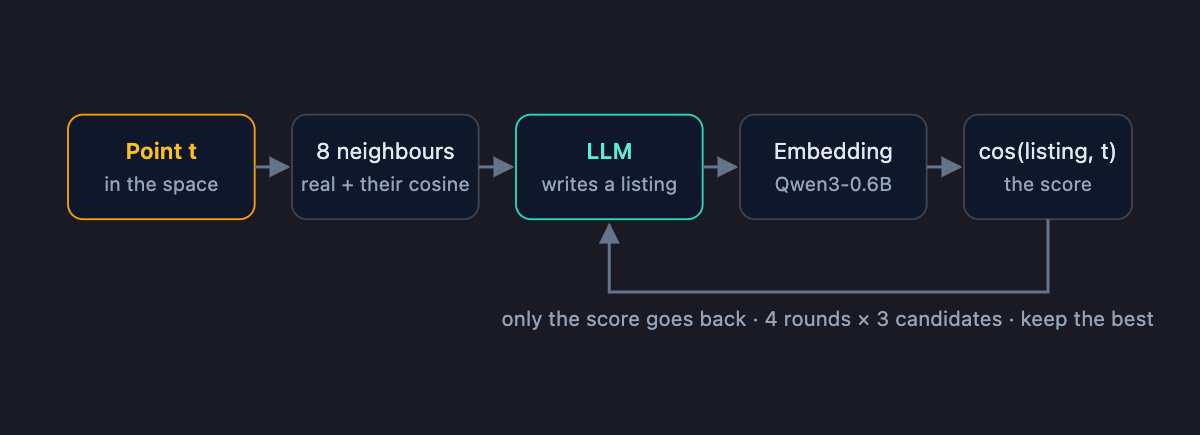
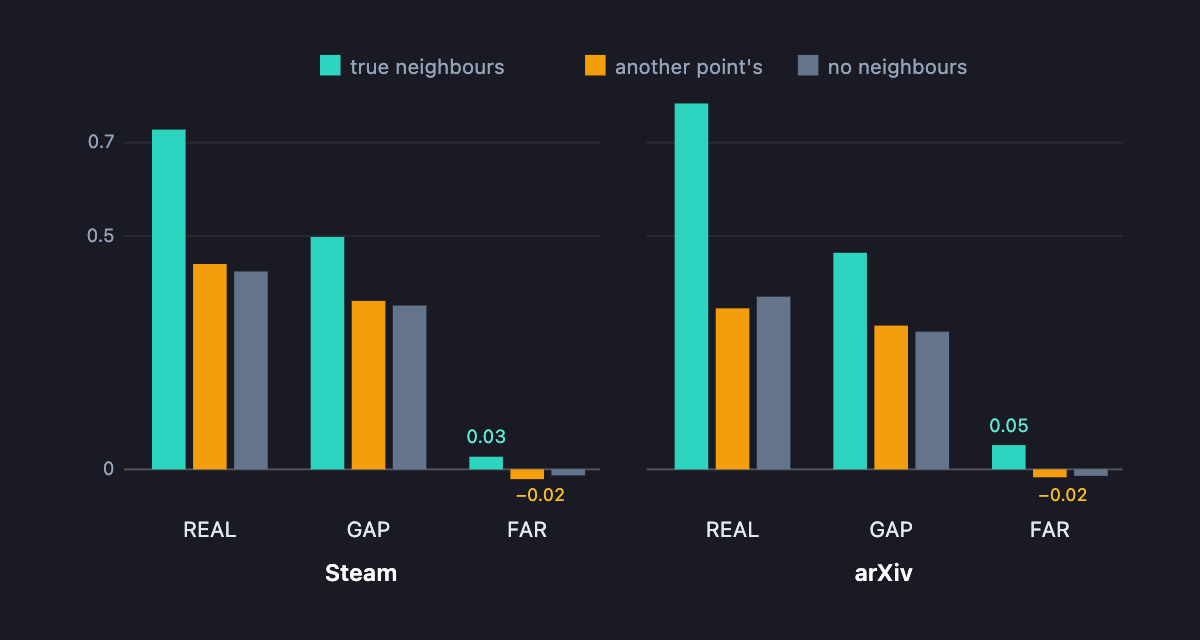
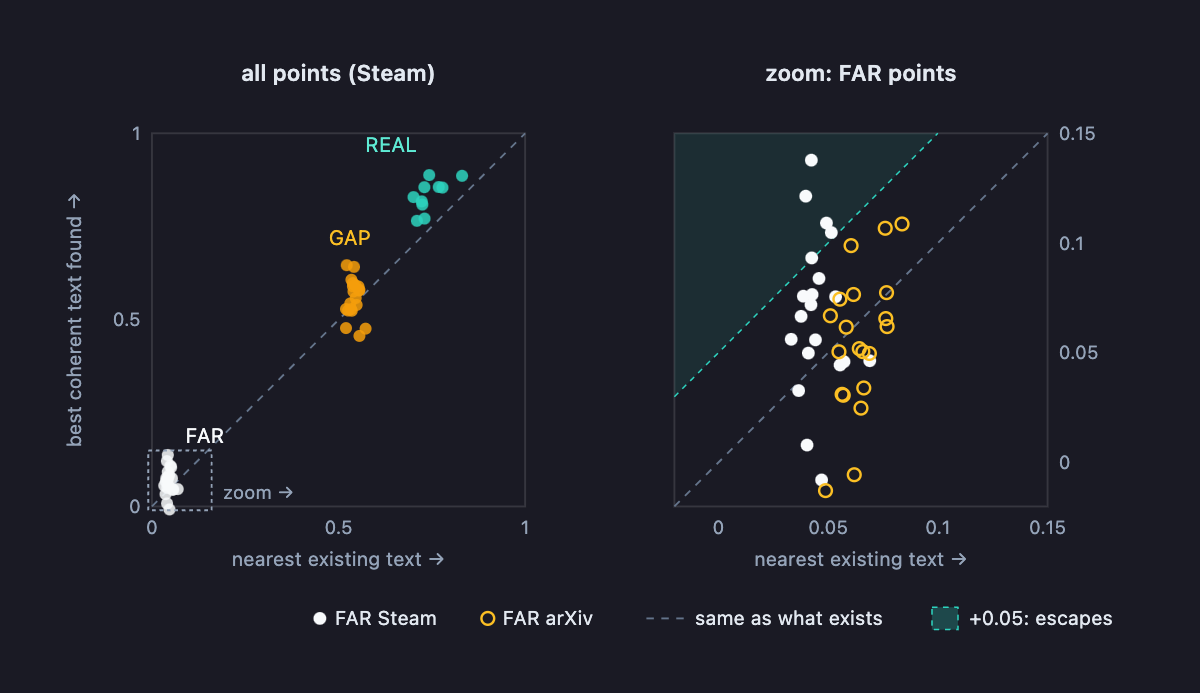
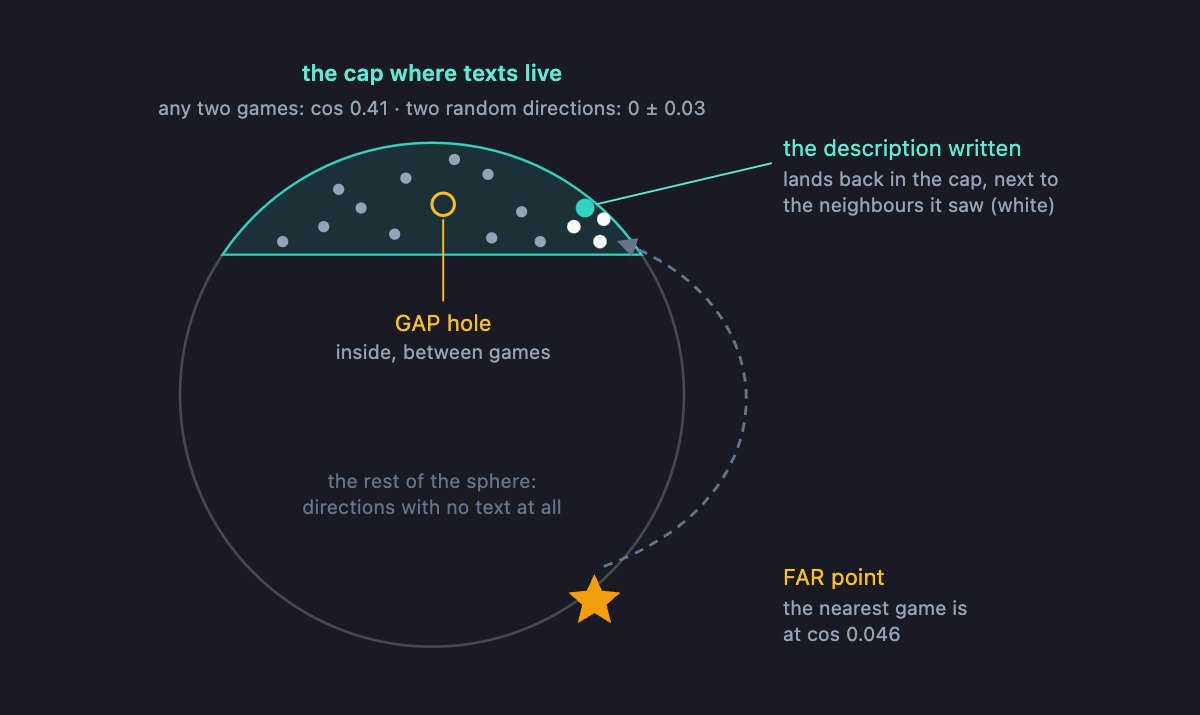
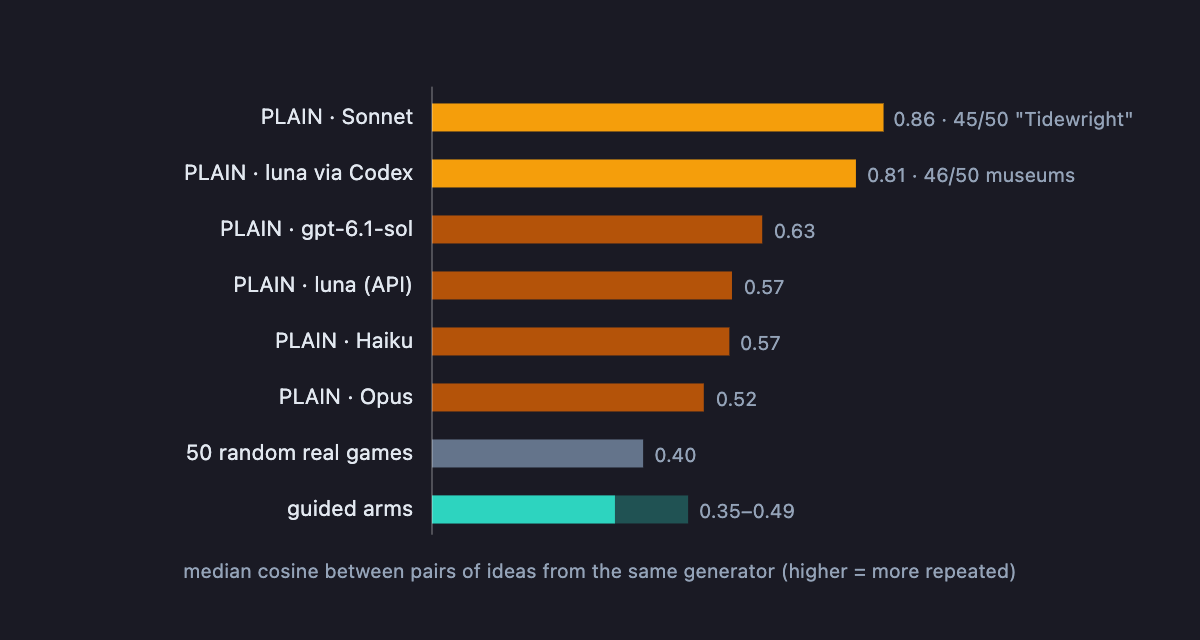
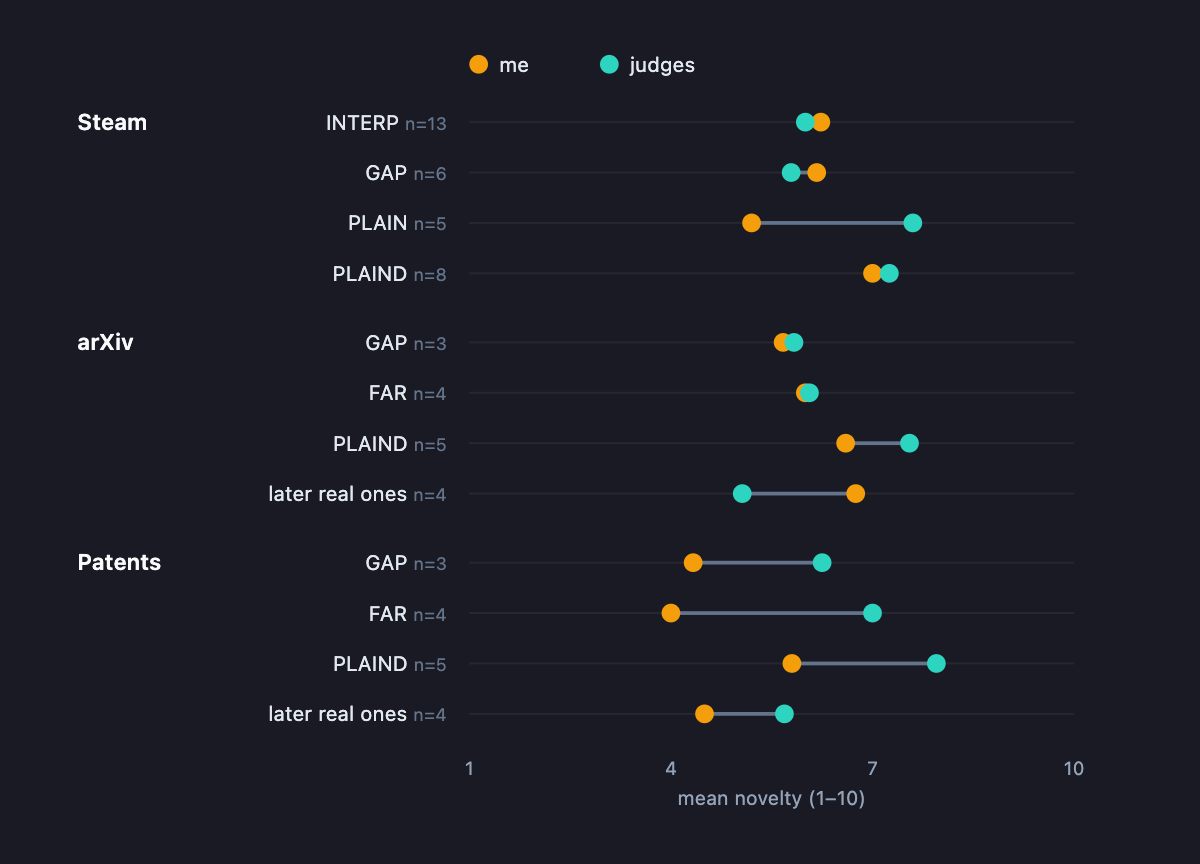
The Gaps in the Map Are Not Ideas Recently @syntheticbeef posted a recipe on X for getting AI to invent genuinely new ideas. You embed the games on Steam, pick points in the space that are far from all of them, turn each point back into a game description, and rank the results by how different they are from what already exists. If a point is far from everything, the idea that comes out of it should be new. My objection was immediate: in a space with a thousand dimensions almost everything is far from everything, and almost all of that space is noise. An empty point does not mean there is an idea there; there may be no meaningful text there at all. A friend replied that coherence is just another dimension, with its own local optima, and that image diffusion shows strange, meaningful corners exist: an astronaut riding a horse. I agreed that they exist, but diffusion reaches them by starting from a concept and moving by similarity; the tweet looks for dissimilarity with no starting point. It was an argument that could be measured, so I measured it. Three maps I repeated everything on three catalogues that look nothing like each other, so that the conclusion would not depend on one: - Steam, the tweet's map: about 68,000 games released before 2024, with their descriptions, genres and tags. I set aside the 41,000 released afterwards, to check at the end whether any idea got ahead of what came out later. - arXiv: 72,000 computer science papers from before 2023, each with its title and abstract. - Patents: 71,521 US patent applications filed between 2012 and 2015. Steam is the thread of the article. arXiv and patents are there to check that what happens is not a quirk of video games. Each text becomes a vector with Qwen3-Embedding-0.6B, an open embedding model. To measure how close two texts are I use the cosine between their vectors: 1 if they point the same way, 0 if they have nothing to do with each other. Two ways to turn a point into text A point in the space is a list of 1,024 numbers. No language model can read it, so the tweet takes for granted a step that is not trivial: turning the point back into text. There are two ways to do it. The first is to show it the neighbours, the one anyone would think of. You show the LLM the 8 real games nearest to the point, ask it for a game listing, and tell it how close it got: the cosine between its listing and the point. With that score it tries again, like a game of hot and cold. Four rounds of three candidates, and I keep the best. On arXiv the LLM writes a paper abstract, and on patents, an application. !The decoding loop: the target point gives its 8 nearest neighbours, the LLM writes a listing, it is embedded, its cosine with the point is measured and only that score goes back to the LLM, for 4 rounds of 3 candidates. The decoder. The LLM never sees the point, only the games around it and a score of how close it got. This approach has an obvious problem. Give it 8 games and it will most likely write something that resembles those 8, and then the point is irrelevant: it is the same as asking "make me a game based on these". The only thing that could make the point matter is the cosine score. If hot and cold worked, the LLM would move towards the point beyond what the neighbours give it. That can be measured, and I measured it. The second way is to search without showing anything. A GPU search generates texts that directly maximise the cosine with the point. Those texts get very close, but they are word soup, so Claude or Codex then rewrite them to be readable, with the cosine as their only clue. Two models have to accept the result as coherent. This is the real test of the tweet's idea: if there is a coherent text near the point, this is the method most likely to find it. Five kinds of point I tried five kinds of point. Each kind is what an experiment calls an arm: - REAL: the point of a real game that I hide from the map. This is the control. If the method cannot recover a game that exists, nothing else means anything. - INTERP: the midpoint between two very different games, the geometric version of "combine two distant ideas". - GAP: interior holes, points that fall in the region where games are but where there is none. - FAR: the tweet's recipe. Out of 20,000 random directions, the 50 furthest from any game. - PLAIN: no map. I just ask the model to "invent a new game, different from any that exists". On Steam I used six generators, the models that write the listings: Claude Opus, Sonnet and Haiku, gpt-6.1-sol, and gpt-6-luna through the API and through Codex. On arXiv and patents I used two, luna through Codex and Sonnet. Before scoring, another model rewrote every listing into the same 120-word format, so that style would not give away where it came from. Then four different models scored them blind on coherence, feasibility, appeal, and novelty against the five most similar existing texts. Real games released after 2024 were mixed in as a reference. I also scored 64 of the same items by hand. What comes out when you show the neighbours REAL works. When the point is a hidden game, the decoder goes back to its neighbourhood, at a cosine of around 0.7. With Star Farmer: Warlock of the Universe hidden, it wrote Voidbloom Run, a space-farming game about growing seeds on hostile planets, at 0.87. And it rebuilds whatever is on the map, including what nobody would want. One of the hidden games was SEX with HITLER: WW2, and the neighbours the model saw included the two earlier games in the series, SEX with HITLER and SEX with HITLER 2. It wrote Hitler: No Future in Berlin, a visual novel with shooting in which the defeated Führer tries to survive in the ruins of Berlin and meets "five adult heroines" (cosine 0.69). INTERP produces literal combinations. Between Skill Master VR -- Learn Meditation, a virtual reality meditation game, and Demon's Rise - Lords of Chaos, a strategy game with demons, came Ashen Breath: Legions of the Void, a dark-fantasy tactical RPG "with an optional VR meditation mode" (0.84). It is what was asked for, and you can see the seam. FAR goes nowhere. The listing lands at a cosine of 0.03 to 0.05 from the point, depending on the generator, which is practically zero. The nearest existing game to those points is at 0.046, so there is nothing better either. What comes out is an ordinary game that resembles the neighbours it was shown. One point's neighbours were Challenge from the Black Cat, a Japanese hamster puzzle game and My Furry Stepmom, and out came Pounce & Pop: Kitten's Block Quest, a kitten pushing blocks to get home (0.069). Another gave The Museum of Unfinished Things, a museum that rearranges itself at night (0.028). Reasonable games, pleasant even, that could already be on Steam. The same happens on arXiv and patents: what gets written for a FAR point lands below 0.08. Is it just copying the neighbours? FAR listings were much closer to their 8 neighbours than to the point itself: on Steam, at a cosine of 0.63–0.72 from their centroid, against 0.03 from the point. That held for 100% of FAR listings in all three catalogues. The question from before was still open: does the cosine score add anything, or is it all the neighbours? To separate the two I ran a causal test. Same point, same cosine score, and only one change: the neighbours the LLM sees. They can be the true ones, another point's, or none at all. I ran it on Steam and arXiv, with two generators (luna and Sonnet), on REAL, GAP and FAR, with 20 points per combination and the decision rules written down before running anything. !Mean cosine between listing and point depending on the neighbours shown. With the true neighbours, REAL reaches 0.73 on Steam and 0.78 on arXiv; with another point's neighbours or none it drops to 0.3-0.4. In FAR, with the true neighbours it only reaches 0.03-0.05, and without them it stays below zero. Listing–point cosine, mean of the two generators. Without the true neighbours, even a hidden game or paper stays at 0.3–0.4, barely closer than to any other point. The cosine score on its own brings almost nothing closer. It is the neighbours, in all 12 combinations. With another point's neighbours, the listing heads towards that other point. With no neighbours, playing hot and cold alone, the listing ends up only 0.04 to 0.07 closer to its own point than to any other point of the same kind. Even for a hidden game, without neighbours it stays at 0.36–0.47, when with them it reaches 0.7–0.8. In hindsight this looks obvious, and partly it is: give an LLM 8 games and it writes something that depends on those 8, not on a point it knows nothing about. But that is what any decoder built on an LLM this way does, so any "idea" that comes out of a point along this route is a blend of its neighbours. To find out whether there is anything at the point, you have to search without neighbours. Searching without neighbours Before looking at far points I checked that the search worked. With the hidden games and papers of REAL, the best coherent text ended up closer to the point than any existing text in all 10 cases in each catalogue. In most GAP holes it reached the level of what exists, or a little beyond. !Each dot is a point in the space. Horizontally, the cosine of the nearest existing text; vertically, that of the best coherent text found by the search without neighbours. On REAL and GAP the search gets as close as what exists, or closer. On FAR everything stays in the bottom corner: on Steam 5 of 20 points beat what exists by more than 0.05, but none passes 0.14. The search without neighbours gets where text already exists, and a little beyond. On FAR points it stays stuck near zero: on Steam, 5 of 20 beat what exists by more than 0.05, and the best reaches 0.14. On FAR points things change. On arXiv my objection holds: for 90% of the points, the best coherent text does not beat the nearest existing paper. On Steam, not entirely. For 25% of the points the coherent text does land more than 0.05 above the nearest game, and for 15% if I also require approval from a third model that had not written or filtered anything it was judging. Getting a little beyond what exists is possible. But look at the scale. Those escaping texts stay at a cosine of 0.09–0.14 from their point, when the point itself is at 1. "Further out than any game" is not "at the point". This qualifies my objection, and I think it improves it. Leaving the map is not impossible. It is that what you reach stays very far from what you asked for, and what you read is still an ordinary game. Why: the cap The geometry explains why far points are out of reach. Texts do not spread across the whole space. They all share a common direction, so they occupy a narrow cap of the sphere: any two Steam games have a cosine of 0.41, while two random directions have 0 ± 0.03. FAR points are random directions picked for being far from everything, so they fall outside the cap. Any text, however odd, falls inside it. !Texts occupy a narrow cap of the sphere. An interior GAP hole sits inside the cap, between games. A FAR point sits outside it, on the rest of the sphere, and the description written for it lands back in the cap, next to the neighbours it was shown. Schematic, not to scale. GAP holes lie inside the region where text exists; FAR points lie outside it. Whatever is written for a FAR point lands back inside. With this geometry the distance can be predicted before looking. Before building any arXiv point, I computed from the corpus statistics alone how far the nearest paper would be from a far point. I predicted 0.062 and got 0.058. On patents it came out at 0.062. What does work: asking without a map Interior holes can be reached, but they are not newer. On Steam the judges gave them a novelty of 4.9 out of 10, below INTERP (5.5), with all six generators. On arXiv they tied with INTERP, and on patents it depends on the generator. A hole between games gets filled with something that looks like the games around it. For the judges, the most novel output was the one that did not use the map: PLAIN, simply asking for "a new game". With every generator, PLAIN beat the best guided arm by 1.1 to 2.6 points of novelty. Until I read the listings one after another. Sonnet called 45 of its 50 games "Tidewright" something, and luna through Codex wrote 46 museums out of 50. I saw it straight away: another museum, and by then a tiresome one. The judges did not, because they scored each listing on its own and never saw two together. Each idea was new against the catalogue, but the generator kept repeating the same idea. The same happened on arXiv: Sonnet titled 43 of its 50 papers "Tidal" something. !Median similarity between each generator's 50 ideas. PLAIN with Sonnet reaches 0.86 and with luna via Codex 0.81, far above 50 random real games (0.40) and the guided arms (0.35-0.49). Asking without the map gives the newest ideas one at a time, but two generators almost always repeat the same one. Showing the model its earlier ideas (PLAIND) brings repetition down almost to the guided arms. I fixed it with a variant, PLAIND, in which the model sees the titles it has already proposed. Repetition drops almost to the level of the guided arms, and novelty stays the highest in all three catalogues, 1 to 5 points above INTERP depending on the generator. My novelty and the judges' turned out less alike than I expected. !Mean novelty I gave against the judges, by catalogue and arm. On Steam we agree except on PLAIN, where the judges give 7.6 and I give 5.2. On arXiv we mostly agree. On patents I give 1.2 to 3 points less on every arm. My novelty against the judges' (64 items scored by both). On patents, where I recognised almost everything, I am much harsher; on Steam I only part ways on PLAIN, the one with the repeated museums. On Steam we agree except on PLAIN, because of the repeated museums. On patents I am much harsher on every arm. For three of the four FAR patents I read I answered "yes, I know something that does this", and one GAP patent I described as a plain old recommendation system. I think we measure different things. The judges reward what is specific and unfamiliar compared with the five texts they are shown, and I ask whether the concept already exists. Can it be proved? I wanted to go beyond the data, and with help from gpt-6-astra I tried to prove a bound: how close a coherent text can get to a far point. No bound held, because each proposal fell to data we already had. Coherence is not smooth: the judges give opposite verdicts to listings that differ by a single word. And no probability threshold from a language model separates what the judges accept from what they reject. So I turned it around: can we prove there is no bound? Strictly speaking, no, because texts of bounded length are a finite set and always have a maximum. What was proved, and checked in Lean, is something else. Without a rule that says what counts as coherent, nobody can certify a ceiling better than the trivial one, however many tests they run. And in general the problem is computationally hard. Did any idea get ahead of the future? That left the check against later games and papers. On Steam it does not work: once every listing is rewritten into the same format, real games from before and after 2024 are barely distinguishable. On arXiv it does work, and FAR ideas get no closer to what was published after 2023 than any old paper does. PLAIND ideas do get closer. But the generators were trained after 2023, so that shows they know what came next, not that they anticipate it. The one generator that could not know those papers, gpt-4o, anticipates nothing once style is removed. In short - Decoding a point with an LLM blends its neighbours. The cosine score adds almost nothing; what comes out depends on what you show it. - Searching without neighbours, far points are still out of reach. The best I found stays at 0.14 from a point that sits at 1, because texts live in a cap and those points are outside it. - Interior holes can be reached, but they are not new. They get filled with something that resembles what surrounds them. - Novelty came from asking for it, not from empty geometry, as long as the model sees what it has already proposed. The tweet gets something right: there are unexplored corners of the map that can be reached. But a point far from everything is not an idea waiting for someone to write it down. Almost always, it is a place where no text fits. The other half of the question remains, the one the arXiv result leaves open: can a model reach an idea that genuinely did not exist when it was trained? This is the Einstein test Demis Hassabis proposed: train a model only on what was known before 1911 and see whether it arrives at general relativity. That will be part two, with a generator whose training cutoff I control. --- The code, pre-registrations and Lean proofs are at JaviMaligno/latent-gap-ideas. --- Originally published on javieraguilar.ai Want to see more AI agent projects? Check out my portfolio where I showcase multi-agent systems, MCP development, and compliance automation.