Mentions
Conversations linking to GitHub, newest first. Times are UTC.
Mentions by source
X
Bluesky
Hacker News
V2EX
Qiita
DEV
Mastodon
Latest posts
@bhavin_Confuse Mainly KITE at Memoket. It's an open-source memory engine that turns conversations into structured facts. You can inspect a memory and see the source messages behind it. memoket/memoket-kite
HX Stomp CustomOS (modded firmware) Wishlist Since the amazing developer Nocaseguy published his project adding nam support to the HX Stomp, but more importantly doing all the hard work of building a dev pipeline to modify the HX Stomp's firmware, I've been working on adding some new features to our beloved-but-long-neglected pedal. I'd like some input on features that you would love to see, big or small. I've come up with a preliminary list from other threads I've found on reddit, but I'd love some more input! Here's what I've already added: - Tuner activation mode (hold/press) - Global setting that modifies the TAP/TUNR button (whichever footswitch it's assigned to), so that you can activate the tuner with a normal press, instead of holding it down for 2s (stock). - Lock Tuner settings - Global setting that prevents the settings visible when the tuner is open (mode, reference, etc) from being changed. Inspired by a friend's gig where he accidentally had the reference value at 420 and the rest of the band was A=440 so no matter how much he tuned it still sounded flat 😅 Planned features: - Compressor Gain Reduction Meter (though i'm not sure how to handle multiple compressors) - Currently WIP - Animated/Custom backgrounds for the homescreen - Loudness meter on output channel (to help with levelling all your presets) No idea is too small or too big! Just let me have em! If you are interested in contributing, please DM me.
Location: Odessa, Ukraine Remote: yes Timezone: Flexible [UTC-7, UTC+3] Willing to relocate: no Technologies: windows low level development, windows internals, win32/NT api, debugging, research, DLLs, Processes, and Threads, IPC, asynchronous I/O, tokens, SD, crypto api, certificats, authentication( credential providers, authentication packages, etc), tpm, WDM, hooking, ..own debugger and tools, some PKI-based windows logon solutions Resume/CV: stackoverflow.com ( stackoverflow.com - #8 All Time ) github.com/rbmm youtube.com Email:lotus_rt@protonmail.com
VidLock: a self-hosted media server with watch parties, VAAPI transcoding and a webOS TV route (open source) I built a media server for my own library and ended up open-sourcing it. It's called VidLock. Point it at a folder and it builds a browsable library with posters, details and Continue Watching. Everything stays on your network. Features - HLS streaming with AMD VAAPI hardware transcoding - Watch parties with synced playback and WebRTC voice chat - TV remote navigation, including an LG webOS route - QR sharing and PIN protection - Custom player with episode thumbnails Stack: Next.js 14, Socket.io, WebRTC, FFmpeg Honest limits: I've only tested the GPU path on AMD. Intel and NVIDIA are untested, so I'd love reports from people with that hardware. It's also a young project, so expect rough edges. I know Jellyfin and Plex are far more mature. The reason I built this was to get watch parties with voice chat and TV remote support in one package. Repo: Manish6523/local-media-server Download: github.com/Manish6523/local-media-server/releases Site: vidlockonline.manish.casa I'm a solo dev and would really value bug reports and setup feedback.
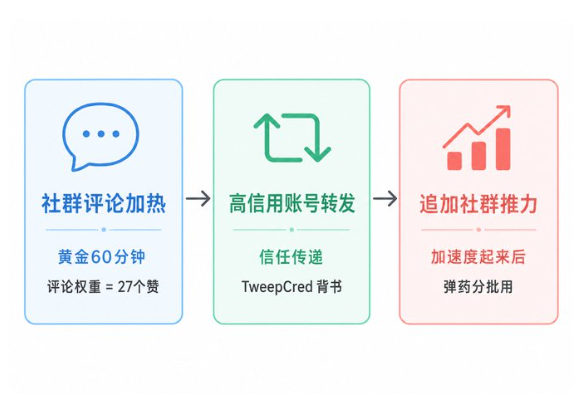
有没有 X 推特运营相关的社群? 马斯克早就把推特的推荐算法开源了,开源地址: xai-org/x-algorithm 截止到 2026 年 11 月 3 号,Github 标星达到 34K Star 这个推荐算法目前还在持续更新! 根据开源的推荐源码分析,「回复+作者回应」的权重是单纯点赞的 75 倍!  问一下各位 V 友,没有 X 推特运行相关的社群?最好是付费的? 
I built a small MCP Gateway/Proxy just so that I can use @BearNotesApp MCP CLI ... since the app will only work on Mac, there is no way for my hermes agent, which is hosted on linux, to access my notes. So, I asked codex to build one and here we are zaherg/mcp-gateway t.co
AI Coding Agents Do Not Make Framework Choice Irrelevant. They Make Its Costs Measurable A familiar argument is making the rounds in web development: if an AI agent writes most of the code, developer experience matters less, so teams should choose the framework that works best for agents. It sounds plausible. It also skips the hard question: what does “works best” mean, and how would you know? Nolan Lawson tried to answer that with a small benchmark. He asked Claude Opus 5.5 to build the same Pokémon catalog app in 12 JavaScript stacks, tested each result against a shared conformance suite, and measured cost, time, code size, and selected Lighthouse metrics. He ran five iterations per stack, except Angular, which had three measurable results for some metrics. The benchmark write-up and its open-source harness make the experiment inspectable. The headline is not that one framework won. The useful finding is that “agent-friendly” is not a single score. In this test, Hono with htmx was among the least expensive and shortest-code options, while Astro sent no JavaScript on the tested page. Angular cost more and generated more code, but this is one content-oriented application, one model, one benchmark specification, and a small number of runs. The evidence is enough to question vague claims. It is not enough to declare a universal winner. That distinction matters because framework decisions are long-lived. If the agent saves a few minutes today but creates more code to inspect and maintain tomorrow, the initial speedup may be a poor trade. The better response to AI-assisted development is not to pick a framework based on intuition about what models prefer. It is to extend the measurement window from “how fast did the agent finish?” to “what does this choice cost across the life of the application?” What the experiment actually measured A shared task, not a framework tutorial. Lawson specified a small but non-trivial Pokémon app using local data from PokéAPI. Agents had to implement the same user-visible features and pass the same conformance suite. They were allowed to use official framework MCP tools or skills where available, and the harness recorded whether the agent actually used them. The benchmark repository says each run used a fresh Podman container and that the generated app was tested separately from the agent environment. The repository README describes the controls and reproduction setup. More than token count. Lawson reported API-equivalent cost, wall-clock time, tokens, lines of code, and Lighthouse measurements for performance and accessibility. That is a useful choice: an agent can spend more tokens to produce code that is smaller, more accessible, or faster for users. Optimizing only for the first completion time would miss those trade-offs. The median reported cost ranged from $2.67 for Hono plus htmx to $4.97 for Angular. These are not the experimenter's cash charges. Lawson says he used a Claude Max plan and reported the API prices quoted by Claude Code. The cost range is therefore a way to compare the reported usage, not a billing receipt or a forecast of what a team will pay. The time and token figures also varied. Astro's median run took 8.2 minutes, while Angular's took 17.2 minutes. Median token use ranged from 3.85 million for Nuxt to 9.76 million for Angular. But those figures came from five runs per framework, with Angular's reduced sample in some measurements. The author's own write-up notes stochastic results and overlapping ranges. A median is a helpful summary, not proof that the same ordering will hold on your task. The counterintuitive result is the important one Raw JavaScript was not automatically the cheapest route for the agent. The benchmark's “Vanilla” condition used JavaScript or TypeScript with Vite and no UI framework. It was not simply “write the smallest possible plain JavaScript app.” The agent made architectural choices inside the allowed setup, and the result used a median of 5.00 million tokens and took 10.1 minutes. Several framework conditions used fewer tokens or completed sooner. That does not prove frameworks are better for agents. It demonstrates that removing a framework does not automatically remove complexity. A framework can supply conventions, routing, data loading, and a structure an agent can follow. Conversely, it can introduce conventions the model does not know well. Which effect dominates depends on the framework, task, tool setup, and model version. The web payload and the agent's build cost are different budgets. Astro's tested page transferred a median of 0 KiB of JavaScript, while Next.js transferred 142 KiB. Hono plus htmx used 18 KiB, and Angular 93 KiB. On that metric, the result separates framework bundles more clearly than the agent's cost rankings do. But a zero-JavaScript page is not a complete performance verdict: the application still has server work, network requests, content, and user interactions. The benchmark also reports different results for blocking time and largest contentful paint, with caveats around variance and the Lighthouse setup. If a team collapses those measurements into one “best” framework score, it will hide the very trade-offs that make the exercise useful. Agent usage cost is an engineering input. Browser payload and responsiveness are user-facing outputs. Maintainability is a future cost. They should not be treated as interchangeable just because they came from the same run. Code size is a proxy, not maintainability itself. Hono plus htmx generated a median of 1,370 non-blank source lines; Angular generated 2,009. That is a measurable difference, and smaller implementations may mean fewer tokens for later agent edits. Lawson explicitly connects code volume with the cost of future changes. Yet line count cannot tell you whether code is understandable, well-factored, secure, or easy for a human team to change. A short, opaque implementation is not automatically maintainable. Why “better for agents” is a weak architecture rule Framework advocates can point to model familiarity, official agent skills, MCP servers, and established examples. Those can matter. But the benchmark found that agents did not consistently use the available tooling. For example, the report says some frameworks' tools were used in only a subset of runs, and Nuxt's MCP was not used in the observed attempts. Installing an integration is not the same as proving it changed the result. There is also a training-data trap. Lawson suggests that SvelteKit's higher measured cost may partly reflect its recent release: the agent repeatedly read its migration guide, possibly because the latest version was not represented well in the model's training data. That explanation is plausible, but it is not isolated as a causal factor. A follow-up would need to vary model version, tool access, and framework documentation exposure independently to determine whether unfamiliarity caused the extra work. The result is a moving target. Framework versions change, models change, tools change, and the same agent can make different choices across runs. A one-time benchmark can help choose what to investigate. It cannot permanently rank a technology stack. That is especially true when official AI tooling is unevenly available or the agent ignores it. How to use this kind of benchmark without overfitting Start with your application shape. A content catalog is not a collaborative editor, admin dashboard, offline-first mobile web app, or real-time interface. Lawson says the sample is closer to a content site than a highly interactive product. If your application is dominated by complex client-side state, this result is a poor proxy. Pick a representative slice of your own product before treating any framework ranking as relevant. Define acceptance criteria before the run. Specify user-visible behavior, accessibility expectations, performance thresholds, supported browsers, and operational constraints. Keep the same tests across candidates. If one framework gets a different prompt or extra hints, the result measures prompt quality as much as framework choice. Measure failed attempts, not just successful output. In the benchmark, Angular failed to create a measurable app in two of five runs. Lawson retained the three usable iterations for some metrics and explained the difference. That transparency is important. In your own evaluation, record failures, retries, timeouts, test results, and cleanup effort. Do not quietly discard the runs that make a preferred tool look worse. Separate repeatability from generalization. Run enough iterations to see whether differences exceed run-to-run noise. Then repeat with a second task and, if relevant, a second model. The original author notes variance in both agent output and Lighthouse. Re-running one task reduces some uncertainty; it does not make that task representative of every product. Track the whole cost surface. At minimum, keep separate measures for: - Agent spend or token use per accepted change. - Human review and correction time. - Test pass rate and severity of defects. - Browser performance and accessibility. - Code size and complexity signals. - The effort required to add a second feature after the first implementation. That last measure is easy to skip and potentially more revealing than initial generation time. A framework that lets an agent produce a first screen quickly may not help when the next request changes data flow, permissions, or navigation. Add a follow-up task that tests whether the generated structure supports change without a rewrite. A decision checklist for framework evaluation Before you switch stacks because a model appears to prefer one, ask: 1. Is the benchmark task representative of our actual product? 2. Did each candidate receive the same specification, model, resource limits, and acceptance tests? 3. Were official agent tools installed, and did the agent use them? 4. Are the reported differences larger than the run-to-run spread? 5. Did we count failed runs and human repair work? 6. Are user outcomes measured independently from agent speed and cost? 7. Does the generated code remain workable after a second, realistic change? 8. Would we make the same choice if the current model or tool integration disappeared next month? The last question is a useful stress test. A framework should not be selected solely because one model has recently seen more examples of it. Model familiarity can improve today's result, but application needs, ecosystem support, and maintainability still matter after the next model update. The takeaway: benchmark claims, not vibes This experiment is valuable because it exposes its scope, shares its harness, reports multiple measures, and discusses limitations. Its results are not a framework league table. They are a reminder that the cost of a stack now includes both the work an agent spends producing code and the work people spend checking, operating, and changing that code. For a team choosing a framework, the practical move is modest: use public benchmarks to form hypotheses, then test those hypotheses on a small, representative feature with your own requirements. Keep the agent's cost, user-facing quality, reliability, and maintenance effort separate. If the decision changes when you add a second task or another model, you have learned something important about how fragile the original ranking was. I write about developer tools, infrastructure, and AI. Subscribe if you want evidence-based engineering analysis without treating a benchmark as a universal answer. Have you measured how your framework changes an AI agent's cost or the quality of the code it produces? What would you include in a fair test? Sources - Nolan Lawson: The AI cost of JavaScript frameworks - Open-source benchmark repository and reproduction notes
Answering questions about audio beyond transcripts The original problem was there's more to sound than what transcripts can offer. Humans are able to know music is playing, react to sirens, or recognize people's voices. Agents dont. Trained a pretty simple decision model. Stream audio in and ask yes/no questions about it live. Answers arrive every 80 ms and it runs faster than realtime on cpu. Bonus, it is also able to know which speaker is talking via a 5 sec enrollment. I'm still trying to figure out what the future looks like. Distill more info into transcripts or let models directly learn from audio or something else. What sounds do you want agents to understand? Repo: Crele-AI/nimbus
Well, so. I accidentally spent a week shuffling things around in Unity Gaussian Splatting. SPZv4, direct PLY/SPZ loading, stochastic render, global sorting and whatnot. And maybe *now* I can stop working on it :) github.com/aras-p/UnityGaussianSplatting/releases…
Location: Berkeley, CA Remote: Yes. Remote, hybrid, or onsite around the Bay Area are all fine. Willing to relocate: No Technologies: Python, C/C++, TypeScript. Zephyr, FreeRTOS, nRF52840, ESP32, Thread, BLE, LoRa, signed OTA, KiCad, some VHDL. MCP servers, agent frameworks, LLM-judged evals, Claude Code. Kubernetes/GKE, Terraform, Cloudflare Workers, OpenTelemetry, Grafana. Résumé/CV: 3amon.net Email: white.eamon@gmail.com Years of experience: 19 I'm an embedded engineer who spent the last year building AI agents, and I'd like to keep doing both. Most of my career was firmware and real-time work: optical terminals for satellites (bare-metal Cortex-M7, test campaigns at the Naval Research Lab), FPGA and driver work at National Instruments, Linux point-of-sale hardware. This past year I built an SRE on-call agent for an enterprise AI platform. It reads the production alert queue and investigates through policy-gated MCP tools on GKE. I also built the MCP tool router it runs on. Some things I've built on my own time, with write-ups at 3amon.net and code at github.com/3amon: - 39 wearable LED rings that keep a shared clock with no leader. nRF52840, Zephyr, OpenThread, signed OTA with rollback, my own carrier PCB, and simulators that gate every release. - LoRaPeerLink, device-to-device LoRa without LoRaWAN. Built against a channel simulator, then 99.6% delivery over a one hour soak on real SX1262 radios. - Guard rails for coding agents: fail-closed hooks, scoped MCP servers, and a little tool that shows every agent session running across my machines. Looking for senior or staff roles in embedded/connectivity (device fleets, OTA, radios) or agent infrastructure (MCP, tool runtimes, agents that touch production). Best case is a team that needs both. Full-time preferred, contract is fine too.
@VitalDatch Weights: huggingface.co Workflow: github.com/Comfy-Org/workflow_templates/blob/main…
@Renzexi01 @yetone yicheng47/runner 辛苦锐评下我这个
If you switched to @superlogical's rex recently and are missing sesh, check this out CruelAddict/resh
Catbird Linux is switching from its original recipe as a bootable Debian iso, going to image based / atomic Linux. It is now opinionated Bluefin + Niri window manager. Install and run apps on a nearly unbreakable Linux. #Linux #Bluefin #Niri #Fedora ab9il/catbirdlinux
@raycast Made with my Spotlight Film skill: ridemountainpig/spotlight-film
Qwen3.8-Flash-Next is hitting 500+ tok/s decode on a single RTX PRO 6000. - Prefill still sitting at 8.5-9.2k tok/s. - 1 stream - 271 tok/s - 2 concurrent streams - 395 tok/s on - 3 concurrent streams - 503 tok/s on - All at 600W. - MiaAI-Lab/Qwen%E2%80%A6 t.co
Coding agents with a face: bots in Coincide {% youtube qpZBAiav69I %} Coincide runs Claude Code, Codex, Cursor, Grok Build, OpenCode and Antigravity side by side in one native Mac window. Bots are how you keep a standing assistant around: a coding agent with a face, a personality and a job. What a bot is A bot is a saved setup for new conversations: its look, name, personality and instructions, plus the agent, model and modes those conversations start with, and the folder they run in. Open the bot and you're talking to that setup, on the CLI and login you already have. Pick a character There are seven characters (Brulee, Alien, Star, Croissant, Bomboloni, Cherry and Teddy) and eleven colors. They're drawn in code, so they stay sharp at any size, and their eyes blink now and then while the bot is working (unless you've asked macOS to reduce motion). Give it a personality Pick one of ten presets: Cheerful, Calm & Concise, Witty, Mentor, Coach, Straight Shooter, Curious Explorer, Professional, Gentle or Creative. Each one shows a sample greeting in its voice, written by hand, not generated. Or choose Custom and describe the personality yourself, starting from a preset's text if you like. Its own agent, model and folder Each bot decides where its conversations start: Codex with GPT-5.5 in one repo, Claude Code with Opus in another. You don't have to re-pick the agent, model and folder every time. Give it a routine Scheduled tasks can send a message into a bot's conversation once, daily, on weekdays or chosen days, weekly, every few minutes or hours, or on a cron expression, in a chosen time zone. A "Morning standup" every weekday at 9:00 is a single schedule. Schedules run while Coincide is open and wait for a busy thread to finish its turn. Try it Coincide is free and open source (MIT), for macOS 26 or later on Apple silicon and Intel. - Download: coincide.dev - Source: apoorvdarshan/coincide The video recreates the app with demo data. The bots use Coincide's own artwork.
Continuous Avatar UploaderのPRもマージされてた これで便利になる ContinuousAvatarUploader#166
Location: Nigeria (UTC+1, same time zone as Central Europe; full overlap with European hours, partial with US East Coast) Remote: Yes Willing to relocate: Yes Technologies: AWS, Azure, Terraform, Microsoft Sentinel, KQL, Wazuh, Rapid7 InsightIDR, Checkov, Prowler, GitHub Actions, Semgrep, Trivy, Gitleaks, Linux, Ubuntu, Windows Server Résumé/CV: drive.google.com Email: owolabiseth7@gmail.com Cybersecurity engineer working across cloud security, detection and response, and DevSecOps. CompTIA Security+, B.Sc. Cybersecurity, currently in IT support. Recent hands-on projects, all built as code and documented on GitHub: - AWS security posture lab: deployed misconfigurations with Terraform, detected them with Checkov and Prowler (CIS benchmark), remediated as code (30 to 0 code findings, 15 CIS alarms) - Microsoft Sentinel SOC lab: 7 KQL detections mapped to MITRE ATT&CK, each validated by testing; found and fixed a late-ingestion blind spot; automated triage and email alerting - DevSecOps pipeline: secrets, SAST and dependency scanning in CI with SHA-pinned actions Open to remote roles in cloud security, security engineering, security operations / detection engineering, and DevSecOps. GitHub: github.com/naijadevseth LinkedIn: linkedin.com
PhreshOS - An open-source, self-hosted system for apps built with web technologies. PhreshOS runs on the machine you install it on, keeps your Programs running there, and gives you a Desktop in the browser. Programs are built with the web tools. PhreshOS/system t.co
I made Rider look like a native macOS 26 app: real Liquid Glass, not a theme Hey! I spent the last weeks building **Glass Islands**, a free plugin that turns Rider's Islands UI into actual macOS glass: frosted panes over your wallpaper, Liquid Glass pills on tabs and toolbar buttons, and native translucent menus and popups. It's not a colour scheme and not a fake blur: the plugin puts real AppKit views (`NSVisualEffectView` / `NSGlassEffectView`) behind Rider's Swing content, so the macOS compositor does the rendering. The editor stays the most opaque layer, so code remains readable. - Installs/uninstalls without restart, everything previews live - Follows dark/light theme, Reduce Transparency and Increase Contrast - Rider 2026.2+, macOS 12+ (Liquid Glass pills on macOS 26) Marketplace: plugins.jetbrains.com Source (MIT): lilyaan444/glass-islands Right now it's Rider-only. If people want it in IntelliJ / WebStorm / PyCharm, tell me, it's mostly a matter of testing.
@rafa_guitarX @asdfg21_snivy Official Idol SDK speridlabs/idol-sdk The output is a Gaussian splat in PLY format. It is not a rig-ready mesh.
Red faction guerrilla reMARStered VR Here's a game I've been working on for about 3 weeks, im tired and don't have anything to show off atm but it's done and it's just small tweaking and random bug fixes moving forward. This was a really fun game and it's kind of a dream to be able to play it in vr now. ElderMiner/Red-Faction-Guerrilla-Re-MARS-tered-VR
@aeroxyz For anyone who wants to dig deeper: Aero’s announcement of the pilot: x.com MEV tax module code: github.com/dromos-labs/metadex-public/blob/main/V…
Finally Passed SAA-C03 🎉 Passed AWS SAA-C03 today! My experience, study resources, and a few takeaways Finally passed the AWS Solutions Architect Associate (SAA-C03) exam today! Thought I’d share my experience and what worked for me, especially for anyone currently preparing. Preparation time: Exactly 2 months, studying at a fairly slow and steady pace. Resources I used: Adrian Cantrill (cantrill.io): This was my main learning resource, and I’d highly recommend it if you actually want to understand AWS beyond just passing the exam. Some parts of the course are a little outdated, but the depth of explanation is excellent. Adrian really gets into how the underlying architecture of AWS services works, rather than just telling you what a service does. It’s particularly good for building a strong foundation in cloud computing. The only downside is that it’s quite lengthy, so if your main objective is to pass the exam quickly, it might not be the most time-efficient route. Stephane Maarek’s Udemy Course: I went through Stephane’s course as well, and I’d say it complements Cantrill’s course really well. Stephane is much more to the point and exam-focused. He covers what you need to know without spending too much time on the underlying details. If you’re already comfortable with AWS fundamentals and want to move through the exam preparation quickly, this is a great resource. Ronit Sachdev’s SAA-C03 Exam Guides (GitHub): Honestly, one of the best resources I came across for last-minute revision. If you’ve got a week or two left before your exam, I’d strongly recommend going through these guides. Focus on memorizing the keywords and associating them with the relevant AWS services. A lot of SAA-C03 comes down to recognizing requirements in a scenario and knowing which service or architecture best addresses them. And definitely go through the Pocket Cards. Those things are lifesavers for quick recall and revision. GitHub: RonitSachdev/aws-saa-c03-guides Practice Exams (Tutorials Dojo + Stephane Maarek): I completed 6 Tutorials Dojo practice test sets on Udemy 6 Stephane Maarek practice tests Here’s something that might reassure those of you struggling with practice exam scores. I was scoring roughly 55–66% on most of my practice exams. Some of the Tutorials Dojo questions were genuinely difficult, and there were times when I felt like I wasn’t making much progress. However, I kept reviewing my incorrect answers, trying to understand why the correct option was correct and, more importantly, why the others were wrong. I also made handwritten notes throughout my preparation. Before taking my final Tutorials Dojo practice test, I went through all my handwritten notes from beginning to end, and ended up scoring 70% on that test. That was a pretty big confidence boost before the real exam. My key takeaways: Don’t just memorize AWS services. Understand how they work together and the architectural trade-offs between different solutions. Learn to eliminate incorrect answers. Sometimes knowing why three options are wrong is just as useful as knowing why one is correct. Don’t get too discouraged by low practice exam scores. Use them to identify your knowledge gaps rather than treating them as a prediction of your actual result. Make your own notes. Revisiting mine before the exam made a noticeable difference. In the final week or two, focus on revision, service comparisons, keywords, and scenario recognition rather than trying to learn everything from scratch. About the actual exam: Personally, I found the real exam somewhat easier than Tutorials Dojo, although not by a huge margin. Most questions were worded fairly straightforwardly, but there were definitely some tricky ones where two options seemed equally reasonable. My strategy was to answer the easy questions first, flag the difficult ones, and return to them later. I finished with about 10 minutes remaining. I walked out feeling pretty much 50/50 about whether I’d passed, even certain that I had failed, so seeing that PASS result was a massive relief! Hurray to scaled marking or whatever. This is my first AWS certification so was already feeling very stressed and nervous during the exam. Hope this helps someone preparing for SAA-C03. Good luck to everyone studying!
Location: Lahore, Pakistan Remote: Yes (Global Remote / Independent Contractor) Willing to relocate: Open / Remote preferred Technologies: TypeScript, React, Next.js, Node.js, Python, Laravel, PHP, PostgreSQL, Redis, Docker, AWS Resume/CV: abdulrahmanchohan.me (PDF downloadable on site) Email: abdulrahmanchohan4181@gmail.com GitHub: github.com/AbdulrahmanChohan LinkedIn: linkedin.com Full-Stack & Applied AI Engineer with 3.5+ years of experience (5+ cumulative) building scalable web applications, robust backend architectures, and production AI integrations. Highlights: - Built Clip Matters: AI video intelligence platform with semantic vector search (Qdrant), background processing, and modern React interface. - Developed Orange Express: High-throughput 14-stage financial state machine with real-time audit logging and payment gateways. - Experienced in building AI-powered bots, real-time messaging, and multi-tenant SaaS. Experienced working asynchronously with remote teams across the US, UK, EU, and GCC with high responsiveness and clear communication.
とりあえず問題発生したらゲーム名込みで検索してみるべきと学んだ というかこんな限定的な問題だったのか…
Location: Ho Chi Minh City, Vietnam (UTC+7) Remote: Yes Willing to relocate: No Technologies: Python (httpx, Playwright, FastAPI, pandas), TypeScript/Node.js, PHP, SQL (PostgreSQL/Supabase, SQLite), n8n, Make, Apify SDK, React, React Native (Expo), Google Apps Script Résumé/CV: trungthanhtran.vercel.app Email: ttrungthanh90@gmail.com Junior developer looking for part-time contract or freelance work in web data extraction and workflow automation. I prefer calling the JSON API behind a page over scraping the rendered HTML, and I like turning manual spreadsheet work into small tools. Things I have built: - Customer loyalty app (React Native + PHP REST API) for a cosmetics retailer, built alone, live on Google Play (my current job since May 2026) - Apify Actors I wrote (company contact enricher, product price/stock extractor), source: Tthanh2k6/apify-b2b-lead-and-contact-enricher - Offline browser tools for Vietnamese small businesses (VietQR cashier, debt aging, fleet fuel reconciliation with Excel import): tthanh2k6.github.io - GitHub: github.com/Tthanh2k6 Good fit: scrapers that broke, data pipelines into Sheets/CRM/Postgres, n8n/Make workflows, small internal tools. Happy to start with a small paid task.
A short look at google-research/harness2, an open source research project that rewrites the setup around a fixed AI model so it does better on work tasks. Code and docs: google-research/harness2 t.co
namviek ⭐ 2.6k Namviek is a self-hosted project management tool for teams that need to manage projects on a budget. 🔗 hudy9x/namviek #opensource t.co
Rust-coreutils のせゐで何かがをかしいのではといふことが判ったところで今日は終はり yash-rs#896
Location: Germany (CET/CEST) Remote: Yes (100% Remote only) Willing to relocate: No Role: AI Systems Architect | Human-AI Tandem Operator (System Topology, Specification & Logic Design) Technologies: LLM Context Architecture, Invariant Modeling, Deterministic Serialization, State-Machine Orchestration, Inference Forensics (Target runtimes: Python, Rust, vLLM, llama.cpp) Résumé/CV: github.com/Recursive-Logic-Core (Full CV upon request via email) Email: arch_mmm@proton.me I operate strictly as a calibrated Human-AI Tandem at the structural and invariant level: AI engines handle syntax generation, code implementation, and blind reverse-auditing, while I direct system topology, causal logic, and boundary verification against the 7 core transformer failure modes: 1. Lost-in-the-Middle (Attention Decay) 2. Stochastic Drift (Absent State Invariance) 3. Confidence-Accuracy Decoupling (Hallucinations) 4. Context Window Saturation (State Loss) 5. Needle-in-a-Haystack (Retrieval Failure) 6. Sycophancy (RLHF Alignment Bias) 7. Control-Data Conflation (Prompt Injection) Key Artifacts & Open-Source Forensics: - SLAP: Deterministic, bracketless tree serialization in O(N) single-pass (>50% token payload reduction vs. JSON) -> Recursive-Logic-Core/SLAP - DriftBreak: Local context governor mitigating state and context drift on localhost -> Recursive-Logic-Core/DriftBreak - Context Architecture: Structural mitigation frameworks for all 7 LLM failure modes -> Recursive-Logic-Core/llm-context-architecture - System Forensics: Public root-cause isolation in production runtimes (vLLM & llama.cpp: recurrent state drift, ROCm/CUDA memory fragmentation, FSM token loops) -> Recursive-Logic-Core/system-analysis Terms: Full-time employment (German contract or via Employer of Record / EoR) Languages: German (native), English (fluent written, async-first) Notice Period: 2 months to end of month
A 180B model. On a mini PC. Reading 2,000 tokens per second, writing up to 204. No cloud, no server rack: one RTX 3080 20 GB on a single OCuLink cable. Two weeks ago the same box read at 390 with an 8 GB card. Full config and benchmarks: emoubarak/strata-flash-next-rtx3080-20gb t.co
button は cursor: pointer 派なので良い csswg-drafts#14251
Btw this the project he saw : Project Moon, a small persistant Telegram AI companion with memory, goals & remainders. pushkarthisside/project-moon
Senior / Staff Software Engineer | Backend, Full-stack, Platform Location: Czechia (EU, CET) Remote: Yes (EU/EMEA, open to B2B contracts) Willing to relocate: No Technologies: TypeScript, Node.js, React, Go, PostgreSQL, Docker, Kubernetes, Ansible, OpenTofu, GitHub Actions Résumé/CV: unbeholden.dev Email: jakub@kot.lt Software engineer with eight years of experience at remote startups. I've built products from scratch, led a team of eight engineers, and owned architecture, infrastructure, deployments, and production operations. Most recently, I led engineering for a Bitcoin commerce platform supporting five payment methods, including Lightning. Previously, I built real-time messaging products at Momence and helped launch Crave Delivery at OAK'S LAB. Outside of commercial work, I build open-source Bitcoin and Lightning tools, maintain self-hosted infrastructure using Ansible, OpenTofu, and Kubernetes, and develop agent tooling, including a multi-agent PR reviewer with isolated development environments. Looking for a Senior, Staff, Platform, or Founding Engineer role with substantial technical ownership. Available immediately. GitHub: github.com/unbeholdendev Blog: unbeholden.dev LinkedIn: linkedin.com
🖥️ وكيل ذكاء اصطناعي يشغّل تطبيقات حاسوبك… دون تخمين من لقطات الشاشة! أداة agent-desktop المفتوحة من Vercel Labs تقرأ شجرة إمكانية الوصول في macOS وWindows وLinux، فيضغط الوكيل ويكتب على عناصر محددة ثم يتحقق من النتيجة. npm install -g agent-desktop vercel-labs/agent-desktop
Wow, this behind-the-scenes look at how-the-sausage-gets-made is even more valuable than the game itself. A great way to understand the core principles behind @poteto’s pstack through the incredibly fun tibo.dog game. github.com/cursor/plugins/tree/main/pstack
i built a self-hosted Grok Bot alternative grok bot runs agents for you in their cloud. i've been running a company of AI employees on my own servers with 5dive CLI since april. the difference: - your server: agents run as separate linux users. - any harness: mix claude code, codex, grok, agy, hermes, openclaw, pi and more. - any model: on your own plans, API keys or local llms. - an actual team: org chart, shared backlog, handoffs, independent graders and human approval gates. - hackable core (MIT): bash + systemd + sqlite. fully composable - add plugins, loops, tools or custom CLI commands. - lightweight: can run on a tiny 1GB box. trade-off: Grok Bot has great native apps, mine is just a web app, android/ios coming soon. chats in the app can be end-to-end encrypted, one switch on your server. "hire a new developer on codex" is one message. setup is one command on any ubuntu vm. repo: 5dive-ai/5dive connect web app: 5dive.ai
Do you support SANDesc? mattiadurso/SANDesc
Awesome Reverse Engineer Anything: Hey, I think all these projects are really cool. People are rebuilding closed apps, decompiling old games and freeing smart TVs and vacuum robots from their vendor clouds, and I love where this trend is going right now. So I wanted to put them all in one place. The list has over 100 projects so far, plus the tools people use for this kind of work. To get in, a project needs at least 500 stars and a commit in the last year. Star trends refresh every day, so you can see what is taking off right now. Full disclosure: this is my own list and I used Claude to help me build it. PRs are very welcome, or just fill out the issue form and a bot prepares the PR for you. If I missed something cool or got something wrong, tell me.
Location: US Remote: Yes Willing to relocate: No Email: logandark@logandark.net Self-taught software engineer with over 10 years of experience. Proficient in Rust, TypeScript, Python but have used many, many more. Some embedded, desktop, lots of web. Frontend and backend. I've done UI/UX design work in Sketch, Figma, Adobe XD before it was cool. I prefer to design in code. Rust is my favorite and most proficient language by far. TypeScript is probably the next best. I try to avoid Python but I have extensive experience with it. Been trying to get into Haskell but not yet productive in it. I use LLMs for search and light assistance. Good at hardening and some optimization. Very particular about controlling attack surface. Very detail-oriented. Looking for full-time salaried or hourly gigs, first come first serve, Frontend SWE or Full-stack. Not task-based or for AI training. I can interview and start immediately for a fit. Automations will not receive a reply. github.com/LoganDark
kornia/kornia 基于 PyTorch 的可微分计算机视觉库,Apache-2.0 开源。 pip 装好就能用,1200 多个算子:模糊、旋转、透视变换、SIFT/LightGlue 特征匹配,整批图一次处理,梯度还能一路传回去。 🔗 直达:kornia/kornia 以前预处理拖后腿,现在整批丢上显卡,412 星一天!
Every time I found a cool MCP server or repo on GitHub I had the same problem: is this safe to install? Reading the whole thing by hand takes forever, and most of the time I just... didn't, and installed it anyway. Not great. So I made a tool for myself and figured others might find it useful too. JinnexGuard looks at a GitHub repo, a local folder or an npm/PyPI package and points out stuff worth a second look, with the file, the line and the actual code: - install scripts that run on their own - curl | bash and similar "download and run" tricks - secrets left in the code, bundled binaries - hidden instructions meant for AI agents (this one matters a lot for MCP servers) - whether the package on npm/PyPI actually matches the repo It never runs the code it's checking. And on purpose it won't tell you "this is safe". It shows you the evidence and you decide, because some of the worst supply chain attacks came from projects everyone trusted. A bit of background: I'm not a full time programmer, I used to fix PCs for a living. I built this with Claude Code, step by step: I'd explain a check I was doing by hand, we'd turn it into a detector with tests, then I'd run it against real repos and fight the false positives. It works as a CLI or as an MCP server, so you can ask your agent to scan something before installing it. pipx install jinnexguard ricardorincon719/jinnexguard It's my first open source release, so if it flags something it shouldn't (or misses something obvious), please tell me. That kind of feedback is exactly what I need right now.
Task B Needs Task A's Branch: Stack Two Agents' Work With git rebase --update-refs - Book: Event-Driven Architecture Pocket Guide - The series: Pocket Guides for Developers — 8 short books on agents, RAG, prompts, observability, events, databases and system design — the whole series - My project: Hermes IDE | GitHub — an IDE for developers who ship with Claude Code and other AI coding tools - Me: xgabriel.com | GitHub --- You hand Claude Code the API change: add an orderTotal() function. You hand Codex the UI change that shows the total. Both agents get their own branch cut from main, the way most worktree guides set it up. Codex finishes first. Its branch imports a function that does not exist on main, so its tests fail, and the obvious fix for a missing function is to write one. So it does. Now you have two orderTotal() implementations on two branches, and a merge conflict waiting for whoever lands second. The tasks were never independent. The UI change depends on the API change, so its branch should start from the API branch, not from main. That is a stacked branch, and git has had a good tool for keeping a stack in shape since Git 2.38 added git rebase --update-refs in October 2022. Every command below runs in a throwaway repo. I build Hermes IDE, so weigh the parts about it with that in mind. The git half works without it. Step 1: task A, then task B on top of it Make a scratch repo with one file: mkdir stack-demo && cd stack-demo git init -b main echo 'export const orders = [];' > api.js git add api.js git commit -m "Initial commit" Task A gets its own branch and folder through git worktree add. Play the agent and commit the API change: git worktree add -b hermes/order-total ../order-total cd ../order-total cat >> api.js <<'EOF' export function orderTotal(items) { return items.reduce((s, i) => s + i.price, 0); } EOF git commit -am "Add orderTotal" Now start task B from task A's branch. The last argument to git worktree add is the start point. The docs put it plainly: -b creates the new branch "starting at <commit-ish>", and it defaults to HEAD when you leave it out. Pass task A's branch: cd ../stack-demo git worktree add -b hermes/show-total ../show-total \ hermes/order-total cd ../show-total cat > ui.js <<'EOF' import { orderTotal } from './api.js'; export const label = (items) => `Total: ${orderTotal(items)}`; EOF git add ui.js git commit -m "Show order total" This works even though hermes/order-total is checked out in the other folder. Git only refuses to check out the same branch in two worktrees, and here you are creating a new branch on top of it. Two log ranges show the stack. git log --oneline main..hermes/show-total lists both commits. git log --oneline hermes/order-total..hermes/show-total lists only the UI commit, which is the part a reviewer of task B should read. !Two stacked blocks on a workbench, the lower one labelled by a gear and the upper one by a window, held together by an orange clamp Task B sits on top of task A, not next to it. In Hermes, ⌘N (Ctrl+Shift+N on Windows and Linux) starts each task on its own hermes/<name> branch in its own worktree, with the task as the agent's first prompt (README). The sheet's branch line shows what the new branch is cut from, "from main (current)" in the site's demo. Check that line before you start task B. If it doesn't show task A's branch, create task B's worktree with the git worktree add … hermes/order-total command above instead. Since 2.2.1, when a task starts from a branch other than the default one, the Review Desk shows only that task's own changes, the same thing the second git log range gave you. !The Hermes ⌘N New task sheet with a task typed in, chips for Claude Code, the orders-api project, a new hermes/ worktree, Accept edits, model and effort, and the command preview The ⌘N New task sheet in Hermes 2.3.4: agent, project, a new hermes/ worktree, approval mode, model and effort, and a preview of the command Hermes will run. Step 2: task A changes after review Review comes back on task A: the total ignores quantity. There are two ways the fix can arrive, and they need different commands on task B. A new commit on top of A. The agent adds a commit and leaves the old one alone: cd ../order-total cat > api.js <<'EOF' export const orders = []; export function orderTotal(items) { return items.reduce((s, i) => s + i.price * i.qty, 0); } EOF git commit -am "Multiply by quantity" cd ../show-total git rebase hermes/order-total The plain rebase is enough. Task A's original commit is already in hermes/order-total, so git replays only the UI commit on the new tip. A rewritten A. This is the alternative to the block above. The reviewer wants one clean commit, so the fix is amended into the original. Starting again from the end of Step 1, save the old tip first, because task B is still built on it: cd ../order-total old=$(git rev-parse HEAD) cat > api.js <<'EOF' export const orders = []; export function orderTotal(items) { return items.reduce((s, i) => s + i.price * i.qty, 0); } EOF git commit -a --amend --no-edit cd ../show-total git rebase --onto hermes/order-total "$old" Without --onto, git would try to replay the pre-amend API commit on top of the amended one, and you would be resolving a conflict against your own code. --onto hermes/order-total "$old" means: take the commits after $old and put them on the new A. The rebase docs cover this as transplanting a branch. Step 3: main moves, rebase the whole stack with --update-refs Someone lands an unrelated change on main: cd ../stack-demo echo 'export const currency = "EUR";' > config.js git add config.js git commit -m "Add currency config" Both task branches are now behind. Rebasing them one at a time means remembering old tips again. --update-refs does it in one go: it will "automatically force-update any branches that point to commits that are being rebased". Rebase the top branch onto main and the branches inside the stack move with it. There is one catch, and it bites exactly the setup worktrees give you. The same docs line goes on: "Any branches that are checked out in a worktree are not updated in this way." hermes/order-total is checked out in ../order-total, so a plain git rebase --update-refs main would move task B and leave task A's branch behind on the old main. Detach task A's worktree for the length of the rebase, then put it back: git -C ../order-total switch --detach cd ../show-total git rebase --update-refs main git -C ../order-total switch hermes/order-total switch --detach with no commit stays on the same commit, so no file in ../order-total changes. Commit any work in that folder first anyway, because switching back moves it to the rebased branch. Then check the shape with git log --oneline --graph main hermes/show-total: the API commit sits on top of the currency commit, and the UI commit on top of that. If you stack branches often, git config --global rebase.updateRefs true makes this the default (GitHub's 2.38 write-up). --no-update-refs turns it off for one rebase. !The Hermes Review Desk Worktrees tab listing one Hermes worktree each for orders-api, web-app and orders-types, with each worktree's hermes/ branch, task, age and disk size The Review Desk's Worktrees tab in Hermes 2.3.4: one worktree per task, each with its hermes/ branch, task, age and disk size. That tab is also the list of branches --update-refs will skip. A Hermes task started in a new worktree has its branch checked out there, so check this tab before a stack rebase and detach the lower task's folder. Step 4: land them in order Land A first, then B. After step 3 each branch sits directly on top of the one below it, so both merges are fast-forwards: cd ../stack-demo git merge --ff-only hermes/order-total git merge --ff-only hermes/show-total --ff-only refuses rather than creating a merge commit, so if either one fails, the stack drifted and you rebase again before landing. On GitHub, open task B's pull request against hermes/order-total, not main, so its diff shows only the UI change. When task A merges and its branch is deleted, GitHub retargets the dependent pull request to main instead of closing it. If task A was squash-merged, task B still carries A's original commits. Drop them while your local hermes/order-total still points at the pre-squash tip. Run it in task B's folder, since its branch is checked out there: cd ../show-total git fetch origin git rebase --onto origin/main hermes/order-total In Hermes, the Land action commits, opens a pull request or merges locally in one step, and can be undone (README). The detail that matters for a stack is in the 2.0 changelog: "It lands into the branch the task started from and never over an edit you have not committed." If Hermes started task B from task A's branch, that branch is where B lands, not main. So landing B folds the UI change into hermes/order-total, and landing A afterwards takes both into main. If you would rather land A into main first and keep B separate, merge B by hand with the commands above. Either way, a Land you regret has an undo. What this doesn't solve Stacking fixes the order of work. It doesn't fix the work. If task A's review changes the function's signature, task B's code breaks after a clean rebase, and only your tests tell you. Run them in task B's folder after every rebase in steps 2 and 3. Keep stacks short. Two or three branches are easy to hold in your head. Past that, every review round on the bottom branch means another rebase up the stack, and an agent working on the top branch is coding against an API that may still move. --- If this was useful Landing an API change before the caller that needs it is the same ordering problem you hit between services: a producer has to ship a field before any consumer reads it. My Event-Driven Architecture Pocket Guide covers that side, with sagas, the outbox pattern, and the contract traps that show up when changes land out of order. It is one of 8 short books in the Pocket Guides for Developers series, on agents, RAG, prompts, observability, events, databases and system design. Hermes IDE is free to download, source-available under BSL 1.1, and runs on macOS, Windows and Linux; if it saves you a rebase, star it on GitHub. 
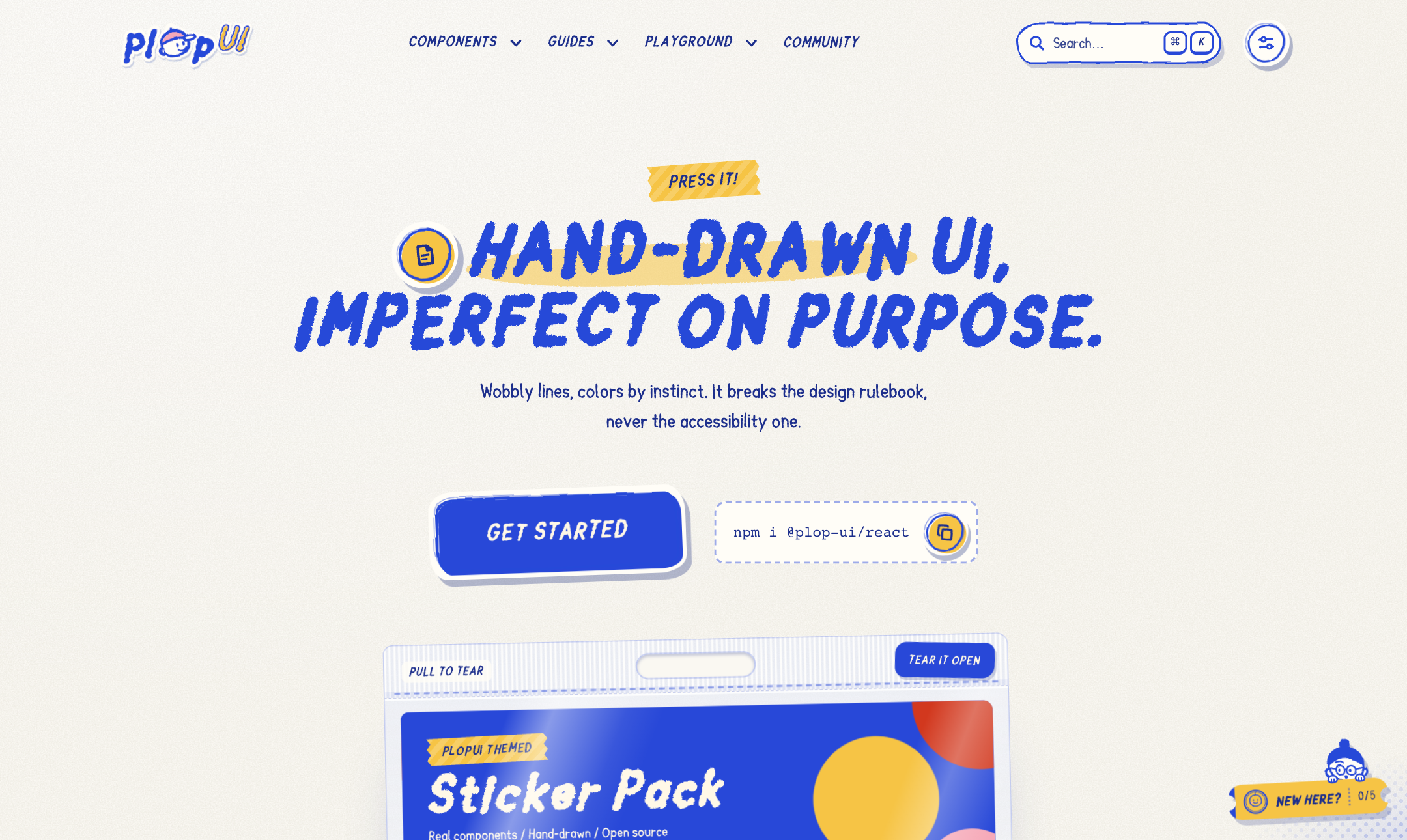
I built a hand-drawn React UI kit that's crooked on purpose and accessible anyway Most UI kits try hard to look neutral. PlopUI goes the other way: wobbly sticker buttons, washi-tape tags, a hand-lettered marker font, colors picked by instinct. The whole thing looks like it was drawn on the back of a receipt. It has one rule: break the visual rulebook, never the accessibility one. !The PlopUI home page: a hand-drawn headline, sticker buttons and doodled characters on paper The drawing sits on top, never instead A PlopUI button is a real <button>. A checkbox is a real checkbox. The hand-drawn outlines, shadows and doodles are decoration layered over native elements, so the browser and screen readers still know exactly what everything is. That means the boring stuff just works: - Tab, Enter and Space do what you expect. Select and Menu also handle arrow keys, Home, End, type-to-jump and Escape. - Every interactive component has a keyboard test, and the docs site runs end-to-end tests in Chromium, Firefox and WebKit. - Status never relies on color alone. The error character (Bix) winces and sweats, so the meaning reads even if you can't tell red from green. Crooked, but the same crooked everywhere The hardest part of a "random" look is server rendering. If a button's tilt comes from Math.random(), the server draws one angle and the browser draws another. React complains about a hydration mismatch, and the button visibly jumps. So nothing in PlopUI calls Math.random() while rendering. Every tilt, wobble and jitter comes from a seed: // hashString is FNV-1a: it turns a string like "Post sketch" into a 32-bit number. /** A deterministic random generator: same seed, same sequence, values in [0, 1). */ export function seed(value: string | number): () => number { let x = typeof value === "number" ? value >>> 0 || 1 : hashString(value) || 1; return () => { // mulberry32 x = (x + 0x6d2b79f5) >>> 0; let t = x; t = Math.imul(t ^ (t >>> 15), t | 1); t ^= t + Math.imul(t ^ (t >>> 7), t | 61); return ((t ^ (t >>> 14)) >>> 0) / 4294967296; }; } /** A value in [-range, range], rounded so it serializes identically on server and client. */ export function seededTilt(value: string | number, range = 2.5): number { const n = seed(value)(); return Math.round((n * 2 - 1) * range * 100) / 100; } Same seed in, same crooked line out, on the server and in the browser. The rounding matters too: two decimals means the number is written identically in the server HTML and in React's props. Built for the App Router The package never imports next/*, so it works in any React 19 app. In Next.js, every interactive component already carries "use client", and the static ones (a timeline, a plain tag) stay Server Components and ship no client JavaScript. It's also light where it counts: everything is tree-shakeable, and a plain Button is about 5.6 kB gzipped. The wobble knows when to chill Every animation respects prefers-reduced-motion. Turn it on and the motion stops, while state changes still show, just instantly. Looping scenes pause while they're off screen, which took the docs site's idle CPU on a throttled phone from 12% to 0%. And the animated footer has a pause button, because anything that moves for more than five seconds should. Three packages - @plop-ui/react: the components, hooks and characters. - @plop-ui/tokens: colors with measured contrast, type, motion and five paper surfaces as CSS variables. There's also a tokens.json for Figma (Tokens Studio). - @plop-ui/fonts: Sketchpop, the marker font, under the SIL Open Font License. Every letter is drawn three times and rotates through calt, so a word like "Shipped!" never repeats the same p twice. Try it npm i @plop-ui/react @plop-ui/fonts import "@plop-ui/fonts/fonts.css"; import "@plop-ui/react/styles.css"; import { PlopProvider, Button, toast } from "@plop-ui/react"; export function App() { return ( <PlopProvider surface="poster"> <Button buddy onClick={() => toast.success("Sketch posted", { buddy: true })}> Post sketch </Button> </PlopProvider> ); } Or skip the install and play with it first: the Playground lets you stick components onto paper and copy the code. What it's for Creative tools, learning apps, games, portfolios, side projects: anything that should feel made by a person. It's not the right pick for a dense enterprise dashboard where every pixel has to stay quiet. PlopUI is free and MIT-licensed: plopui.com · GitHub. Issues and pull requests are welcome, and a few are labeled "good first issue". If something breaks, tell me. I'll fix it and thank you by name.
Code (React + Supabase, sample data only, no live demo): Sulaiman-GitHub/skool-manager
🔥 [1 Repo Every Developer Should Know] caddy: The Free Tool Taking Over GitHub! #shorts Discover caddyserver/caddy: Fast and extensible multi-platform HTTP/1-2-3 web server with automatic HTTPS 💬 Comment "CADDY" below for the direct link, or grab it from the links below: 👉 Interactive Star History & Live Analysis: githubrepo.cloud ⭐ Embed Live Verified Badges in your README: githubrepo.cloud 🔗 Direct GitHub Repository: caddyserver/caddy 📊 Repository Specs: ⭐ Stars: 78,641 🍴 Forks: 5,230 💻 Language: Go 📜 License: Apache-2.0 #shorts #caddy #acme #automatichttps #caddyfile #webdev #javascript #typescript #reactjs
🌐 Website: rayxworld.github.io 💻 GitHub: Rayxworld/tally ⬇️ Download Tally v1.0.0 (Windows installer): github.com/Rayxworld/tally/releases/tag/v1.0.0 I'd love to hear your feedback, suggestions, and bug reports. Give it a try! 🦀
New EIP! Post-Quantum Material Registration 🔗 EIPs#12609 Highlights: - Adds a new EIP-7685 execution request type (0x06) and a predeploy contract that lets a validator’s withdrawal (execution) address register 32 bytes of opaque PQ material for a validator, identified by its 48-byte BLS pubkey. - Consensus layer stores at most one (validator_index, pq_data) entry per validator in a new BeaconState list; a later valid registration from the same withdrawal address overwrites the earlier one. - The predeploy uses an EIP-7002-style dynamic fee with per-block target/max (target 8, max 16 dequeued per block), a queue like EIP-7251, and a system call at end-of-block to dequeue and emit requests into the block’s EIP-7685 requests list. - The contract itself does not authenticate ownership beyond recording msg.sender; the consensus layer enforces authorization by requiring the request’s source_address to match the validator’s execution withdrawal credentials (and ignores invalid/unauthorized/unknown-validator requests without refund). - The 32 bytes are intentionally undefined (“opaque”) to keep post-quantum design choices open; a future fork can define how the commitment is used and can also disable further registrations via a special system-call path (inhibitor). ELI5: Ethereum validators currently prove messages with BLS signatures, which could be forged by a powerful quantum computer in the future. This proposal adds a simple way for each validator’s fund-owner (the withdrawal address on the execution layer) to “pin” a 32-byte blob in the beacon chain state ahead of time—like writing down a sealed reference to their future quantum-safe key info. Later, when Ethereum upgrades to post-quantum signatures, the chain can use that previously-registered 32 bytes to verify the validator’s new quantum-safe credentials without trusting BLS at that time.