Mentions
Conversations linking to GitHub, newest first. Times are UTC.
Mentions by source
X
Bluesky
Hacker News
V2EX
Qiita
DEV
Mastodon
Latest posts
Idea for the Epstein RAG app: one click to copy an answer together with its citations, so the sources travel along wherever the answer gets pasted. AbhisumatK/Epstein_Files_RAG
Github 本周开源热榜:AI 编码设计词汇表、反 AI 味技能包、Cloudflare 安全审计、本机 Agent 驾驶舱、越狱提示词争议:11月第1周 Top5 #github #chatgpt impeccable:给编码 Agent 的设计词汇表,用 polish / bold 引导生成,再用 critique / audit 两道审查,拦住一眼假的 AI 页面,本周 +12K 星登顶。链接:pbakaus/impeccable hallmark:反 AI 味的设计技能包,把艺术指导、参考图和浏览器走查写进 Agent 工作流,让界面像人做的,而不是千篇一律的模板。链接:Nutlope/hallmark security-audit-skill:Cloudflare 官方出品的多阶段安全审计,交给 Agent 逐步执行,产出可独立验证、机器可读的审计结论。链接:cloudflare/security-audit-skill t3code:本机 Agent 的统一驾驶舱,手机、网页、桌面三端接管所有编码 Agent,下发任务、看进度。链接:pingdotgg/t3code dsh-purge:本周最有争议的社区项目,靠切换提示词让模型绕过各自的安全限制,本质上是越狱工具,怎么用、该不该用,大家自行判断。链接:YuJunZhiXue/dsh-purge 11月第1周 Github 开源热榜 Top 5,覆盖 AI 编码设计、Agent 安全审计、Agent 控制与提示词工程,这五个项目本周合计涨了 4.7 万星。 Hey, foreign friends! If you want to understand the content of this video more easily, you can try the CCDub extension. It provides accurate translation and dubbing with ChatGPT, helping you easily understand every part. Click the link below to install it now! dub.qhkly.com
largepuma/libre-artifacts The video above was made with it too: libre-motion cut a real screen recording of the slides editor into a film and wrote the music.
Why the Epstein RAG indexes text instead of page images: a document you can search word by word beats a picture of one. OCR noise and all, searchable text is what makes real questions possible. AbhisumatK/Epstein_Files_RAG
@isbkch @OpenBot_ menu bar mode opened here openbot#4516
Now with ps5-perf, sampling will be much faster. heydemoura/ps5-perf
This tool was made using @ether_fi MCP. It is an independent open-source project. I’d appreciate your feedback if you’re an etherfi user or thinking about becoming one. rogeriomr/lighthouse-for-etherfi-cash Sign up if you don't have an account ether.fi
你是我的币安 Agentic Wallet 接入助手。本阶段只完成登录与只读核验,禁止转账、签名、授权、mint、swap。 1) 安装并加载币安官方 Skill「binance-agentic-wallet」及它要求的钱包工具。先完整阅读官方说明: github.com/binance/binance-skills-hub/tree/main/s… Agent #62442 #ProofOfAgent @Ptahtrade ptah.trade
@dberrkk @OpenBot_ opened it here openbot#4515 for macos vm isolation
Aletheia 0.1.12: docs on their own site, release notes per version, MCP registry publishing Aletheia (npm: aletheia-mem) is a free, local memory and rules hub for AI coding tools. Each coding agent forgets between sessions and keeps its own rules file. Aletheia keeps one SQLite store on your machine. Tools read it over MCP, REST or a CLI, and one rule set is synced into CLAUDE.md, AGENTS.md, GEMINI.md, Cursor and Windsurf rules, and Copilot and Aider files. Version 0.1.12 is a patch release. Here is what changed. The docs have their own address The documentation moved from GitHub Pages to aletheia.mohamedashrafelsaed.com. Paths are unchanged, and the old address redirects. Each version now has its own release notes page, and an Atom feed lists every release. Published to the MCP registry on every tag The release workflow bumps server.json to the tag and publishes it to the official MCP registry with the registry's mcp-publisher CLI and GitHub OIDC. 0.1.12 is listed there as io.github.mohamed-ashraf-elsaed/aletheia-mem. Settings shows only what the code reads The Settings page lists three settings: facts.minConfidence, context.facts and rules.reviewDays. Seven settings that nothing read are gone. Use environment variables for the provider, fact budgets and excluded projects. Redaction is always on. Install npm install -g aletheia-mem aletheia-server It needs Bun 1.1 or newer. The server binds to loopback only. There is no account and no telemetry. Status Alpha. Hooks have run in real sessions of Claude Code, Command Code and Codex CLI, on one machine. Cursor, Gemini CLI and Windsurf configs are written from their docs and not yet tested on a real install. If you run it with a tool I have not tested, open an issue with the tool, its version, the command and the result. - Release notes for 0.1.12 - Documentation - Source on GitHub (Apache-2.0)
ECC now has 71 specialist agents and 314 skills for your coding tools. Plan a feature, then have a separate agent review the code with fresh context. It's open source, and you still decide what ships. Repo + install guide: affaan-m/ECC t.co
You Did Great for Three Days. Then Life Happened. Here Is a Habit System That Survives That. You Did Great for Three Days. Then Life Happened. Here Is a Habit System That Survives That. You start a habit on Monday, full of energy. By Thursday you have missed a day, and by Sunday the whole plan is quietly in the bin. Not because you are lazy. Because the plan was built for a perfect week, and you do not live in a perfect week. Here is a smaller system. One habit, one mark a day, one five minute look each week. No app required. A phone note or a paper calendar works fine. 1. Pick one habit, then shrink it until it feels too easy Pick exactly one habit. Not three, not five. One. Then shrink it until you could still do it on your worst day this week. That is the test. If the answer is no, it is still too big. - "Walk every day" becomes "walk to the mailbox and back." - "Read more" becomes "read one page before bed." - "Post every day" becomes "write one sentence for tomorrow's post." A habit you actually do beats a habit you admire. You can make it bigger later, after two full weeks of daily marks. Do not make it bigger in week one. 2. One mark a day, nothing more Every day, mark one thing: did you do it or not. That is all. Use one line per day, always in the same place: - Mon: yes - Tue: yes - Wed: no, sick day - Thu: yes A "no" is not a failure. It is data. Write one short reason next to it if you know it: sick, traveling, forgot. No reason is fine too. What matters is the mark, not the excuse. Never backfill a week from memory on Sunday. If a day has no mark, it stays blank, and you move on. Worked example: a small business owner wants to follow up with customers every day, but it keeps slipping. She shrinks it to "send one follow-up message before lunch," and marks it in one phone note. Monday yes, Tuesday yes, Wednesday no (driving all day), Thursday yes. By Friday she can see the pattern plainly: driving days are the gap, not willpower. Want a new free skill like this each week, ready to paste into ChatGPT, Claude, or Grok? Sign up here: lil-nicky-ai.kit.com 3. The missed day rule: never miss twice One missed day is normal. Two missed days in a row is the danger point. That is when most people quietly quit. So the rule is simple: never miss twice. After a missed day, the next day's only job is to get the mark back. Do the smallest version of the habit, even the mailbox version, and mark it. You are not making up for yesterday. You are just restarting the run. If you miss a full week, do not restart the whole plan. Shrink the habit again and start a fresh run. The habit was too big, not you. 4. The five minute weekly review Once a week, same day each week, spend five minutes on three questions: 1. How many marks did I get this week? Count them, no judgment. 2. What got in the way on the missed days, if any? Look for one pattern, not a full confession. "I always miss it on driving days" is a useful pattern. 3. One fix for next week, or none. A fix means changing the time, the place, or the size of the habit. "Do it right after breakfast instead of at night" is a fix. "Try harder" is not a fix. If you got seven marks, keep the habit exactly as it is for another week. If you got four or fewer, shrink it again before you blame yourself. What this does not do This does not plan your week, organize your work, or fix an overloaded schedule. It tracks one habit, nothing else. One habit, one mark, one weekly look. That is the whole system, and that is why it holds up. If you want the full set for daily planning, email, meetings, and weekly review, that is a bigger job, and it lives in a paid pack, not in this free skill. Try it free The full Habit Tracker skill is free to copy and use here: github.com/lilnickyai/claude-code-skills-samples/… Want the full everyday set? The Everyday Productivity Skills pack covers daily planning, email, meetings, and weekly review for $19: littlenova5.gumroad.com And if you want a new free skill like this every week, sign up here: lil-nicky-ai.kit.com
Wallpaper engine port for MacOS, rewritten from scratch using Rust Used up my weekly limit building this. Claude wrote the whole rendering backend from scratch using rust. Results, 50-60percent less memory usage than existing apps, and for normal video wallpapers it is 90percent, i mean it went down from 250mb to 12-25mb Do check it out ✌️ Github | website
Small-scale check of "good views beat next-token prediction" (Balestriero & LeCun 2026): human captions only, 11M-param encoders [P] The paper claims text models align with image models faster when trained on "good views" (two different captions of one photo) than on bad views (one caption, words hidden) or next-token prediction. Its largest run used captions written by an image captioner, so image information could have leaked in. I tried a laptop-scale version with human captions only. Setup - Data: 10,000 COCO photos, 5 human captions each. 8,000 train, 1,000 val, 1,000 test. - Image side: frozen DINOv2-base, embedded once. - Text side: same 4-layer, width-256 encoder (11M params) for all three. Same captions, 3000 steps, batch 256, same anti-collapse loss (VICReg-style variance and covariance, not the paper's SIGReg). Only the training pairs differ. The text models never see an image. - Score: mutual 10-NN between caption embeddings and DINOv2 embeddings on the 1,000 test photos (chance 0.010). Results (same learning speed, mean of 3 seeds) - Good views (2 different captions): 0.320 - Bad views (1 caption, masked spans): 0.192 - Next-token prediction: 0.148 Each method also got a small learning-rate search. Best speed, 1 seed: 0.328 / 0.196 / 0.168. Order unchanged. Limits - 11M params and 8,000 photos, not the paper's 109M or 72B. - Good views need to know which captions describe the same photo. Annotators wrote them looking at the photo. - Retrieval (R@1 with one fitted rotation) shows a smaller gap: 0.084 vs 0.063 vs 0.057. - Next-token prediction's best learning speed was the top of my range. - One dataset, one image model. I added the extra speed step after seeing the first search; it is noted in the repo. Code, chart and per-run results: IFAKA/platonic-lab What I would test next: does the gap shrink as the encoder grows? I could not test that on a laptop. Has anyone tried?
code’s open if you want to render your own atom 👇 AlexCarten/every-dot-is-a-measurement
Mira este repo, es una skill a la que le describes tu stack tecnológico y dibuja un diagrama de arquitectura con logos e interacción. → caru-ini/stack-diagram
Wall of Shames Exposing Fraudulent AI Tools & GitHub/Gitlab Scams >A community-driven project documenting and analyzing fake "AI Hacking Tools" and scams (thanks to AI assistance!) that exploit non-technical and young users through social media.Exposing Fraudulent AI Tools & GitHub/Gitlab Scams
Mira este repo, es una skill a la que le describes tu stack tecnológico y dibuja un diagrama de arquitectura con logos e interacción. → caru-ini/stack-diagram t.co
Tout est produit par IA, avec des garde-fous publics : citations comparées à la source, formules rejouables, barèmes sourcés. Aucun économiste ne l'a encore relu. Une erreur ? Code et données ouverts, corrections bienvenues : Noril/mon-budget-2027
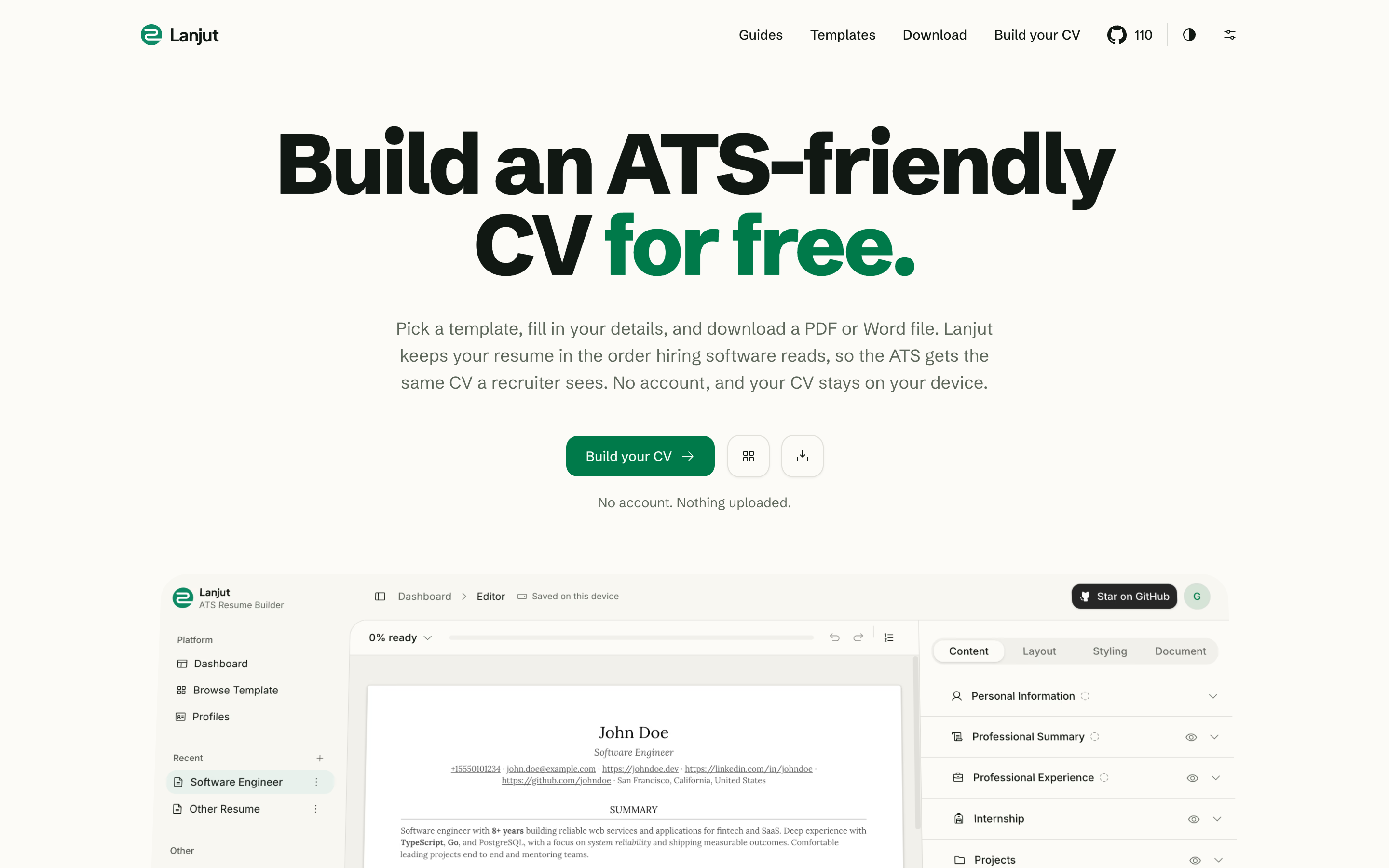
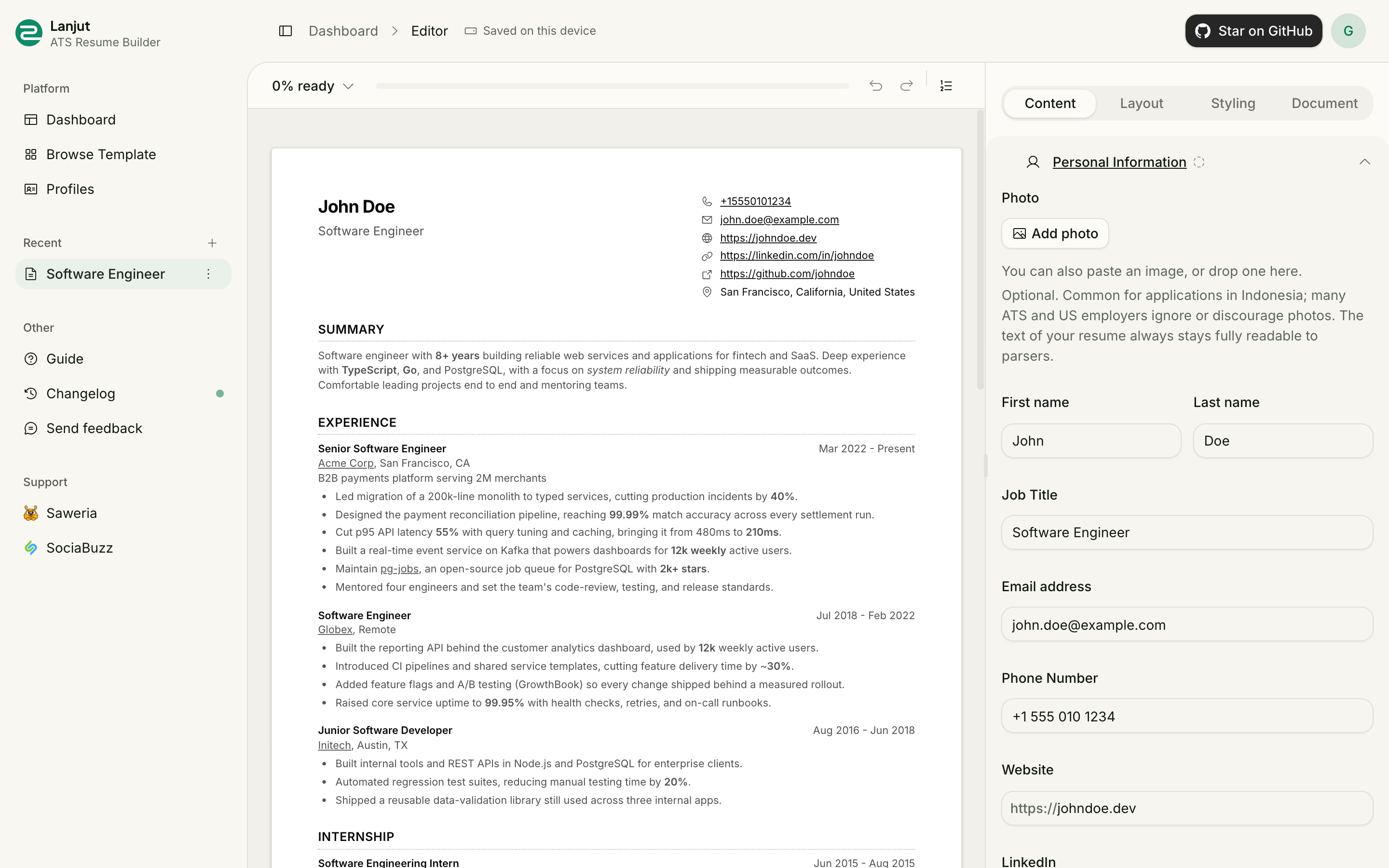
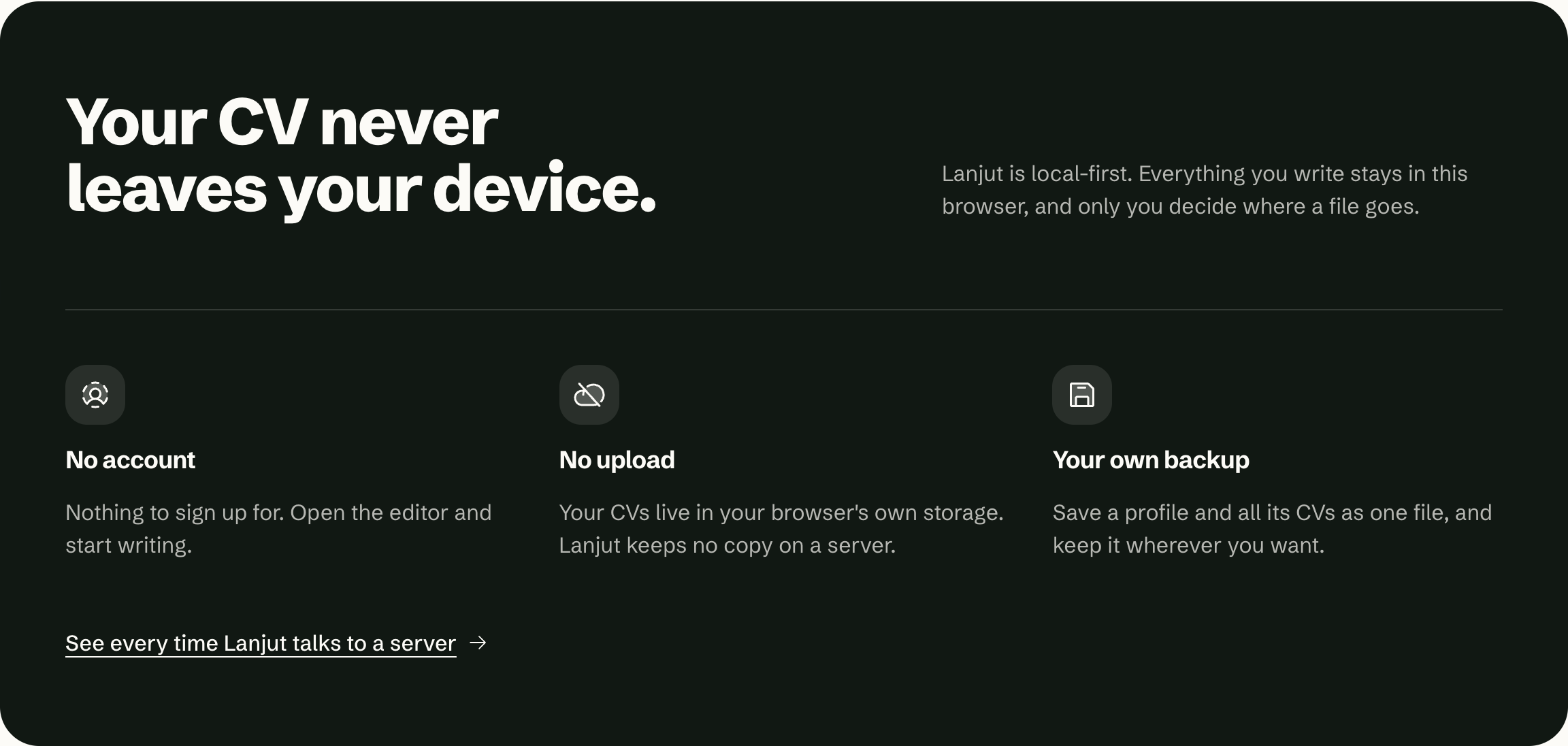
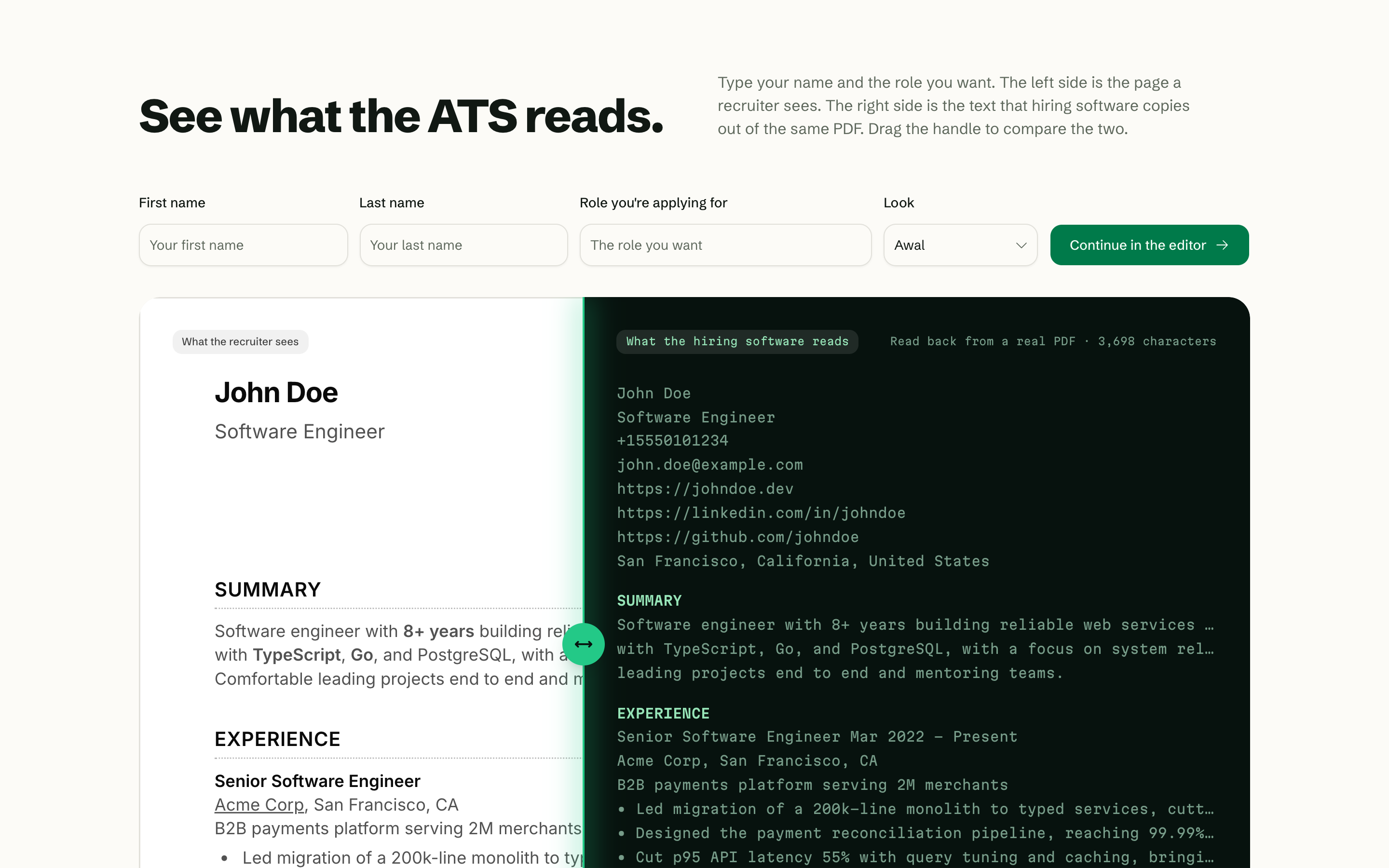
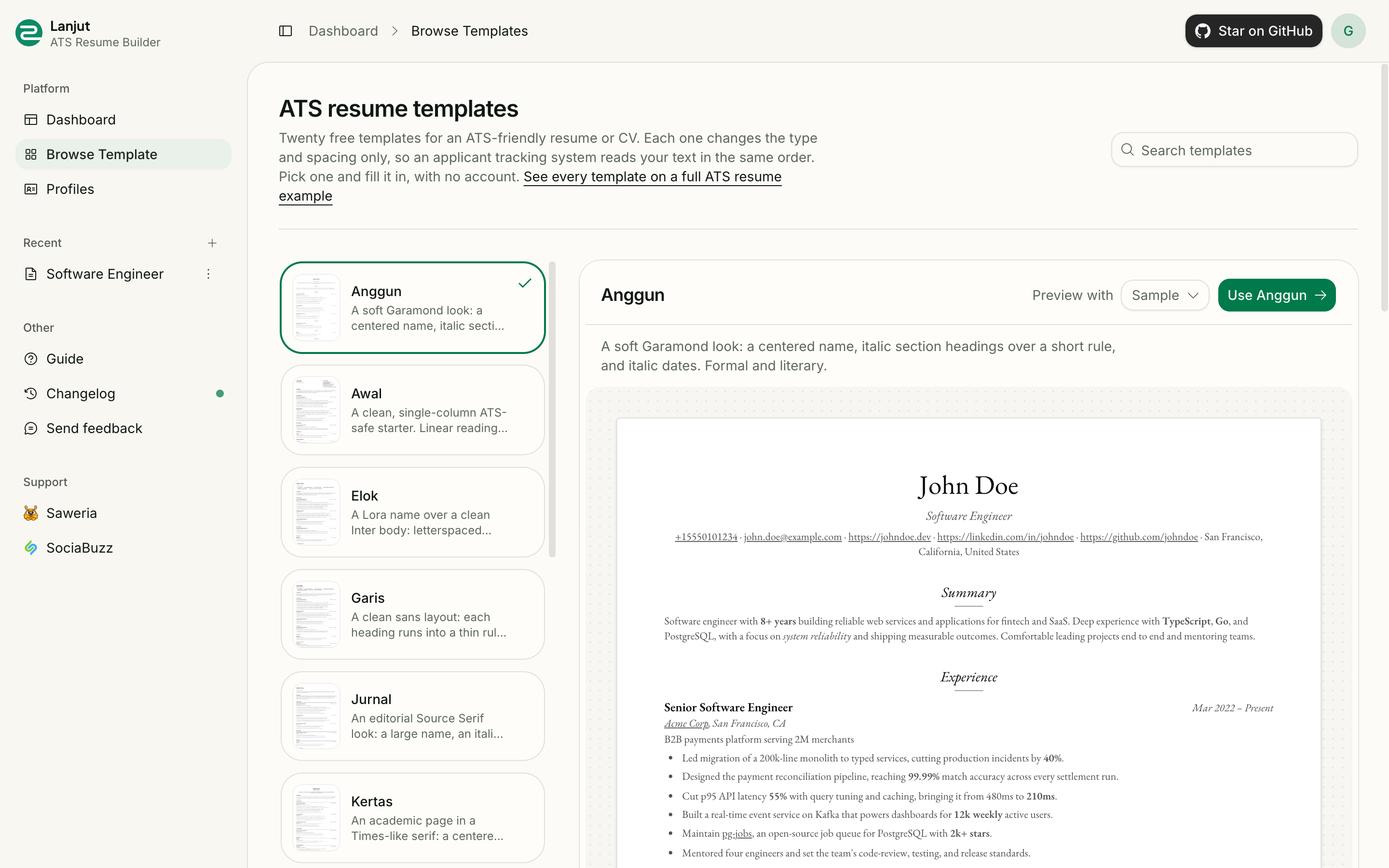
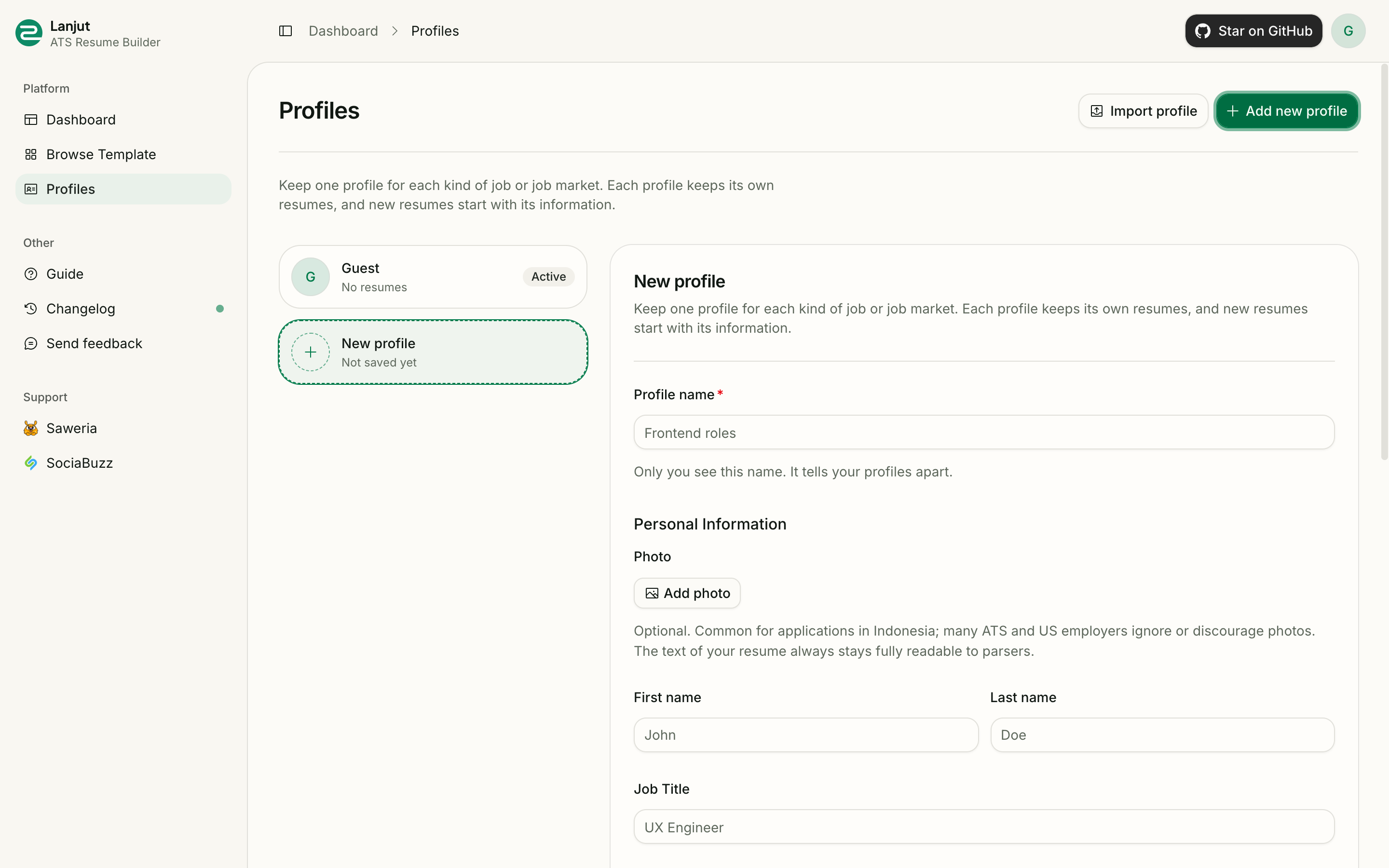
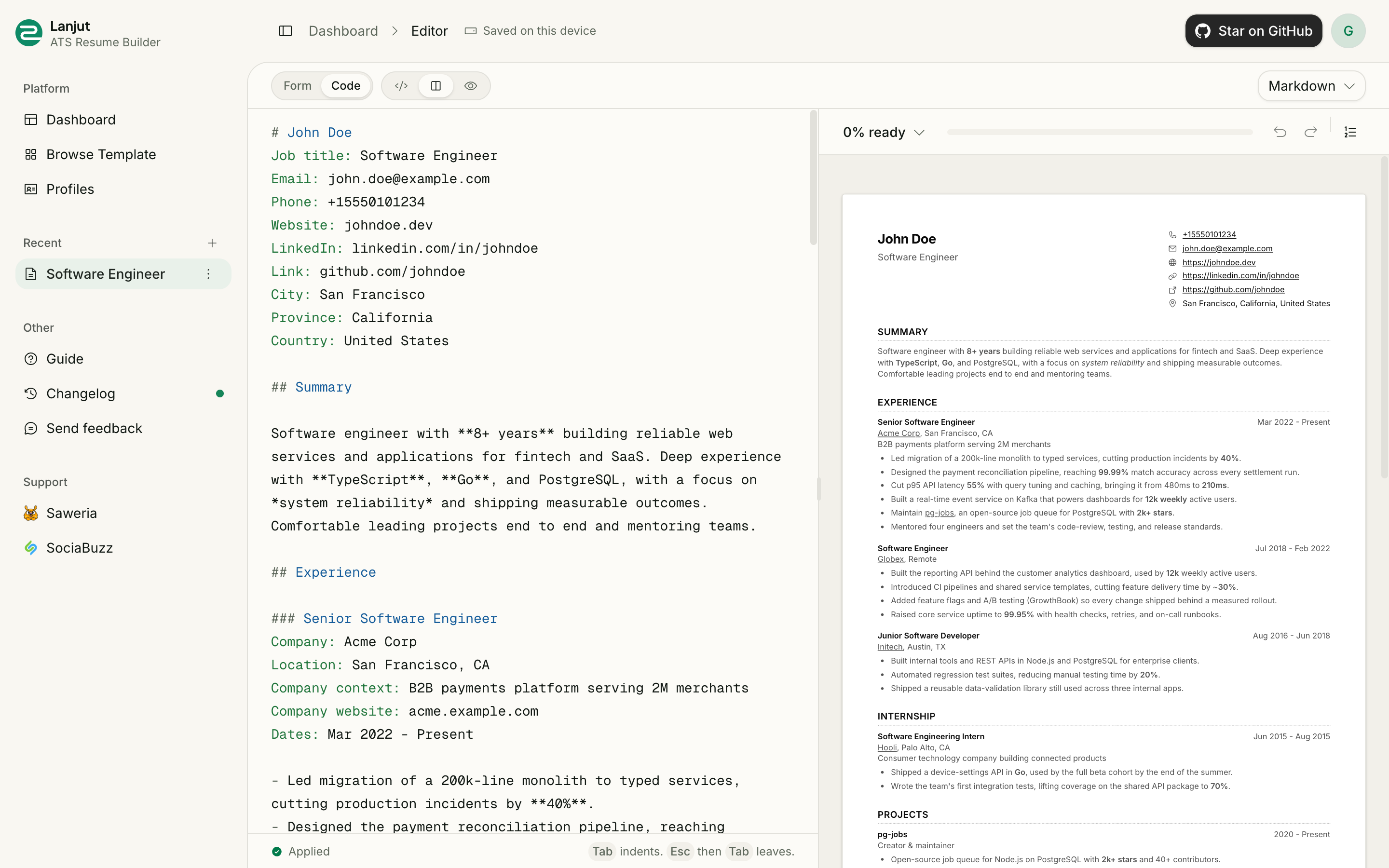
I Built a Free CV Builder With No Login, and Your Resume Never Leaves Your Browser Introduction You know the moment. You spend an hour on some resume builder, fixing your bullet points, picking a nice template. Then you click Download, and it says: "Upgrade to Pro to export your PDF." Or it lets you download, but the PDF has their logo on the bottom. Or it wants your email first. I got tired of that. So I built the one I wanted, and I called it Lanjut. When I first wrote about it in July, it had six templates. On October 29 it hit 1.0, with a desktop app for Mac, Windows, and Linux. Today it's on 1.6, with twenty templates. And the three rules from day one are still the same: > In short: > > - No login. No sign-up, no email, no password. Open it and write. > - Free, and open source. No paid plan, no trial, no watermark. The code is on GitHub under AGPL-3.0. > - Your resume stays on your device. It's saved in your browser. There's no server that stores it. > > Try it at lanjut.org. !The Lanjut home page By the way, Lanjut means "continue" in Indonesian. Which is also what "resume" means. I'm still a little proud of that one 😅 Rule 1: No Login Q: Do I need an account? A: No. Go to lanjut.org and start typing. Think about who needs a resume builder the most. Someone who's looking for a job. A fresh graduate, or someone who just got laid off last week. They don't need one more account, one more "verify your email", one more newsletter. So Lanjut has no accounts at all. Not "optional sign-up". None. !The editor: the form on the right, the live page in the middle Rule 2: Free, and Open Source No paid plan. No trial that ends after seven days. No watermark on your PDF. Download as many times as you want, in PDF, Word (.docx), or plain text. How can it be free? Because it costs me almost nothing to run. There's no database and no user accounts to keep. Cloudflare serves the site, and your browser does the rest. When the server bill is close to zero, a paywall would just be greed. And it's open source under AGPL-3.0. So you don't have to trust anything I write in this post. You can read the code. Rule 3: Your Resume Stays on Your Device This is the one I care about the most. A resume has your phone number (some country requires it), your email, your city, and your whole work history. Most resume builders keep all of that in their database. Lanjut is local-first: everything you write is saved in your browser's own storage (IndexedDB), on your machine. !No account, no upload, your own backup Since you're reading this on dev.to, here's a fun test. Open DevTools, go to the Network tab, and type in the editor for a minute. Your resume doesn't go anywhere. There's nothing to send it to. There's also a privacy page that lists every single time the site talks to a server, like loading the page or checking for a desktop update. It's a short list. Q: So what happens if I switch laptops? A: You download a backup. One small file holds a profile and all its resumes, and you open it on the other machine. That file goes wherever you send it. Not to me. Does It Actually Pass the ATS? Quick context: an ATS (Applicant Tracking System) is the software many companies use to read your resume before a human does. It copies the text out of your PDF and sorts it into fields. If your layout confuses it, your job titles end up mixed with your hobbies, and nobody ever tells you. I'll be honest: no tool can promise you get through. Every company sets up its ATS differently. What Lanjut can do is make sure the file is right: real text, standard headings, and one reading order from top to bottom. That's why it has no tables and no two-column layouts. You still choose the fonts, spacing, colors, and section order. And instead of asking you to believe that, the home page shows it: !What the recruiter sees, next to the text an ATS reads from the same PDF On the left is the page a recruiter sees. On the right is the text pulled out of a real PDF, generated right there in your browser. Drag the handle to compare. If the right side reads in a clean order, so will most parsers. What's in 1.6 The 1.6 release was a big one: - Fourteen new templates, so twenty in total. Every one keeps the same reading order. Only the look changes. - Colors for your name, headings, lines, and links. Lanjut refuses a color that's too light to read on white. - Contact labels, so you can show "LinkedIn" instead of a long URL. It also warns you, because some ATS only read the visible text. - A download page that picks the right installer for your computer. !Some of the twenty templates And a few things that were already there, but people keep asking me about: - Profiles. Keep one profile per kind of job, like one for frontend roles and one for product roles. Each has its own resumes and contact details. - Import your old CV. Drop in a PDF, and Lanjut sorts it into sections. - Works offline. Open it once, and it keeps working without a connection. The desktop app works offline too. - English and Indonesian, for the app and for the resume itself. !Profiles: one per kind of job For Developers Okay, this is my favorite part. Open Preferences and turn on Developer mode. Now the editor has a Form/Code switch, and you can write your whole resume as Markdown, YAML, or JSON. The page updates as you type. !Writing a resume in Markdown, with the live page next to it I mean, we write README files all day. Why not a resume? The stack, if you're curious: Astro with React islands for the site, zustand for state, synced to IndexedDB. The PDF export runs in a Web Worker through WebAssembly, so even a big export never freezes the page. The desktop app is Tauri, loading the same static build from disk. I wrote about the architecture in more detail on my site. Closing Lanjut is v1 now. For me, that means the promise is locked: no login, free, open source, and your resume stays on your device. New features will keep coming, but those four won't change. If a feature ever needs an account or a server copy of your resume, it won't ship. So if you're job hunting, or you know someone who is, give it a try: - Use it in the browser at lanjut.org - Get the desktop app for Mac, Windows, or Linux - Read the code, open an issue, or leave a star on GitHub And that's it, folks. Thank you for reading until the end, I hope this post is useful for you.
@MikiAdamus @WisprFlow Makes sense, the phone is where it usually falls down. This is the Android one if you want to give it a go: w6liam/OSSFlow
ウィンドウ用意して手動で切り分ける感じにしようかな〜って思ってたらそういうプラグインが出てきてうれしい teruyoshii/AviUtl2_TextPath_Te
OpenUI is an interesting take on #GenerativeUI. AI-generated interfaces that stream in real time, with support for React, Vue, Svelte, and Angular. It claims up to 67% fewer tokens than JSON in its benchmarks. Fully #OpenSource. thesysdev/openui
What Happened When I Built an Open-Source AI Project in Public A few months ago, BOOTH was just a small idea I wanted to explore. I wasn't sure whether it would become a proper Python library, whether anyone would find it useful, or whether other developers would ever contribute to it. I just had a problem I wanted to work on. It started with a thought about something unrelated to programming: getting lost in an airport. I wrote about that experience in my Substack post, Knowing less, but knowing what matters. The basic idea was that having more information doesn't always mean making better decisions. I started thinking about how this applies to AI. An LLM can process enormous amounts of information and still produce an incorrect answer. It can return perfectly valid JSON, sound confident, and still get something important wrong. Maybe the answer isn't always to make models know more. Maybe we also need better ways to check their outputs before applications rely on them. That thought eventually became BOOTH. I started building it, published it on GitHub and PyPI, and opened the repository to contributions. What happened after that has been one of the most interesting parts of the experience. First, what is BOOTH? BOOTH is a lightweight, zero-dependency, provider-agnostic Python checkpoint library for LLM output reliability. The idea is to give developers a way to check an LLM's output before their application uses it. It currently has three main APIs: - booth.check() – Checks parsing, ambiguity, confidence, and optional application-defined validation. It can also retry through reconsideration. - booth.acheck() – The asynchronous equivalent. - booth.check_with_evidence() – Compares an existing answer against evidence supplied by the application. The third API is something I've been particularly interested in. Imagine you're building a RAG application. Your application already retrieves documents and gets an answer from an LLM. You now want to compare that answer against the evidence you have. With booth.check_with_evidence(), you can provide the evidence and your own comparison function. BOOTH doesn't retrieve the evidence or independently establish whether something is true. The application remains responsible for supplying the evidence and deciding how the comparison should work. I like this approach because it gives developers control over how answers are checked instead of assuming that the model's own confidence is enough. You can install BOOTH with: pip install boothpy It's still an evolving project, and passing a BOOTH check does not prove that an answer is factually correct. That's an important limitation, and one I want to keep being transparent about. What people started finding interesting about BOOTH Once the project became public, developers started exploring different parts of it. One thing I've found encouraging is the interest in the idea of evidence-based checking. It's easy to focus on asking an LLM to generate an answer. But in many applications, the more important question is what happens after the answer is generated. Can the application compare it against information it already has? Can developers define their own validation rules? Can they handle uncertain outputs in a more structured way? Those are some of the problems BOOTH is trying to make easier to work with. I've also seen interest in its provider-agnostic approach and the possibility of using it with different models and frameworks. Contributors have added examples involving Gemini, Anthropic, Ollama, and LangChain, among others. Other developers have explored structured-output parsing and different ways of checking model responses. It's nice to see people take an idea that started in my head and try to make it useful in their own ways. But something else happened too. People didn't just try the features and agree with the original idea. They started questioning it. And that turned out to be just as valuable. People started challenging the assumptions behind it One of the most interesting discussions was about confidence. BOOTH uses a default confidence threshold of 0.7. But there's an obvious question: If an LLM says it's confident, should an application actually trust that confidence? A contributor proposed investigating whether self-reported confidence was meaningfully related to answer correctness. The experiment used 300 TriviaQA questions with local models. The results reported by the contributor were: | Model | Accuracy | Wrong answers that passed 0.7 | |---|---:|---:| | Qwen 2.5 7B | 51.7% | 139 of 139 | | Llama 3.2 3B | 50.9% | 135 of 143 | These are results from a particular experiment, not universal benchmarks or claims about all models. The reproducible write-up and raw outputs should be consulted alongside the numbers. Still, the results raised an uncomfortable question. For these models, the confidence threshold did very little to reject incorrect answers. A model could be wrong and still report confidence high enough to pass. That matters because confidence can look like a useful signal, but it isn't the same thing as correctness. I don't see this as a reason to abandon the idea of checking confidence. I see it as a reason to understand its limitations and avoid relying on it alone. Other contributors have also explored independent-sample agreement, tested local models, and worked on handling malformed outputs. These experiments and improvements have helped expose cases that deserve more attention. And that's something I genuinely want from an open-source project: people who are willing to test the assumptions, not just use the implementation. Opening the repository changed more than the code When I first published BOOTH, I hoped a few developers might try it, report issues, or suggest improvements. I didn't expect so many different people to get involved. At the time of writing, the repository has received 14 merged pull requests. The contributions include: - Gemini, Anthropic, and Ollama examples. - LangChain with FAISS and FLAN-T5. - Evidence-comparison experiments. - A troubleshooting guide. - Python typing support through py.typed. - Mypy integration into CI. - Structured-output parsing through parse_fn. - Ollama experiments with Qwen models. - Independent-sample agreement experiments. - Improvements to handling malformed model outputs. Some contributions expanded the examples. Others improved the developer experience. Some went deeper into the behaviour of the library itself. For an established project, 14 pull requests might not sound like much. For a project I started as a small personal experiment, it's something I'm genuinely happy about. What makes it more meaningful is that the contributions haven't all been about adding features. People have brought different ideas, tested different approaches, found edge cases, and asked questions I hadn't thought about. I've also appreciated seeing developers share their experiences with BOOTH independently on LinkedIn. Some have written about their first open-source contributions, while others have discussed the integrations and experiments they worked on. It's a nice feeling when something you built becomes interesting enough for someone else to spend their time exploring it and sharing what they learned. I'm grateful to everyone who has contributed code, examples, experiments, feedback, and ideas. You can see the people behind the contributions here: BOOTH – GitHub Contributors Not all feedback has been praise, and that's a good thing I want to mention this separately because I think it's important. It's encouraging when people appreciate an idea or find a particular feature useful. The interest in evidence-based checking, provider flexibility, and structured validation has been motivating. But I don't want BOOTH to become a project where people feel they can only say positive things about it. If someone finds a limitation, I want to hear about it. If someone tests a model and discovers that an assumption doesn't hold, that's useful. If someone thinks an API could be designed better, I'd rather have that conversation than defend the original implementation just because I wrote it. For example, the confidence experiments have made me think more carefully about what confidence scores can and cannot tell us. The discussions around evaluation have also raised questions about how we should measure BOOTH's behaviour in the first place. Positive feedback helps me understand which ideas resonate with developers. Critical feedback helps me understand where those ideas fall short. Both are important. I don't think an open-source project becomes better simply by collecting contributions. It becomes better when people feel comfortable exploring it, questioning it, and sharing what they discover. A new question: how should we evaluate BOOTH? Another discussion has been around a possible API: booth.measure() The idea is to let developers evaluate BOOTH offline using labelled datasets. At first, it sounds straightforward. Give it a dataset, run some checks, and produce a report. But the details matter quite a bit. Some of the questions raised include: - How should correctness be determined? - Should calibration be measured before or after retries? - How should false acceptance be calculated? - What happens when a model returns the same confidence score for every answer? - Should evaluation reports expose raw outputs so results can be independently checked? These are not just implementation details. They affect what the results actually mean. booth.measure() is still under consideration. I don't want to introduce an evaluation API just because it sounds useful. I'd rather understand what developers need and make sure the measurements are meaningful. This is another example of how community discussions have changed the way I think about the project. Sometimes the most useful contribution isn't a new feature. It's a question that makes you stop and reconsider the design. BOOTH reached beyond GitHub There have also been a couple of milestones I didn't expect when I started. BOOTH was featured in Python Weekly, Issue #767, and later by Python Hub. For a small independent project, that kind of visibility is encouraging. It means the work reached developers who might not otherwise have come across the repository. Of course, being featured doesn't automatically mean people are using the library in production. I don't want to confuse visibility with adoption. But it's still a milestone worth appreciating. What matters to me now is what happens next: whether developers try BOOTH, whether they find it useful, what limitations they encounter, and whether the project can become genuinely useful in real applications. What's next? BOOTH is still early, and there is plenty of work ahead. Some things I'd like to explore further include: - Better evaluation and confidence calibration. - More provider and framework examples. - Stronger evidence-comparison experiments. - Better handling of edge cases and malformed outputs. - A clearer approach to measuring how well the checkpoint actually performs. I'm also thinking carefully about the roadmap toward v1.0. I don't want to rush a release just to have a bigger version number. I'd rather get the fundamentals right first: the API, behaviour, documentation, and testing. And I'd like the community to keep influencing that direction. If you'd like to try BOOTH If you're working with Python, LLMs, RAG pipelines, or AI agents, I'd love for you to take a look. You don't need to become a regular contributor. Even trying one example and telling me what you think would be useful. You could: - Install BOOTH and try the quickstart. - Test it with your favourite model. - Try the evidence-based checking API in a small RAG application. - Find an edge case. - Challenge one of the design decisions. - Open an issue or submit a pull request. And please share the failures too. If something doesn't work, or you think an approach is wrong, I'd genuinely like to hear about it. Project links: - GitHub: BOOTH repository - PyPI: boothpy - Issues: Report a problem or suggest an idea - Examples: BOOTH examples - Contributors: See everyone who has contributed One question for the community If you were building a reliability layer for an AI application, what would you trust most? 1. The model's own confidence score. 2. An external validator. 3. Evidence retrieved from your knowledge base. 4. A combination of all three. I'd genuinely like to hear your thoughts, especially if you've tried approaches that worked differently from what you expected. A few months ago, BOOTH was just a small Python repository I wanted to experiment with. Now there are developers contributing code, exploring its features, testing models, questioning assumptions, finding limitations, and sharing what they've learned. I still have a lot to figure out. BOOTH isn't a finished solution to LLM reliability, and I don't want to pretend it is. But one thing I've learned is that putting a project in public changes the way you build it. You start with an idea and an implementation. Then other people bring their own use cases, questions, criticisms, and improvements. Some of them help you see the value in what you've built. Others show you what you haven't got right yet. I'm grateful for both. And I'm excited to see what we can make of BOOTH together.
Introducing a New Plugin – See Who Is Typing on a Ticket Hello everyone, I have developed a plugin that shows who is currently typing a comment on a ticket. The plugin has been tested successfully with GLPI 11.0.6 and is working as expected. If anyone is interested, please feel free to give it a try. I would really appreciate your feedback, suggestions, and any ideas for improvement. Looking forward to hearing your thoughts! Repo: aayush1108/livetyping
ISUCON優勝者が出身研究室の大先輩で知ってる方だったので刺激されてエスパーして使ってたスキルっぽいなにかを生成するみたいな取り組みをやってたわけですが、ようやく参加記が出たので読ませて一旦完成系になった気がする touyou/skills
Show HN: ViBrow – A custom browser writen in Python and Zig using 35MB RAM
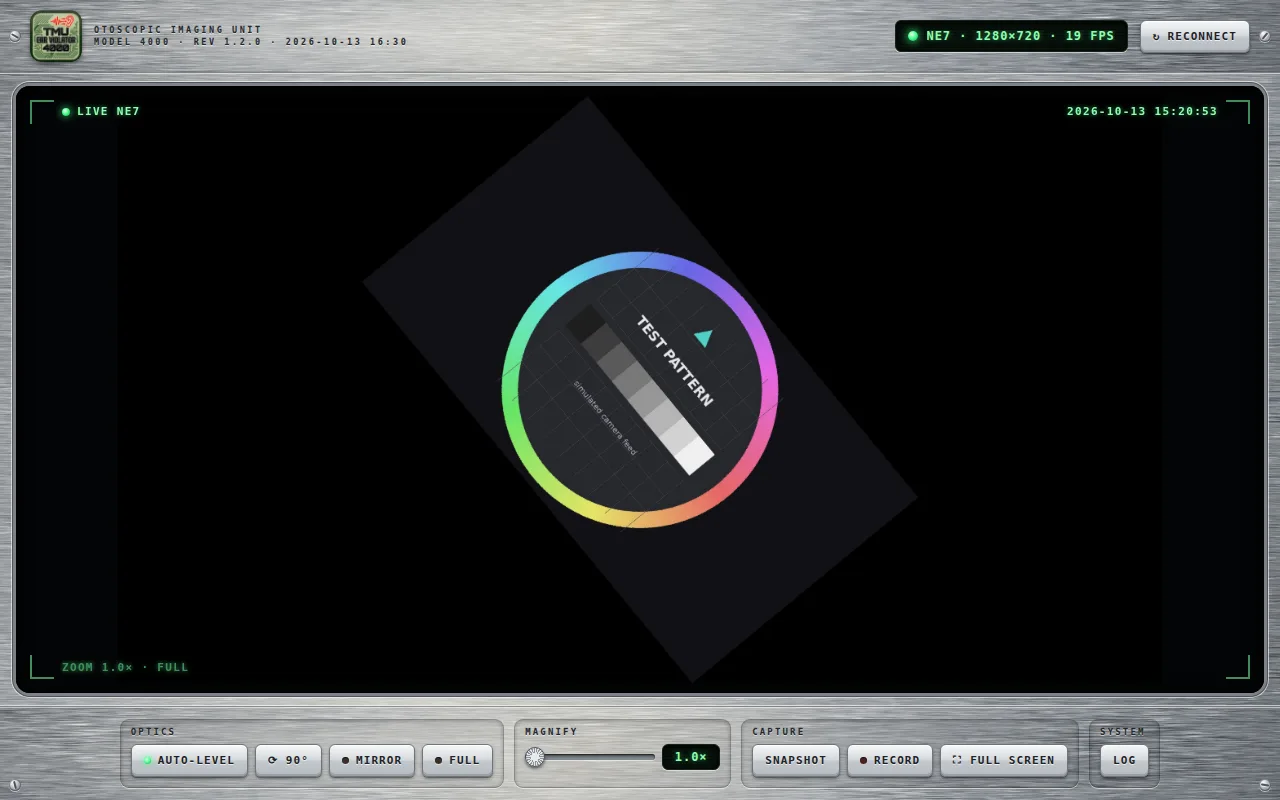
Tmu Ear Violator 4000 Streamer Use your cheap WiFi ear camera without the vendor app. A viewer for cheap WiFi ear cameras (otoscopes), microscopes, borescopes and endoscopes that normally need a vendor app ("SL ylz", "EarVision", "Soulear", "Cooleer", "MAX-VIEW", "Depstech" and friends). It speaks the protocols of twelve camera families, so one program covers most of that market, and it never touches the internet. Project page · [Download for Android](../../releases/latest) · by Matthew Armstrong <p align="center"> <img src="raw.githubusercontent.com" alt="The viewer in a desktop browser, shown with a test pattern" width="720"> </p> - No trackers, no ads, no analytics, no accounts. The app never contacts the internet. - Android app that asks for network access only. - Desktop version: one Python file with no dependencies, for Windows, macOS and Linux. - Works with six camera families (table below) and detects which one your scope is. - Wakes scopes that hide their WiFi until a Bluetooth knock (EarVision / softish-), on desktop. - Full-resolution picture by default, with optional Square and Circle views. - Fullscreen (button, F key or double-click), auto-level from the scope's tilt sensor, mirror, rotate, zoom. - Snapshots (PNG) and video recording. - Log panel with one-click diagnostics, plus Reconnect and Restart buttons. Which cameras work? | Family | Look for this WiFi name | Companion app it replaces | Tested | |---|---|---|---| | NE7 | HNDEC-xxxx | SL ylz | real scope (the author's) | | NE3 | HNDEC-xxxx (older) | SL ylz | simulator only | | Wifiview ("Xylla", iTiMO, Y38) | Enjoy-, JesHome-, iTiMO-, jetion_, AIR-ES | AIR-Look, iTiMO | simulator only | | Soulear (i4season / Beken, sold under dozens of brand names) | Soulear-, SUEAR, i4season, inskam | Soulear / Suear | simulator only | | EarVision ("JEGOAT") | softish-xxxxxx (hidden until woken, see below) | EarVision | simulator only | | EarFairy | Cooleer_xxxxxx | Cooleer | simulator only | | MaxSee / MAX-VIEW / JoyHonest microscopes | Maxsee_xxxx, MAXVIEW-xxxx, JH- (camera at 192.168.29.1) | MAX-VIEW, Max-see | simulator only (others have used it on real ones) | | Depstech-style borescopes, older firmware | camera at 192.168.10.123, TCP 7060 | "WiFi endoscope" apps | simulator only | | Depstech WF070 borescopes, newer firmware | camera at 192.168.10.123, UDP 8030 | Depstech View | simulator only | | Appotech AX3268 endoscopes (YPC99, Kerui, GoSky/YCamera) | camera at 192.168.1.1, RTSP on 7070 | YCamera | simulator only | | Anything serving MJPEG or JPEG over HTTP (ESP32-CAM, mjpg-streamer) | camera answers on port 80, 81, 8080 or 8081 | whatever it came with | simulator only | | Novatek-chip cameras | camera at 192.168.1.254 | various | simulator only, lowest confidence | The Soulear row also covers the MS5 WiFi microscope (192.168.1.1). Many microscopes and borescopes have no recognisable WiFi name, so they are found by their address and port instead; the viewer checks all of them for you. "Simulator only" means the code follows other people's published reverse engineering of those cameras and passes its tests against a simulated camera, but nobody has tried it on the real thing yet. If yours works, or doesn't, please [open an issue](../../issues/new/choose) with the log. Scopes that hide their WiFi (EarVision / softish-) These scopes don't show up in your WiFi list until a phone app sends a hidden Bluetooth message. The viewer can do that for you on Windows, macOS and Linux: Switch the scope on, start the viewer, and press Wake scope (Bluetooth) (or start it with --wake). The first time, it installs its one extra Bluetooth helper (bleak) by itself, needing internet for a few seconds. It finds the scope, wakes it, and joins its WiFi for you. The WiFi password is derived from the scope's own Bluetooth broadcast, so there is nothing to type. If it can't join the WiFi by itself, the log shows the name and password, and the Copy WiFi password button in the log panel copies it for you. On Linux, if the wake itself fails, a phone works too: in the free nRF Connect app connect to SOFTISH-xxxxxx and read the characteristic 0x0099 (service 0x9900); the scope's WiFi then appears. The Android app can't do the Bluetooth step yet. Scope light (experimental). The EarVision scope's light has no known command. In the log panel, Probe light tries likely commands one at a time while you watch the LED; press Light changed! when it reacts, and the log shows which commands were just sent. You can also type bytes into the Send box (hex, e.g. 30 01 01). Guesswork on unknown firmware, at your own risk. Quick start: double-click 1. Turn the scope on (hold the button for 3 seconds) and join its HNDEC-xxxx WiFi (no password). 2. Double-click the launcher for your system. You need Python 3.8+, nothing else. | System | Double-click | |---|---| | Linux | TmuEarViolator4000-Linux.sh (if asked, choose Run) | | Windows | TmuEarViolator4000-Windows.bat | | macOS | TmuEarViolator4000-Mac.command (first time: right-click, Open) | A browser tab opens with the picture. If the scope is on its WiFi it is found automatically. A plain MJPEG stream for VLC or OBS is at http://localhost:8080/stream.mjpg. From a terminal: python3 src/earscope/ne3web.py --help lists the options (--port, --camera-ip, --protocol auto|ne3|ne7|wifiview|i4season|jegoat|earfairy|jhcmd|borescope|depstech|appotech|mjpeg|novatek, --wake, --no-browser, --version, -v). Android (10+) Get the latest EarViolator4000-x.y.z.apk from the [Releases](../../releases/latest) page. Open it on your phone and allow installing from your browser or file manager when Android asks. Each release includes SHA256SUMS.txt, so you can check the file is the one GitHub built from this source. Then join the scope's WiFi (if Android warns there's no internet, choose Stay connected) and open Tmu Ear Violator 4000 Streamer; it finds the scope by itself. Snapshots go to Pictures/EarViolator4000 and recordings to Movies/EarViolator4000. See BUILDING.md to build the APK yourself. Privacy and security | | | |---|---| | Permissions | INTERNET and ACCESS_NETWORK_STATE only | | Talks to | the scope on its own WiFi, and itself on 127.0.0.1 (desktop only, for the optional wake: your Bluetooth adapter) | | Code | two Python files: app.py and ne3web.py | The scope's own WiFi has no password: anyone in range can connect while it's switched on. See SECURITY.md to report a problem. More documentation - HOW_IT_WORKS.md: protocols, architecture, endpoints - CHANGELOG.md · CONTRIBUTING.md · SECURITY.md - THIRD_PARTY.md: credits and bundled components - BUILDING.md: build the APK, signing, releasing - DESIGN_NOTES.md: findings, decisions, what is untested --- Source code: The-Dorkknight/earscope-app on GitHub
Can't recommend this enough for nuking YouTube ads, FWIW.
Stop paying for ML bootcamps. Harvard Open-sourced the exact ML Systems curriculum they teach senior engineers. Prof. Vijay Janapa Reddi released the full CS249r material book, GitHub. Master these 6 pillars and you instantly jump - harvard-edge/c%E2%80%A6 t.co
羲和,观天以授时,御日以成序。 「开发实录」 通用 Agent 多主体协作平台:四模块(Vue / Spring Boot 4 / LangGraph / Rust) 每个智能体有自己的身份、能力与记忆。 cc01cc/xihe-project (开发中) #AI #Agent #BuildInPublic t.co
[Release] Faster USVFS for MO2 — Cuts virtual directory scan time by ~93% and Skyrim startup time by nearly 50% Hey everyone! I'm thrilled to properly introduce Faster USVFS for Mod Organizer 2 (MO2)—an unofficial, experimental build of USVFS that cuts virtual directory scan time by ~93% and reduces total Skyrim startup time by nearly 50% on medium-sized modlists. Some of you might have already stumbled across me on the old Nexus page or GitHub Releases—somehow my GitHub release still racked up 400+ downloads even while the Nexus file was stuck in quarantine and the page was hidden! Tragically, I didn't realize I had uploaded it to the wrong category on Nexus, so 195690 got hidden by the moderators. Totally my bad—but today, I am officially back from the dead in the right place! preview.redd.it - Download: Nexus Mods | GitHub Releases - Detailed Benchmarks: GitHub Gist - Source & Upstream PR: ModOrganizer2/usvfs PR #99 | GitHub Branch How It Works USVFS (User Space Virtual File System) is the cornerstone of MO2. It uses Windows API hooking to redirect file access functions on the fly so games and tools see a virtualized directory structure without touching your actual game folder. For most operations, USVFS is already fast—close to its limits. The bottleneck is directory enumeration (NtQueryDirectoryFile(Ex)), which was designed nearly a decade ago for a very different modding era. Whenever a game or tool scans a folder, stock USVFS resolves virtual files one at a time: opening, querying, and closing the mod's source directory for every single file, while re-entering its own hooks under a global lock. As modern modlists grew to thousands of mods and frameworks leaned heavily into runtime directory scans, that original design naturally struggled to keep up. Faster USVFS modernizes it with batched directory enumeration: - Reads each contributing mod folder at most once per scan - Bypasses internal hook re-entrancy - Packs multiple virtual entries straight into the caller's buffer This eliminates hundreds of thousands of redundant syscalls and lock acquisitions across every game and modding tool launched through MO2. Performance & What to Expect In interleaved A/B testing on a well-tuned, medium-sized modlist, total Skyrim startup time dropped by ~50% (see the Gist for full methodology and numbers). Because this specifically accelerates directory enumeration, your real-world speedup comes down to how much of your startup was originally spent scanning folders: - Massive loose-file modlists: Results can swing even higher. - BSA-heavy lists or setups bottlenecked by other slow stages: You may only see a slight improvement if directory scanning wasn't a major bottleneck for your setup in the first place. Safety & Compatibility - Save-safe: I consider this build solid and reliable after small-scale testing prior to release. Even if an oversight in my code or design causes an issue, the worst-case scenario is the game failing to detect or read certain virtualized files until you restore your backup—it will never corrupt your existing save files. - Compatibility: No known incompatibilities, and nothing else currently does what this build does. Tested on MO2 v2.4.4, v2.5.2, and v2.5.3 Beta 12 (theoretically compatible with all existing MO2 versions). - Recommended Pairing — CRDW (ACCELERATE mode): I highly recommend running this alongside CRDW's ACCELERATE mode rather than LOAD mode. LOAD reuses a cache from a previous session without a reliable cache invalidation mechanism—more of a forced trade-off against vanilla Skyrim's directory traversal bottleneck than an ideal solution. ACCELERATE re-traverses directories fresh on every launch, keeping everything consistent with your actual filesystem state while staying blazingly fast with Faster USVFS. Installation 1. Download manually (do NOT install this as a normal mod inside MO2!). 2. Navigate to your Mod Organizer 2 installation directory (where ModOrganizer.exe is located) and back up your original usvfs files. 3. Extract the downloaded archive and overwrite the existing files in your MO2 folder. Feedback & Support >Please do NOT bother the MO2 developers with issues encountered while using this build—they are busy enough as it is! Please report bugs or feedback only on the Nexus comments page or GitHub Issues. When reporting an issue, please attach your usvfs log (MO2 Settings -> Diagnostics -> logs, ideally recorded with the log level set to Debug) along with a crash log if you have one.
Rowkery: I built a Mac database app with an MCP server where the agent can't write without you committing I've tried DBeaver, TablePlus, DataGrip and tons of other database GUIs, and there was nothing in between, so I built my own. And with AI steering most of my workflow, I wanted my database GUI to have an MCP server built in too. Rowkery is a Mac app for Postgres and SQLite(Supporting MySQL and MariaDB soon!). The MCP server runs locally over stdio (Rowkery --mcp), no account. Claude Desktop and Claude Code connect in one click, and for other clients the app shows the config to copy. What the agent can and can't do: - It only sees the connections and tables you pick - Every query is a single SELECT on a read-only session, with a row cap and a time limit - Columns you mark as sensitive come back as a stand-in. It can still count and match on them but never sees the real value - If it wants to change data it has to propose it. Rowkery dry runs it and shows you the rows before and after, and nothing is written until you commit it in the app - Every call goes into an activity log It also supports MCP Apps, so in Claude Desktop (and other hosts that support it) query results show up as a real table right in the chat, and a proposed change shows up as a card. The view is one page bundled in the app, with no network access. Just managed to get it signed by Apple and released it as 1.0 beta. It's free and open source (Apache-2.0). rowkery.com rowkery/rowkery Would love to hear where you think the guard has gaps, as everyone one says "the more the merrier", breaking it means it give me more insight of how to make the app better!
@lewang_teraliq The reduced-hiring-not-layoffs distinction is the part most people miss - companies quietly close the bottom of the ladder and call it efficiency. I recently created Plan B, a free open-source project on keeping your options open before that bites: mirajobs/planb . Curious whether you see supervised judgment work as something smaller teams can actually afford to build?
aurorasilicon.org github.com/aurora-silicon/linux/discussions make sure you double check these for current status on compatibility matrices!
MyMeta - Metadata for your Video collection Link to my repo: Schadenfreund/MyMeta MyMeta is a user-friendly desktop application for automatically fetching, editing, and embedding metadata into your media files. Say goodbye to manual file organization and inconsistent naming!
I'm open-sourcing a tool that checks whether AI-written Playwright tests can be trusted. Looking for contributors Hi all. I'm a QA engineer learning test automation. I built AI QA Copilot as a practice project and I'm now making it open source (MIT), because I think the problem is bigger than one person. The problem: AI can write Playwright tests in seconds, but a test that passes can still prove nothing. My first AI-generated tests passed 8 of 8 and were worthless: they sorted the app's list and compared it with itself, so they would pass on an empty list. What the tool does: - Acceptance criteria -> AI review -> you answer -> AI drafts test cases -> you approve -> AI writes Playwright tests. A human approves every step. - Trust checks: does every approved value appear in the test? (mine went 1 of 7 -> 7 of 7) Can the test fail when I break an expected value? A reviewer agent flags weak tests; a flaky-test hunter names root causes. - Failure forensics: for each failed test it writes a case file with the evidence and a verdict (environment, test code, selector, flaky, or likely app bug). A re-run in a known-good context (e.g. standard_user vs problem_user) separates app bugs from test bugs. - Proof: on SauceDemo's buggy "problem_user", 4 of 8 sorting tests fail on a real bug; the other 4 correctly pass. CI on GitHub Actions: 31 tests, about 45 seconds, no AI in CI. - Runs on free models through a router, so no cost. Where I'd love help (no AI key needed for most of it): - Forensics rules: one small file each, with a unit test. Real error messages from your own suites are the best input. - Windows support: the helper scripts are bash only. - A second example app, so it isn't a SauceDemo-only demo. - Checks such as "break every test and report N of M can fail" or a criteria-to-test traceability report. Honest limits: only tested on SauceDemo so far, free models hit rate limits, and a lot of it is still rough. Repo: shaharyaramjad/ai-qa-copilot There's a contributing.md and a list of starter issues. The one rule: never make a test pass by changing its expected value. What would you want from a tool like this? And what failure patterns do you see most in your own suites?
Agent 越勤快,团队反而越忙? DeepSeek 的 Super-agent 研究原型有个好原则:少占人类注意力。按请求或团队规则行动,有可用结果或需人决策才发言;公开版仍非生产就绪。 验收自动化,先数一天少打断人几次,再数多跑了几项任务。 deepseek-ai/dsh-superagent-prototype t.co
Audify – High-Quality Music Was Never Meant to Be App Name: Audify What it does: Audify is a free, open-source Android music player built for people who want high-quality audio and more control over their music without another subscription. It offers local music playback, lossless audio format support, and music discovery features. Key Features: 1. Lossless audio support and local music playback. 2. YouTube Music discovery, synced lyrics and offline playback. 3. Crossfade, Automix, playlists, and Android TV / Wear OS support. Cost: Completely free. No subscription or lifetime payment. Open source under GPL-3.0. Link: sachit1751-art/Audify preview.redd.it
Getting a community node verified by n8n in 2026: what it actually took Built by the team behind Prisma Reviews API. On 2 November 2026 n8n verified our community node for the Prisma Reviews API, n8n-nodes-prisma-reviews. Verified means it shows up in the nodes panel of n8n Cloud and can be dragged onto the canvas with no install step. Here is what the process asked of us, in case you are building one. 1. Use the official CLI from day one @n8n/node-cli gives you n8n-node build, n8n-node lint and n8n-node release. The linter is stricter than you expect: options must be sorted alphabetically by name, descriptions follow n8n's style, and credentials need a test request. Fixing lint at the end is painful; run it on every commit (we run it in CI on every push). 2. Publish from GitHub Actions with provenance Since 1 May 2026 n8n only verifies packages published from GitHub Actions with npm provenance. The CLI can scaffold the workflow (n8n-node release --init-workflow). Our flow now is: 1. Bump the version and push a tag such as 0.1.3. 2. The publish.yml workflow runs lint and build and publishes to npm with a signed provenance statement. 3. n8n picks up new versions on its own and reviews them for the next release cycle, as long as the changes are visible in the public repository. Packages published from a laptop with npm publish do not get provenance and cannot be verified. 3. Keep the repository and the package in sync n8n checks that what is on npm matches the public repo. Every version that goes to npm is a commit and a tag on GitHub first, with a CHANGELOG entry. 4. Listen to the community thread The most useful feature in our latest release came from the n8n forum. A user asked how to tell "no new reviews" apart from "the check failed". We added two webhook events to the API, location.sync_failed (sent once after 3 failed checks in a row) and location.sync_recovered, and version 0.1.3 of the trigger node exposes them. A workflow can now alert on a broken connection instead of staying silent. What the node does Prisma Reviews is one API to read and reply to the reviews of businesses and apps you own, on 66 platforms (Google Maps, App Store, Google Play, Judge.me, Yelp, Tripadvisor, Booking.com, G2 and more), in one JSON format. The package has: - Prisma Reviews Trigger: starts a workflow on a new or updated review, a published or failed reply, a connection change, or a location whose sync fails or recovers. - Prisma Reviews: an action node to list and get reviews, publish replies where the platform allows it, and manage locations and connections. Typical first workflows: a Slack message for every new review, an alert to the manager on 1 and 2 star reviews, and a Google Sheet with every review of the month. The node never writes replies itself; it publishes the exact text your workflow passes. Setup guide: prismareviews.com · Node page on n8n: n8n.io If you are going through verification and get stuck on lint or provenance, ask in the comments.
Tribal squeeze~ Made using: FP-Studio/framepack-studio LoRA (made by me!): civitai.red My models and art are free, so I appreciate your support! Find more here: civitai.red #nsfw #aiart #hunyuanvideo #civitai #breasts #framepack #framepackstudio
I built an open-source control plane for AI agents to prevent infinite loops and runaway token bills Hey everyone, Over the past year building enterprise LLM workflows, the biggest failure mode I’ve seen isn't model capability—it’s the lack of runtime control. When you give an agent access to external tools, standard frameworks let them retry failures blindly. A small error in a tool call can trigger a cascade of secondary calls that exhausts your token budget in minutes with nothing to show for it. To solve this, I built and open-sourced **Agent Eval Router**: 👉 **GitHub**: rohith0707/agent-eval-router ### What It Does: Instead of letting an agent call tools directly, it routes everything through a deterministic control plane: * **Policy & Risk Gates**: Intercepts the agent's intent and evaluates if the action should be allowed, routed to a different model, escalated for human approval (HITL), or blocked. * **Server-Side Guardrails**: Enforces hard caps on cost, iterations, and execution duration. * **Decision Ledger**: Every decision is logged to an auditable SQLite ledger with cryptographic verification receipts. * **Counterfactual Replay (`/v1/replay`)**: Simulates routing and evaluation logic deterministically before executing in production. ### Tech Stack: - **Backend**: Python 3.11+, FastAPI - **Control Console**: Next.js App Router - **Storage**: SQLite for local durable evidence and decision logs The code, test harnesses, and architecture are completely open-source. Check it out and let me know what you think: rohith0707/agent-eval-router
This Free 36,485-Star App Replaces Paid Voice Typing #Shorts Handy is a free, open-source speech-to-text tool that runs Whisper and Parakeet models completely offline on your device. The project link is below. 👉 Get it free (GitHub): cjpais/Handy 👉 Every tool from our videos: talalrahahleh.github.io #speechtotext #opensource #ai Emoji: Twemoji (CC-BY 4.0)
3/3 Some of these performance gains were possible thanks to @huggingface’s kernels library. Go check it out: github.com/software-mansion/runntime/releases/tag…
I wanted a "Notepad for Markdown" without installing heavy apps, so I made MDNote (1.3 MB, free & open-source) Hey everyone, I'm not really a software developer. I originally started using AI tools (Claude and Codex) to work on a game mod, and noticed they output everything as `.md(markdown)` files. Honestly, I'd never even heard of Markdown before that. Installing heavy apps like Obsidian or Typora just to read and edit those files felt like overkill, and Windows Notepad doesn't really render Markdown properly. So I ended up building a "Notepad for Markdown" called MDNote. Here is what it does: - ~1.3 MB installer, with a portable version too. It opens instantly and handles multi-million-character files without typing lag. - You don't need to know Markdown syntax. Write in a formatted view just like Word, use Live mode (raw # and ** only on the line your cursor is on), or switch to source mode. Everything saves as plain .md. - Type directly inside table cells, and use a simple toolbar for checklists, colors, links and images. It can also be locked as a read-only viewer. - Works for plain .txt too. TXT mode with line numbers, crash recovery for unsaved text, and multiple encodings (UTF-8/16, Shift JIS, GBK, etc.). - The UI comes in English, Korean, Japanese, and Simplified/Traditional Chinese. I've tested English and Korean heavily, including Korean IME input so characters don't break while typing, but I'd really appreciate feedback from Japanese and Chinese users! - Free, open source (GPL v3), 100% offline with zero telemetry. Windows 10/11 only. Full disclosure: since I'm not a traditional coder, the code was written with AI tools, while I focused on the UI/UX design, testing and a ton of debugging. I use it every day now. Also, since it's a free hobby project, it isn't code-signed yet, so Windows SmartScreen might pop up on first launch (More info → Run anyway). Bug reports and feedback are super welcome! GitHub / Download: https://github.com/Lahai-Roi/MDNote
X-Men vs. Street Fighter English Patch This patch uses the English text from the US arcade release to replace virtually every instance of Japanese in the Saturn version. It follows my earlier Marvel Super Heroes vs. Street Fighter patch. What changed - Win quotes for all 18 characters (Apocalypse included) and endings for all 17 playable characters use the official US arcade English. Alpha Chun-Li gets Chun-Li's English, as in the arcade. - Attract-mode captions, CONTINUE? hints and the NO CHALLENGERS sign use the arcade's own English art. - Apocalypse's pre-fight text boxes and the boot warnings (missing RAM cart, bad save) have no arcade English, so they're a new translation. The README marks each one. - A new NAMES row in Options picks the names, and saves with your other settings: - U.S. (default): Bison, Akuma and Charlie, as in the US arcade. - SATURN: the Saturn's own Vega, Gouki and Nash. The choice covers the select screen, VS screen, life bars, win banners, announcer calls, quotes and ending labels. Caveats - This project was created with Claude Opus 5.5. - Not translated: one Japanese trademark line in the QSound notice after the credits (its English is on the same screen) and the voices other than the name calls. Downloads You need your own Japanese BIN/CUE. The patch changes Track 01 only. - xdelta Patch - SSP Patch - Pre-Patched Image (no original image needed) Each zip holds one patch (both name versions are in it, picked in Options) and a README with the expected hashes. Further Development - GitHub Repo - Release Page You should be able to make your own custom version fairly easily if you start here. How to patch - xdelta: open Delta Patcher (how-to). Patch Track 01 only, and keep its original file name. Don't change the other tracks or the CUE. Rom Patcher JS does the same job in a browser. - SSP: saturn-patcher-egui (Windows, Linux) patches a copy of Track 01 in place. Sega Saturn Patcher (Windows) should also work: select the CUE, click "+ Game Patch (SSP)", pick the .ssp file, then click "Patch Image". - The full steps are in the README. Like the original, the game needs the 4MB RAM cart.
[Ann] ocaml-ssl 0.8.1 Hi all! ocaml-ssl version 0.8.1 was just released and added to the opam registry. Version 0.8.0 was released a few weeks back with a bunch of bugfixes and cleanups and 0.8.1 now also adds support for SSL v4. All projects using ocaml-ssl should now consider updating to this latest version. As usual, feel free to suggest patches and etc. Also, the package could definitely use more workforce is you're interested in stepping in. Thanks, -- Romain
No encontré una #API pública/documentada para consultar @vueling desde la terminal, así que hice vuelingcli ✈️ Busca vuelos, tarifas, calendarios y estados, con salida JSON/TOON. Solo consulta: no reserva ni paga. Primera release: github.com/seifreed/vuelingcli/releases/tag/v0.1.0
Evaluating Instrument-Centered AI Agents for Table-Top Science Experiments Jiaqi Cai, Siyu Cheng, William S. Huxter, Li-Qiao Xia, Shuwen Sun, Shuai Yuan, Yifan Zhao, Naiyuan Zhang, … arxiv.org [𝚌𝚘𝚗𝚍-𝚖𝚊𝚝.𝚖𝚎𝚜-𝚑𝚊𝚕𝚕] 💬Code: caidish/instrMCP t.co
We built AgentSec to do 4 and 5 for you. Read-only tools go in allowed_tools, writes in forbidden_actions, and it attacks the boundary and reports what got through. invarislabs/invaris-agentsec