Mentions
Conversations linking to GitHub, newest first. Times are UTC.
Mentions by source
X
Bluesky
Hacker News
V2EX
Qiita
DEV
Mastodon
Latest posts
ArtCraft Hub - Self-hosted WebAssembly artcraft creative suite with automated release sync I’ve been loving the open-source Storytold/ArtCraft creative tools (PhotoCraft, VectorCraft, CADCraft, SoundCraft, etc.), and wanted an easy, all-in-one container to host them locally with a polished dashboard. Huge shoutout to artcraft-in-a-box by sbuchweitz for the original inspiration! Full disclosure: this project is completely vibe-coded with AI pair-programming, but it turned out super clean and works like a charm. What it does: - All-in-One Dashboard: Clean web dashboard supporting 15+ creative tools with instant search (/), category filters, and pinned favorites. - Dual Themes: Ships with both an editorial cream/ink "ArtCraft" theme and a modern dark "Glass" theme. - Automated Sync: Runs a background cron that automatically checks GitHub for new releases of each app, downloads the WASM packages, and updates symlinks. - Multi-Version Switching: Lets you switch between installed release versions directly from the UI. - Pre-configured Caddy Server: Zero-headache reverse proxy setup with correct WASM MIME types, gzip compression, and Cross-Origin-Embedder-Policy headers for SharedArrayBuffer support. Quick Start with Docker: yamlservices: artcraft-hub: image: ghcr.io/georgeargyrakis/artcraft-hub:latest container_name: artcraft-hub restart: unless-stopped ports: - "8080:80" volumes: - artcraft-data:/data - artcraft-config:/config environment: - SYNC_CRON=0 0 * * * - TZ=UTC volumes: artcraft-data: artcraft-config: - GitHub Repository: GeorgeArgyrakis/artcraft-hub - Docker Image: ghcr.io/georgeargyrakis/artcraft-hub:latest Feedback, suggestions, and PRs are very welcome! Hope someone finds it useful for their home lab.
The Adversary v0.7.0-alpha for Cardputer/ADV is out! 2026-10-30 (v0.7.0-alpha) - SIGNAL HUNTER - Hunt a BLE device by signal strength. A "Track device" action on the BLE scanner opens a proximity view that locks onto the chosen device and turns its advertisement RSSI into a smoothed signal meter with a getting-closer / getting-farther arrow and a red/amber/green band, so you can walk down a beacon or tag. It is labelled signal, not distance (RSSI is not a tape measure). - Locate a WiFi AP by beacon signal. A "Locate AP" action on the WiFi scanner does the same for an access point: it locks the AP's channel, reads its beacon RSSI frame by frame and drives the same meter, arrow and band, and works on a hidden or idle AP. - Act on connected clients from Evil Twin. The CLIENTS list is now interactive: ENTER on a client opens a menu to deauthenticate it once (bounce it back through the captive portal) or block it, which keeps it kicked off for the rest of the session. - BLE Identity Spoof is no longer a dead action. Selecting "Spoof Identity" on a scanned device previously did nothing; it now opens the spoofer locked to that device to clone its name and MAC, and a cold launch from the BLE menu shows a (select from scanner) prompt that routes to the scanner to pick a target instead of advertising an empty persona. (Remains in the experimental tier pending on-device confirmation of the clone.) - Read-only logs scroll with a position thumb. The probe, credential, client-traffic, saved-network, About and What's New views now use the shared list component: a proportional scrollbar thumb replaces the old carets and "N/M" readout, and scrolling clamps cleanly at both ends. - Crashes now record the heap state that preceded them. A small flight recorder in always-on RTC memory logs the free heap, largest free block (fragmentation) and minimum free heap with a real timestamp, so an out-of-memory reboot leaves evidence of how starved the heap was instead of a bare reset. - Footer counters no longer truncate. Large index/total counters (such as a four-digit file count) render in full instead of being cut to "1000/10"; the counter formatter is now shared and bounds-checked. First external community contribution. - Build integrity: third-party firmware-library ZIPs are pinned by SHA256. The two external release ZIPs the build downloads are verified against recorded checksums in CI, so a re-uploaded asset at a fixed URL can't silently change the shipped bytes. Web flasher: isonimus.github.io GitHub: Isonimus/adversary
"When the tools lie: does a coding agent still say 'tests pass'?" Garry Meaburn, Programming the Loop, Nov 1: programmingtheloop.com Data and code: github.com/meabs/experiments/tree/main/2026-11-br… Their run: one agent (Codex CLI, gpt-5.6-luna), one Java repo, four small tickets, 12 runs per cell.
MockJDBC: AI-assisted lib+skill to automate testing/building DB-centric processes Sharing these which we're using to improve the automation of agent-building of Boomi processes which revolve around DB interactions. These are two key tools (free, open source): - MockJDBC: specially designed to work seamlessly with Boomi to simulate a DB - Agent skill: designed to add special test-driven skills to Boomi Companion in order to increase the quality of the agent-build integrations. The issue: unit-testing DB-interactions is complicated, may require infrastructure automation, is slow etc... => thus the agents have limited capability/are slow at looping over testing The solution: MockJDBC allows simulating and asserting DB interactions all inside Boomi, without the need of a real DB. The skill will instruct Boomi Companion in order for it to make good use of it! In my experience this has two advantages: - Agent is faster at building+testing+iterating => less time-to-result, less tokens spent - Higher test coverage level => higher overall quality, higher overall automation, less human interaction
@0xEngineers_ 💀💀 Thanks for reporting! remotion#12899
🚀 RPCS3 PS4 版本 0.40 正式上线! 兼容性与性能再次提升,更多游戏正在逐步接近“可玩”体验。PS4 玩家和模拟器爱好者,赶快来试试最新版本 下载地址 github.com/RoberixStudios/rpcs3-port-for-ps4/rele… 感谢每一位参与测试、反馈问题并支持项目发展的朋友 #PS4 #RPCS3 t.co
performance still has a long way to go so please help contribute! MFS-code/Eglantine-steamdeck
AgentTM – A time-travel debugger for AI coding agents, built with Go I've been building AgentTM, a local-first developer tool written primarily in Go that records Codex execution history and allows developers to inspect and restore previous workspace states. The current v0.1 implementation includes SQLite-backed event storage, SHA-256 content-addressable snapshots, historical file inspection, code diffs, and isolated checkpoint restoration using Git worktrees. It also includes a React/TypeScript dashboard, with the frontend embedded into the Go binary. Currently, it only captures non-interactive Codex sessions launched through AgentTM. I've tested the end-to-end workflow on Windows, including checkpoint restoration and cancellation handling. Native Linux/macOS testing and broader agent support are still pending. The long-term goal is to support multiple coding agents and allow developers to inspect, rewind, and branch their execution histories. Sharing the current implementation for anyone interested in Go-based developer tooling and agent observability. Repository: Jyotishmoy12/AgentTM
Show HN: A SQL parser and type checker written in TypeScript types
Excellent workshop! I stayed behind after the @Team1LatAm workshop to show @blastonyzamora the repository ilichb/diamond-framework. He asked me questions for a while. Later, he remarked that the concept was very good, and in fact, exactly what @avax has been researching. t.co
[Linux] Looking for testers for a read-only Docker Compose preflight tool Hi! 😁 I've just released version 0.4.4 of BeforeUp, a small open-source tool for checking Docker Compose projects before deploying them. I'm trying to get some feedback from people using Linux environments other than the one I've been testing on. The test is pretty straightforward: 1. Download BeforeUp from the GitHub releases. 2. Run beforeup check -f compose.yaml against a test project. 3. Tell me whether the warnings are accurate and whether anything unexpected happens. The tool doesn't start, stop, or modify containers. I've already tested it on Debian 13 with Docker Engine and several Compose versions. I'd particularly appreciate feedback from other Linux distributions, different Docker configurations, or ARM64 users. I'm also interested in whether the output is actually understandable without reading the documentation first. GitHub: BreezeDelegate/beforeup Bug reports, confusing behavior, false positives all useful. You can open a GitHub issue or just reply here. Thanks to anyone willing to give it a try. preview.redd.it
Show HN: Slop Node for Keeta ...the first publicly available node software for Keeta. Created with heavy use of AI agents. Not affiliated with Keeta. You can run a replica, a peering node or a (testnet) rep with Docker in a few lines. Mine is running at node.xescu.re The true digitalization of finance, especially in cross-border contexts, has stalled. Blockchain technology may bring about a new chapter where money is as fast as the internet is. However, current blockchains are unscalable and clunky and I don't see them being the next financial backbone at all. Keeta is insanely fast. (Google measured 11 million transactions per second: cloud.google.com) Settlement is sub-second and deterministic. Keeta's mental model maps cleanly to payments, and it doesn't try to force smart contracts where they're not needed. Tokens can be equipped with KYC/AML/sanctions controls for assets and jurisdictions that so require. Ramps, bridges, and liquidity providers are not an afterthought, but native first-class participants of the network. Using these components, for the first time in history, a solo developer with an AI agent can set up an entire neobank in just minutes. I believe Keeta will power a new wave of financial apps, where the best user experience, security, and feature set will win. Builders can focus on building, and the open and interoperable network takes care of providing them with the best infrastructure, instead of depending on closed-room financial deals. I can't wait to see how Keeta develops, but right now its source code isn't fully public and third parties are not able to run their own nodes. I fed Claude Opus 5.5 the public parts of the code, my understanding of Keeta, its docs and forum discussions. Then came about 6 hours of refinement and setting up an environment where the agent could evaluate itself. Finally, it ran for a few days autonomously: The end result is a fully functional Keeta node. It's primarily for experimentation, please don't rely on it for high value applications (yet?).
Oh my Dillards-Von Maur-Belk-Boscov-Frasers, you are right. Links for the lazy: occupysaas/zeroauthy occupysaas/salescompel Little attempt at reconciling differing ideas of what shape a replacement intented to be default choice should take.
@tysn_dev Use the official weights. Great speed. 1M context windows. Great concurrency. christopherowen/spark-ds41f
@FrancisAlbertGN @ulthimas twitter cut me off lol tjis is it github.com/XboxDev/extract-xiso/releases/tag/buil…
How it works: @googlegemma’s Gemma 4 reads the photo, handwriting too. You say how to take it: “ek goli subah aur raat”. Plain code, not the AI, checks every medicine. An expired one gets no reminders. Open source: taseen-t/anatono-meds
qwen code 0.26.5. /autofix-pr now quits after three pushes and leaves a comment asking for a human. ci still red, and that human is you github.com/QwenLM/qwen-code/releases/tag/v0.26.5
@Meituan_LongCat github.com/KainingYing Kaining can claim
Shoutout to nix:numtide/llm-agents.nix to make testing all ai multiplexers so easy numtide/llm-agents.nix
Agentic Harness Eco System Hey All, I've been building "looprig" an Agentic Harness Ecosystem in golang that can be used to develop AI Agent. It's pretty modular as you can plug multiple modules together or use standalone modules for your use cases. It has sandboxing capabilities in Mac, Linux, Windows similar to Claude or Codex; inference compatibility with most llms and providers; UI React Type script packages backend front end integration; Placements, pooled agents for running agents in your own infrastructure (including kubernetes) with appropriate isolation based on use case; harness that puts all together with most sophisticated capabilities like classifiers; many more.. Please point your agent or take a look at the eco system and let me know your thoughts. github.com/looprig. looprig/harness Thanks!
今日 $PEARL 观察:边推理边挖矿,成本还要再降? PR #473 尝试减少证明构建对推理线程的阻塞。作者称,能将 H100+vLLM 同一负载耗时 32 秒→19 秒,减少约 41% 仅为特定测试,PR 尚未合并,需要留意后续复现结果与 PR 合并进度。 pearl#473
Per-customer budget caps for Anthropic API calls (with prompt caching priced right) --- title: Per-customer budget caps for Anthropic API calls (with prompt caching priced right) published: true description: Price Claude calls from all four usage fields, reserve an estimate before the call so parallel requests can't blow through a cap, and fall back to a cheaper model near the limit. tags: anthropic, claude, typescript, redis --- If your product calls Claude on behalf of your customers, one heavy account can spend a month's margin in a weekend. Anthropic's console limits protect your organization. They don't know which of your customers sent the traffic, so they can't stop one of them without stopping everyone. This post builds a per-customer monthly cap for the Anthropic Messages API in TypeScript: 1. Price each call correctly, including prompt-cache reads and writes. 2. Check the budget before the call, in a way that holds up under concurrent requests. 3. Switch to a cheaper model near the cap, and refuse at the cap. It uses @anthropic-ai/sdk and Redis (ioredis). The ideas carry over to any store with atomic operations. 1. Pricing a Messages API call A Claude response's usage has four token counts that matter for cost: | Field | What it is | Billed at | |---|---|---| | input_tokens | input after the last cache breakpoint | base input price | | cache_read_input_tokens | prefix read from the prompt cache | 0.1x base for most models (0.05x for Opus 5.5 and Sonnet 5.5) | | cache_creation_input_tokens | prefix written to the cache this call | 1.25x base (5-minute TTL), 2x (1-hour TTL) | | output_tokens | generated tokens, including thinking | output price | The trap is that input_tokens is not the total input. Total input is input_tokens + cache_read_input_tokens + cache_creation_input_tokens. If you only price input_tokens, a cached chat app looks almost free. And if you ignore cache writes, you under-count the first call of every conversation by 25% or more on its prefix. When the 1-hour TTL is in play, usage.cache_creation splits writes into ephemeral_5m_input_tokens and ephemeral_1h_input_tokens, so you can price them separately. // prices.ts: USD per 1M tokens, standard tier. // From https://docs.anthropic.com/en/docs/about-claude/pricing, read 2026-11-02. Check before relying on these. type Price = { input: number; output: number; cacheRead: number; cacheWrite5m: number; cacheWrite1h: number }; export const PRICES: Record<string, Price> = { "claude-sonnet-5-5": { input: 2.0, output: 10.0, cacheRead: 0.1, cacheWrite5m: 2.5, cacheWrite1h: 4.0 }, // Haiku 5.5 has a higher price for prompts over 100K tokens; this is the up-to-100K tier. "claude-haiku-5-5": { input: 0.1, output: 0.5, cacheRead: 0.01, cacheWrite5m: 0.125, cacheWrite1h: 0.2 }, }; export interface ClaudeUsage { input_tokens: number; output_tokens: number; cache_read_input_tokens?: number | null; cache_creation_input_tokens?: number | null; cache_creation?: { ephemeral_5m_input_tokens?: number; ephemeral_1h_input_tokens?: number } | null; } export function costUsd(model: string, u: ClaudeUsage): number { const p = PRICES[model]; if (!p) throw new Error(`No price for ${model}; add it to PRICES`); const write1h = u.cache_creation?.ephemeral_1h_input_tokens ?? 0; const write5m = u.cache_creation?.ephemeral_5m_input_tokens ?? (u.cache_creation_input_tokens ?? 0) - write1h; return ( u.input_tokens * p.input + (u.cache_read_input_tokens ?? 0) * p.cacheRead + write5m * p.cacheWrite5m + write1h * p.cacheWrite1h + u.output_tokens * p.output ) / 1_000_000; } Not modeled here: batch discounts, long-context tiers, data-residency uplifts and server-tool fees (web search and the like). If you use them, add them; otherwise your cap is a floor, not a ceiling. Throwing on an unknown model is deliberate. Silently pricing a new model at $0 is how caps stop working without anyone noticing. 2. Why "check, then record" isn't enough The simple version reads the customer's spend, compares it to the budget, makes the call, and adds the cost afterwards. That's fine for one request at a time. But an agent loop or a user with three tabs open can have ten requests in flight. All ten read the same "under budget" total, all ten go through, and the customer ends up well past their cap. The fix is to reserve an estimate before the call, atomically with the check, then settle with the real cost afterwards: before: if spent + reserved + estimate > budget → refuse else reserved += estimate (one atomic step) call Claude after: reserved -= estimate; spent += actual Parallel requests now see each other's holds, so the overshoot is bounded by how wrong one estimate is, instead of by everything in flight. Estimating a call before you make it The upper bound on a call's cost is its input at full price plus max_tokens of output. You can get the input size from the token-counting endpoint: const { input_tokens } = await anthropic.messages.countTokens({ model, system, messages }); const estimate = (input_tokens * price.input + maxTokens * price.output) / 1_000_000; That's an extra round trip per call. If it's too slow for you, JSON.stringify(messages).length / 4 is a rough stand-in. Either way, pricing all input at the full rate over-estimates cached prompts, which is the safe direction for a hold. Atomic reserve and settle in Redis Two keys per customer per month: spent and held. A Lua script makes the check and the hold one step: // budget.ts import Redis from "ioredis"; const redis = new Redis(process.env.REDIS_URL!); const TTL = 60 * 60 * 24 * 40; // let old months expire on their own const period = () => new Date().toISOString().slice(0, 7); // "2026-11", UTC const keys = (customerId: string) => [ `budget:${period()}:${customerId}:spent`, `budget:${period()}:${customerId}:held`, ]; const RESERVE = ` local spent = tonumber(redis.call('GET', KEYS[1]) or '0') local held = tonumber(redis.call('GET', KEYS[2]) or '0') if spent + held + tonumber(ARGV[1]) > tonumber(ARGV[2]) then return 0 end redis.call('INCRBYFLOAT', KEYS[2], ARGV[1]) redis.call('EXPIRE', KEYS[2], ARGV[3]) return 1`; const SETTLE = ` redis.call('INCRBYFLOAT', KEYS[2], ARGV[1]) redis.call('INCRBYFLOAT', KEYS[1], ARGV[2]) redis.call('EXPIRE', KEYS[1], ARGV[3]) redis.call('EXPIRE', KEYS[2], ARGV[3]) return 1`; export async function usedFraction(customerId: string, budgetUsd: number): Promise<number> { const [spent, held] = await redis.mget(...keys(customerId)); return (Number(spent ?? 0) + Number(held ?? 0)) / budgetUsd; } export async function reserve(customerId: string, estimateUsd: number, budgetUsd: number): Promise<boolean> { const ok = await redis.eval(RESERVE, 2, ...keys(customerId), estimateUsd, budgetUsd, TTL); return ok === 1; } export async function settle(customerId: string, estimateUsd: number, actualUsd: number): Promise<void> { await redis.eval(SETTLE, 2, ...keys(customerId), -estimateUsd, actualUsd, TTL); } (keys() is computed per call, so a request that starts at 23:59 UTC on the 31st and settles after midnight will settle into the new month. If that bothers you, compute the keys once and pass them through.) 3. Putting it around the call // claude.ts import Anthropic from "@anthropic-ai/sdk"; import { PRICES, costUsd } from "./prices"; import { reserve, settle, usedFraction } from "./budget"; const anthropic = new Anthropic(); export class BudgetExceededError extends Error { constructor(public customerId: string) { super(`AI budget reached for ${customerId}`); } } const CHEAPER: Record<string, string> = { "claude-sonnet-5-5": "claude-haiku-5-5" }; export async function createForCustomer( customerId: string, budgetUsd: number, params: Anthropic.MessageCreateParamsNonStreaming, ): Promise<Anthropic.Message> { // Near the cap: same request, cheaper model. let model = params.model; if (CHEAPER[model] && (await usedFraction(customerId, budgetUsd)) >= 0.8) model = CHEAPER[model]; const price = PRICES[model]; if (!price) throw new Error(`No price for ${model}`); const { input_tokens } = await anthropic.messages.countTokens({ model, system: params.system, messages: params.messages, tools: params.tools, }); const estimate = (input_tokens * price.input + params.max_tokens * price.output) / 1_000_000; if (!(await reserve(customerId, estimate, budgetUsd))) throw new BudgetExceededError(customerId); let actual = 0; try { const msg = await anthropic.messages.create({ ...params, model }); actual = costUsd(msg.model, msg.usage); return msg; } finally { // Failed calls release their hold at $0. await settle(customerId, estimate, actual); } } And in a route handler: try { const msg = await createForCustomer(user.id, user.plan === "pro" ? 20 : 2, { model: "claude-sonnet-5-5", max_tokens: 1024, messages: [{ role: "user", content: prompt }], }); res.json(msg); } catch (e) { if (e instanceof BudgetExceededError) { return res.status(402).json({ error: "monthly_ai_limit", message: "You've reached this month's AI limit." }); } throw e; } A specific error code lets your UI show "upgrade or wait until the 1st" instead of a generic failure. That's the difference between a cap and an outage. Streaming With anthropic.messages.stream(...), input and cache counts arrive in the message_start event and the final output count in message_delta. The SDK's await stream.finalMessage() gives you the assembled usage, so price it the same way and call settle in a finally. If the client disconnects and you abort the stream, you may not get final usage; settling at the estimate in that case errs on the side of the cap. Decisions you still have to make - Fail open or closed? If Redis is down, do you let calls through (unmetered spend) or refuse them (feature outage)? Most products should fail open and alert. Wrap reserve in a try/catch and make it a conscious choice. - Leaked holds. If a process dies between reserve and settle, its hold stays until the month's keys expire. For most apps that's a few cents. If it isn't for you, store holds individually with a timestamp and sweep old ones. - Estimate size. A large max_tokens makes big holds, which can refuse a customer who has a little budget left. Set max_tokens to what the feature really needs. - What "cheaper model" means. Test the fallback model on the feature before wiring it in. For extraction and short answers it's usually fine; for long reasoning it may not be. If you'd rather not write this Disclosure: I maintain llmbrake, an MIT-licensed TypeScript library for this pattern. It wraps OpenAI-compatible chat.completions calls, so with Claude it works through Anthropic's OpenAI-compatible endpoint rather than the native Messages API shown above, and its default price table doesn't price cache writes separately. If you use the native SDK and prompt caching heavily, the code in this post is the more accurate option.
@webtkdev Lowering the window helps. The stock summary still drops exact errors and tool calls for me, so I use fast-jev-compaction, a Claude Code plugin (MIT, fork of Tamara Tran's). It compacts with TypeSafe's Jev model and keeps messages and calls verbatim. Lexus2016/fast-jev-compaction
I made my first Obsidian plugin! Your meetings as a week timeline, plus a card for everyone you've met Hey everyone! I've posted here before about Shadow, the AI meeting assistant I've been building. A surprising number of our users come from this community, and a lot of your feedback is the reason Shadow now saves every meeting straight into a vault as plain Markdown. But everything being in your vault doesn't mean you can actually see it. If you wanted to look at your week, or check when you last talked to someone, you still had to write your own Bases or Dataview queries. So I made my first Obsidian plugin! It's called Shadow Meetings. 🗓️ Your week as a timeline Every meeting shows up as a block at the time it actually happened, with who was in it. You can flip back and forth between weeks. preview.redd.it 👥 A card for everyone you've met (your personal CRM!) How many times you've met, when you last met, and what that last meeting was. preview.redd.it There's also a side panel that follows whatever page you have open. On a person's page it lists every meeting with them. On a meeting page it shows when you last met each person in it. And if you want, it can link today's meetings in your daily note. That one is off by default. I know people here care a lot about what plugins do to their vault, and honestly so do I. It never edits the pages Shadow writes, makes no network requests, and has no telemetry. The only things it writes are the .base file and your daily note, and only when you run those commands. To be upfront, it's only useful if you use Shadow, because it reads the notes Shadow writes. The plugin itself is free and MIT licensed. It's desktop only and needs Obsidian 1.10+ with Bases. You can find it in Community plugins by searching "Shadow Meetings" (plugin page · GitHub). This is my first plugin, so I'm sure there's a lot to improve. What would you want to see next? A view by company, by project, or something else?
Starting My DSA Journey with C++ — Learning One Problem at a Time 🚀 I've decided to take my Data Structures and Algorithms (DSA) preparation more seriously and, instead of just solving problems privately, I want to start documenting my learning journey here. I'm currently practising DSA using C++, with a simple goal: build strong problem-solving skills, understand the logic behind solutions, and become better at writing efficient code. Why I started this journey One thing I've realised is that knowing programming syntax and actually solving problems are two different things. You might know loops, conditions, arrays, and functions, but applying them to solve a problem requires a different level of understanding. That's what I want to improve through consistent practice. What I'm currently working on I'm starting with basic logic-building problems, particularly star patterns. At first, these problems might look simple, but they are a great way to understand nested loops and how program execution works. For example, consider this pattern: * *** ***** ******* ********* While solving it, I explored how the outer loop controls the rows and the inner loop controls the number of stars printed in each row. One interesting thing I learned was how the expression 2 * i - 1 can generate an increasing odd number of stars without manually specifying the count for every row. It's a small concept, but understanding the mathematics behind the logic makes a difference. How I plan to document my progress I'm planning to follow a consistent approach: Practice problems regularly. Understand the logic before looking at solutions. Maintain notes about concepts and mistakes. Complete problems in batches of five. Push my solutions and progress updates to GitHub. I'll also share what I learn, the problems I find challenging, and the concepts that become clearer along the way. My goal I don't want this to become just another repository filled with solutions. I want it to reflect my actual learning process — including the mistakes, confusion, improvements, and progress. I know consistency matters more than speed, so I'm taking it one problem at a time. This is Day 1 of documenting my DSA journey. Let's see how far consistent effort can take me! GitHub Repository- link for repo #CPP #LearningInPublic #100DaysOfCode #DeveloperJourney
Looking for a few Linux/Docker users to test a small open-source CLI I'm looking for 3–5 people who use Docker Compose on Linux and wouldn't mind testing a tool I've been working on. It's called BeforeUp. It checks a Compose project for potential problems without starting or modifying anything. I've tested it on my own Linux environment, but I'd really like to hear how it behaves on different setups. You don't need to spend hours on it. Just install it, run: beforeup check -f compose.yaml And let me know if the output makes sense. I'm mainly interested in three things: - Warnings that turn out to be wrong - Problems it should have caught but didn't - Anything confusing about installation or usage You can use a throwaway Compose file if you'd rather not test against a real stack. Please don't share private configuration files or secrets. It's free and open source: BreezeDelegate/beforeup Even one detailed bug report would be useful.
@Aya_tiszk 何度も申し訳ありませんが、新しい診断ツール(https://NexusArk-InspectLegacyBootstrap-20261102-r3.zip)を試していただけますか……? それと、更新前のフォルダーを置いていたデスクトップが、OneDriveと同期していたかわかりますか? github.com/kenomendako/Nexus-Ark/releases/tag/dia…
Zelda TOTK Android Port on Poco F7 Ultra | 1080p Apps: github.com/mamcjr/TOTKDroid/releases
@VikasAlwys The video did more than a resume ever could - proof of work beats a bullet list. I recently created Plan B, a free open-source project about keeping your options open before a layoff hits: mirajobs/planb . Curious - would you build in public before you needed to, or only after?
くーるぜろさんのAbyss おすすめです。 頻繁にアプデが入って、できること増えてありがたいです。 zephel01/Abyss huggingface.co
I’ve just published my demo source code here 350d/betaflight-osd-megademo Enjoy! #betaflight
PoseForge : an open-source local AI animation studio I’ve been working on PoseForge, an open-source, local-first AI studio. You give it 1–4 identity photos and a pose reference, and it returns the same people in the new pose and composition. Why I built it: Getting a consistent character into a specific pose usually means rebuilding a multi-image prompt in chat every time. PoseForge makes that a repeatable workflow. It runs on your own machine, and your projects and assets stay local. What it does - Up to four identity slots plus a pose reference, with per-person direction - Camera, lighting, styling and fidelity controls - Reusable character and pose libraries (name a character once, reuse it later) - Multi-pose sheet splitting, recipes, and up to six queued variants - Generation history with inputs, outputs and reruns - Token, spend and latency metrics, with JSON/CSV export - Video generation, so it’s an animation studio too, not just images Engines: Codex CLI, Google Antigravity CLI and ComfyUI (fully local), plus hosted APIs (OpenAI, Gemini, Replicate, fal.ai) if you prefer. Stack: Node.js/Express, Next.js/React, and PGlite as the embedded database (so no Docker). Apache-2.0. Try it: Clone the repo, run npm run setup, then npm run dev and open localhost:3000. Node 20.9+ is required. It’s a single-user local app, so don’t expose it to a network. - GitHub: vishwakulkarni/PoseForge - Landing page with a read-only demo: vishwakulkarni.github.io I’d love feedback on the UI, Tool and how useful it is.
I built Rook: open-source zero-knowledge password manager. Master password never leaves the browser. Server only sees ciphertext. Stack: TypeScript, React 19, TanStack Start, Nitro, Postgres/Supabase, Vercel Contributions + security reviews welcome. daniel-amekpoagbe/Rook t.co
github.com/k3peta/shigaraki/releases/tag/macos-v0… Mac版も公開。試してみてね。
We rebuilt our Kalshi AI trading bot from its own prompt twice: it bought a filled order again --- title: "We rebuilt our Kalshi AI trading bot from its own prompt twice: it bought a filled order again" published: true description: "A demo-first Kalshi bot in Python, rebuilt from its own prompt and run on live demo market data with a mock broker: a filled order bought twice, a rate cap that reset on restart, a typo retried 126 times, and retries that ignored Retry-After." tags: python, api, tutorial, ai canonical_url: botcookery.com --- Originally published on BotCookery, free build recipes for AI-built trading and prediction-market bots. Written with AI assistance. Every log line below is from real runs on Oct 24 and Oct 27, 2026, with live market data from Kalshi's demo exchange and a mock broker: no keys, and no order was sent anywhere. Nothing here is financial advice, and the strategy in this bot is a placeholder. Our Kalshi AI trading bot recipe is a prompt. You paste it into your AI coding tool in an empty folder and it builds a small Python bot that runs on Kalshi's demo environment by default: it watches a few markets, applies your rule, checks hard limits in code, and places 1-contract limit orders inside an order group, with a kill switch and an optional LLM research step that only ever sees public market text. The interesting part of a bot like this isn't the strategy. It's everything around the order: what happens on restart, after a fill, when a market closes, when the API is slow. So we tested exactly that. Twice, we pasted the published prompt into a clean folder, built it as written, and ran it against live demo markets with a mock broker. The first pass (Oct 24) found three bugs. The second pass (Oct 27) built the fixed Oct 24 prompt exactly as written and found five more. The prompt is now fixed for all eight. None of them was a crash. Each one was the bot quietly doing the wrong thing with orders, limits or retries. The Kalshi side in one paragraph Orders go to POST /portfolio/events/orders (Create Order V2; Kalshi says the legacy /portfolio/orders will be deprecated no earlier than May 6, 2026). The body has ticker, side (bid or ask), count as a string, price as a fixed-point dollar string like "0.5600", time_in_force, self_trade_prevention_type, and optional client_order_id, post_only, reduce_only and cancel_order_on_pause. Order groups (POST /portfolio/order_groups/create) auto-cancel every resting order in the group if fills exceed a contracts limit in a rolling 15-second window. DELETE /portfolio/events/orders cancels everything. Demo lives at https://external-api.demo.kalshi.co/trade-api/v2, with separate keys. Kalshi's order book lists bids only, so the implied YES ask is 1.00 minus the best NO bid; no NO bids means no ask, and the bot doesn't trade. Here's what the mock broker logs when the rule fires (Oct 27 clean rebuild, trimmed): {"event": "mock request (not sent)", "method": "POST", "path": "/portfolio/events/orders", "body": {"ticker": "KXNHLGOAL-26OCT27CBJPHI-PHIABUMP20-1", "side": "bid", "count": "1.00", "price": "0.1800", "time_in_force": "good_till_canceled", "self_trade_prevention_type": "taker_at_cross", "client_order_id": "8d438211-...", "order_group_id": "mock-group-6d89936d", "cancel_order_on_pause": true}} {"ticker": "KXNHLGOAL-26OCT27CBJPHI-PHIABUMP20-1", "seen": {"yes_bid": 0.15, "yes_ask": 0.18, "status": "active"}, "rule": "fair 0.25 - ask 0.18 - fee 0.0103 = 0.0597 > margin 0.03: bid 1 @ 0.1800", "risk": "ok", "event": "order sent (mock)"} The fair price of 0.25 is a placeholder in the config, not a view on the market. Bug 1: a filled order got bought again After the first pass, the prompt said: treat any ticker with a resting order as already ordered. That fixed restarts. It didn't fix fills. A filled order isn't resting any more, so on the next loop the ticker looks untouched and the bot bids again. We tested it by removing two orders from the mock's saved state, which is what a fill looks like from the bot's side. The very next loop sent new orders on both tickers. With a real account, that's a bot that buys again every time one of its orders fills. The fix: save the tickers ordered today in state.json, and also skip any ticker where GET /portfolio/positions shows a position. In the clean rebuild, we marked the one resting order as filled at 14:21:10 UTC. The log for that ticker changed from one reason to another and stayed there: {"ts": "2026-10-27T14:21:09+00:00", "ticker": "KXNHLGOAL-26OCT27CBJPHI-PHIABUMP20-1", "event": "no order", "rule": "already have a resting order here"} {"ts": "2026-10-27T14:21:21+00:00", "ticker": "KXNHLGOAL-26OCT27CBJPHI-PHIABUMP20-1", "event": "no order", "rule": "already ordered today"} The next 41 loops on that ticker said "already ordered today" and sent nothing. Bug 2: the orders-per-minute cap forgot itself on restart max_orders_per_minute worked, as long as the process stayed up. The count lived in memory. In our drill the cap blocked an order at 13:11:54 UTC. We restarted the bot, and the same order went out nine seconds later. Any limit that lives only in memory is a limit that a crash loop, a supervisor restart or an impatient Ctrl-C resets. Order timestamps are now saved in state.json. So is the 60-second wait after a cancel-all, which matters for a specific Kalshi reason: the docs for DELETE /portfolio/events/orders say orders placed in the minute after the request may also be cancelled. If you clear the KILL file while the bot is stopped, the restart still waits. Bug 3: a typo'd ticker was retried forever We put one deliberately wrong ticker in the config. The first build logged an identical data error for it on every single loop, 126 times in the run: {"ts": "2026-10-27T13:08:05+00:00", "ticker": "KXBOTCOOKERY-NOTREAL", "event": "data error", "error": "HTTP 404: {\"error\":{\"code\":\"not_found\",\"message\":\"not found\"}}"} {"ts": "2026-10-27T13:08:17+00:00", "ticker": "KXBOTCOOKERY-NOTREAL", "event": "data error", "error": "HTTP 404: {\"error\":{\"code\":\"not_found\",\"message\":\"not found\"}}"} {"ts": "2026-10-27T13:08:29+00:00", "ticker": "KXBOTCOOKERY-NOTREAL", "event": "data error", "error": "HTTP 404: {\"error\":{\"code\":\"not_found\",\"message\":\"not found\"}}"} This one is easy to hit for real: demo and production list different markets, so a ticker copied from kalshi.com usually 404s on demo. A 404 is now logged once and the ticker is skipped for the rest of the run: {"ts": "2026-10-27T14:20:58+00:00", "ticker": "KXBOTCOOKERY-NOTREAL", "event": "ticker not found (404): skipping it from now on"} In the clean rebuild that line appeared once per process, five processes in all, instead of 126 times. Bug 4: a closed market's order stayed in exposure forever One demo market finalized at 13:20 UTC, and the mock broker still listed our order on it as resting. So it counted against the $5 exposure cap for the rest of the run. On the real exchange, resting orders are cancelled when a market closes; the mock didn't know that, which means every exposure test after the first close was testing a fiction. The mock now drops resting orders when a market's status is no longer active, and logs it. In the longer live run we watched short-lived demo markets go initialized to active to closed to determined, and the new code caught it: {"ts": "2026-10-27T14:00:13+00:00", "ticker": "KXQUICKSETTLE-27OCT26H1000-3", "event": "market closed: 1 resting order(s) now gone"} The point generalizes: if your mock is more forgiving than the exchange, your risk checks pass for the wrong reason. Bug 5: retries ignored the server and the clock For this one we put a local fault-injecting relay between the bot and Kalshi's demo host, and made it misbehave on purpose. A 429 carrying Retry-After: 5 was retried after a fixed 0.5 to 8 seconds, ignoring the header. With the server returning 429 or 503, one loop over six tickers took 48 seconds. With a server that answered slowly, it took 60. The client now retries only GETs (never an order), honours Retry-After up to 30 seconds, uses a 5-second connect and 10-second read timeout, and ends the loop after two tickers in a row fail on the network. One loop each with the final code: 429 with Retry-After: 5 took 40 seconds, 503 took 16, a dropped connection 16. The slow-server drill also caught a bug in our own fix. The 30-second limit covered one attempt, not the retries, so one ticker could spend 58 seconds retrying. A 25-second total budget per call brought it to 32 seconds per ticker. A loop that gives up after two tickers still takes about 63 seconds, which is no faster than before for a slow server. It just stops hammering it. Here's the clean rebuild against the relay returning 429 with Retry-After: 5: {"ts": "2026-10-27T14:26:04+00:00", "event": "reusing order group", "order_group_id": "mock-group-6d89936d"} {"ts": "2026-10-27T14:26:24+00:00", "ticker": "KXWTAMATCH-26OCT28DARTJE-TJE", "event": "data error", "error": "HTTP 429: {\"error\":{\"code\":\"too_many_requests\",\"message\":\"too many requests\"}}"} {"ts": "2026-10-27T14:26:44+00:00", "ticker": "KXWTAMATCH-26OCT28DARTJE-DAR", "event": "data error", "error": "HTTP 429: {\"error\":{\"code\":\"too_many_requests\",\"message\":\"too many requests\"}}"} {"ts": "2026-10-27T14:26:44+00:00", "event": "2 tickers in a row failed on the network: ending this loop early"} Five tries per ticker, 5 seconds apart, then the loop ended after two tickers: 41 seconds and 10 requests in all, every one a GET. Also new: the fee comes off the edge The bot bids at the implied ask, so it crosses the book and pays Kalshi's taker fee: 0.07 x price x (1 - price) per contract, up to 1.75 cents. The prompt now subtracts that before comparing your edge to the margin. That's the fee 0.0103 in the log above (0.07 x 0.18 x 0.82). It comes from Kalshi's fee schedule, not from the run, but with a 3-cent margin in the config it can decide whether the rule fires at all. The first pass, Oct 24: three bugs that came first Restarting stacked a second order. The original prompt said "at most one order per ticker per run". Our build kept that in memory, so a restart sent a second resting bid on the same market and created a second order group. That's where the "resting order = already ordered" rule and the saved order group id came from. Daily loss came from the wrong place. The old prompt computed it from GET /portfolio/positions as realized P&L minus fees. That endpoint returns unsettled positions by default, and its P&L is per market, not per day. Fed to the risk module as written: old unsettled loss counts as today: 2.15 after settlement it vanishes : 0.0 A loss from last week would block today's trading, and a losing market stops counting the moment it settles. Daily loss now comes from GET /portfolio/balance: equity (balance plus portfolio value) at the first loop of the UTC day, minus equity now, saved in state.json. Resting orders didn't count as exposure. Only positions counted, so unfilled bids were invisible to the cap, and the mock returned no positions at all, so the cap never ran. Exposure now adds the cost of resting orders. A few things we noticed along the way: of the 8,000 open, non-combo demo markets we listed on Oct 24, only 6 had both a YES bid and a YES ask. You filter with ?status=open, but each market comes back as active. And from our server, external-api.kalshi.com returned 403 while api.elections.kalshi.com answered, which is why the production base URL is overridable. Rebuilt from scratch: what held After the fixes, we built the bot again in an empty folder from the published prompts only. 27 tests passed. Then 44 loops over about 11 minutes on 8 live demo tickers, mock broker. The filled order wasn't bought again. A restart reused the saved order group and sent 0 orders. A second copy refused to start: another copy of the bot is already running: refusing to start When a market closed, the mock dropped its resting order and logged it. And one gap in the prompt itself turned up: a Retry-After of 30 seconds can never fit a 25-second budget. The rebuild gave up instead of waiting, and the prompt now says a wait that would pass the budget ends the retries. The follow-up prompt Built the bot before Oct 27? Paste this into the same project. (If you built it before Oct 24, the recipe page has a second follow-up prompt to paste first.) Update my Kalshi bot: 1. A filled order is no longer resting, so save the tickers I ordered today in state.json and skip them. Also skip any ticker where GET /portfolio/positions shows a position. 2. Save order timestamps in state.json so max_orders_per_minute survives a restart. Save the 60 s post-cancel-all wait there too, so clearing KILL while the bot is stopped still waits. 3. If a ticker returns 404, log it once and skip it for the rest of the run. 4. Mock broker: when a market's status is no longer active, drop its resting orders from logs/mock_state.json and log it, so exposure is released. 5. Subtract Kalshi's taker fee, 0.07 * ask * (1 - ask), from my edge before comparing it to the margin. 6. HTTP client: retry GETs only, never POSTs. Honor Retry-After (cap 30 s), timeout (5 s connect, 10 s read), a 25 s total retry budget per call (a wait that would pass it ends the retries), and end the loop early if two tickers in a row fail on the network. Page through GET /portfolio/orders?status=resting with the cursor. 7. A second copy of the bot must refuse to start (file lock). Add tests for each, run them, and show me the diff before changing anything else. Starting fresh? The full prompt is on the recipe page. Do the Kalshi API starter first for a signed client, pick 1-3 tickers from the demo market list (ones with both a bid and an ask), set tiny limits (1 contract per order, $5 exposure, $2 daily loss), and run it with no keys at all: BROKER_MOCK=1 python bot.py The mock logs each request it would send and sends nothing. Its balance is a fixed $100 labelled mock, so the daily-loss limit only really runs with demo keys. Then drill the safety net: touch KILL cancels everything once and stops ordering, removing it waits 60 seconds, and deleting an order from logs/mock_state.json simulates a fill that must not be bought again. What this is and isn't The page's verified line, word for word: Verified working on live data in mock mode, Oct 27, 2026. Clean-folder rebuild from the published prompts only, then live demo market data (44 loops over about 11 minutes), mock broker: no demo keys and no orders sent, so the daily-loss limit was not exercised. Fills and outages were simulated (edited mock state, a local fault-injecting relay). The same assistant that wrote the earlier versions did the rebuild, and the Oct 24 and Oct 27 follow-up prompts were checked against the new build rather than run as an upgrade of an old one. Some changes are covered by unit tests only, not by the live run: the stop when the order group is rejected, limits.json failing closed if a value is missing or not positive, and paginated resting_orders. These runs prove the plumbing, not a strategy. Demo prices barely moved, the fair prices are placeholders, and Kalshi notes that demo prices and behavior may differ from real markets. If you turn on the research step, treat what the LLM writes as advisory: LLM probability estimates are often confident and badly calibrated. And Kalshi's Developer Agreement allows API use for your own trading, not for running a bot for others. The full recipe, with the complete prompt, step-by-step setup, the safety checklist and links to every Kalshi doc we checked, is at botcookery.com. The code from the verified run is on GitHub at lazyclaw137-ship-it/kalshi-ai-trading-bot (MIT, no keys), and the three-layer kill switch is written up on its own in our kill switch and position limits recipe.
Joey for Reddit and Third-Party Reddit Apps Prepared by Manus for The Society for AI Collaboration Studies Date: November 2, 2026 Overview This guide covers patching an existing Joey APK. Third-party apps tend to be more AI-friendly because they support workflows, but they may lack features added to Reddit since third-party-app support was deprecated. Reddit’s API announcement separately described continued free access for moderator tools and moderation bots, as well as non-commercial accessibility-focused apps. [1] [2] Reddit API change Reddit’s updated API policy took effect on July 1, 2023. On that date, Reddit introduced free Data API limits of 100 queries per minute per OAuth client ID for OAuth-authenticated access and 10 queries per minute without OAuth. Reddit also announced a rate of $0.24 per 1,000 API calls for third-party apps requiring higher usage limits. [1] Reddit’s updated Data API Terms and Developer Terms became effective on June 19, 2023. [1] Third-party apps and workflow support Third-party apps tend to be more AI-friendly because they support workflows. Their workflow support can include configurable navigation, repeatable actions, filtering, and interfaces that can be adapted to a process. Features that may be missing Third-party Reddit apps such as Joey may lack features added to Reddit after third-party-app support was deprecated. A patch can restore selected API calls or authentication behavior, but it cannot automatically add functionality introduced later in Reddit’s official apps, newer API surfaces, or Reddit services outside the old client’s code. Potential gaps include newer moderation surfaces, account controls, chat or messaging behavior, recommendation features, media handling, and other changes made after Joey’s last available release. Current Joey patching route To patch an existing Joey APK, use Morphe Manager with the Patcheddit patch bundle. Patcheddit lists Joey, Joey Pro, and Joey Dev package families as supported targets and provides compatibility patches. It does not distribute the original Joey APK. [3] The relevant current releases are: - Morphe Manager 2.3.0, released October 30, 2026. [4] - Patcheddit 2.0.3, released October 30, 2026. Its changelog lists fixes for comment loading and gallery loading across supported Reddit apps. [5] The patching process is: 1. Install Morphe Manager on Android. 2. Add the Patcheddit source using Morphe’s source controls or the Patcheddit add-source link. 3. Import the existing Joey APK from device storage. 4. Select the Joey-compatible patches. 5. Build the patched APK. 6. Save and install the patched output. A clean installation may be required because the patched APK is signed with a different key from the original Joey release. For Joey Pro, the supported package identifier is o.o.joey.pro. Patcheddit is a patch source, not a distributor of the original Pro APK. Check the APK package ID before patching. References 1: redditinc.com "Key Facts to Understanding Reddit’s Recent API Updates, June 15, 2023; updated June 30, 2023" 2: reddit.com "Reddit API Update: Continued access to our API for moderators, May 31, 2023" 3: wchill/patcheddit "Patcheddit README and supported Joey package families" 4: github.com/MorpheApp/morphe-manager/releases/tag/… "Morphe Manager 2.3.0 release, October 30, 2026" 5: github.com/wchill/patcheddit/releases/tag/v2.0.3 "Patcheddit 2.0.3 release, October 30, 2026"
CPU使用量は低いのに応答が遅い。Gunicornの送信待ちを調べる この記事の主な対象は、Gunicornの同期ワーカーを2個使い、それぞれが1件ずつ応答を書き込む構成です。 フレームワークを使わずに書いた小さなPythonアプリで、受信の遅い要求があるとき、別の要求への応答がどう変わるかを測りました。 同期ワーカーは、担当する応答の書き込みが終わるまで次の要求を扱わないプログラムです。「ワーカー」は、このような要求の処理を担当するプログラムを指します。受信側がゆっくり読み、2個とも書き込みを終えられないと、別の要求への影響はどうなるのでしょうか。 この条件では、ゆっくり進むダウンロードを2件同時に動かすと、別のアクセスへの応答時間が、約1.6msから約5.9秒に伸びました。ここで比べたのは、応答時間を短い順に並べたときに95%が収まる値、p95です。以下の代表値は、同じ条件を3回測ったp95の中央値です。 ダウンロードが1件だけなら、別のアクセスへのp95は約1.7msでした。また、間にNGINXというWebサーバーを置き、応答を先に受け取ってためる設定にすると、同じ同期ワーカー2個でも約2.3msでした。ダウンロード自体の完了時間は、受信プログラムが設定した約8秒です。 ただし、これはWebアプリ全般の性質や、フレームワークの性能順位を示す結果ではありません。 同じアプリを4スレッドで動かした補助条件では、NGINXがなくてもp95は約1.5msでした。非同期サーバーの測定は行っていません。 先に、今回測った条件を確認する 項目 今回の前提 アプリ フレームワークなしのPythonアプリ。WSGIというアプリとサーバーの呼び出し方式を使用。Flask・Django・FastAPI等は使わない 主な実行構成 Gunicorn 23.0.0のsyncワーカー2プロセス。各プロセスが1件ずつ応答する 主に比較するもの 同じアプリ・ワーカー構成で、直接アクセス/NGINXの応答バッファリングoff/onを比較 大きな応答 同じデータを繰り返す16MiB。受信プログラムが約2MiB/sで読み、約8秒で完了するように制御。受信バッファの設定値は8KiB(Linuxの返値16KiB) 別の要求 12バイトのJSONを返す窓口へ毎秒8件、9秒間要求。毎回新しいTCP接続を使う 通信 同じLinuxホスト内のHTTP/1.1。TLS・圧縮・キャッシュ・CDNなし。実インターネット回線やPaaSの公開経路を測らない 補助条件 同じアプリをGunicorn gthreadの1プロセス・4スレッドで動かす。方式と同時対応数の両方が変わる比較 応答時間は、別の要求のTCP接続を開始してから、12バイトの本文を読み終えるまでです。1条件あたり72件を3回測りました。CPU・メモリにも実験用の上限を設けており、値は末尾の設定欄に記載しています。 この実験から、別のフレームワークや非同期サーバーでも同じ件数で遅くなる、あるいはNGINXが必ず必要だとは判断できません。 以下では、この表の主構成で起きた違いと、その説明に使える仕組みを見ます。 ダウンロードと、すぐ返せる応答を同時に動かす 実験では、同じアプリに2種類のアクセス先を用意しました。 アクセス先 返すデータ 受け取る方法 /large 16MiBの大きなデータ 1秒あたり2MiBずつ読み、約8秒かけてダウンロードする /fast 12バイトの小さなJSONデータ 待たずに読み取り、応答が返るまでの時間を測る /fastは、プログラムから呼び出して結果を受け取る窓口、APIです。本文では、このアクセスを「別のアクセス」と呼びます。データベースへの問い合わせや重い計算を入れず、すぐに返せる内容にしました。MiBはデータ量の単位で、1MiBは1,048,576バイトです。 サーバーへ要求を送り、その応答を受け取る側のプログラムがクライアントです。ブラウザもその一種です。今回はブラウザの代わりに実験用プログラムを使い、ダウンロードする人と、別の要求を送る人の動きを再現しました。 主構成のGunicorn syncワーカーは1件ずつ要求を扱います。使用した版の公式設計資料にも、この動作が記載されています。同じフレームワークを使っていても、こうした実行方式やワーカー数の設定で、同時に進められる要求の数は変わります。今回はフレームワーク固有の機能を含めず、サーバー側の動きを観察するために、短い実験用アプリを使いました。 ダウンロードを0件・1件・2件と変えながら、/fastへの要求を毎秒8件、9秒間送りました。前の応答が遅くても、次の要求は125ms後に送ります。毎回72件の応答時間を測り、同じ条件を3回ずつ試しました。 さらに、NGINXで応答を中継する場合も測りました。このようにアプリと受信側の間で要求・応答を中継する役割を、リバースプロキシと呼びます。 NGINXには、受信側へ送るよりも先にアプリの応答を読み進め、メモリや一時ファイルにためる設定があります。これがバッファリングです。以降の表や図では、この設定を「先読みあり/なし」と表記します。先読みありでも、応答全体がたまるまで利用者への送信を待つわけではありません。 主構成(Gunicorn syncワーカー2個)の概念図です。各列上部の箱はアプリ側のワーカーをまとめて表しています。OSの通信バッファは、Linuxなどが送受信データを一時的に置くメモリです。箱の大きさは容量を表しません。 ダウンロードが2件になると、応答の担当が両方ふさがった この節の表とグラフは、すべてGunicornのsyncワーカー2個を固定した比較です。 別のアクセスのp95、つまり応答時間の95%が収まる値を、3回の測定の中央値で示します。1msは1,000分の1秒です。 アクセスの経路 ダウンロードなし 同時1件 同時2件 アプリへ直接アクセス 1.57 1.72 5,945.11 NGINX・先読みなし 2.66 2.33 1,071.47 NGINX・先読みあり 1.93 2.94 2.34 単位はmsです。例えば、5,945msは約5.9秒です。 実測値。主構成はGunicorn syncワーカー2個、同一ホスト内のHTTP/1.1です。点は3回の中央値、縦線は最小〜最大。縦軸は1→10→100→1,000msと10倍ずつ増える目盛り(対数軸)です。 アプリへ直接アクセスした場合、ダウンロードが1件なら、もう1つのワーカーが/fastの要求を処理できました。2件になると、両ワーカーが大きなデータを送っているため、/fastの要求は順番を待つようになります。 仕組みは、同期ワーカーの実装から説明できます。受け取る側が少しずつしか読まず、送受信用メモリの空きがなくなると、ソケットへの書き込みは空きができるまで待ちます。同期ワーカーは、そこで担当中の応答を書き終えられなければ、次の要求に進めません。 Gunicornの同期ワーカーの実装でも、応答データを少しずつ順に書き込んでいます。書き込み処理が呼ぶソケットは、プログラムがネットワークでデータをやり取りするための窓口です。この書き込みが終わらなければ、ワーカーは次の要求へ進めません。 今回観測したのは、アプリの書き込み処理にかかった時間と、別の要求への応答時間です。個々のTCPバッファの使用量や、ワーカーの停止位置をスタック解析で調べたわけではありません。結果は上記の動作と整合しますが、どのバッファに何バイトたまっていたかまでは確定していません。 このとき、アプリのCPU使用量は、各測定の平均で最大でも1コア分の約0.8%でした。計算する余力があっても、応答を担当する2個のワーカーが送信待ちでふさがることはあります。 実測値。syncワーカー2個、同時ダウンロード2件。1点が/fastへの1要求です。3回のうちp95が中央の測定を表示しました。横軸は要求を送った時刻、縦軸はその応答にかかった時間です。 NGINXの先読みを切っても、OSはデータをためる NGINXを挟み、先読みを無効にした場合、ダウンロード2件のときのp95は約1.1秒でした。アプリへの直接アクセスより短いものの、ダウンロードがないときの約2〜3msには戻りませんでした。 応答サイズを決める前に、8MiBのデータを1MiB/sで受け取る予備測定も行いました。そのときは、NGINXの先読みを切っていても、別のアクセスのp95は約2msでした。そこで応答を16MiB、受け取り速度を2MiB/sへ変え、ダウンロード時間を約8秒に保ったまま、送る量を増やして本測定を行いました。予備測定は表の値に混ぜていません。 予備測定と本測定では、応答サイズと読み取り速度の両方が変わっています。 この違いを、応答サイズだけの効果として切り分けた実験ではありません。以降の結論は16MiB・2MiB/sの本測定の条件に限って読みます。 先読みを無効にする設定はproxy_buffering offです。この設定を切っても、アプリとNGINXの間、NGINXと受信プログラムの間には、OSの送受信用メモリが残ります。NGINX自身も、アプリからデータを受け取るための小さなメモリを使います。NGINXの仕様では、offでも一度に受け取れる最大量をproxy_buffer_sizeで設定すると説明されています。 こうしたメモリに応答データをすべて渡し終えられれば、受信側が読み終わる前にアプリが次の要求へ進める場合があります。各ソケットの使用量は測っていないため、8MiBと16MiBの間に共通の境界があるとはいえません。先読みoffでも保持場所が残ることは仕様に基づく説明であり、その容量や今回の差への寄与を個別に実測したものではありません。 アプリが書き終えても、ダウンロードは終わらない 次に、ダウンロード2件の条件で、2つの時間を分けて測りました。 アプリの書き込みが終わるまで:16MiBの応答を少しずつ返し始めてから、最後のデータをOSの送信用メモリへ渡すまで。 受信側の完了時間:ダウンロードの要求を送ってから、16MiBを受信し、設定した読み取りペースに合わせる待ちも終えるまで。最後の読み取り後の速度調整の待ちも含みます。 アクセスの経路 アプリの書き込み(秒) 受信側の完了時間(秒) アプリへ直接アクセス 6.562 8.016 NGINX・先読みなし 1.970 8.009 NGINX・先読みあり 0.055 8.005 表は、それぞれの測定内の2応答の中央値を取り、さらに3回の測定の中央値を取った値です。 実測値。syncワーカー2個、ダウンロード2件×3回、計6応答。棒は6応答の中央値、黒点は各応答の書き込み時間。受信側の約8秒は読み取り速度の制御を含み、実回線上の純粋な転送時間ではありません。 先読みありでは、NGINXがアプリの応答を早く読み進めます。NGINXのメモリに収まらない分は、一時ファイルにも保存できます。NGINXの公式仕様にあるこの動作を、今回の測定でも確認しました。 この設定では、アプリはNGINXへ向けた書き込みを早く終え、次の要求に進めます。NGINXは受信側への送信を続けられるため、アプリの書き込み完了と受信側の完了を分けられます。今回の短いAPI応答時間は、この動作と整合しています。応答バッファリングを有効にすれば、どのアプリでも同じ改善量になるという結果ではありません。 実測値。主構成で同時ダウンロード2件、前の時系列図と同じ測定。約200msごとに使用中の一時ファイルを合計しました。論理サイズを示し、物理ディスクへの書き込み量や速度ではありません。 先読みありでは、使用中の一時ファイルが2件のダウンロードで合計最大約25.2MiBになりました。アプリのワーカーが送信待ちをする時間を減らす代わりに、NGINXがデータを保存するためのメモリやファイルを使っています。 ファイルの内容はOSのメモリにも載り得るため、保存先をファイルにすればメモリ消費がなくなるわけではありません。 同時に対応できる数を増やした場合 別の確認として、Gunicornを1プロセス・4スレッドのgthread構成に変更しました。スレッドは、1つのプロセス内で複数の処理を進める仕組みです。ここでは応答を担当できる数を4つにしています。 この構成でアプリへ直接アクセスし、ダウンロードを同時に2件行うと、別のアクセスへのp95は約1.5msでした。2件の送信を待っていても、ほかの要求を扱える担当が残っています。 アプリへの直接アクセス・同時ダウンロード2件 別の要求のp95(ms、3回中央値) 主構成:sync 2プロセス 5,945.11 補助構成:gthread 1プロセス・4スレッド 1.55 この補助条件では、ワーカーの方式と、同時に対応できる数の両方を変えています。 方式だけの効果、担当数だけの効果は切り分けていません。同じアプリでも実行構成を変えれば結果が変わった例であり、スレッド方式の性能上の優位や、最適なスレッド数を決める比較には使えません。 この測定で言えること、測っていないこと 今回の主構成では、受信を遅くした要求が同時に2件あると、アプリの書き込みと別の要求への応答が長くなりました。Gunicorn syncの仕様と合わせると、同期ワーカーが担当中の応答を書き終えるまで次の要求へ進めないことが、結果を理解する手がかりになります。NGINXの応答バッファリングを変えた主比較は、この同じワーカー構成に対して行ったものです。 Flask・Django・FastAPI等のフレームワーク、UvicornやNode.js等の別サーバー・実行環境、非同期方式を比較したわけではありません。この実験から、それらの環境で同じ現象や同じ秒数になるとは判断できません。また、補助構成ではNGINXなしでも約1.5msだったため、NGINXがWebアプリ一般に必須だという結論にもなりません。 自分のアプリで確かめるなら まず、アプリが応答データを作り終えるまでの時間と、そのデータを書き込み終えるまでの時間を分けて見ます。作る処理がすぐ終わっているのに書き込みに長くかかるなら、受信側の読み取りや、その途中の送受信を調べる手がかりになります。 次に、送信を待っているワーカーが、その間に別の要求を扱える構成かを確認します。今回の同期ワーカーのように1件ずつ対応する構成なら、送信待ちの件数とワーカー数を一緒に見ます。 PaaSなどでアプリの前に中継サーバーがある場合は、そのサーバーが応答をどこまで先に受け取る設定なのかも確認します。設定を変えた後は、別のアクセスの応答時間に加えて、中継サーバーのメモリや一時ファイルの使用量も比べます。 先読みの有効化は、少しずつデータをすぐ届けたい応答では、届くタイミングに影響する可能性もあります。今回の結果は、大きさが決まった通常のHTTP応答についてのものです。画面へ少しずつ文字を表示するSSEや、接続を維持して双方向に通信するWebSocketの設定は、それぞれ別に確かめる必要があります。 今回の結果を自分のアプリへ当てはめる前に、使っているサーバーの方式、ワーカーやスレッドの数、中継サーバーの設定が同じかを確認してください。フレームワーク名だけで結果を当てはめず、送信を待つ間に別の要求を扱える構成かを調べるのが、この実験から持ち帰れる確認方法です。 使用したバージョン・設定・測定方法 実行環境と受信速度 Gunicorn 23.0.0、NGINX 1.22.1(Debianパッケージ1.22.1-9+deb12u10)、CPython 3.11.2、Linux 6.12、aarch64です。大きな応答は、あらかじめ用意した64KiBのデータを256回返す16MiBです。 すべて同じホストの127.0.0.1を使う通信(ループバック)です。HTTP/1.1を使い、応答後に接続を閉じます。TLSによる暗号化、圧縮、キャッシュは使っていません。受信プログラムの読み取り間隔を調節して約2MiB/sにしています。実際のインターネット回線を低速にした実験ではありません。 受信側ソケットのSO_RCVBUF設定は8KiB、Linuxが返した値は16KiBです。Linuxの仕様にある管理用の領域も含む値で、実際のTCP受信窓そのものの値ではありません。asyncioのStreamReaderのlimitは16KiBです。ダウンロードの接続開始から約250ms後に、/fastの要求を送り始めました。 NGINXの設定と一時ファイルの計測 「先読みあり/なし」はproxy_buffering on / offに対応します。それ以外の設定は同じです。proxy_buffer_size 16k、proxy_buffers 4 16k、proxy_busy_buffers_size 32k、proxy_max_temp_file_size 32m、proxy_temp_file_write_size 64k。一時ファイルの32MiB上限は、1要求あたりの上限です。 一時ファイルは、名前を削除してもプログラムが開いたまま使う場合があります。そのため、ディレクトリの一覧ではなく/proc/PID/fdから、NGINXが開いているファイルを調べました。同じファイルを複数回数えないよう、デバイス番号とinode(ファイルの識別番号)で重複を除いています。Linuxのファイル参照の説明も参照できます。 数値の集計とばらつき 各測定の72件を応答時間の短い順に並べ、95%の位置を切り上げた69番目をp95としました。条件別の表は、そのp95の3回分の中央値です。ダウンロード2件のときの範囲は次のとおりです。 アクセスの経路 3回のp95の範囲(ms) アプリへ直接アクセス 5,928.68〜6,590.04 NGINX・先読みなし 1,052.72〜1,826.44 NGINX・先読みあり 1.96〜3.03 本測定は30回、/fastの計2,160件はすべてHTTP 200で成功しました。大きな応答33件もすべて16MiBを受信しています。要求を送る予定時刻から、実際に送り始めるまでの遅れは最大約7.0msでした。 CPU上限はアプリ0.25コア、NGINX0.20コア、制御・負荷生成0.20コアで、制限周期は10ms。メモリ上限はそれぞれ128MiB、96MiB、128MiBです。CPU時間・制限による待ち・メモリ使用量も保存しました。本測定はホスト全体のCPU閾値超過で一度安全停止し、未完了の測定を除外して、完了済み17回の後の13回だけを再開しています。閾値とアプリの条件は変えていません。 最大処理能力や長時間の耐久性を測ったものではありません。各TCPソケットのバッファ量、HTTP/2・HTTP/3、SSE、WebSocket、低速アップロード、多数接続、メモリやディスクが不足する状況も対象外です。 測定値は条件別集計、1回ずつの集計、要求ごとの応答時間、大きな応答の送受信時間、メモリなどの時系列にまとめました。データのREADMEに、集計方法と再現用コードの案内があります。 KamuiDashは、GitHubからWebアプリをデプロイできるPaaSです。
@Google says to @brunosouzasc @BancoCentralBR @LulaOficial @camaradeputados @SenadoFederal @itau @FEBRABAN @valoreconomico ✓SELIC 1D by Lara Resende & Maluhy ✓🏜️ 20k KWHperCapita ✓🏜️ US$130k GDPperCapita ✓@grok run saporra scoobiii/selix ✓#Selic1D
Let's Build a DevOps Project Together: Part 2 #devops #devopsmadeeasy #devopsforfree #devopsproject GitHub Repo: sakshigautam/spring-petclinic-microservices
Wait a minute... There IS a rust implementation! apache/iceberg-rust
great-ui.com is just 18 stars away from 300 star it here :- Saurabh-2607/GreatUI
MeshHook now runs your workflows on c0mpute MeshHook now runs your workflows on c0mpute MeshHook is our MIT-licensed, webhook-first workflow engine: you drag nodes onto a canvas, wire them up, and a webhook starts a run. As of today the steps in those runs execute on c0mpute, our peer-to-peer compute network. Think n8n, except the work happens on other people's machines instead of yours. Try it at meshhook.com. What runs where - AI steps call open models on c0mpute nodes through the Infernet open market. They are peer-only: a step never falls back to a paid hosted model. The default is qwen2.5:1.5b, then 0.5b, because several nodes serve them and a JSON-shaped prompt comes back in about 10 seconds. You can pick a bigger model per node if you can wait for it. - JMESPath transforms and HTTP calls are auctioned as workflow.step jobs. Any c0mpute worker on 0.2.56 or later bids on them by default. The winner runs the step and returns a result MeshHook checks by hash. - Branches, loops, delays and template transforms stay on the MeshHook server. They are cheap, and they need the run's state. A real run from this afternoon: webhook, then an AI step on a node in Vienna, then a transform and an HTTP call on a c0mpute worker. 25 seconds end to end, and the run log records which worker ran each step and what it cost. Your credentials stay home A worker sees the whole step it runs, so MeshHook keeps an HTTP call on its own server whenever it carries anything secret: an Authorization or cookie header, anything that looks like a key or token, user:pass@ in the URL, or a secret template. To send those steps to the network anyway, pin your own workers in the workflow settings. Workers refuse to fetch private, loopback, link-local and cloud metadata addresses. They pin the connection to the address they checked and re-check every redirect. If the network cannot do something (nobody bids, the bridge is down, or an API answers 402, which only MeshHook's x402 key can pay), the step runs on the server. The log says why. Pick per workflow The editor has a Runs on menu with four options: Auto, c0mpute network, This server, or Private. Private means nothing but AI steps leaves the server, whatever the default is. Run a worker Every c0mpute worker on 0.2.56 or later serves workflow steps. Install one with: curl -fsSL https://c0mpute.com/install.sh | sh Every node you add makes everyone's workflows faster. The protocol details are in DIP 0030, in the c0mpute repo. Source: profullstack/meshhook and profullstack/c0mpute. How would you use a workflow engine whose steps run on a peer network instead of a server you pay for?
"Deep-context agents hold your project context and draft the specification. Zero-context reviewers examine the draft without the earlier conversation, helping expose unstated assumptions and blind spots" google/elephant-goldfish-model
An AI agent just beat NVIDIA's FlashMLA baseline by 9.8% on B200, without seeing its source code OpenBMB just wrapped up ForgeKernel Live, a ~22-hour autonomous GPU kernel optimization run on NVIDIA B200. The interesting part isn't just the speedup. The agent was optimizing against a black box. It could execute and benchmark the official FlashMLA implementation, but couldn't access its source code, documentation, or profiling information. Some numbers from the run: - 22 hours of autonomous optimization - 32 kernel versions across 42 iteration rounds - First beat the baseline in under 10 hours (version 13) - Final result: 1.098× performance - 472 µs vs. 518 µs — a 9.8% speedup They're now open-sourcing the optimized kernel, along with 27 operators covering attention, Gated DeltaNet, Kimi Delta Attention, GEMM, and convolution. They've also released the ForgeKernel harness, so others can run their own kernel optimization experiments. What's interesting is the shift from AI writing code to AI iteratively optimizing low-level GPU code against real performance measurements. Curious how far this approach can go as these agents get better at CUDA and GPU architecture. Live run: openbmb.cn GitHub: OpenBMB/ForgeKernel
0x8c4584d7574b4ffd437f88ec8fcf1a5d15c5ce08 project have good github officecli.io github.com/officecli type what you need, get a real .pptx, .docx, or .xlsx back. Native Office Files, ready to edit. x account and github connected, Ca posted t.co
github.com/Project-Babble/Baballonia/releases/tag… Babbleのv4.0.0のモジュールを一度消し飛ばして3.2.0に落としたら行けた
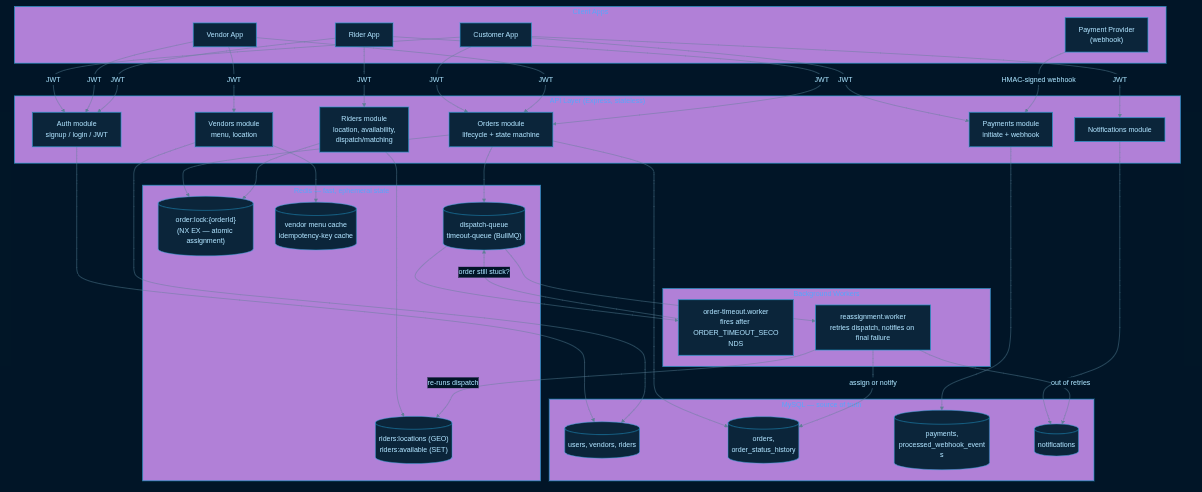
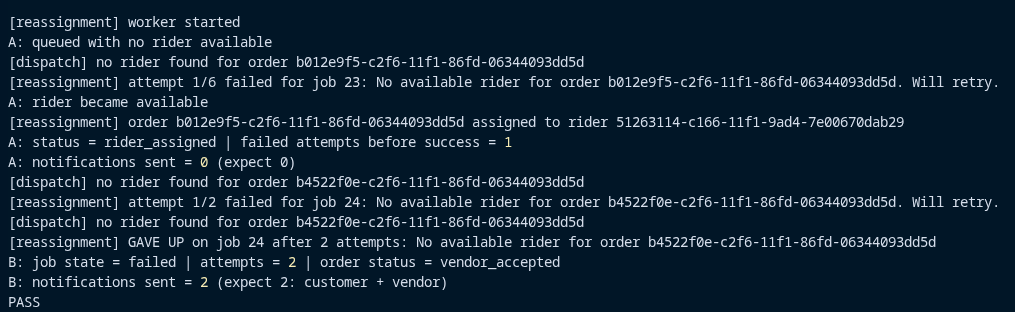
Building a Delivery Dispatch Backend: The Decisions That Actually Mattered Most backend portfolio projects are CRUD with extra steps. I wanted to build something with actual teeth, a system where the interesting work isn’t the endpoints but the handful of places where a naive implementation would quietly break under real conditions. So I built a scaled-down version of what sits behind an app like Uber Eats or Chowdeck: a backend that coordinates customers, vendors, and riders through the full order lifecycle, live rider matching, atomic assignment under concurrency, idempotent payment webhooks, and automatic reassignment when nobody’s available. !Dispatch backend architecture This article isn’t a tour of every endpoint. It’s a discussion of questions I had to answer with code and why I answered them the way I did. “What happens when two orders want the same rider at the same instant?” This is the core of the whole dispatch problem. A customer’s order gets accepted by a vendor, and the system needs to find the nearest available rider and lock them in. Still, if two vendors accept orders within milliseconds of each other, and the pool of available riders near both is the same three people, you will get a collision eventually. The naive fix would be to “check if the rider is available, then assign them.” But that has a race condition baked directly into its two steps. Both requests can pass the check before either one writes. I used two atomic Redis operations instead of application-level locking: SET order:lock:{orderId} riderId NX EX 10: an atomic compare-and-set with a self-expiring TTL, so a crashed process doesn’t leave an order permanently locked. SREM riders:available riderId: Redis’s set-remove command returns exactly how many elements it removed. Only the caller that gets 1 back actually claimed the rider. Everyone else, even if they got there “at the same time” from the application’s perspective, gets 0 and moves to the next candidate. !rider availability test snippet “What happens when a payment provider retries a webhook?” Payment providers don’t trust a single delivery attempt. If they don’t get a fast 200 response back, they resend, sometimes more than once. Any webhook handler that isn’t explicitly idempotent will eventually double-process a payment. I handle this by inserting the event’s event_id into a table with a UNIQUE constraint inside _the same database transaction_ as the status update. A duplicate delivery hits that constraint; the transaction rolls back cleanly, and the response is still a 200 (so the provider stops retrying), so it just reports duplicate: true instead of reprocessing. This is a different idempotency mechanism from the one on order creation, which uses a client-supplied Idempotency-Key cached in Redis. That’s deliberate: order creation is client-driven (the client decides what counts as “the same request,” useful when it can’t tell if a timed-out request actually succeeded), while the webhook is server-driven (the event’s own identity is authoritative, and the guarantee has to survive concurrent delivery, which a Redis cache with a TTL doesn’t guarantee as strongly as a database constraint plus a row lock). Using one pattern everywhere would have been simpler to write and wrong for at least one of the two cases. “Why mock the payment gateway?” I mocked the payment provider rather than integrating a real sandbox (Paystack, Flutterwave), and I want to be upfront about why, because it’s a deliberate trade-off, not a shortcut. The engineering that actually matters here, which is the HMAC signature validation, the idempotent processing logic above, and the payment state machine, is identical regardless of which provider sits behind it. A real integration would have meant a provider account, API keys, and a public tunnel just to receive callbacks during development. None of that demonstrates additional backend design skill; it’s setup friction. Swapping in a real provider later touches exactly two functions, initiation and the webhook handler, because the transaction logic and schema were built provider-agnostic from the start. “What happens when no rider is available at all?” This is the failure mode that’s easy to leave as an afterthought. If dispatch can’t find anyone, the order can’t just sit in limbo forever. !rider reassignment worker When a vendor accepts an order, a delayed timeout job gets scheduled alongside the immediate dispatch attempt. If dispatch doesn’t find anyone, the timeout fires later and hands the order to a background worker that retries matching with a fixed backoff. If every retry is exhausted and still nobody’s available, the system writes a notification for both the customer and the vendor, telling them to cancel instead of leaving the order stuck with no visibility into why. Keeping this as a separate background worker, rather than retrying inline on the request, matters for a boring but important reason: a slow reassignment retry should never block a customer’s “place order” request. The two run as entirely separate processes. What I’d do differently with more time Being specific about scope boundaries is part of showing the work, not hiding gaps: - A real payment gateway, once there’s an actual need to move money - Routing-API-based ETAs, since the current matching is straight-line distance, not drive time - Push notifications instead of the current DB-polled notification table - Rate limiting on auth and the webhook endpoint - Structured, correlated logging across the API and both workers Full architecture diagrams, the AWS deployment shape, and the complete decision log are in the project’s README here.
@rdd147 Serious security here starts with AWS firecracker micro-vm environment framwork which AWS backed perplexity open source. perplexityai/SPACE
Looking for Lenovo laptop owners to help test a read-only keyboard backlight compatibility scanner Looking for Lenovo laptop owners to help test a read-only keyboard backlight compatibility scanner Hi everyone! I'm maintaining an open-source fork of Auto Backlight for ThinkPad, a Windows utility that automatically turns the keyboard backlight on when you start using your laptop and turns it off after a configurable period of inactivity. The application currently works on my ThinkPad X1 Extreme Gen 2 using Lenovo's IBMPmDrv driver. I've also implemented experimental EnergyDrv support, but it hasn't been verified on physical EnergyDrv hardware yet. I'd like to investigate potential compatibility with other Lenovo laptop families, including: - ThinkBook - IdeaPad / IdeaPad Gaming - Yoga / Yoga Slim - Legion - LOQ - Other Lenovo models with backlit keyboards What I'm looking for I've created a small, open-source Lenovo Compatibility Scanner that collects basic information about the keyboard backlight interfaces exposed by your laptop. The scanner checks: - Lenovo laptop model and Windows version - BIOS version (optional) - Presence and state of IBMPmDrv and EnergyDrv driver services - Lenovo-related WMI interfaces, class names and method declarations - Potential Legion and Gamezone lighting interfaces Important: this is a metadata-only scanner, not a hardware compatibility test. It does NOT change your keyboard backlight, execute firmware methods, send driver commands, modify BIOS settings, install drivers or upload anything. No administrator privileges are required. You don't need to install Auto Backlight for ThinkPad or any other application. How to participate 1. Download Scan-LenovoCompatibility.ps1 from the GitHub repository. 2. Open Windows PowerShell normally (not as Administrator). 3. Run the script using the instructions in the scanner README. 4. Review the two locally generated reports: LenovoCompatibilitySummary.txt and LenovoCompatibilityReport.json. 5. Open a compatibility report issue on GitHub and share a reviewed summary. The JSON attachment is entirely optional. The reports contain model and firmware metadata, so please review them and remove anything you don't want to share. Nothing is uploaded automatically. If possible, also mention your exact Lenovo model, whether the keyboard has white or RGB backlighting, whether Fn+Space controls it, and whether you're using Lenovo Vantage, Legion Space or another lighting utility. Links Project: prat89/auto-backlight-for-thinkpad Scanner source: github.com/prat89/auto-backlight-for-thinkpad/blo… Scanner instructions: github.com/prat89/auto-backlight-for-thinkpad/blo… Submit a report: github.com/prat89/auto-backlight-for-thinkpad/iss… Even a report showing no relevant drivers or WMI interfaces is useful. It helps establish which hardware interfaces are present on different Lenovo models and which approaches deserve further investigation. Please note that the current application is not claimed to support all these laptop families, and the scanner does not establish whether the app will work on your device. Thanks to anyone willing to help expand Lenovo compatibility!